Walter Kennedy grows up at Pelican Stairs in Wapping, the son of an anchor-smith, a boy with every reason to follow his father into honest labour. But something restless burns in him; as Lives of the Most Remarkable Criminals tells it, he possesses a ‘too aspiring temper’ that honest trades can never satisfy.
Serving aboard a man-of-war during Queen Anne’s wars against France, Kennedy absorbs every whispered tale of buccaneers and maritime desperadoes, and what begins as fascination hardens into ambition. His is a true crime story shaped not by sudden desperation but by slow, deliberate seduction; the sea offering its own dark curriculum.
The silver oar of Admiralty justice waits somewhere ahead of him, gleaming on a courtroom table he cannot yet imagine.
Lives of the Most Remarkable Criminals preserves Kennedy’s full account in vivid detail; hear it now, narrated from the original text.
Click the RSS feed link below to subscribe and get new episodes the moment they drop.
The past speaks its own dialect; here is what to listen for in this episode.
Petty treason: not a lesser kind of treason in the way we might assume. In English common law, petty treason referred specifically to the killing of a superior by a subordinate: a wife killing a husband, a servant killing a master, or a clergyman killing a prelate. When piracy is described as petty treason at common law, it signals that pirates were seen not merely as thieves but as men who had betrayed the sovereign authority itself.
Silver oar: a literal object, not a metaphor. The Court of Admiralty carried a silver oar into the courtroom as its emblem of jurisdiction over maritime offences. It lay on the table during trials and was carried in procession before the condemned on their way to execution. It was the last thing many pirates ever saw gleaming in the daylight.
Upon the account: sailor’s slang for turning pirate. To go ‘upon the account’ was to abandon lawful service and take up robbery at sea. The phrase carried a grim bookkeeping quality; as if plunder were simply another ledger to be managed.
Ambuscade: the older form of the word ambush, borrowed from the French. It sounds grander, more deliberate; and in this episode it describes exactly that: a carefully laid trap with poisoned arrows and lethal patience.
Dissembled: today we might say ‘pretended’ or ‘concealed.’ To dissemble is to hide one’s true intentions behind a mask of courtesy. The Portuguese governor who discovers the pirates but invites them to an entertainment is dissembling; and the consequences are devastating.
Tractable: meaning obedient, easily managed. We still use it occasionally, but in eighteenth century character sketches it appears often; a tractable child is one who gives no trouble. Kennedy is described as tractable in his youth, which makes his later transformation all the more striking.
Buccaneers: not simply a romantic synonym for pirate. The buccaneers were a specific group of seventeenth century raiders, originally hunters on Hispaniola who smoked meat on wooden frames called ‘boucans.’ They evolved into seafaring raiders who operated under loose commissions and sometimes with the tacit approval of colonial governors. By Kennedy’s time, their era was passing into legend; the kind of legend that infected young sailors with ambition.
Man-of-war: a warship in the service of a national navy, armed and crewed for battle. It is not a pirate vessel; quite the opposite. That Kennedy learns his piracy while serving aboard one of the Crown’s own fighting ships is one of the darker ironies of his story.
About This Series
Lives of the Most Remarkable Criminals is one of the earliest works of true crime writing in the English language, nearly 300 years old, covering murderers, thieves, highwaymen, forgers, coiners and worse.
The book is entirely in the public domain and every word of it can be read today for free. But if you would rather listen, this podcast does exactly that: one criminal at a time, every week, read aloud.
True crime was not invented by podcasts or streaming services. Eighteenth century readers were just as fascinated by outlaws and killers as we are today. They just consumed their dark stories by candlelight.
The voice you hear is David Dark: crime researcher, theatre script writer, producer of live immersive experiences, and audiobook narrator and voice artist. This podcast uses an AI voice model trained on David’s own voice, built using the maximum available training data to faithfully represent how he actually sounds. To hear David’s real voice in human generated form, visit him on Audible, Online Stage, Voices of Today, Spoken Realms, and Internet Archive.
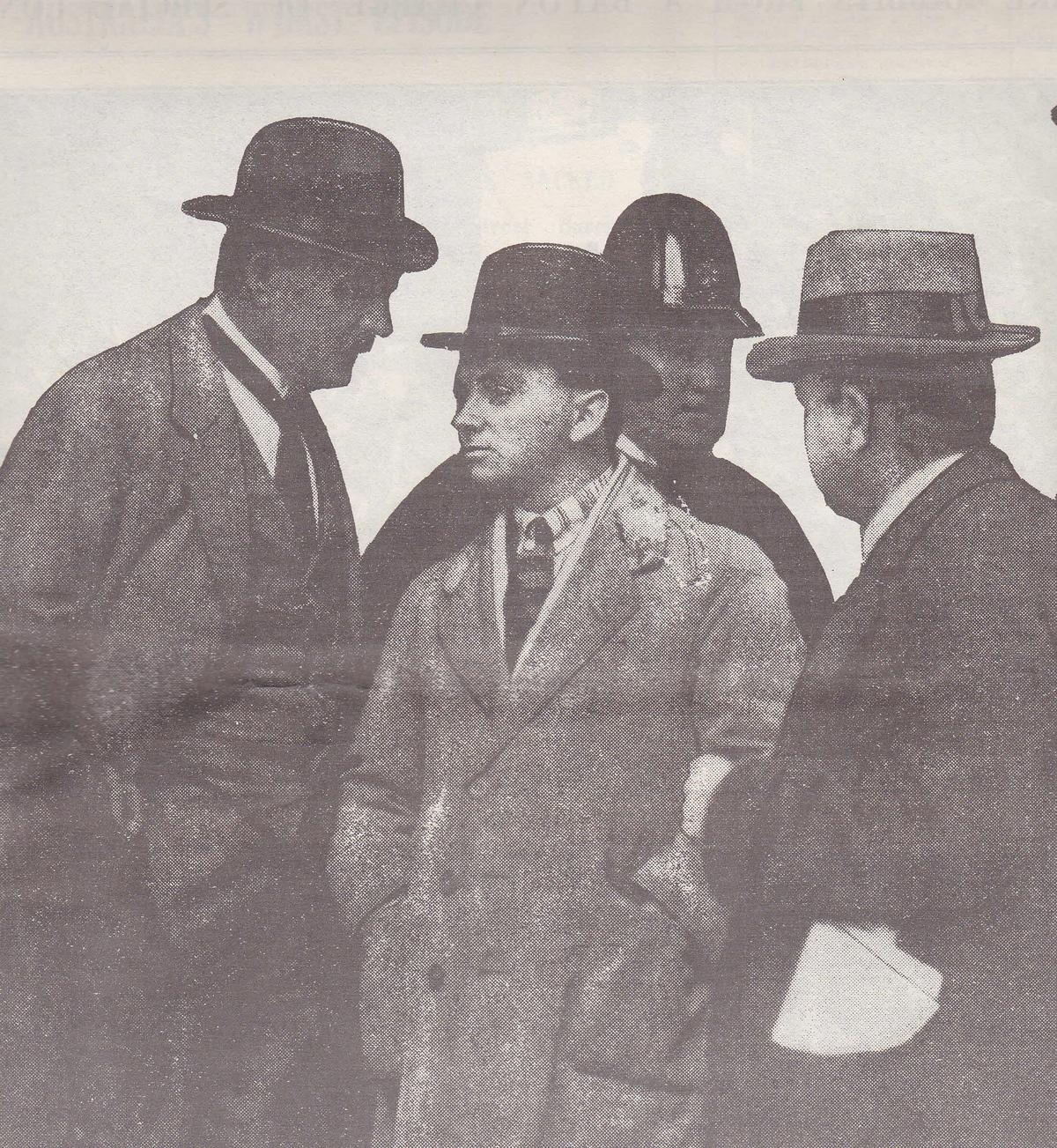
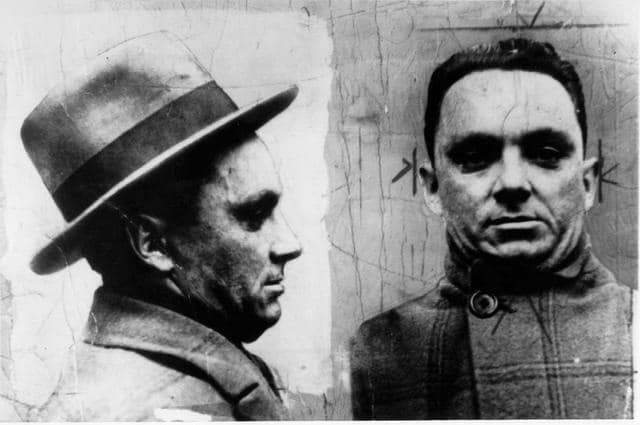
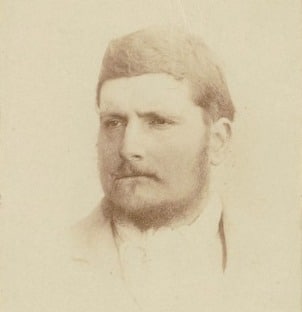
In the smoky laneways and shadowy backstreets of early twentieth-century Melbourne, few criminal names carried as much menace and mystique as Squizzy Taylor. Born Joseph Leslie Theodore Taylor in Brighton on 29 June 1888, the man who would become known as Squizzy rose from the working-class streets of Richmond to become one of Australia’s most notorious underworld figures.
Small in stature but large in self-belief, Taylor built a reputation for violence, cunning, and theatrical self-promotion. He was charming when it suited him, ruthless when crossed, and unusually skilled at turning criminal notoriety into public fascination. His story is one of ambition, betrayal, intimidation, and bloodshed, played out against the backdrop of a city undergoing rapid social change.
How Leslie Taylor came to be known as “Squizzy” remains uncertain. Various explanations have been offered over the years, but none can be treated as definitive. What is clear is that the nickname stuck, and in time it became one of the most recognisable names in Melbourne’s criminal history.
From the Stables to the Streets
Taylor’s childhood was shaped by instability and hardship. After the family coachmaking business collapsed and was sold by creditors in 1893, the Taylors moved from Brighton to the inner-Melbourne working-class suburb of Richmond. When his father died in 1901, the thirteen-year-old Taylor went to work in the stables of a horse trainer and later spent time around Melbourne’s pony-racing circuit.
He did not remain on the right side of the law for long. By his mid-teens, Taylor was already appearing before the courts. In March 1906, at the age of seventeen, he was sentenced to twenty-one days’ imprisonment for stealing an overcoat. It was an early step in what would become a lengthy criminal career, one marked by repeated arrests, brief terms of imprisonment, acquittals, and returns to the street.
By his early twenties, Taylor had moved beyond petty theft into more serious offending. He accumulated convictions for theft and assault while building a network of associates across Melbourne’s inner suburbs. Charges were laid; witnesses faltered; evidence proved difficult to sustain; and Squizzy often walked free.
Taylor understood that fear could be as useful as money. Alongside associates such as Paddy Boardman, he became linked to witness intimidation and jury-rigging. In the world he inhabited, a timely visit from the right people could persuade witnesses to forget details, leave town, or decide that silence was safer than testimony.
Dolly Gray and the Making of a Criminal Partnership
No account of Squizzy Taylor’s early rise is complete without Dolly Gray, his long-term de facto partner and a criminal figure in her own right. Dolly was no passive companion. She was active in Taylor’s world, associated with robbery, blackmail, and criminal operations in and around Little Lonsdale Street.
In December 1914, Dolly survived a mysterious shooting after suffering a bullet wound to the head. The circumstances were murky, and they remain part of the violent mythology surrounding Taylor’s circle. Her relationship with Squizzy was long-running, volatile, and entangled with the criminal networks that helped shape his rise.
Taylor’s romantic life was as complicated as his criminal one. In May 1920, he married Irene Lorna Kelly. The marriage produced two children, although their first child, June, died in infancy. Taylor and Irene divorced in 1924. Prior to the divorce, he had been involved with Ida Muriel Pender, with whom he had a daughter, Patsy, born in 1923, and later married Ida that same year. She would remain close to Taylor until his death.
The Rise of Melbourne’s Underworld King
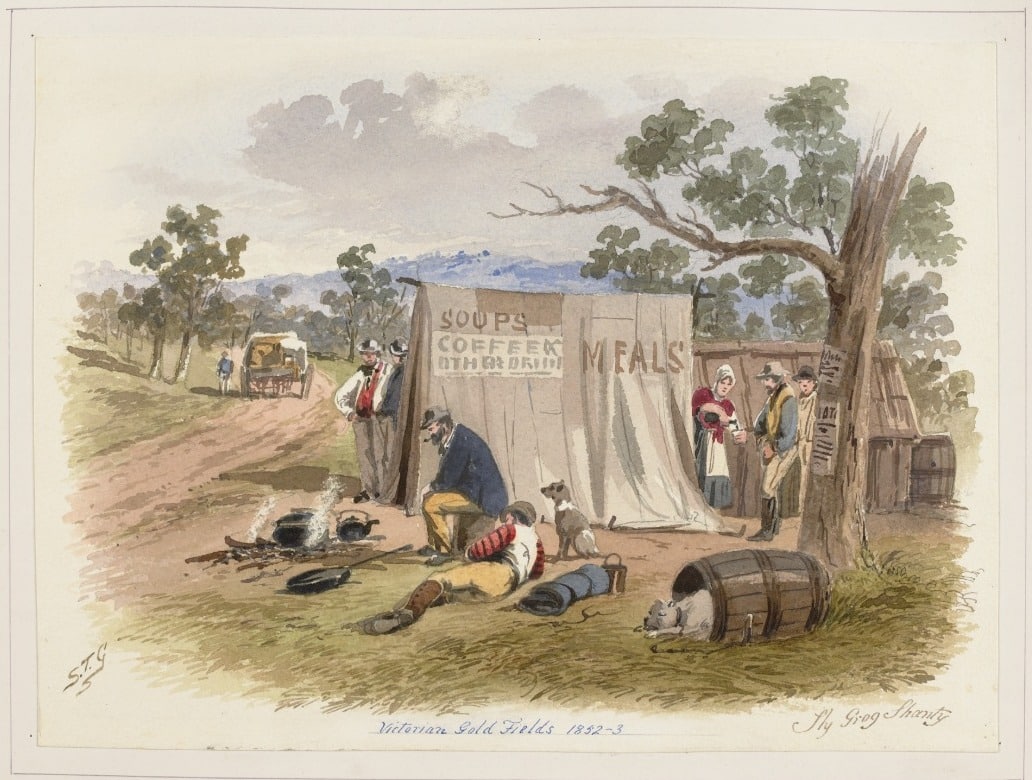
The years following World War I brought social dislocation, unemployment, returned soldiers struggling to reintegrate, and a thriving illicit economy. Restrictive hotel trading hours helped fuel the sly-grog trade, while gambling, prostitution, illegal liquor, and protection rackets created opportunities for ambitious criminals.
Taylor moved comfortably through this world. He was linked to armed robbery, illegal liquor, prostitution, racecourse crime, protection rackets, witness intimidation, and, in his later years, the cocaine trade. He also cultivated relationships with corrupt police and other useful figures who could provide protection, information, or warning when danger approached.
Squizzy’s criminal activities were centred in Melbourne’s inner suburbs: Richmond, Fitzroy, Collingwood, Carlton, and the surrounding working-class districts. These were communities where poverty, loyalty, intimidation, and mistrust of police could all work to a criminal’s advantage.
Taylor also cultivated a public image. He wanted to be seen as generous, stylish, loyal, and untouchable. Whether or not the reality matched the legend, the image served him well. In his world, silence was valuable, and public admiration could be almost as useful as fear.
In June 1918, Taylor was credited by some with helping to organise the robbery of Kilpatrick’s jewellery store in Collins Street, where diamond rings valued at £1,435 were stolen. The robbery involved both Richmond and Fitzroy criminals, but it also produced suspicion, resentment, and accusations of betrayal. Those tensions would soon erupt into open violence.
The 1919 Fitzroy Vendetta
The Kilpatrick’s jewellery store robbery helped sow the seeds of a violent underworld conflict. The Fitzroy faction became suspicious that someone from Richmond had tipped off police after three of their members were arrested. Tensions worsened when Henry Stokes gave evidence for the prosecution after charges against him were dropped.
There was also anger over the division of the proceeds from the robbery. Then came a further provocation: Dolly Gray was drugged at an underworld gathering in Fitzroy, mistreated, and robbed of jewellery worth about £200. Some present believed the jewellery had come from the Kilpatrick’s haul and therefore belonged to them.
Taylor’s Richmond associates retaliated, and the shootings began.
The feud became known as the Fitzroy Vendetta. It left a trail of violence across Melbourne’s inner suburbs. In one incident in August 1919, shots were fired into a sly-grog shop in Fleet Street, Fitzroy, injuring a woman and two men. Taylor was arrested after witnesses reported seeing him jump into a moving car shortly after the shooting. He was charged and later acquitted.
Police struggled to contain the violence. They were hampered by witness silence, intimidation, underworld loyalty, and allegations of corruption. Charges were laid, then dropped or defeated. The vendetta revealed the limits of law enforcement in a criminal world where people were often more afraid of gang reprisals than of the courts.
A Gangster and a Showman
One of the most fascinating aspects of Squizzy Taylor’s career was his relationship with the media. Long before social media, celebrity criminals understood the value of publicity, and Taylor was unusually good at making himself newsworthy.
He gave interviews, courted attention, and seemed to enjoy the role of Melbourne’s most infamous gangster. Newspapers were happy to oblige. Squizzy’s exploits sold papers, and his colourful personality made him an irresistible subject. He appeared in expensive suits, presented himself with confidence, and understood that theatricality could magnify fear.
This showmanship extended to his personal life. Taylor was a familiar figure at racecourses, where he placed bets, mixed with gamblers, and held court among admirers and hangers-on. He enjoyed Melbourne nightlife, smoked American cigars, rode in expensive cars, and dressed like a man determined to look more successful than respectable society itself.
His high public profile may also have made him harder to handle. Every arrest became a spectacle; every court appearance drew attention. Taylor played the role of the cheeky, glamorous rogue, even as he remained closely associated with intimidation, violence, and organised criminal activity.
#image_title
The Artful Dodger
In June 1921, Taylor’s luck appeared to run out when he was caught breaking into a warehouse in King Street. He was committed to stand trial and released on bail of £600. When the trial date arrived, however, Taylor had vanished.
For more than a year, police searched for him without success, while newspapers followed the manhunt with delight. Taylor eventually surrendered in 1922, turning even his return to custody into a public performance. Once again, the line between criminality and celebrity blurred around him.
In October 1923, Thomas Berriman, manager of the Hawthorn branch of the Commercial Bank, was shot outside Glenferrie Station while carrying £1,851 in bank funds. He died from his wounds two weeks later.
Witnesses identified the men as responsible as Henry James Donnelly, better known by the alias Angus Murray, and Richard Buckley. Police later raided a house in St Kilda and arrested Murray along with Taylor and Ida Pender. Taylor was charged with aiding and abetting the crime and with harbouring Murray, who had escaped from Geelong Gaol.
Taylor was acquitted of the more serious charges but convicted of being the occupier of a house visited by thieves and sentenced to six months’ imprisonment. Murray was convicted of Berriman’s murder and hanged at the Old Melbourne Gaol in April 1924. Buckley avoided capture for years before being convicted of Berriman’s murder in 1930; his death sentence was later commuted.
Rivalries, Feuds, and the Battle for Melbourne
No gangster’s power goes unchallenged, and Taylor had many enemies. Throughout his career he clashed, negotiated, and feuded with other formidable underworld figures, including gambling identity Henry Stokes, with whom his relationship shifted between alliance and hostility.
His most famous and ultimately fatal rivalry was with John “Snowy” Cutmore, a violent criminal who had made his name in Melbourne before spending time in Sydney’s underworld. There, Cutmore moved among figures associated with the early razor-gang era, including Norman Bruhn, often remembered as one of Sydney’s original razor gangsters.
Cutmore was linked in some accounts to the killing of Bruhn, who had been an ally of Taylor. Whether revenge, rivalry, unpaid debts, old grievances, or a mixture of all these forces lay behind the final confrontation remains uncertain. Squizzy Taylor’s world rarely produced clean explanations.
The Final Showdown: Death of a Gangster
Taylor and two associates met at the Bookmakers Club in Lonsdale Street, hired a car, and spent the evening searching for Cutmore around Carlton’s pubs. Unable to find him, they went to the home of Cutmore’s mother at 50 Barkly Street, Carlton. Cutmore was there, bedridden with influenza.
A violent confrontation followed. Shots were fired. Cutmore was mortally wounded. So was Taylor.
The precise circumstances have been disputed ever since. The inquest returned an open verdict, finding insufficient evidence to determine exactly who fired the fatal shots. The simplest public version was that Taylor and Cutmore had shot each other in a fatal duel, but the evidence left troubling questions.
There were reports of more shots than could easily be accounted for. Weapons were found away from the bedroom. One enduring theory suggested that Cutmore’s mother, Bridget, may have fired the shot that killed Taylor after finding him wounded in the house. None of this was ever proven.
Cutmore died at Carlton. Taylor was rushed to St Vincent’s Hospital in Fitzroy, where he died later that evening. He was thirty-nine years old.
The man who had haunted Melbourne’s underworld for the better part of two decades was gone, killed in the kind of violent, murky confrontation that seemed almost inevitable given the life he had led. Fittingly, even his death left unanswered questions.
The aftermath was a media frenzy. Newspapers devoted pages to Taylor’s life and crimes, and his funeral drew hundreds of onlookers. In death, as in life, Squizzy Taylor commanded attention. He was buried with Anglican rites at Brighton Cemetery, not far from where he had been born, completing a circle that had taken him from Brighton to Richmond, from petty theft to underworld notoriety, and finally to a violent end.
The Legacy of Squizzy Taylor
Nearly a century after his death, Squizzy Taylor remains one of Melbourne’s most enduring criminal figures. His story has been told and retold in books, films, television series, documentaries, podcasts, and walking tours.
The 1982 film Squizzy Taylor, starring David Atkins in the title role, introduced his story to a new generation. The 2013 television series Underbelly: Squizzy revived interest again, bringing the myths, violence, and spectacle of Taylor’s Melbourne back into popular culture.
What is it about Squizzy Taylor that continues to fascinate? Was it his sheer audacity? A small-time stablehand and petty thief who clawed his way into the upper ranks of a brutal criminal world through nerve, intimidation, corruption, and violence. Part of it is the era: the roaring twenties, a time of jazz, sly grog, gambling, social upheaval, and rapidly changing cities. And part of it is the enduring Australian fascination with outlaws and antiheroes, from bushrangers to razor gangs, figures who exist at the margins of society but whose stories reveal something important about the world around them.
Squizzy Taylor was many things: thief, gangster, showman, suspected murderer, and infamous legend. His story reminds us that the history of Australia’s cities is not only a story of progress and respectability. It is also a story of darkness, violence, fear, ambition, and the relentless human appetite for power.
Walking through Melbourne today, it is hard to imagine the world Squizzy inhabited. Yet echoes of his era remain for those who know where to look: in old pubs and terrace houses, in narrow laneways, in former sly-grog districts, and in the collective memory of a city that has never quite forgotten one of its most infamous sons.
Barbara Spencer is barely out of childhood when the world begins to shape her into something dangerous. Raised without restraint in the cramped lanes of Cripplegate, she is the kind of figure that Lives of the Most Remarkable Criminals captures with unflinching clarity: a young woman too proud for servitude, too restless to stay still, drawn by temperament toward the edges of lawful life.
Her drift into counterfeiting feels almost inevitable; a single act of defiance carries her out of her mother’s alehouse and into the company of coiners who see her recklessness as a useful tool. In the annals of true crime, few portraits are as vivid as this one: a girl barely twenty, pushing false money through London’s streets with a freedom she mistakes for power.
Georgian justice has a particular cruelty reserved for women convicted of this offence, and the machinery of that law is already turning. Hear her story read aloud from the pages of Lives of the Most Remarkable Criminals; every word preserved, every detail intact, waiting for you now.
#image_title
Click the RSS feed link below to subscribe and get new episodes the moment they drop.
The past speaks its own dialect; here is what to listen for in this episode.
Mean parents: today ‘mean’ usually suggests cruelty or stinginess, but in eighteenth century usage it simply meant humble or of low social standing. Barbara’s parents were not wicked; they were poor and unremarkable, the kind of people the law barely noticed until their children crossed it.
Mantua-maker: a dressmaker who specialised in the mantua, a loose flowing gown fashionable in the late seventeenth and early eighteenth centuries. It was one of the few skilled trades open to women, and an apprenticeship to one could have set Barbara on a very different path.
Utter: to utter false money had nothing to do with speaking. In legal language it meant to put counterfeit coins into circulation; to pass them off as genuine in a transaction. The crime of uttering was considered a form of petty treason against the Crown, because the monarch’s image and authority were stamped upon every coin.
Vend: to sell or distribute. Paired with ‘utter’ in the text, it underlines the commercial nature of the offence; coiners operated in networks, with some people manufacturing the forgeries and others, like Barbara, sent out into the streets to move them.
Petty treason: a legal category that has no modern equivalent. It covered crimes that violated a bond of allegiance or obedience: a wife killing her husband, a servant killing a master, or a subject counterfeiting the king’s coin. The penalties for petty treason were deliberately more severe than those for ordinary felonies, and for women the distinction carried a uniquely horrifying consequence.
Faggots and brushes: bundles of sticks and dry kindling used to build the fire at an execution by burning. The word ‘faggot’ today carries entirely different connotations, but in this period it referred simply to a bound bundle of firewood; the mundane fuel of an extraordinary punishment.
St. Giles’s Pound: a public pound near the parish of St. Giles in the Fields, used for impounding stray livestock. The area around it was notorious for poverty, gin shops and criminal networks; it was exactly the kind of place where a young runaway could vanish into a new and dangerous life overnight.
Discover: in this context, to discover someone meant to reveal or expose their identity to the authorities. Barbara refused to discover those who taught her to coin; she would not name them, even under the weight of her own conviction.
#image_title
About This Series
Lives of the Most Remarkable Criminals is one of the earliest works of true crime writing in the English language, nearly 300 years old, covering murderers, thieves, highwaymen, forgers, coiners and worse.
The book is entirely in the public domain and every word of it can be read today for free. But if you would rather listen, this podcast does exactly that: one criminal at a time, every week, read aloud.
True crime was not invented by podcasts or streaming services. Eighteenth century readers were just as fascinated by outlaws and killers as we are today. They just consumed their dark stories by candlelight.
The voice you hear is David Dark: crime researcher, theatre script writer, producer of live immersive experiences, and audiobook narrator and voice artist. This podcast uses an AI voice model trained on David’s own voice, built using the maximum available training data to faithfully represent how he actually sounds. To hear David’s real voice in human generated form, visit him on Audible, Online Stage, Voices of Today, Spoken Realms, and Internet Archive.
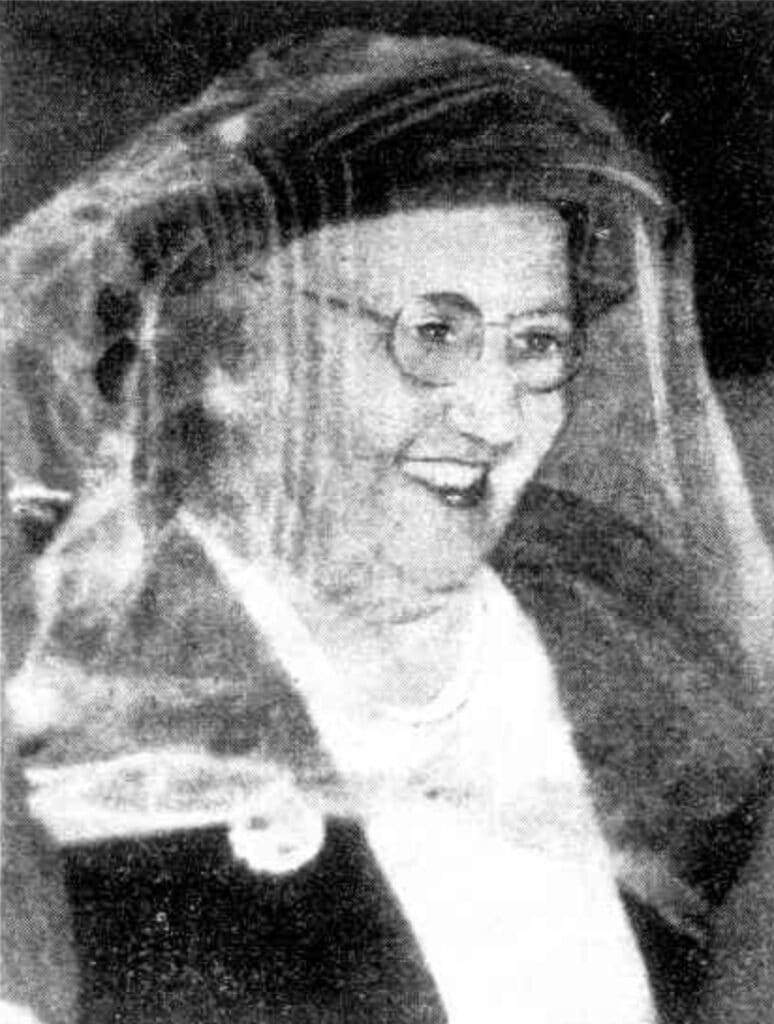
Among the most chilling cases in Australian criminal history, the story of Caroline Grills stands out for its sheer domestic horror. Known to her family and friends as ‘Aunt Carrie,’ this seemingly warm and generous woman spent years poisoning those closest to her with thallium, a tasteless and odourless rat poison that slowly destroyed her victims from the inside out. Between the late 1940s and early 1950s, Grills operated in plain sight across suburban Sydney, attending to the sick and dying with cups of tea laced with death. Her case remains one of the most disturbing examples of serial poisoning in the country, a reminder that the most dangerous killers can sometimes wear the most familiar faces.
A Beloved Figure in the Family
Caroline Grills was born in 1888 and spent most of her life in the working-class suburbs of Sydney. By all outward appearances, she was a devoted wife, a loving mother, and an attentive relative who went out of her way to care for family members in their time of need. She was short and stout, with thick spectacles and a warm smile that put everyone at ease. Neighbours and relatives alike described her as generous and kind, always the first to arrive with food and comfort when someone fell ill.
It was precisely this reputation that made her crimes so effective and so difficult to detect. In post-war Australia, families were tight-knit and relied heavily on one another. The idea that a beloved aunt or mother figure could be systematically murdering her own relatives was almost unthinkable. Grills exploited this trust with a calculated patience that would not be fully understood until years later, when the bodies had already been buried and the survivors were fighting for their lives.
The First Deaths: Suspicion Buried with the Victims
The poisoning spree is believed to have begun in November 1947 with the death of Christina Mickelson, Grills’ stepmother. The elderly woman was 87 years old and had been in declining health, and when she passed away, no one questioned the cause. It seemed like a natural death, the sad but unremarkable end of an ageing woman’s life. Grills had been at her bedside throughout, dutifully preparing meals and cups of tea.
Not long after, in January 1948, Angelina Thomas died. A relation of Grills’ husband, she too had been elderly and in apparently failing health, and again Aunt Carrie had been the devoted caregiver in attendance. Then came the death of John Lundberg, Grills’ husband’s brother-in-law, in late 1948. Each time the pattern was the same: a period of mysterious illness characterised by hair loss, numbness in the extremities, and severe gastrointestinal distress, followed by death. And each time, Caroline Grills had been present, hovering with her teapot and her sympathetic smile.
At the time, thallium poisoning was notoriously difficult to detect. The symptoms mimicked a range of natural illnesses, and unless a doctor specifically tested for the substance, it could easily be mistaken for everything from influenza to nerve disease. Thallium was also readily available in Australia as an ingredient in commercial rat poisons, making it terrifyingly easy for Grills to obtain her weapon of choice without arousing suspicion.
A Pattern Emerges
By 1949, the death toll in Grills’ extended family had begun to attract quiet whispers, though no one dared voice their suspicions openly. The fourth confirmed victim was Mary Anne Mickelson, Grills’ sister-in-law, who died that year after suffering the same agonising decline as those before her. Like the others, she had been under the attentive care of Aunt Carrie.
What made Grills particularly dangerous was her apparent lack of traditional motive. She did not stand to inherit vast fortunes from her victims. There were no bitter family feuds or obvious grudges. Some criminologists have since speculated that Grills derived a perverse satisfaction from the power she held over life and death, enjoying the attention and gratitude she received as a devoted caregiver.
Whatever her internal motivations, the external reality was devastating. Four people were dead, and Grills showed no signs of stopping. In fact, she appeared to be escalating, expanding her circle of victims to include not just elderly relatives but younger and healthier family members as well.
#image_title#image_title
Grills was not operating in a vacuum. By early 1953, thallium poisoning had become a serious public health crisis in New South Wales. In the thirteen months leading up to her arrest, there had been 46 reported cases across the state, ten of them fatal, with five of those deaths believed to be murders. At any given time, multiple victims were being treated simultaneously in Sydney hospitals. The situation was alarming enough that in late April 1953, a group of Australian poison experts convened in Sydney for an emergency meeting, the first of its kind in the country, to pool clinical, chemical and analytical data on thallium poisoning and attempt to find an antidote. Poison experts around the world had been searching for one for years without success. Caroline Grills was not the only person poisoning with thallium in Sydney, but she would prove to be the most prolific.
The Survivors Who Broke the Case
The turning point came when Grills began poisoning relatives who did not die. In the early 1950s, several family members began experiencing the telltale symptoms of thallium poisoning: their hair fell out in clumps, they suffered excruciating pain in their limbs, and their vision deteriorated rapidly. Among those targeted were Eveline Lundberg, Grills’ own sister-in-law, along with Eveline’s daughter Christine Downey and her husband John Downey, all regular recipients of Aunt Carrie’s famous cups of tea.
It was within this circle that Grills was finally caught. A suspicious family member, already partially blinded from a previous poisoning, noticed Grills slip her hand into her dress pocket and move it over a cup of tea she had just prepared. He quietly switched the cup, decanted the tea into a bottle, and handed it to police. Laboratory analysis confirmed what the family had feared: the tea contained a lethal dose of thallium. Caroline Grills was arrested on 11 May 1953.
The Trial That Shocked Sydney
The trial of Caroline Grills in October 1953 became a media sensation across Australia. The image of a kindly grandmother deliberately poisoning her own family captivated and horrified the public in equal measure. Newspapers dubbed her ‘Aunt Thally,’ a darkly humorous nickname that belied the gravity of her crimes.
Prosecutors made a calculated decision about how to proceed. Although police charged Grills with four counts of murder, relating to the deaths of Christina Mickelson, Angelina Thomas, John Lundberg, and Mary Anne Mickelson, and three counts of attempted murder, they chose to try her on a single count: the attempted murder of Eveline Lundberg. It was their strongest and most direct case. The intercepted cup of tea was damning physical evidence, thallium had been found in Grills’ dress pocket, and a witness had seen her administer the poison with his own eyes, before that sight was also taken from him.
The murder charges were not abandoned entirely. The judge permitted evidence of the four suspicious deaths to be introduced during the trial as similar fact evidence, allowing the prosecution to establish Grills’ pattern of behaviour and intent without needing to mount four separate murder trials. Once she received the maximum available sentence, pursuing those additional prosecutions was deemed unnecessary.
Grills professed her innocence throughout, claiming police had pressured her family to testify against her and insisting she had lived to help, not to kill. Her behaviour in the courtroom, marked by outbursts of laughter, did little to help her cause. On 15 October 1953 she was found guilty of attempted murder and sentenced to death.
Her appeal was dismissed by the Court of Criminal Appeal in April 1954, and in September that year her sentence was commuted to life imprisonment, a decision that reflected evolving attitudes toward capital punishment in Australia during the 1950s. She would spend the rest of her days behind bars.
Life Behind Bars and a Grim Legacy
In prison, Grills reportedly maintained her cheerful and sociable demeanour, earning a measure of popularity among fellow inmates. It was said that she continued to make tea for other prisoners, a detail that carries an almost unbearable irony given the nature of her crimes. Whether her fellow inmates were aware of the full extent of her history is unclear, but the image of Aunt Carrie bustling about with her teapot in the State Reformatory for Women is one that has endured in Australian criminal folklore.
Grills gradually lost her eyesight during her years in prison and became increasingly frail. She died on 6 October 1960, still incarcerated, without ever having publicly expressed remorse for her crimes. The true number of her victims remains uncertain; while she was charged in connection with four deaths and several attempted murders, some investigators believe she may have been responsible for additional deaths that were never formally linked to her.
The Thallium Poisoning Legacy in Australia
The case of Caroline Grills had a lasting impact on Australian law and public health policy. In the wake of her trial, authorities moved to restrict the sale of thallium-based rat poisons, recognising the extraordinary danger posed by a substance that was both lethal and virtually undetectable. The case also highlighted significant gaps in forensic toxicology at the time, prompting improvements in post-mortem testing procedures across the country.
Grills’ crimes also contributed to a broader cultural awareness of poisoning as a method of domestic murder. In the decades that followed, her case was frequently cited in discussions about the particular dangers posed by killers who operate within the home, exploiting bonds of trust and familial obligation. Her story served as a grim warning that evil does not always announce itself with violence or aggression; sometimes it arrives with a smile and a cup of tea.
The case of Caroline Grills is one of many dark chapters profiled in the Dark Stories series, where we explore the lives and crimes of Australia’s most infamous criminals in no particular order. From suburban poisoners to outback outlaws, these stories reveal the shadows lurking beneath the surface of ordinary Australian life. One day, we plan to rank these criminals once and for all, settling the debate about who truly stands as the most notorious figure in the nation’s criminal history. Until then, the tea is served, and the stories keep coming.
Spread the word on your favourite platform!
Subscribe to Dark Stories
True crime stories, dark history and tour news, straight to your inbox.