John Jones: The Young Pickpocket of Holborn

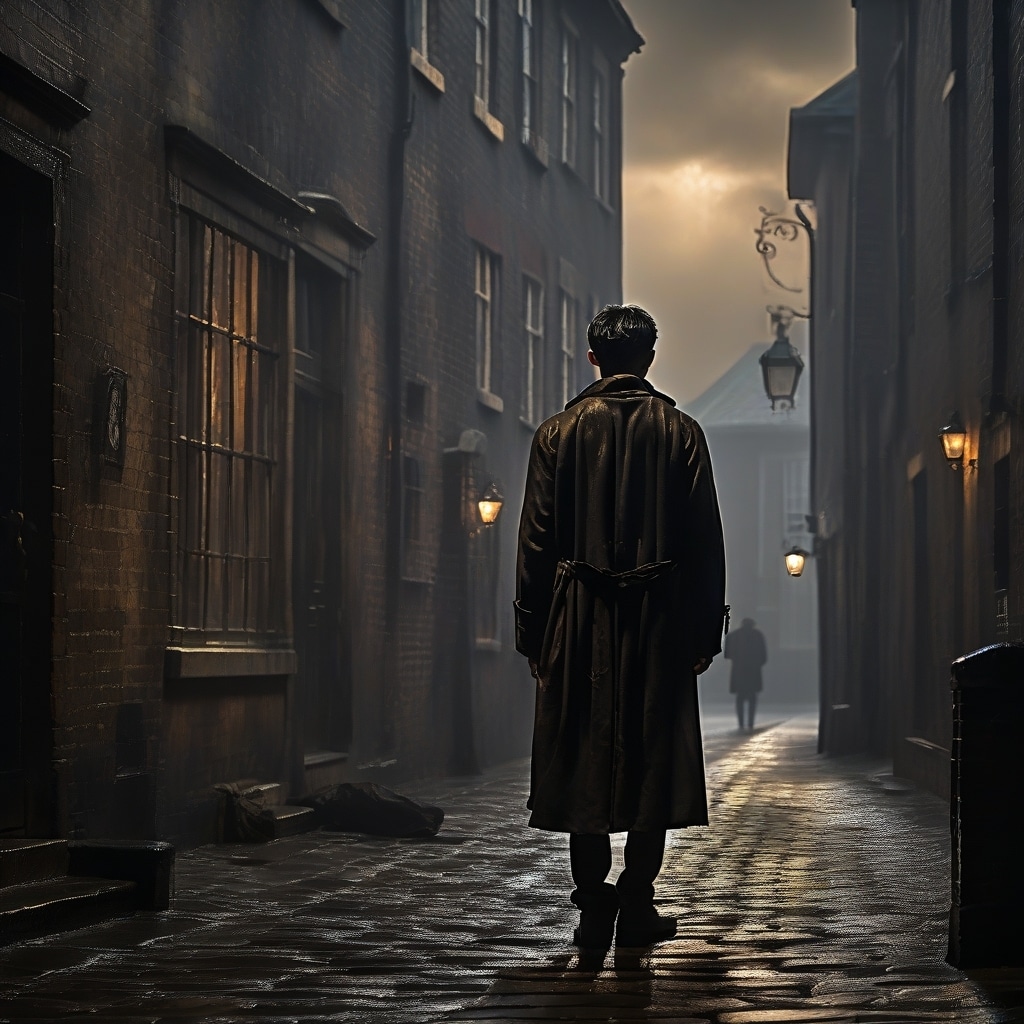
John Jones is barely a man when he stumbles into the trade that will define him. As Lives of the Most Remarkable Criminals recounts, he is a boy raised with too much tenderness and too little discipline; a creature of idleness born in Holborn to parents who indulge every whim, hoping the flaws will simply fall away with age.

They never do. Refused by every honest trade and cut off by his own family, Jones drifts into a London underworld where true crime begins not with malice but with boredom, poverty, and the wrong friend met at the wrong hour.

The city he moves through is dense with bodies and opportunity, and the distance between a restless young man and a condemned one is terrifyingly short.

Hear his story read aloud from the pages of Lives of the Most Remarkable Criminals; the full chapter awaits you now.

Click the RSS feed link below to subscribe and get new episodes the moment they drop.

Subscribe via RSS

Dark Lexicon: Old words. Dark meaning.

The past speaks its own dialect; here is what to listen for in this episode.

Malefactor: today this word survives mainly in legal documents and old novels, sounding almost quaint. In the eighteenth century it carried real weight; it simply meant a criminal, an evildoer, someone who had done wrong in the eyes of the law. When the text calls Jones a malefactor, it is not decorating him with drama; it is classifying him the way a court clerk would.

Put him out upon liking: this phrase describes a trial arrangement where a young person was placed with a tradesman on a probationary basis before formal apprenticeship papers were signed. Think of it as a working interview that could last weeks. If the boy and the master suited each other, an apprenticeship followed; if not, the boy was sent home. Jones, of course, found fault with every one.

Reluctancy: an older form of what we now call reluctance. It meant the same thing; an unwillingness or hesitation. The longer, slightly clumsier version was common in Georgian prose and has since been quietly trimmed by usage.

Blind alehouse: not a pub for the visually impaired. A blind alehouse was a disreputable drinking den, often unlicensed, tucked away in a back lane or cellar where it could operate out of sight of authorities. The word ‘blind’ here means hidden or obscure; the kind of place where criminal business could be discussed without being overheard.

Pocket: in this context, a pocket is not part of a garment but a separate pouch tied around the waist beneath the skirts. Women carried their valuables in these detachable bags, which is why pickpockets and cutpurses targeted them specifically. To ‘whip off her pocket’ meant to cut or snatch this pouch away from her body entirely.

By-alley: a narrow side passage off a main street; what we might now call an alleyway or a back lane. In Georgian London these cramped passages were everywhere, providing escape routes for thieves and cover for all manner of dark transactions.

Capital in its nature: this phrase means the crime carried the death penalty. In the eighteenth century, a staggering number of offences were capital; theft above a certain value, pickpocketing, housebreaking, even shoplifting could send a person to the gallows. The phrase sounds clinical, almost bureaucratic, but what it really says is: this will cost you your life.

Sessions: the regular sittings of a criminal court, particularly the Old Bailey sessions held roughly every six weeks in London. Being ‘condemned at the next sessions’ meant the wheels of justice turned quickly; there was no long wait on death row in the modern sense. Your trial came around with the calendar, and so did your sentence.

Lives Of The Most Remarkable Criminals

About This Series

Lives of the Most Remarkable Criminals is one of the earliest works of true crime writing in the English language, nearly 300 years old, covering murderers, thieves, highwaymen, forgers, coiners and worse.

The book is entirely in the public domain and every word of it can be read today for free. But if you would rather listen, this podcast does exactly that: one criminal at a time, every week, read aloud.

True crime was not invented by podcasts or streaming services. Eighteenth century readers were just as fascinated by outlaws and killers as we are today. They just consumed their dark stories by candlelight.

The voice you hear is David Dark: crime researcher, theatre script writer, producer of live immersive experiences, and audiobook narrator and voice artist. This podcast uses an AI voice model trained on David’s own voice, built using the maximum available training data to faithfully represent how he actually sounds. To hear David’s real voice in human generated form, visit him on Audible, Online Stage, Voices of Today, Spoken Realms, and Internet Archive.


Spread the word on your favourite platform!

Nathaniel Hawes: The Young Highwayman of Finchley Common

Nathaniel Hawes is barely out of his apprenticeship when he begins stealing from his master’s cash box, a slow slide from mischief into something far darker. Lives of the Most Remarkable Criminals presents him as one of those young men who mistakes recklessness for courage; a Norfolk grazier’s orphan who falls into expensive company and never finds his way back out.

Among the true crime figures of early Georgian England, Hawes stands out not for cunning or calculation but for sheer, blistering nerve. He is sprightly, sharp, and utterly convinced that boldness alone can carry a man through any danger the world throws at him.

The roads around London are about to learn what that kind of conviction looks like on horseback, and the courts of justice are waiting to answer it in kind.

Click the RSS feed link below to subscribe and get new episodes the moment they drop.

Subscribe via RSS

Dark Lexicon: Old words. Dark meaning.

The past speaks its own dialect; here is what to listen for in this episode.

Grazier: today the word barely registers, but in the eighteenth century a grazier was a substantial farmer who fattened cattle or sheep for market. It carried weight; a rich grazier meant a man of real rural prosperity, the kind whose estate might be worth fighting over after his death.

Put him out apprentice: this phrase describes the common practice of placing a young person with a master tradesman to learn a craft, usually for seven years. It was less a choice than a transaction; guardians paid a premium to bind the child, and the master gained cheap labour in return.

Good parts: nothing to do with physique. In Georgian speech, to say a man had ‘good parts’ meant he was clever, quick witted, and naturally talented. It was a compliment that made his criminal waste of those gifts all the more pointed.

Runners of the prison: these were low ranking servants or turnkeys who fetched and carried within the gaol, running errands for both keepers and inmates. They occupied a murky space; paid poorly by the system, often tipped by prisoners, and rarely trusted by either side.

Crow: today we might say crowbar, but in the early 1700s the tool was simply called a crow. It referred to any iron bar with a flattened, slightly curved end used to prise things apart; in this case, stones from a prison roof.

Stays: what we now call a corset. Stays were stiffened undergarments worn by women to shape the torso, but the rigid boning also created hidden channels and flat surfaces perfect for concealing tools, cord, or contraband against the body.

Sentence of the press: this is the legal term for peine forte et dure, a grim procedure in which heavy weights were placed on the chest of a prisoner who refused to enter a plea. It was not punishment for the crime itself; it was punishment for silence, designed to force the accused to submit to the court’s authority.

Mute: in a courtroom context, standing mute did not simply mean staying quiet. It meant formally refusing to plead guilty or not guilty, which halted the trial entirely. The law treated this refusal as a kind of defiance so dangerous it required its own brutal remedy.

Profligate: the word still exists but has softened over time. Today it suggests wasteful spending; in the 1720s it carried a heavier moral charge, meaning utterly dissolute, abandoned to vice, and beyond the reach of shame.

Lives Of The Most Remarkable Criminals

About This Series

Lives of the Most Remarkable Criminals is one of the earliest works of true crime writing in the English language, nearly 300 years old, covering murderers, thieves, highwaymen, forgers, coiners and worse.

The book is entirely in the public domain and every word of it can be read today for free. But if you would rather listen, this podcast does exactly that: one criminal at a time, every week, read aloud.

True crime was not invented by podcasts or streaming services. Eighteenth century readers were just as fascinated by outlaws and killers as we are today. They just consumed their dark stories by candlelight.

The voice you hear is David Dark: crime researcher, theatre script writer, producer of live immersive experiences, and audiobook narrator and voice artist. This podcast uses an AI voice model trained on David’s own voice, built using the maximum available training data to faithfully represent how he actually sounds. To hear David’s real voice in human generated form, visit him on Audible, Online Stage, Voices of Today, Spoken Realms, and Internet Archive.

Spread the word on your favourite platform!

James Wright: The Weeping Highwayman of the Old Bailey

A respectable wigmaker on the Old Bailey begins to spend faster than he earns, drawn into pleasures he cannot afford and will not abandon. Lives of the Most Remarkable Criminals captures his slide with quiet precision: James Wright does not turn to crime out of malice but out of want, a man whose appetites gnaw through his livelihood until nothing remains but the road.

What makes Wright linger in the annals of true crime is not his daring but his conscience. He is described as a highwayman who could hardly rob a traveller without weeping, a man forever promising himself he would stop, forever failing to keep that promise.

The tension between remorse and repetition shapes everything that follows, a loop of guilt and need tightening around a man who cannot break free. Lives of the Most Remarkable Criminals tells his story in full; listen now and step into the dimly lit world of a criminal who could never quite harden his own heart.

Click the RSS feed link below to subscribe and get new episodes the moment they drop.

Subscribe via RSS

Dark Lexicon: Old words. Dark meaning.

The past speaks its own dialect; here is what to listen for in this episode.

Malefactor: today this word sounds almost theatrical, something pulled from a superhero film. In the eighteenth century it was deadly serious: a malefactor was simply a person who committed a crime, a wrongdoer in the eyes of the law. It carried no dramatic flair; it was the plain, official label pinned to anyone awaiting judgement.

Peruke-maker: a maker of perukes, which is to say wigs. In Georgian England the wig trade was a legitimate and often lucrative craft, serving everyone from lawyers to gentlemen of fashion. To be apprenticed to a peruke-maker was a perfectly respectable start in life; the fact that Wright had one makes his fall all the sharper.

Equipage: today this word is virtually extinct, but in the 1700s it referred to the carriage, horses, servants and general outfit a wealthy person travelled with. Wright used equipage as his guide; the finer the coach and livery, the fatter the target.

Villainies: not the cartoonish scheming the word might conjure now, but a straightforward plural for criminal acts. In this era it carried real legal weight; a list of villainies was a list of offences that could send a person to the gallows.

Impeached: in modern usage we think of presidents and parliamentary proceedings, but in eighteenth century criminal slang, to be impeached meant to be informed upon by an associate. It was betrayal dressed in legal clothes: one thief turning evidence against another to save his own skin.

Assizes: the travelling courts that moved through the English counties, bringing the full power of royal justice to provincial towns. The assizes at Kingston, where Wright was tried and acquitted on one occasion, were periodic sessions where serious criminal cases were heard by visiting judges.

Ignominious: bearing public shame and disgrace. Wright uses the word when speaking of the death that awaits him, and in the context of a public hanging it is precise; the punishment was designed not merely to kill but to humiliate, serving as a spectacle of disgrace for all who watched.

Lives Of The Most Remarkable Criminals

About This Series

Lives of the Most Remarkable Criminals is one of the earliest works of true crime writing in the English language, nearly 300 years old, covering murderers, thieves, highwaymen, forgers, coiners and worse.

The book is entirely in the public domain and every word of it can be read today for free. But if you would rather listen, this podcast does exactly that: one criminal at a time, every week, read aloud.

True crime was not invented by podcasts or streaming services. Eighteenth century readers were just as fascinated by outlaws and killers as we are today. They just consumed their dark stories by candlelight.

The voice you hear is David Dark: crime researcher, theatre script writer, producer of live immersive experiences, and audiobook narrator and voice artist. This podcast uses an AI voice model trained on David’s own voice, built using the maximum available training data to faithfully represent how he actually sounds. To hear David’s real voice in human generated form, visit him on Audible, Online Stage, Voices of Today, Spoken Realms, and Internet Archive.
Spread the word on your favourite platform!

Richard James: The Highwayman of the Oxford Road

Richard James comes into the world already half abandoned: the son of a nobleman’s cook, fatherless before he can remember, cast to sea at twelve years old. As Lives of the Most Remarkable Criminals recounts his story, what emerges is a man shaped less by malice than by a relentless current of misfortune; a figure whose slide toward highway robbery feels almost inevitable, and who belongs to the long, dark tradition of true crime that stretches from Georgian England to our own restless fascination with outlaws.

Captured by Spaniards, taken by pirates, abandoned by a wife who declared him dead while he still breathed: every return to England strips away another reason to live honestly. By the time he turns to the Oxford Road with violence in his hands, there is almost nothing left of the boy who once crossed oceans just to come home.

The road ahead for Richard James narrows with every robbery, and the Georgian world he inhabits does not forgive men without friends or fortune. Hear his full story read aloud from Lives of the Most Remarkable Criminals; it waits for you now.

Click the RSS feed link below to subscribe and get new episodes the moment they drop.

Subscribe via RSS

Dark Lexicon: Old words. Dark meaning.

The past speaks its own dialect; here is what to listen for in this episode.

Disobliged: today we might use this word lightly, meaning to mildly offend or inconvenience someone. In eighteenth century usage it carried far more weight; to disoblige your friends was to sever ties, to alienate those whose goodwill was your only safety net. When Richard James ‘disobliged’ his few remaining friends, the text is telling us he burned every bridge he had.

Betake him: a construction that sounds strange to modern ears, meaning simply to take himself off to something; to resort to an occupation or course of action. James ‘betook him’ to the sea the way a man might shrug and walk toward the only door still open.

Viz.: short for the Latin ‘videlicet,’ meaning ‘namely’ or ‘that is to say.’ Writers of this period used it the way we might use ‘i.e.’ or ‘in other words.’ Here it introduces the blunt truth of James’s new career with almost clinical precision.

Waggoners: not simply drivers but the men who hauled goods along the major roads in heavy horse-drawn wagons. They were frequent targets for highwaymen because they travelled predictable routes, moved slowly, and often carried cargo worth stealing. Robbing a waggoner was less glamorous than holding up a coach, but far more reliable.

Reprieve: in Georgian criminal justice, a reprieve was a temporary suspension of a death sentence, often granted by royal mercy or through the intercession of powerful friends. It did not mean acquittal; it meant a pause, a breath of time in which fate might be renegotiated. That James claims he would refuse one even if offered tells us something chilling about the man.

Inclinable: meaning disposed toward or willing. A word that has faded from everyday speech but once served as the standard way of saying someone was leaning toward a decision. James’s companions were ‘inclinable’ to return the lady’s possessions; James himself was not.

Ignominious: a word still in use but rarely felt as sharply as it was in the eighteenth century, when public execution was designed to be a spectacle of shame as much as a punishment of death. An ignominious death was one that marked you before the crowd as something lower than human; the disgrace was considered part of the sentence.

Lives Of The Most Remarkable Criminals

About This Series

Lives of the Most Remarkable Criminals is one of the earliest works of true crime writing in the English language, nearly 300 years old, covering murderers, thieves, highwaymen, forgers, coiners and worse.

The book is entirely in the public domain and every word of it can be read today for free. But if you would rather listen, this podcast does exactly that: one criminal at a time, every week, read aloud.

True crime was not invented by podcasts or streaming services. Eighteenth century readers were just as fascinated by outlaws and killers as we are today. They just consumed their dark stories by candlelight.

The voice you hear is David Dark: crime researcher, theatre script writer, producer of live immersive experiences, and audiobook narrator and voice artist. This podcast uses an AI voice model trained on David’s own voice, built using the maximum available training data to faithfully represent how he actually sounds. To hear David’s real voice in human generated form, visit him on Audible, Online Stage, Voices of Today, Spoken Realms, and Internet Archive.
Spread the word on your favourite platform!
On This Day in True Crime History

Subscribe to Dark Stories

True crime stories, dark history and tour news, straight to your inbox.