Squizzy Taylor: The Pint-Sized Gangster Who Terrorised 1920s Melbourne, Australia

In the smoky laneways and shadowy backstreets of early twentieth-century Melbourne, few criminal names carried as much menace and mystique as Squizzy Taylor. Born Joseph Leslie Theodore Taylor in Brighton on 29 June 1888, the man who would become known as Squizzy rose from the working-class streets of Richmond to become one of Australia’s most notorious underworld figures.

Small in stature but large in self-belief, Taylor built a reputation for violence, cunning, and theatrical self-promotion. He was charming when it suited him, ruthless when crossed, and unusually skilled at turning criminal notoriety into public fascination. His story is one of ambition, betrayal, intimidation, and bloodshed, played out against the backdrop of a city undergoing rapid social change.

How Leslie Taylor came to be known as “Squizzy” remains uncertain. Various explanations have been offered over the years, but none can be treated as definitive. What is clear is that the nickname stuck, and in time it became one of the most recognisable names in Melbourne’s criminal history.

From the Stables to the Streets

Taylor’s childhood was shaped by instability and hardship. After the family coachmaking business collapsed and was sold by creditors in 1893, the Taylors moved from Brighton to the inner-Melbourne working-class suburb of Richmond. When his father died in 1901, the thirteen-year-old Taylor went to work in the stables of a horse trainer and later spent time around Melbourne’s pony-racing circuit.

He did not remain on the right side of the law for long. By his mid-teens, Taylor was already appearing before the courts. In March 1906, at the age of seventeen, he was sentenced to twenty-one days’ imprisonment for stealing an overcoat. It was an early step in what would become a lengthy criminal career, one marked by repeated arrests, brief terms of imprisonment, acquittals, and returns to the street.

By his early twenties, Taylor had moved beyond petty theft into more serious offending. He accumulated convictions for theft and assault while building a network of associates across Melbourne’s inner suburbs. Charges were laid; witnesses faltered; evidence proved difficult to sustain; and Squizzy often walked free.

Taylor understood that fear could be as useful as money. Alongside associates such as Paddy Boardman, he became linked to witness intimidation and jury-rigging. In the world he inhabited, a timely visit from the right people could persuade witnesses to forget details, leave town, or decide that silence was safer than testimony.

Dolly Gray and the Making of a Criminal Partnership

No account of Squizzy Taylor’s early rise is complete without Dolly Gray, his long-term de facto partner and a criminal figure in her own right. Dolly was no passive companion. She was active in Taylor’s world, associated with robbery, blackmail, and criminal operations in and around Little Lonsdale Street.

In December 1914, Dolly survived a mysterious shooting after suffering a bullet wound to the head. The circumstances were murky, and they remain part of the violent mythology surrounding Taylor’s circle. Her relationship with Squizzy was long-running, volatile, and entangled with the criminal networks that helped shape his rise.

Taylor’s romantic life was as complicated as his criminal one. In May 1920, he married Irene Lorna Kelly. The marriage produced two children, although their first child, June, died in infancy. Taylor and Irene divorced in 1924. Prior to the divorce, he had been involved with Ida Muriel Pender, with whom he had a daughter, Patsy, born in 1923, and later married Ida that same year. She would remain close to Taylor until his death.

The Rise of Melbourne’s Underworld King

The years following World War I brought social dislocation, unemployment, returned soldiers struggling to reintegrate, and a thriving illicit economy. Restrictive hotel trading hours helped fuel the sly-grog trade, while gambling, prostitution, illegal liquor, and protection rackets created opportunities for ambitious criminals.

Taylor moved comfortably through this world. He was linked to armed robbery, illegal liquor, prostitution, racecourse crime, protection rackets, witness intimidation, and, in his later years, the cocaine trade. He also cultivated relationships with corrupt police and other useful figures who could provide protection, information, or warning when danger approached.

Squizzy’s criminal activities were centred in Melbourne’s inner suburbs: Richmond, Fitzroy, Collingwood, Carlton, and the surrounding working-class districts. These were communities where poverty, loyalty, intimidation, and mistrust of police could all work to a criminal’s advantage.

Taylor also cultivated a public image. He wanted to be seen as generous, stylish, loyal, and untouchable. Whether or not the reality matched the legend, the image served him well. In his world, silence was valuable, and public admiration could be almost as useful as fear.

In June 1918, Taylor was credited by some with helping to organise the robbery of Kilpatrick’s jewellery store in Collins Street, where diamond rings valued at £1,435 were stolen. The robbery involved both Richmond and Fitzroy criminals, but it also produced suspicion, resentment, and accusations of betrayal. Those tensions would soon erupt into open violence.

The 1919 Fitzroy Vendetta

The Kilpatrick’s jewellery store robbery helped sow the seeds of a violent underworld conflict. The Fitzroy faction became suspicious that someone from Richmond had tipped off police after three of their members were arrested. Tensions worsened when Henry Stokes gave evidence for the prosecution after charges against him were dropped.

There was also anger over the division of the proceeds from the robbery. Then came a further provocation: Dolly Gray was drugged at an underworld gathering in Fitzroy, mistreated, and robbed of jewellery worth about £200. Some present believed the jewellery had come from the Kilpatrick’s haul and therefore belonged to them.

Taylor’s Richmond associates retaliated, and the shootings began.

The feud became known as the Fitzroy Vendetta. It left a trail of violence across Melbourne’s inner suburbs. In one incident in August 1919, shots were fired into a sly-grog shop in Fleet Street, Fitzroy, injuring a woman and two men. Taylor was arrested after witnesses reported seeing him jump into a moving car shortly after the shooting. He was charged and later acquitted.

Police struggled to contain the violence. They were hampered by witness silence, intimidation, underworld loyalty, and allegations of corruption. Charges were laid, then dropped or defeated. The vendetta revealed the limits of law enforcement in a criminal world where people were often more afraid of gang reprisals than of the courts.

A Gangster and a Showman

One of the most fascinating aspects of Squizzy Taylor’s career was his relationship with the media. Long before social media, celebrity criminals understood the value of publicity, and Taylor was unusually good at making himself newsworthy.

He gave interviews, courted attention, and seemed to enjoy the role of Melbourne’s most infamous gangster. Newspapers were happy to oblige. Squizzy’s exploits sold papers, and his colourful personality made him an irresistible subject. He appeared in expensive suits, presented himself with confidence, and understood that theatricality could magnify fear.

This showmanship extended to his personal life. Taylor was a familiar figure at racecourses, where he placed bets, mixed with gamblers, and held court among admirers and hangers-on. He enjoyed Melbourne nightlife, smoked American cigars, rode in expensive cars, and dressed like a man determined to look more successful than respectable society itself.

His high public profile may also have made him harder to handle. Every arrest became a spectacle; every court appearance drew attention. Taylor played the role of the cheeky, glamorous rogue, even as he remained closely associated with intimidation, violence, and organised criminal activity.

The Artful Dodger

In June 1921, Taylor’s luck appeared to run out when he was caught breaking into a warehouse in King Street. He was committed to stand trial and released on bail of £600. When the trial date arrived, however, Taylor had vanished.

For more than a year, police searched for him without success, while newspapers followed the manhunt with delight. Taylor eventually surrendered in 1922, turning even his return to custody into a public performance. Once again, the line between criminality and celebrity blurred around him.

In October 1923, Thomas Berriman, manager of the Hawthorn branch of the Commercial Bank, was shot outside Glenferrie Station while carrying £1,851 in bank funds. He died from his wounds two weeks later.

Witnesses identified the men as responsible as Henry James Donnelly, better known by the alias Angus Murray, and Richard Buckley. Police later raided a house in St Kilda and arrested Murray along with Taylor and Ida Pender. Taylor was charged with aiding and abetting the crime and with harbouring Murray, who had escaped from Geelong Gaol.

Taylor was acquitted of the more serious charges but convicted of being the occupier of a house visited by thieves and sentenced to six months’ imprisonment. Murray was convicted of Berriman’s murder and hanged at the Old Melbourne Gaol in April 1924. Buckley avoided capture for years before being convicted of Berriman’s murder in 1930; his death sentence was later commuted.

Rivalries, Feuds, and the Battle for Melbourne

No gangster’s power goes unchallenged, and Taylor had many enemies. Throughout his career he clashed, negotiated, and feuded with other formidable underworld figures, including gambling identity Henry Stokes, with whom his relationship shifted between alliance and hostility.

His most famous and ultimately fatal rivalry was with John “Snowy” Cutmore, a violent criminal who had made his name in Melbourne before spending time in Sydney’s underworld. There, Cutmore moved among figures associated with the early razor-gang era, including Norman Bruhn, often remembered as one of Sydney’s original razor gangsters.

Cutmore was linked in some accounts to the killing of Bruhn, who had been an ally of Taylor. Whether revenge, rivalry, unpaid debts, old grievances, or a mixture of all these forces lay behind the final confrontation remains uncertain. Squizzy Taylor’s world rarely produced clean explanations.

The Final Showdown: Death of a Gangster

Taylor and two associates met at the Bookmakers Club in Lonsdale Street, hired a car, and spent the evening searching for Cutmore around Carlton’s pubs. Unable to find him, they went to the home of Cutmore’s mother at 50 Barkly Street, Carlton. Cutmore was there, bedridden with influenza.

A violent confrontation followed. Shots were fired. Cutmore was mortally wounded. So was Taylor.

The precise circumstances have been disputed ever since. The inquest returned an open verdict, finding insufficient evidence to determine exactly who fired the fatal shots. The simplest public version was that Taylor and Cutmore had shot each other in a fatal duel, but the evidence left troubling questions.

There were reports of more shots than could easily be accounted for. Weapons were found away from the bedroom. One enduring theory suggested that Cutmore’s mother, Bridget, may have fired the shot that killed Taylor after finding him wounded in the house. None of this was ever proven.

Cutmore died at Carlton. Taylor was rushed to St Vincent’s Hospital in Fitzroy, where he died later that evening. He was thirty-nine years old.

The man who had haunted Melbourne’s underworld for the better part of two decades was gone, killed in the kind of violent, murky confrontation that seemed almost inevitable given the life he had led. Fittingly, even his death left unanswered questions.

The aftermath was a media frenzy. Newspapers devoted pages to Taylor’s life and crimes, and his funeral drew hundreds of onlookers. In death, as in life, Squizzy Taylor commanded attention. He was buried with Anglican rites at Brighton Cemetery, not far from where he had been born, completing a circle that had taken him from Brighton to Richmond, from petty theft to underworld notoriety, and finally to a violent end.

The Legacy of Squizzy Taylor

Nearly a century after his death, Squizzy Taylor remains one of Melbourne’s most enduring criminal figures. His story has been told and retold in books, films, television series, documentaries, podcasts, and walking tours.

The 1982 film Squizzy Taylor, starring David Atkins in the title role, introduced his story to a new generation. The 2013 television series Underbelly: Squizzy revived interest again, bringing the myths, violence, and spectacle of Taylor’s Melbourne back into popular culture.

What is it about Squizzy Taylor that continues to fascinate? Was it his sheer audacity? A small-time stablehand and petty thief who clawed his way into the upper ranks of a brutal criminal world through nerve, intimidation, corruption, and violence. Part of it is the era: the roaring twenties, a time of jazz, sly grog, gambling, social upheaval, and rapidly changing cities. And part of it is the enduring Australian fascination with outlaws and antiheroes, from bushrangers to razor gangs, figures who exist at the margins of society but whose stories reveal something important about the world around them.

Squizzy Taylor was many things: thief, gangster, showman, suspected murderer, and infamous legend. His story reminds us that the history of Australia’s cities is not only a story of progress and respectability. It is also a story of darkness, violence, fear, ambition, and the relentless human appetite for power.

Walking through Melbourne today, it is hard to imagine the world Squizzy inhabited. Yet echoes of his era remain for those who know where to look: in old pubs and terrace houses, in narrow laneways, in former sly-grog districts, and in the collective memory of a city that has never quite forgotten one of its most infamous sons.

Spread the word on your favourite platform!

Whispers from Gun Alley: False Prophecy

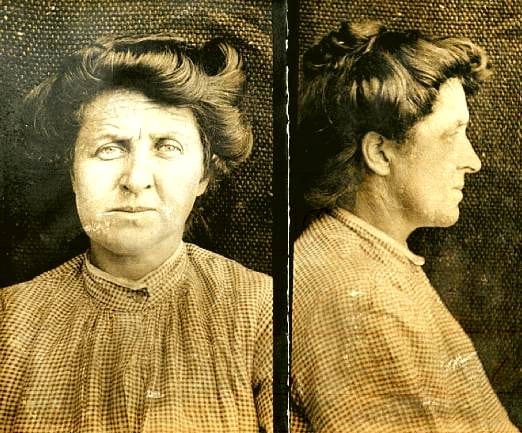
Madame Ghurka was a prominent and mysterious figure in early to mid-20th-century Melbourne. A medium by trade, she gained notoriety not only for her fortune-telling and palm reading but also for her controversial involvement in one of Melbourne’s most infamous miscarriages of justice—the wrongful conviction of Colin Ross.

Aside from the police, Madame Ghurka was arguably the most influential figure in bringing about Ross’s conviction for the 1921 murder of 12-year-old Alma Tirtschke in what became known as the Gun Alley Tragedy.

Possibly driven by a personal feud with Ross, Madame Ghurka was the first to name him as a suspect in the murder. She later went further, reportedly orchestrating the coming forward of key witnesses whose testimonies proved critical in securing his conviction.

Among them was a former employee of Ross – recently dismissed – who claimed Ross had privately confessed the murder to her. Several other witnesses of dubious character also took the stand to deliver testimony that sealed Ross’s fate and secured their share of reward money for a successful conviction.

Madame Ghurka - Criminologist

Desperate to save him, Ross’s family managed to track down the key witness the day before his execution. She reportedly agreed to recant her story and admit the confession was fabricated—but she never appeared the next morning.

The family’s last minute appeals to the Attorney-General fell on deaf ears with one high ranking official later stating, “Your son had to die Mrs Ross. Had he lived the prestige of the police force would have been shattered”.

It would only be a short while after Colin Ross’s execution that doubt began to grow about the legitimacy of the case. Nearly a century later, in 2008, he was posthumously pardoned—which falls short of an exoneration, and leaves the guilty verdict intact.

As for Madame Ghurka, she briefly continued to dabble in criminal investigations, inserting her “psychic” talents into murder cases that drew public attention, with her notoriety destined to linger to her last days.

Discuss On Substack

To uncover more Melbourne Crime History, please consider booking tickets to Melbourne’s True Crime Tour here @ https://darkstories.com.au/melbournes-true-crime-tour/.

Spread the word on your favourite platform!

On This Day in True Crime History – 8th February

On this day in True Crime History, we revisit the 8th February.

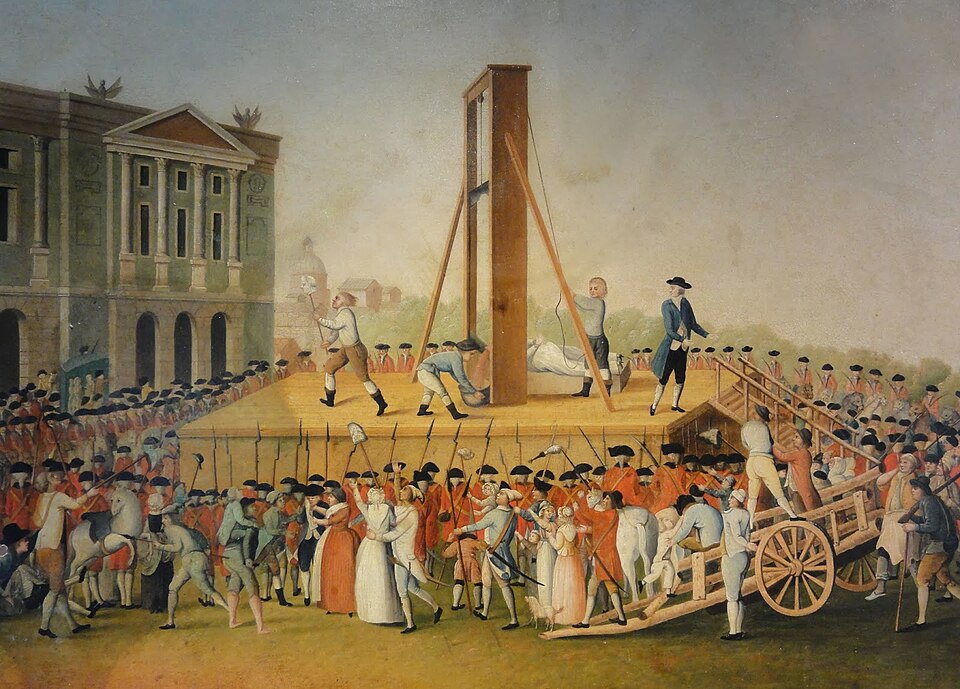
1587: ⚔️ The Execution of Mary, Queen of Scots, for Suspected Conspiracy

On this day in 1587, Mary, Queen of Scots, a figure entwined in political intrigue and dynastic struggles, was executed. Born in 1542, she became queen of Scotland at just six days old after her father’s death.

Her early life was marked by a brief betrothal to the English Prince Edward, a move that sparked conflict due to religious differences. She was instead sent to France, where she married Francis II, becoming queen consort of France at 16. Widowed at 18, she returned to Scotland, a realm divided by religious strife.

Mary’s reign in Scotland was turbulent, characterized by her marriage to her cousin Lord Darnley, whose murder and her subsequent marriage to the prime suspect, the Earl of Bothwell, led to widespread scandal and her forced abdication in favor of her infant son, James VI of Scotland (later James I of England).

Fleeing to England for protection, she became a prisoner of her cousin, Elizabeth I, due to her strong Catholic claim to the English throne. After 19 years of captivity she was caught in conspiracy to murder Queen Elizabeth, leading to her demise, leaving a legacy of martyrdom for her Catholic supporters.

Her execution was infamously botched and took three blows of the axe to complete the job. ⚖️👑📜

This Day in True Crime History

1792: 🍞 James Collington’s Execution for Bakery Burglary

On this day in 1792, James Collington met a grim end, hanged for the theft of bread and flour from the hut of John Campbell, a laborer who provided baking services to the public, as well as a check apron belonging to Susanah Bray, who resided in the same dwelling.

At the hanging tree he addressed the convicts, warning them to avoid the path he had pursued; but said, that he was induced by hunger to commit the crime for which he suffered. He appeared desirous of death, declaring that he knew he could not live without stealing.

This severe punishment for seemingly petty theft was considered necessary as a means for keeping law and order intact owing to the near starvation rations that existed in the colony at this time. 🏚️⚖️💔

This Day in True Crime History

1799: 🚨 James Reece’s Desperate Final Act Before Execution

On this day in 1799, James Reece was hanged for a crime involving a sow, which was a capital offence under the severe moral and legal codes of the time.

Reece’s case was particularly notable not only for the nature of the crime but also for his actions on the day of his execution. Having previously been granted a reprieve at the gallows, Reece made a desperate attempt to escape his fate by attempting to cut his own throat on the morning he was to be executed.

The attempt was not fatal and was likely an attempt to buy more time in order to plan an escape attempt rather than a genuine desire for death.

This Day in True Crime History

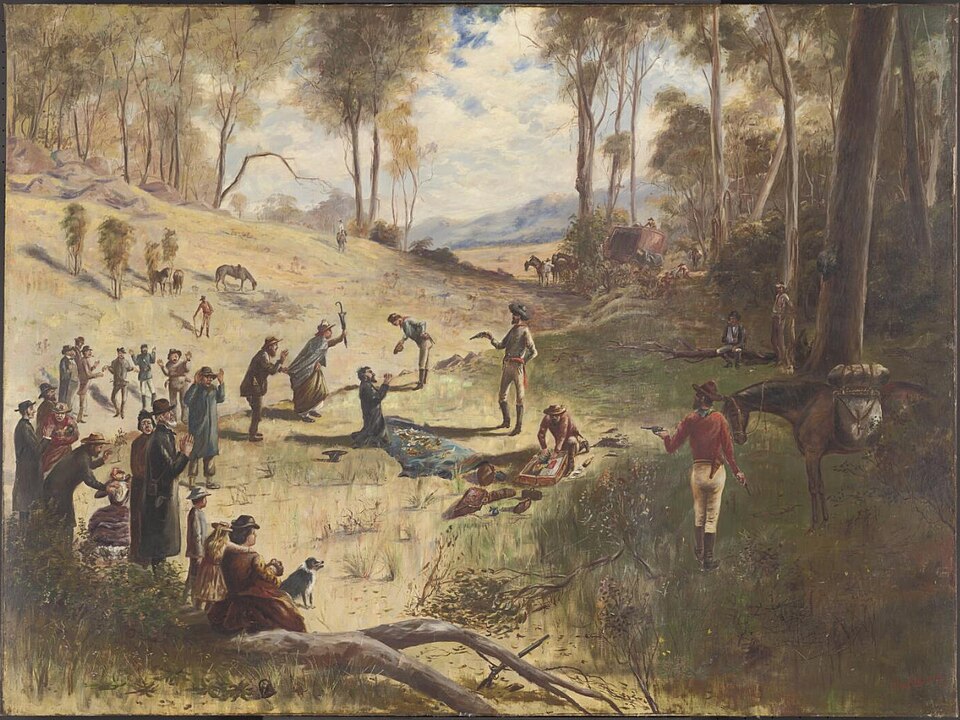
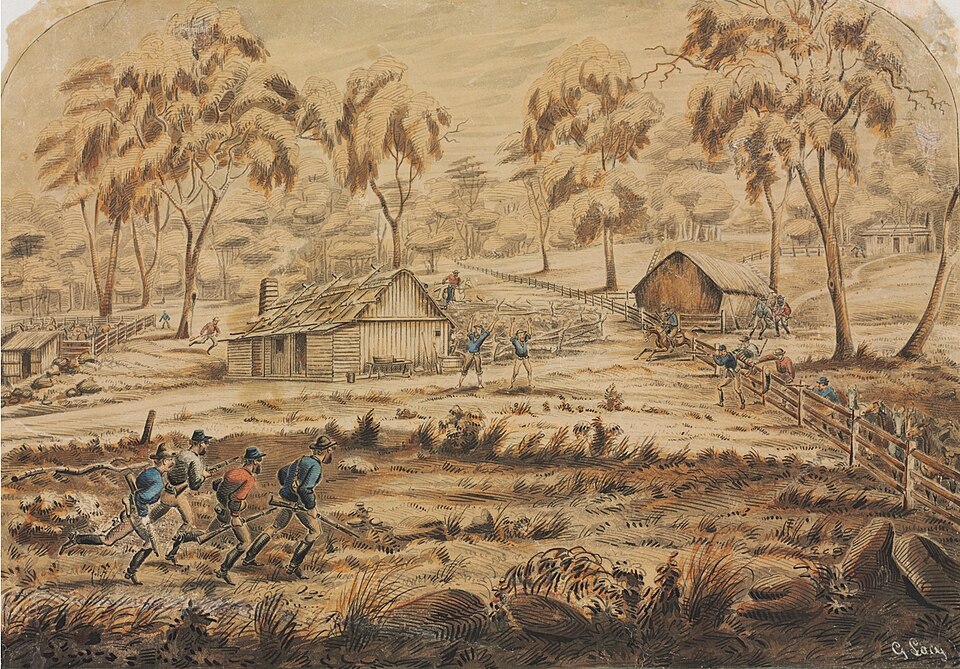
1879: 🏦 Ned Kelly’s Daring Raid on Jerilderie

On this day in 1879, the notorious Ned Kelly and his gang executed one of their most audacious heists, targeting the small town of Jerilderie.

In a display of cunning and boldness, they captured two police officers, securing them in their own cells, before proceeding to rob the local bank. This event not only showcased the gang’s expert planning and brazenness but also highlighted Kelly’s complex relationship with authority and his sense of social justice.

His declaration, “I am a widow’s son outlawed and my orders must be obeyed,” underscored his defiance and the desperate resolve of a man cornered by circumstances.

The raid culminated in the drafting of The Jerilderie Letter, an outlaw’s manifesto that served as a poignant narrative of Kelly’s grievances against the police and the judicial system, sealing his legacy as one of Australia’s most emblematic and polarizing figures. 📜🔒💰

Ned Kelly

1950: 🕵️‍♂️ The Founding of the Stasi in East Germany

On this day in 1950, East Germany saw the establishment of the Stasi, or “Staatssicherheit,” marking the inception of one of the most repressive and feared secret police agencies in the world.

The Stasi was notorious for its extensive surveillance and espionage activities, both within East Germany and abroad, aimed at suppressing dissent and controlling every aspect of citizens’ lives. Its methods included informants, wiretapping, and extensive personal surveillance, creating an atmosphere of fear and mistrust among the population.

The agency’s vast network and ruthless tactics made it a symbol of the oppressive nature of East German communist rule. The Stasi was dissolved in 1990, following the fall of the Berlin Wall and the subsequent reunification of Germany, but its legacy remains a chilling reminder of the dark side of surveillance and state control. 🔍💔

Stasi
Spread the word on your favourite platform!

Unleash Your Inner Detective: Order Novelty Mugshot Crime Cards Today!

Ready to unlock your inner detective and add a playful twist to your gatherings? Say hello to our Novelty Mugshot Crime Cards and our Custom Labelled Mugshot Crime Cards!

To start, let’s introduce you to the ‘I Regret Nothing Police Department’ Novelty Cards. From smooth operators to life-of-the-party types, these cards guarantee a laugh at every event. Get ready to dive into the world of Mugshot Crime Cards, and don’t forget; that you can order them through our website to elevate your party game.

Smooth Operator – this person has a knack for sliding into conversations and making everyone feel at ease. Their charm is undeniable, and they’ve been known to steal a few hearts along the way.

Bye Felicia – Known for dramatic exits and unforgettable one-liners, this party-goer definitely leaves their mark.

Thirst Trap – Always the centre of attention, this individual knows how to turn heads and keep the drinks flowing.

Life of The Party – With a knack for livening up any event, this character is the one who keeps the party going till the break of dawn.

Party Princess – Every party’s royalty, this lady knows how to make an entrance and leave everyone in awe. Here’s to another year of reigning supreme!

Gift Wrapped – Always bringing gifts that are as delightful as his presence, this gentleman is a welcome guest at any event. A very Happy Birthday to our Gift Wrapped!

Danceaholic – With moves that can steal the spotlight, this individual is a true dance floor magnet. Happy Birthday, Danceaholic!

Social Flutterby – Flitting from conversation to conversation, this social butterfly keeps the party buzzing. Wishing her another year of delightful social interactions!

The Uninvited – Despite never being on the guest list, this individual always finds a way into the party. Here’s to another year of crashing parties!

Diva – The star of any event, this lady’s presence is always felt and appreciated. Wishing our Diva a year full of glamour and glitz!

Chatterbox – The lifeblood of any gathering, this individual keeps the energy high with their endless tales and anecdotes. Happy Birthday, Chatterbox!

As we raise our glasses, we celebrate these unforgettable characters and their ‘crimes’ that make every party a memorable event.

Purchase your set of Novelty Party Mugshot Crime Cards or create your own Custom Labelled Mugshot Crime Cards through the Dark Stories website today. Perfect for spicing up your next party or surprising your friends and family with a unique gift.

Here’s to another year of laughter, fun, and unforgettable memories!

Spread the word on your favourite platform!