1816: Betrayed Twice by the Same Informer: Thomas Collins Hanged in Sydney for a Parramatta Road Robbery

Thomas Collins had been transported from Cork on the convict ship Canada, arriving in New South Wales in 1815, and within a year was standing trial in Sydney for burglary. He and two accomplices had broken into a shop in O’Connell Street and made off with baskets of tobacco, burying part of it in the earth near Farm Cove before selling a basket on for a watch and cash. The case against him rested on the evidence of Edward Dempsey, a fellow gang member turned Crown witness, and Collins was convicted of burglary that September.

Days later he was back in the dock on an entirely separate charge: robbing a carter on the Parramatta Road the previous July, in a predawn ambush that saw three carts stopped and their drivers beaten to the ground. Dempsey gave evidence again, and Collins was convicted a second time.

He was hanged in Sydney on this day in 1816, alongside two other condemned men.

Collins confessed his guilt before his death; the record states that all three men executed that morning died penitent.
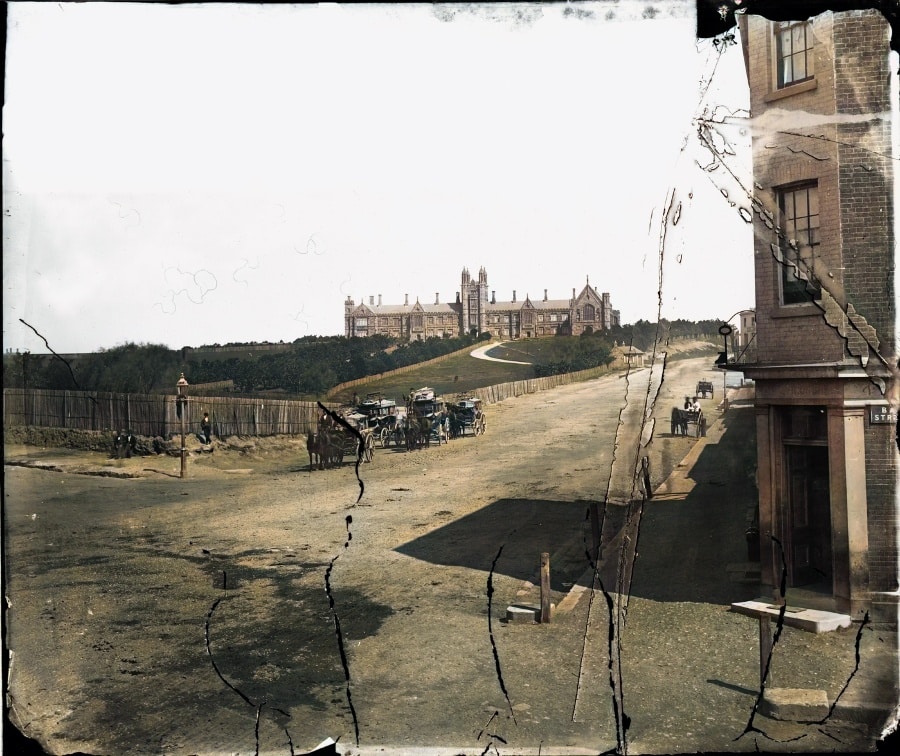

Horse-drawn omnibuses on Parramatta Road, Sydney, c. 1870–1875. Mitchell Library, State Library of NSW.

⬅ See all events from 1 November

Spread the word on your favourite platform!

1816: Betrayed by the Same Informer Twice: Hugh McLarie Hanged in Sydney for Highway Robbery

Hugh McLarie and his gang lay in wait on the Parramatta Road one morning in July 1816, ambushing a line of carts before dawn, knocking the drivers to the ground and making off with a keg of spirits, bolts of cloth and a haul of clothing from the cart of John Andrews. The robbery unravelled when Edward Dempsey, one of the raiders, turned King’s evidence and gave the court a detailed account of the ambush.

It was not the first time Dempsey’s testimony had put McLarie in the dock. Weeks earlier the same informer had helped convict him over a break in at a Sydney shop, naming him as one of the men who carried off baskets of tobacco, coin and clothing hidden in the bush beyond the town.

McLarie was hanged in Sydney on 1 November 1816 for the Parramatta Road robbery.

He confessed his crime before the scaffold and, the record states, died penitent.

Horse-drawn omnibuses on Parramatta Road, Sydney, c. 1870–1875. Mitchell Library, State Library of NSW.

⬅ See all events from 1 November

Spread the word on your favourite platform!

1816: The Black Beau of London, Hanged in SydneyAustralia

Daniel Moowattin was raised from infancy by the colony’s own flogger and hangman, grew up fluent in English manners, and became a trusted bush guide to the botanist George Caley. In 1810 Caley took him to London, where society was charmed by his polished English and the latest fashions; one newspaper called him, admiringly, “a black beau.” He even sang his own songs at a London party before confessing he longed for home, telling a companion he found more pleasure under a gum tree with his own people than anywhere in England.

He returned to the colony in 1812 and drifted between farm labour and life in the bush. That August, a teenage girl named Hannah Russell was walking alone on a road near Parramatta when, she testified, Moowattin dragged her into the scrub, beat and assaulted her, robbed her of money, then beat her again before a passing stockman frightened him off.

Under the colony’s rules, Aboriginal people could not ordinarily be tried in its courts, but the men who knew Moowattin argued he no longer counted as one of them: he dressed, worked and spoke like a settler. On that reasoning he became the first Aboriginal man ever tried before a court in New South Wales, and on this day in 1816 he was hanged in Sydney alongside two men convicted of highway robbery, the first Aboriginal person legally executed in colonial Australia.

Governor Lachlan Macquarie claimed in his records that all three “confessed their crimes… and died penitent.”

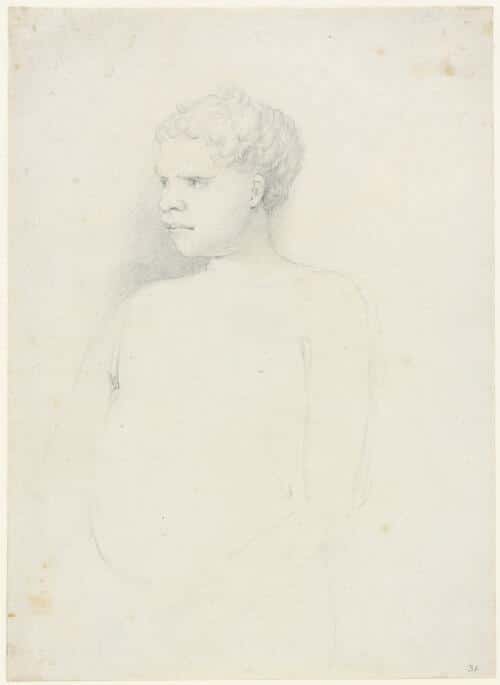
Port Jackson, a Native Boy; contemporary to Moowattin, William Westall, 1802. Courtesy of the National Library of Australia.

⬅ See all events from 1 November

Spread the word on your favourite platform!

1955: He Bombed His Mothers Suitcase and Killed 44 Strangers Aboard Flight 629

Jack Graham wanted his mother dead and her life insurance money in his pocket, and he did not much care who else was on the plane. He packed a dynamite time bomb into his mother Daisie King’s checked luggage before she boarded United Airlines Flight 629 out of Denver on the evening of 1 November 1955, bound for Alaska. Minutes after takeoff the Douglas DC-6B exploded over farmland near Longmont, Colorado, killing all 44 people aboard.

Investigators who pieced together the wreckage traced the blast to luggage in the cargo hold, and found Graham had form: he had collected an insurance payout earlier that year after his mother’s restaurant was destroyed in a suspicious gas explosion. He confessed, then recanted at trial, claiming he had only admitted guilt to stop the FBI pressuring his wife. Since no federal law at the time made it a crime to destroy an aircraft, prosecutors charged him simply with his mother’s murder. Convicted in 1956, he was executed in the gas chamber at Colorado State Penitentiary on 11 January 1957.

Graham showed no remorse to the end, telling a reporter: “Everybody pays their way and takes their chances. That’s just the way it goes.”

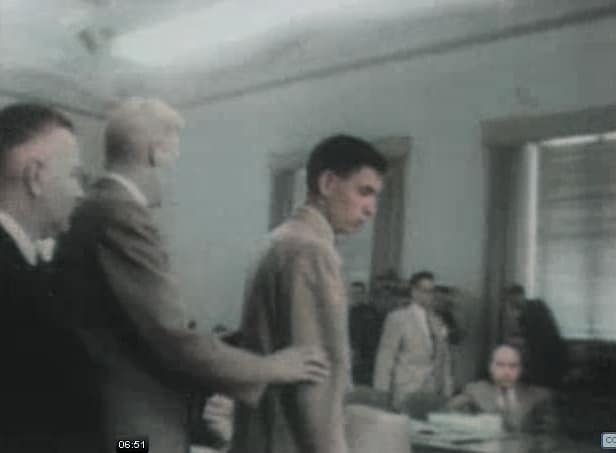
Jack Gilbert Graham during his trial, c. 1957. Prelinger Archives. Digitally colourised.

⬅ See all events from 1 November

Spread the word on your favourite platform!
On This Day in True Crime History

Subscribe to Dark Stories

True crime stories, dark history and tour news, straight to your inbox.