1888: The Double Event: Jack the Ripper Kills Twice in One Night in London

In the early hours, the killer known as Jack the Ripper struck twice within the same hour. His third victim, Elizabeth Stride, was found with her throat cut and still bleeding, her killer likely interrupted before he could mutilate her further. Denied his ritual, he found a fourth victim within the hour: Catherine Eddowes, whose body was left with her intestines arranged over her shoulder and part of her womb removed.

Weeks later, a Londoner opened a parcel addressed simply “From Hell” to find half a preserved kidney inside, accompanied by a taunting letter. Tests suggested it may have belonged to Eddowes herself, though the claim was never proven and the killer was never caught.
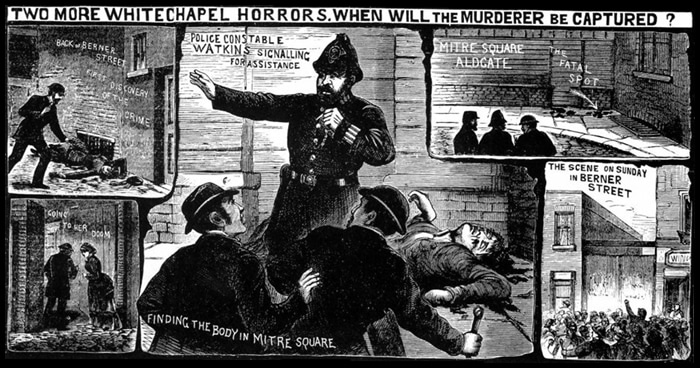

Murders of Liz Stride and Catherine Eddowes

⬅ See all events from 30 September

Spread the word on your favourite platform!

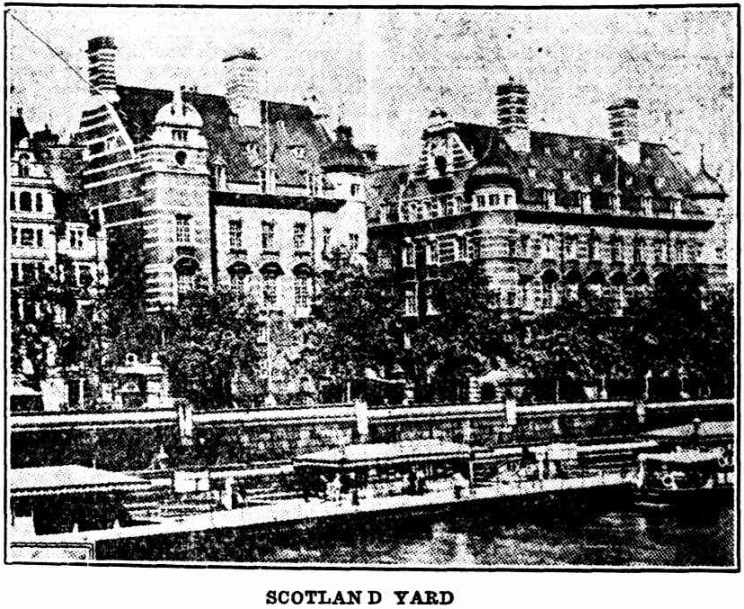
1829: The Birth of Scotland Yard: London Gets Its First Modern Police Force

Before 1829, London had no unified police, just a patchwork of parish constables and private watchmen who could barely keep pace with a city rife with theft, riot and violence. Home Secretary Robert Peel changed that, pushing through the Metropolitan Police Act and creating a single force answerable to the Crown rather than local vestries.

Its headquarters took its name from the street behind it, a quiet lane called Great Scotland Yard, and the name stuck long after the force outgrew the building. The new constables, soon nicknamed bobbies and peelers after their founder, were unarmed, uniformed and deeply distrusted at first by a public wary of state surveillance. Within decades Scotland Yard would become the model for modern policing worldwide, and its name a byword for criminal investigation itself.

Scotland Yard headquarters in London police force: 1929 centenary celebration

⬅ See all events from 29 September

Spread the word on your favourite platform!

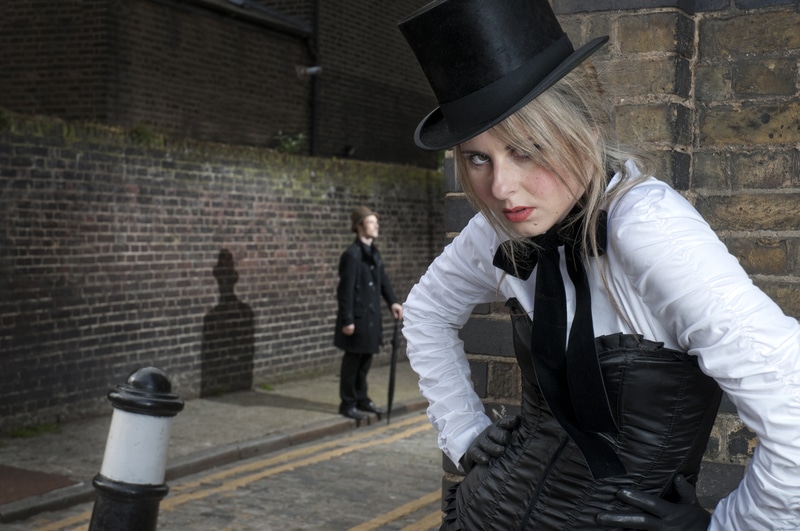
1889: Was Jack a Jill? Rumours of a Female Ripper Emerge in London

Jack the Ripper was a woman. That was the possibility London newspapers began to report: that the killer who had horrified the world for months was a woman disguised as a man, living and working unnoticed in Whitechapel. By the time the story spread, she had reportedly vanished. Police were confidently believed to be “at last on the track” of the murderer, and there was suddenly talk of “his or her crimes”.

Who, it was asked, could walk the streets at night without suspicion, possess the anatomical knowledge the mutilations suggested, and risk being found beside a body? One answer: a woman who was, or had been, a midwife. Discovered bending over a victim, she need only say she had been passing by and thought the woman required her medical attention. Though largely discounted, the Jill the Ripper theory has never completely gone away.

Victorian woman in London street with man in background

⬅ See all events from 21 September

Spread the word on your favourite platform!

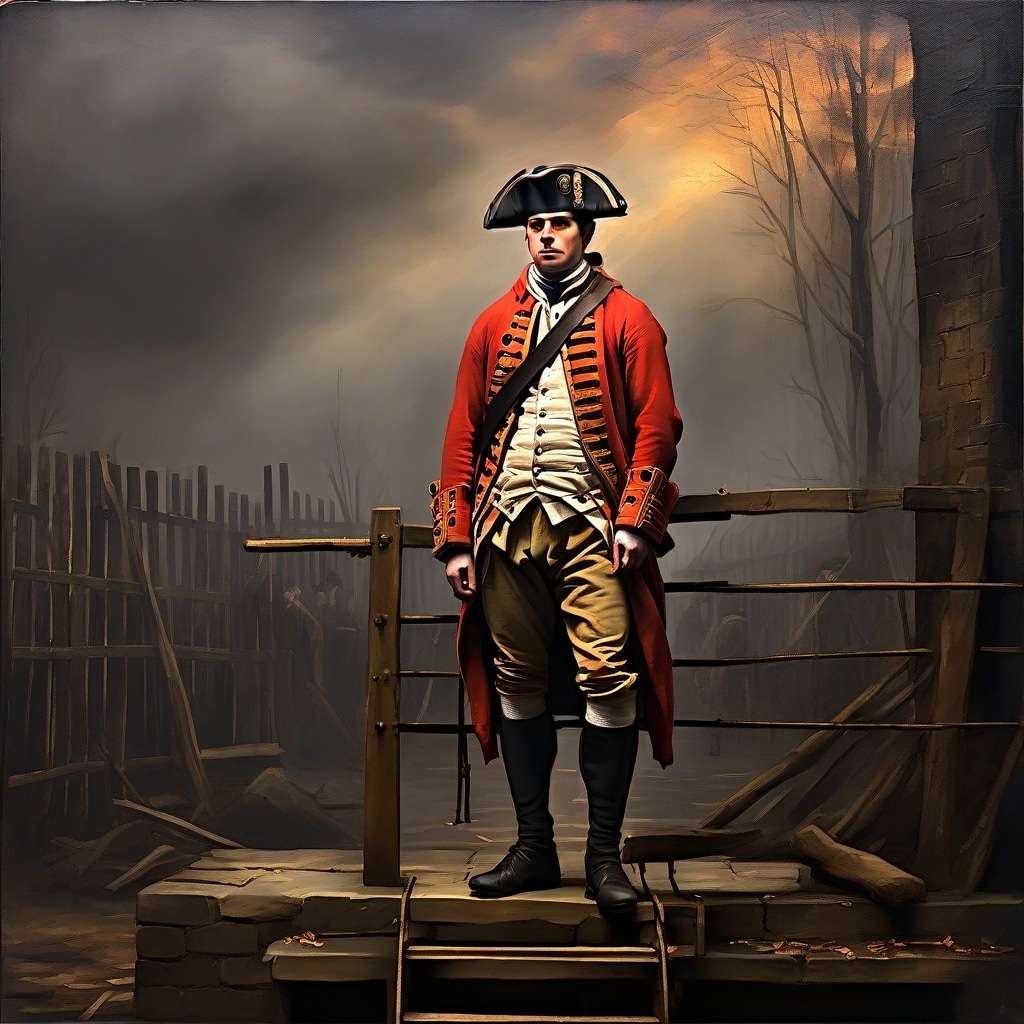
1721: Executed at Twenty: The Soldier Who Claimed He Was Defending His Honour

William Casey, a young Guardsman only about twenty years old, was hanged in London on 11 September 1721 after being convicted of robbing a man named John Stone in a city park. Casey never accepted the charge; he insisted the confrontation had nothing to do with theft and everything to do with Stone making indecent advances toward him, a claim that, if true, cast the entire prosecution in a very different light.

At the gallows Casey did not simply protest verbally. He left behind a written statement formally proclaiming his innocence of the robbery, a deliberate act by a condemned soldier determined that his version of events would outlive him.

“He maintained until death that the confrontation arose because Stone had made indecent advances toward him” and went to his execution still denying the crime for which he was hanged.

William Casey: The Soldier Accused of Robbery in the Park

⬅ See all events from 11 September

Spread the word on your favourite platform!
On This Day in True Crime History
1794·The First Free Settler Murdered in the Colony: Hanged at Sydney for a Parramatta Stabbing
1826·The Gun That Misfired Twice: Three Bushrangers Hanged Outside Sydney
1873·A Tearful Confession in Custody Cracked the Case: Two Men Hanged at Perth Gaol for Eating their Victim
1889·He Called It an Accident. The Jury Called It Murder: Robert Landells Hanged at Melbourne Gaol
1907·A Doctor Fooled Twice: Martha Rendell and the Second Child to Die of Diphtheria
2002·Shot Dead in His Own Bed: A Melbourne Gangland Killing Blamed on a Friend
More Crime On This Day →

Subscribe to Dark Stories

True crime stories, dark history and tour news, straight to your inbox.