Walter Kennedy: The Aspiring Pirate of Wapping

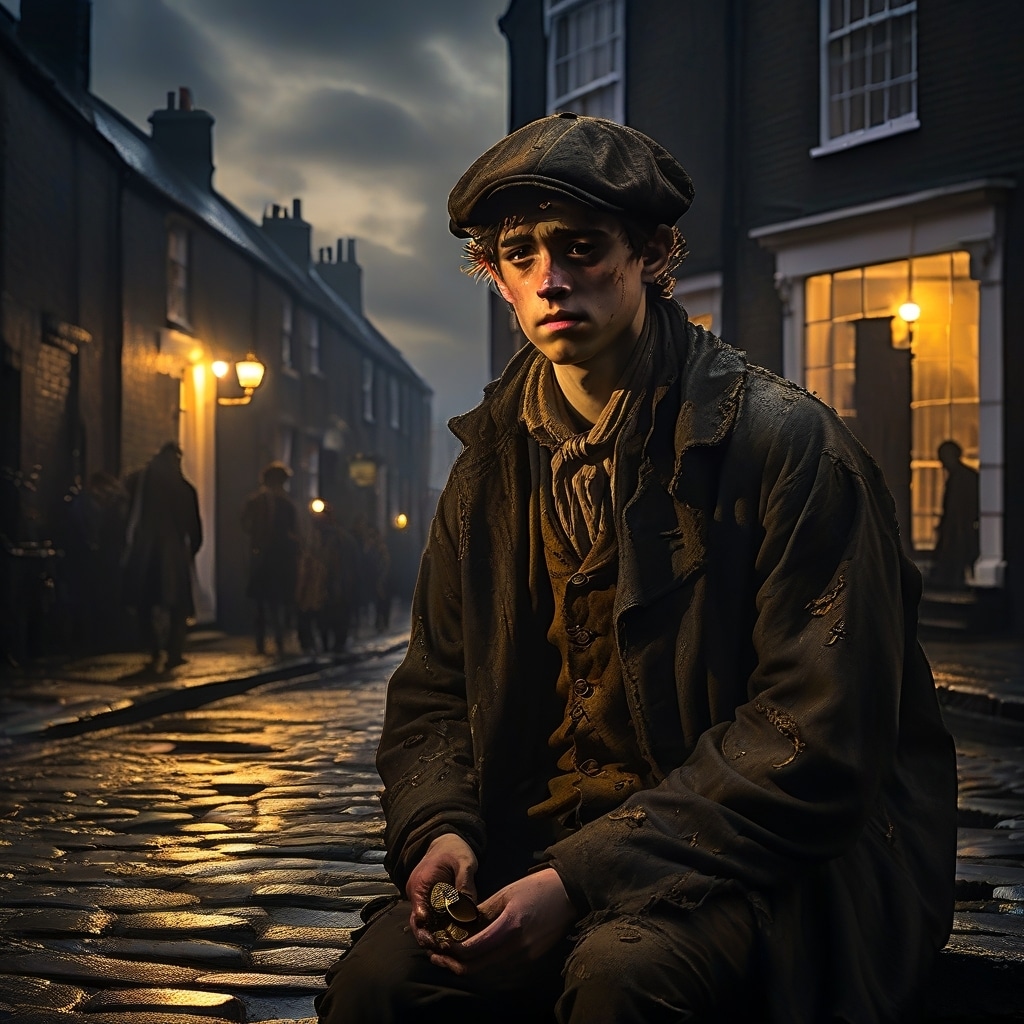
Walter Kennedy grows up at Pelican Stairs in Wapping, the son of an anchor-smith, a boy with every reason to follow his father into honest labour. But something restless burns in him; as Lives of the Most Remarkable Criminals tells it, he possesses a ‘too aspiring temper’ that honest trades can never satisfy.

Serving aboard a man-of-war during Queen Anne’s wars against France, Kennedy absorbs every whispered tale of buccaneers and maritime desperadoes, and what begins as fascination hardens into ambition. His is a true crime story shaped not by sudden desperation but by slow, deliberate seduction; the sea offering its own dark curriculum.

The silver oar of Admiralty justice waits somewhere ahead of him, gleaming on a courtroom table he cannot yet imagine.

Lives of the Most Remarkable Criminals preserves Kennedy’s full account in vivid detail; hear it now, narrated from the original text.

Click the RSS feed link below to subscribe and get new episodes the moment they drop.

Subscribe via RSS

Dark Lexicon: Old words. Dark meaning.

The past speaks its own dialect; here is what to listen for in this episode.

Petty treason: not a lesser kind of treason in the way we might assume. In English common law, petty treason referred specifically to the killing of a superior by a subordinate: a wife killing a husband, a servant killing a master, or a clergyman killing a prelate. When piracy is described as petty treason at common law, it signals that pirates were seen not merely as thieves but as men who had betrayed the sovereign authority itself.

Silver oar: a literal object, not a metaphor. The Court of Admiralty carried a silver oar into the courtroom as its emblem of jurisdiction over maritime offences. It lay on the table during trials and was carried in procession before the condemned on their way to execution. It was the last thing many pirates ever saw gleaming in the daylight.

Upon the account: sailor’s slang for turning pirate. To go ‘upon the account’ was to abandon lawful service and take up robbery at sea. The phrase carried a grim bookkeeping quality; as if plunder were simply another ledger to be managed.

Ambuscade: the older form of the word ambush, borrowed from the French. It sounds grander, more deliberate; and in this episode it describes exactly that: a carefully laid trap with poisoned arrows and lethal patience.

Dissembled: today we might say ‘pretended’ or ‘concealed.’ To dissemble is to hide one’s true intentions behind a mask of courtesy. The Portuguese governor who discovers the pirates but invites them to an entertainment is dissembling; and the consequences are devastating.

Tractable: meaning obedient, easily managed. We still use it occasionally, but in eighteenth century character sketches it appears often; a tractable child is one who gives no trouble. Kennedy is described as tractable in his youth, which makes his later transformation all the more striking.

Buccaneers: not simply a romantic synonym for pirate. The buccaneers were a specific group of seventeenth century raiders, originally hunters on Hispaniola who smoked meat on wooden frames called ‘boucans.’ They evolved into seafaring raiders who operated under loose commissions and sometimes with the tacit approval of colonial governors. By Kennedy’s time, their era was passing into legend; the kind of legend that infected young sailors with ambition.

Man-of-war: a warship in the service of a national navy, armed and crewed for battle. It is not a pirate vessel; quite the opposite. That Kennedy learns his piracy while serving aboard one of the Crown’s own fighting ships is one of the darker ironies of his story.

About This Series

Lives of the Most Remarkable Criminals is one of the earliest works of true crime writing in the English language, nearly 300 years old, covering murderers, thieves, highwaymen, forgers, coiners and worse.

The book is entirely in the public domain and every word of it can be read today for free. But if you would rather listen, this podcast does exactly that: one criminal at a time, every week, read aloud.

True crime was not invented by podcasts or streaming services. Eighteenth century readers were just as fascinated by outlaws and killers as we are today. They just consumed their dark stories by candlelight.

The voice you hear is David Dark: crime researcher, theatre script writer, producer of live immersive experiences, and audiobook narrator and voice artist. This podcast uses an AI voice model trained on David’s own voice, built using the maximum available training data to faithfully represent how he actually sounds. To hear David’s real voice in human generated form, visit him on Audible, Online Stage, Voices of Today, Spoken Realms, and Internet Archive.

Spread the word on your favourite platform!

Robert Perkins: The Disinherited Baker Turned Thief

Robert Perkins grows up in Hertfordshire as the son of a prosperous innkeeper, but prosperity does not protect him. After his mother dies and his father remarries, the boy is cast out of his own home; stripped of affection, stripped of inheritance, stripped of everything that might have held him steady.

As recorded in Lives of the Most Remarkable Criminals, Perkins drifts into the kind of company that haunts the margins of Georgian England: drinkers, gamblers, idlers whose appetites outrun their means. His is the sort of true crime story that begins not with malice but with dispossession; a young man living as though he still possessed his father’s fortune while owning almost nothing at all.

What follows is a life pulled further and further from solid ground, carried across oceans and through the gears of a justice system that does not forget. Listen now as Lives of the Most Remarkable Criminals delivers this restless and melancholy account in full.

Click the RSS feed link below to subscribe and get new episodes the moment they drop.

Subscribe via RSS

Dark Lexicon: Old words. Dark meaning.

The past speaks its own dialect; here is what to listen for in this episode.

Mother-in-law: today this means your spouse’s mother, but in the eighteenth century it was the standard term for a stepmother. When the text says Perkins’s mother-in-law had him turned out of the house, it means his father’s new wife; not some distant relative by marriage, but the very woman who replaced his mother under the same roof.

Groat: a small silver coin worth fourpence. To say someone was ‘never a groat the better’ means they gained absolutely nothing; not even the most trivial sum. It was a common way of expressing total exclusion from any benefit or inheritance.

Cast: in legal language of this period, to be ‘cast’ meant to be found guilty at trial. It sounds almost casual to modern ears, like being tossed aside; and in a sense it was exactly that, the court casting you out of ordinary life and into the hands of punishment.

Upon the rake: to go ‘upon the rake’ meant to go out carousing; drinking, gambling, chasing trouble through the streets. A ‘rake’ was a dissolute young man, and the phrase captures the reckless energy of young men looking for anything but honest work.

Shuffle-board: not quite the gentle cruise-ship game of today. In Georgian alehouses, shuffleboard was a tavern pastime played on long wooden tables, and it was closely associated with gambling, idleness, and the kind of company that led to worse things.

Crown piece: a large silver coin worth five shillings. In this account, the alehouse owners had marked a crown with particular scratches or notches so it could be identified if stolen from the till; a trap that snapped shut on Perkins.

Transportation: the sentence of being shipped to the colonies as forced labour. It sounds almost merciful compared to the gallows, but in practice it meant being sold to a planter and worked in conditions little different from enslavement; and returning without permission was a capital offence.

Vulgar pleasures: today ‘vulgar’ suggests crude or obscene, but in this context it simply meant common or low; the cheap amusements of ordinary people. Drinking, gaming, skittle-playing: none of it was scandalous on its own, but together these pastimes marked a young man as someone drifting toward ruin.

About This Series

Lives of the Most Remarkable Criminals is one of the earliest works of true crime writing in the English language, nearly 300 years old, covering murderers, thieves, highwaymen, forgers, coiners and worse.

The book is entirely in the public domain and every word of it can be read today for free. But if you would rather listen, this podcast does exactly that: one criminal at a time, every week, read aloud.

True crime was not invented by podcasts or streaming services. Eighteenth century readers were just as fascinated by outlaws and killers as we are today. They just consumed their dark stories by candlelight.

The voice you hear is David Dark: crime researcher, theatre script writer, producer of live immersive experiences, and audiobook narrator and voice artist. This podcast uses an AI voice model trained on David’s own voice, built using the maximum available training data to faithfully represent how he actually sounds. To hear David’s real voice in human generated form, visit him on Audible, Online Stage, Voices of Today, Spoken Realms, and Internet Archive.

Spread the word on your favourite platform!

William Barton: The Highwayman Who Could Not Stay Still

William Barton is born with restlessness in his blood. As Lives of the Most Remarkable Criminals tells it, his father abandons him as a child, fleeing to Jamaica with a concubine and a hold full of goods; the boy grows up in his grandfather’s eating-house, surrounded by comfort he cannot bring himself to accept.

This is true crime at its most unsettled: a young man who cannot sit still, who trades a safe apprenticeship for the open sea and trades the sea for soldiering and trades soldiering for the road. Every turn of fortune that might have saved him only sharpens his appetite for the next dangerous thing.

Somewhere on the highways of early Georgian England, the machinery of justice waits for a man who keeps running toward it.

Lives of the Most Remarkable Criminals preserves every twist of Barton’s restless, sprawling life; listen now and follow him into the dark.

Click the RSS feed link below to subscribe and get new episodes the moment they drop.

Subscribe via RSS

Dark Lexicon: Old words. Dark meaning.

The past speaks its own dialect; here is what to listen for in this episode.

Convened with: today ‘convene’ means to gather for a meeting; in early eighteenth century usage it could mean to cohabit or consort with someone, often with a hint of scandal. When the text says Barton’s father ‘had long convened with’ his concubine, it means they had been living together as lovers, not that they held committee meetings.

Temporal laws: these are the laws of the earthly state, as opposed to divine or ecclesiastical law. When the source says Barton’s father was ‘addicted to every species of wickedness, except such as are punished by temporal laws,’ it suggests the man was a sinner but not quite a criminal; wicked enough for God’s judgment, but careful enough to dodge the hangman’s.

Bound him to himself: not a reference to ropes or chains. To ‘bind’ a young person in this period means to apprentice them; the grandfather formally took Will on as his apprentice, training him in the eating-house trade. It was both a legal contract and a family rescue.

Rubbed on: to rub on means to get by, to muddle through with difficulty. It carries a sense of grinding friction; life is not smooth, you are scraping along it. The phrase is all but extinct today.

Reconnoitre: borrowed from the French, this military term means to survey or scout out an enemy position. Barton, the old soldier, sends his companion ahead to assess the strength of a stagecoach the way an officer would assess a fortification. It tells you everything about how he thinks: robbery is just war continued by other means.

Blunderbusses: a blunderbuss is a short, wide-muzzled firearm designed to spray shot at close range. The name likely comes from the Dutch ‘donderbus,’ meaning thunder gun. Coaches carried them as defensive weapons; their spread of shot made accurate aim unnecessary, which was the point.

Uxorious: excessively devoted to one’s wife. It sounds like a compliment, but in this context it is almost a diagnosis. Barton’s devotion to his wife is presented as the very engine that drives him onto the road; he robs because he cannot bear to see her want. The word carries a faint note of contempt, as if love itself is a weakness when it leads a man to the gallows.

Quoth: simply ‘said.’ Already old-fashioned by 1735, it survived mainly in literary and legal writing. When ‘quoth Will’ appears, the narrator is giving Barton’s words a slightly theatrical air, as if recounting a scene from a stage play rather than a crime report.

About This Series

Lives of the Most Remarkable Criminals is one of the earliest works of true crime writing in the English language, nearly 300 years old, covering murderers, thieves, highwaymen, forgers, coiners and worse.

The book is entirely in the public domain and every word of it can be read today for free. But if you would rather listen, this podcast does exactly that: one criminal at a time, every week, read aloud.

True crime was not invented by podcasts or streaming services. Eighteenth century readers were just as fascinated by outlaws and killers as we are today. They just consumed their dark stories by candlelight.

The voice you hear is David Dark: crime researcher, theatre script writer, producer of live immersive experiences, and audiobook narrator and voice artist. This podcast uses an AI voice model trained on David’s own voice, built using the maximum available training data to faithfully represent how he actually sounds. To hear David’s real voice in human generated form, visit him on Audible, Online Stage, Voices of Today, Spoken Realms, and Internet Archive.

Spread the word on your favourite platform!