Over five days in September 1792, mobs stormed nine prisons across Paris and carried out mass summary executions of those held within. The killings were brutal in their indiscriminate reach: roughly half the prison population was slaughtered before the violence finally subsided.
An estimated three-quarters of the victims were not political prisoners at all, but common criminals, forgers, women, and children. The September Massacres remain one of the darkest episodes of the French Revolutionary period.
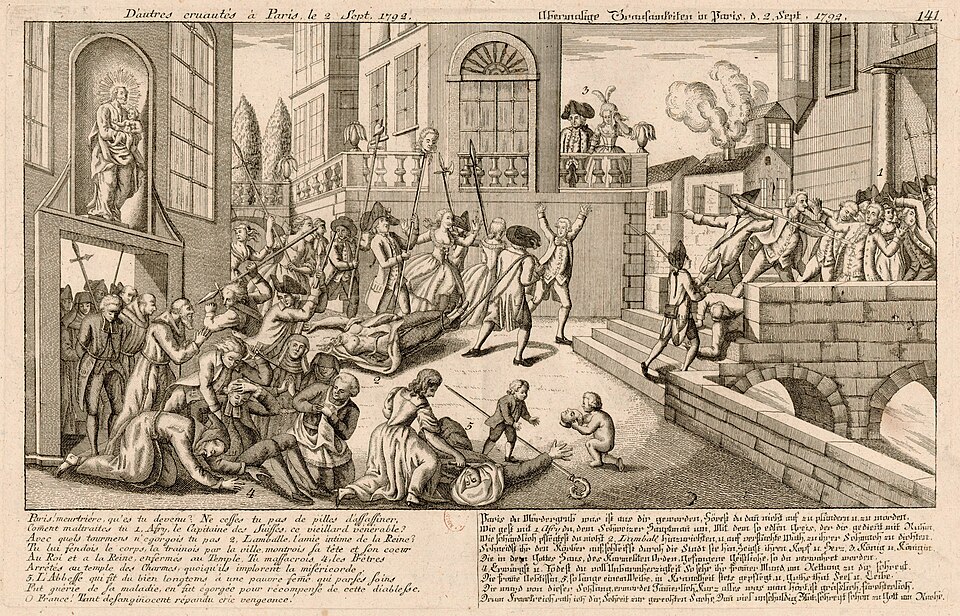
Engraving showing the massacre of Princess de Lamballe
During the September Massacres of 1792, revolutionary crowds swept through Paris prisons and religious institutions, killing prisoners and others regarded as enemies of the Revolution.
At the Carmelite Convent, Roman Catholic clergy imprisoned for refusing to swear allegiance to the Civil Constitution of the Clergy were brought out and killed, among them several bishops.
The violence formed part of a broader wave of extrajudicial executions that engulfed Paris over several days, as fears of counter-revolution and foreign invasion fed a climate of panic and vengeance.
Those killed at the convent were later recognised by the Catholic Church as the Martyrs of September and were beatified in 1926.
Engraving showing the massacre of Princess de Lamballe
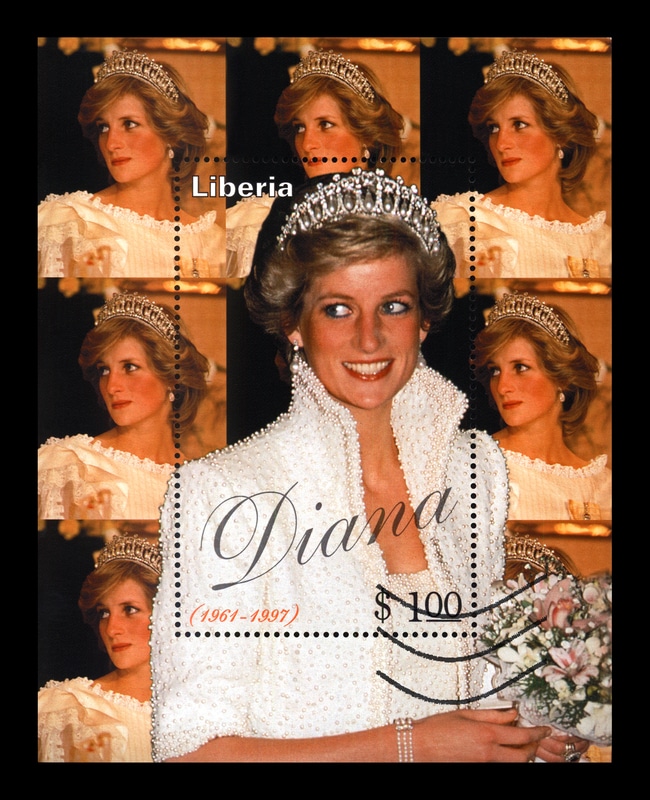
In the early hours of 31 August 1997, Diana, Princess of Wales, died after a high-speed car crash in the Pont de l’Alma tunnel beside the River Seine in Paris. The Mercedes carrying her struck a concrete pillar while being pursued by press photographers. Diana was 36. Dodi Fayed and driver Henri Paul were also killed; bodyguard Trevor Rees-Jones was the sole survivor.
French investigators concluded that Paul had been driving at excessive speed while affected by alcohol and prescription drugs. The crash nevertheless became the subject of numerous conspiracy theories, including claims that Diana and Dodi were deliberately killed, that British intelligence or members of the Royal Family were involved, and that the collision had been engineered to prevent an alleged marriage or pregnancy.
These allegations were examined in detail by Britain’s Operation Paget investigation, which found no evidence of a conspiracy to murder Diana. A subsequent British inquest, concluded in 2008, returned a verdict of unlawful killing caused by the grossly negligent driving of Henri Paul and the pursuing paparazzi.
On August 18, 1572, Protestant Henry of Navarre married Catholic Margaret of Valois in Paris, a union designed to end the bloody civil war between France’s Catholics and Huguenots. The peace did not hold. Just days later, on August 24, King Charles IX, acting under the influence of Catherine de’ Medici, authorised a wave of targeted killings against Protestant leaders in Paris.
What began as a series of assassinations spread into mass mob violence across France. Estimates of the death toll range from thousands to as many as 50,000, as Catholic mobs hunted down Huguenots in city after city. The wedding that was meant to unite a fractured nation had become the prelude to one of the worst religious massacres in European history.
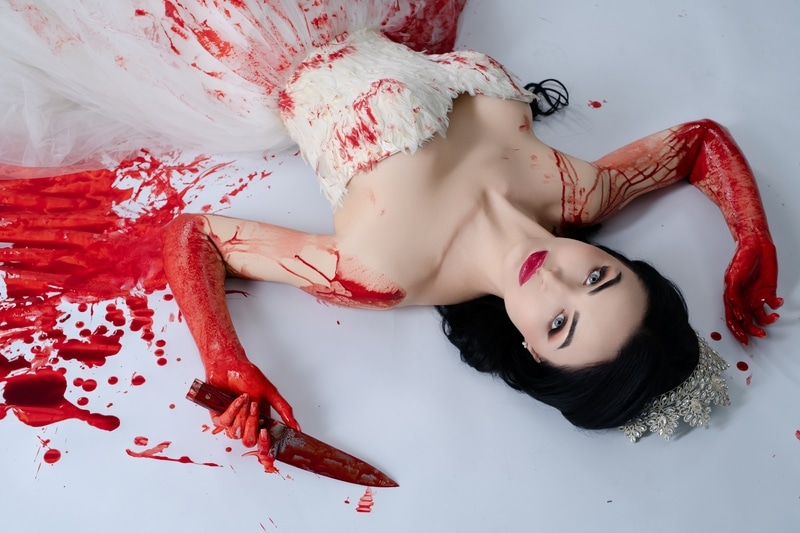
Blood-soaked bride in lingerie holding knife lying on floor