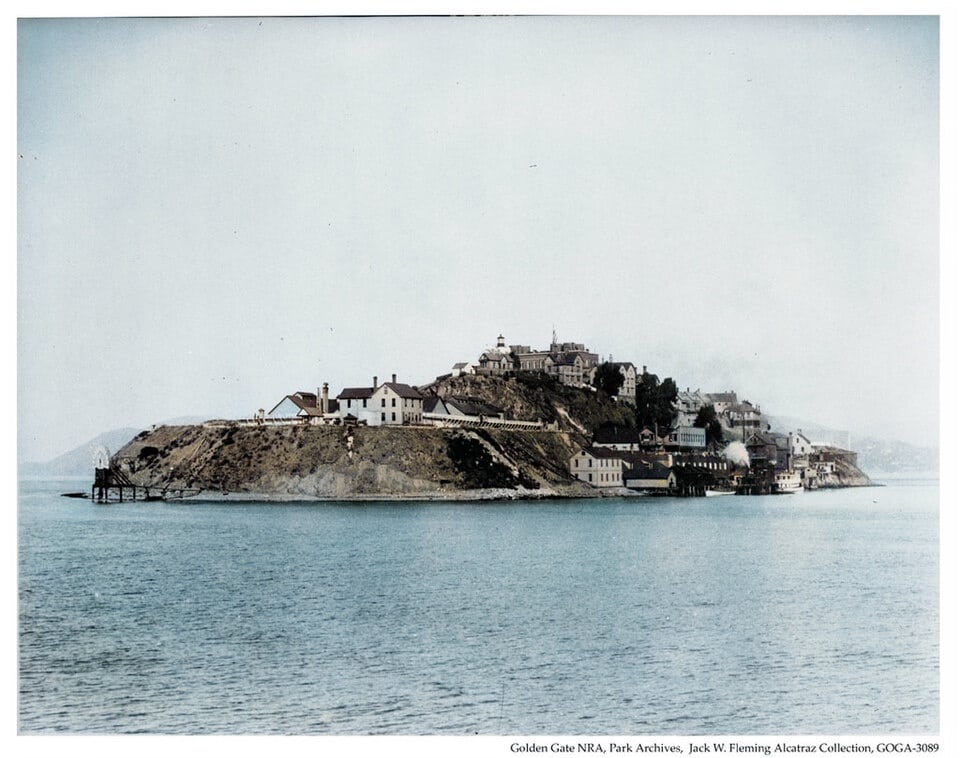
The U.S. Department of Justice announced the acquisition of the military facility on Alcatraz Island on this day in 1933, marking the start of its transformation into a federal maximum-security penitentiary. It would be nearly a year before the island was formally designated a federal prison and the first inmates arrived.
Alcatraz was built for one purpose: to hold prisoners who had proven too disruptive, too dangerous, or too likely to escape from every other federal institution. Surrounded by cold currents and strict discipline, it would soon house names like Al Capone and Robert Stroud, cementing its reputation as America’s most feared prison.
Coloried view of Alcatraz Island circa 1902-1905 (unknown author)
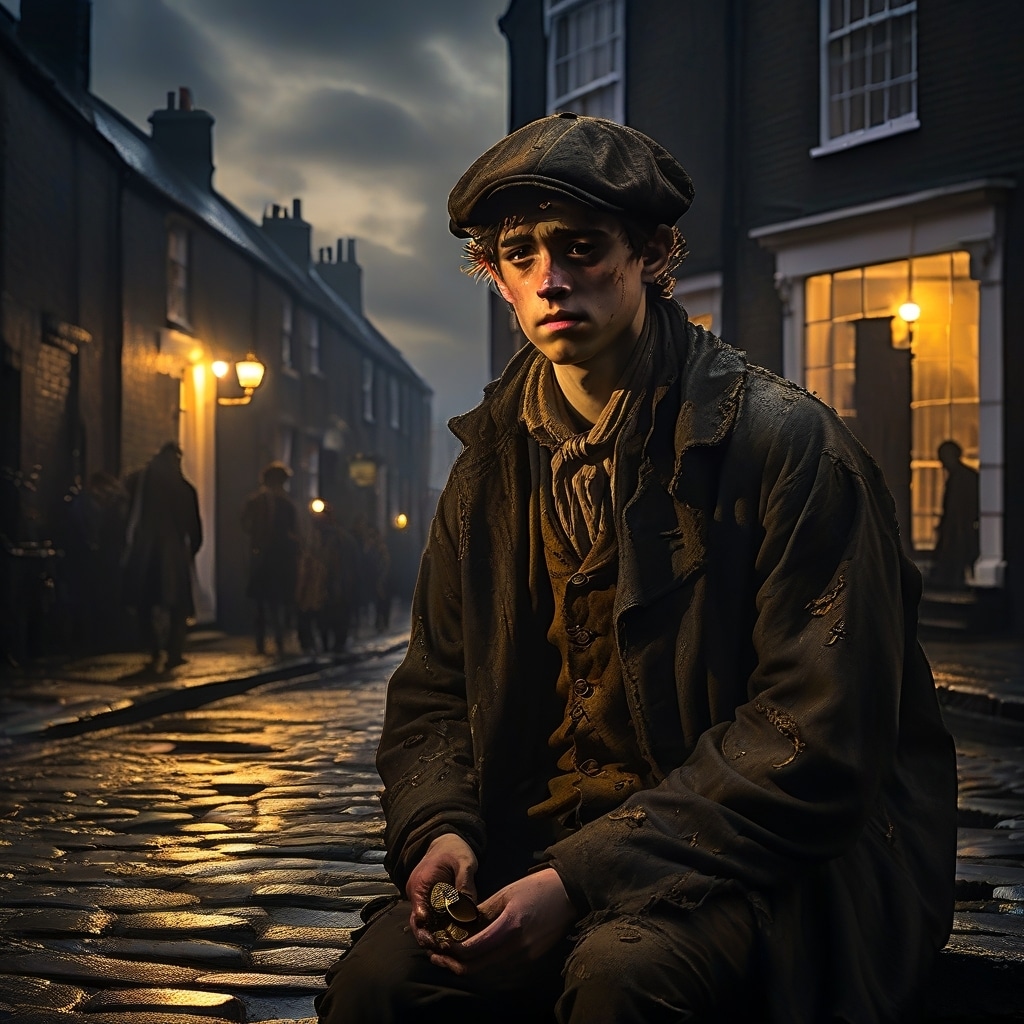
John Dykes cannot stop gambling. It is this single compulsion; documented in Lives of the Most Remarkable Criminals; that drags a young man from indulged eldest son to pickpocket to something far worse, tracing the kind of spiral that still defines true crime centuries later.
Born to parents of middling means who sacrifice their own comfort for his education, Dykes refuses every apprenticeship, every honest path set before him. Instead he haunts the gaming tables when flush and plays span-farthing in the gutter with street boys when broke, each loss pushing him one step closer to the road.
The dice keep rolling, and Georgian London keeps score in ways a young man rarely sees until the ledger is already closed.
Hear the full account read aloud from Lives of the Most Remarkable Criminals; a voice from nearly three hundred years ago, waiting for you now.
Click the RSS feed link below to subscribe and get new episodes the moment they drop.
Subscribe via RSS
Dark Lexicon: Old words. Dark meaning.
The past speaks its own dialect; here is what to listen for in this episode.
Gaming: today we might picture video games; in the eighteenth century this word meant gambling and nothing else. Dice, cards, hazard tables: the kind of play that devours money and then devours the player. When the text says Dykes had an ‘itching after gaming,’ it means he was addicted to wagering, not to innocent amusement.
Chuck and span-farthing: these were street games played for small stakes, often by children and the desperately poor. Chuck involved pitching coins at a mark, while span-farthing required tossing a farthing close enough to an opponent’s coin to span the gap with your hand. That Dykes stoops to these games in a ragged coat tells you exactly how far a night at the tables has brought him down.
Bridewell: not a single prison but a type of institution; originally the Bridewell Palace near Fleet Street was converted into a house of correction in the sixteenth century, and the name became shorthand for any local lockup where petty offenders were held and put to hard labour. Tothill Fields Bridewell, mentioned here, sat in Westminster and was notorious for its grim conditions.
Horsepond: a pond used for watering horses, but also a place of informal punishment. To be ducked or dragged through the horsepond was a humiliation inflicted on petty criminals and social nuisances. It was not judicial in any formal sense; more a community ritual of degradation.
Swore upon: to be ‘swore upon’ meant to have someone give sworn testimony against you before a magistrate. When West tells his brother he is in danger of being swore upon by coiners, he is claiming that counterfeiters are about to name him as an accomplice under oath; a terrifying prospect in an era when such testimony could lead swiftly to the gallows.
To recruit: in modern usage, to recruit means to enlist people. In the eighteenth century it also meant to replenish or restore something that had been depleted. When the text says Dykes took to the road ‘to recruit’ his cash, it means he robbed travellers to refill his empty purse.
Took up with the road: a euphemism for becoming a highwayman. To ‘take the road’ was to ride out on public highways and rob travellers at gunpoint. The phrase sounds almost casual, as if it were simply another career option; and for men like Dykes, that was precisely how it felt until the law caught up.
About This Series
Lives of the Most Remarkable Criminals is one of the earliest works of true crime writing in the English language, nearly 300 years old, covering murderers, thieves, highwaymen, forgers, coiners and worse.
The book is entirely in the public domain and every word of it can be read today for free. But if you would rather listen, this podcast does exactly that: one criminal at a time, every week, read aloud.
True crime was not invented by podcasts or streaming services. Eighteenth century readers were just as fascinated by outlaws and killers as we are today. They just consumed their dark stories by candlelight.
The voice you hear is David Dark: crime researcher, theatre script writer, producer of live immersive experiences, and audiobook narrator and voice artist. This podcast uses an AI voice model trained on David’s own voice, built using the maximum available training data to faithfully represent how he actually sounds. To hear David’s real voice in human generated form, visit him on Audible, Online Stage, Voices of Today, Spoken Realms, and Internet Archive.
John Meff is the son of French Protestant refugees who fled persecution under Louis XIV, raised in London with great care and bound apprentice to a weaver. He serves faithfully, marries, and then finds himself unable to keep his family alive on honest wages; it is poverty, not wickedness, that first pushes him toward housebreaking, a trajectory recorded in Lives of the Most Remarkable Criminals with the unsentimental clarity that makes it one of the earliest works of true crime writing we possess.
What follows is a life of compounding misfortune: narrow escapes, broken resolutions, and a restless drift across oceans that never quite carries Meff far enough from the world he is trying to leave behind. His story belongs to a London where the line between desperation and damnation is thinner than anyone cares to admit.
Every road Meff walks seems to curve back toward the same dark gravity, and the law of Georgian England is not a patient institution. Lives of the Most Remarkable Criminals holds the full account; hear it now, read aloud in all its grim detail.
Click the RSS feed link below to subscribe and get new episodes the moment they drop.
Subscribe via RSS
Dark Lexicon: Old words. Dark meaning.
The past speaks its own dialect; here is what to listen for in this episode.
Transported: in modern usage this word simply means moved from one place to another, but in eighteenth century criminal law it carried a very specific and dreaded meaning. To be transported was to be shipped to the colonies as punishment, forced into years of hard labour far from home. It was considered a mercy compared to hanging, though those who endured it might have disagreed.
Marooned: today this word is used loosely to mean stranded anywhere, but its origin is steeped in pirate custom. To be marooned was to be deliberately abandoned on an uninhabited island, usually with little or no provisions; it was a death sentence disguised as exile, a punishment pirates inflicted on those who refused to join their crew or who broke their code.
Springes: a word now almost entirely extinct. A springe was a snare or trap for catching birds and small animals, typically made from a loop of cord or wire attached to a bent branch. In this account, the castaways fashion them from the horsehair of an old wig; desperation breeds invention.
Fluxes: in the eighteenth century a flux was a violent and often fatal bout of diarrhoea or dysentery, the kind of illness that could reduce a strong person to helplessness within days. The word had an urgency to it that its modern medical equivalents have lost; aboard ships and on desolate islands, flux killed as readily as fever.
Ill-courses: a polite eighteenth century way of saying a life of crime. The phrase carried a note of moral judgement baked right into it; one did not simply commit crimes, one ‘addicted’ oneself to ill-courses, as though lawbreaking were a sickness of the will.
Impeached: today impeachment belongs almost entirely to political language, but in this period it meant something closer to informing on or betraying one’s accomplices to the authorities. To impeach a fellow criminal was to give evidence against them in exchange for one’s own life; a survival tactic with a very short shelf life.
Act of Indemnity: a parliamentary pardon extended to certain classes of offenders, wiping the slate clean for specific crimes committed before a given date. These acts were political tools as much as legal ones, and whether a particular criminal fell within their scope could be a matter of life and death; in Meff’s case, the question is raised at trial with everything hanging in the balance.
Put in the cart: the condemned were loaded into an open cart and paraded through the streets to the place of execution. The phrase sounds almost mundane, but for the person sitting in that cart, surrounded by crowds, it was the last journey they would ever take.
About This Series
Lives of the Most Remarkable Criminals is one of the earliest works of true crime writing in the English language, nearly 300 years old, covering murderers, thieves, highwaymen, forgers, coiners and worse.
The book is entirely in the public domain and every word of it can be read today for free. But if you would rather listen, this podcast does exactly that: one criminal at a time, every week, read aloud.
True crime was not invented by podcasts or streaming services. Eighteenth century readers were just as fascinated by outlaws and killers as we are today. They just consumed their dark stories by candlelight.
The voice you hear is David Dark: crime researcher, theatre script writer, producer of live immersive experiences, and audiobook narrator and voice artist. This podcast uses an AI voice model trained on David’s own voice, built using the maximum available training data to faithfully represent how he actually sounds. To hear David’s real voice in human generated form, visit him on Audible, Online Stage, Voices of Today, Spoken Realms, and Internet Archive.
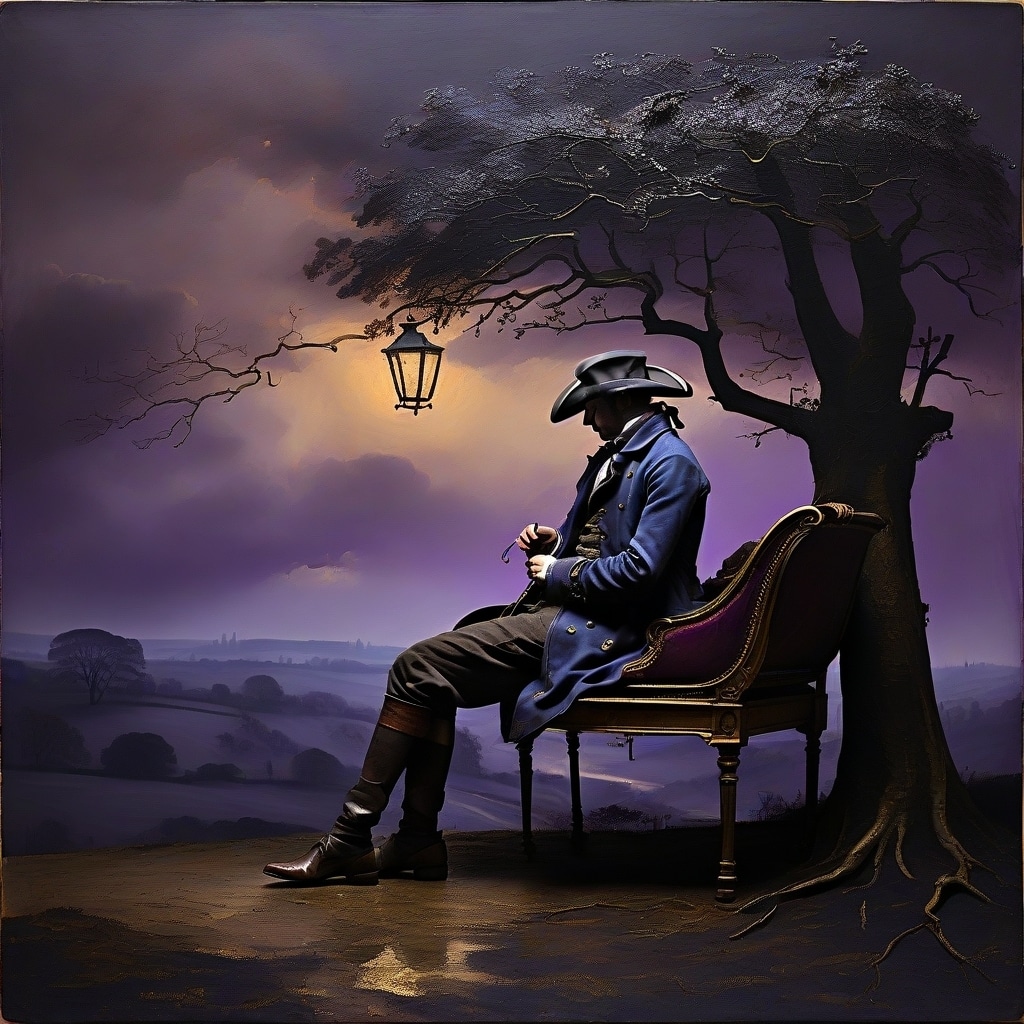
He is seventeen, an apprentice carpenter in Covent Garden, and he has just noticed a young woman standing in a doorway. In Lives of the Most Remarkable Criminals, the story of John Winship begins not with violence but with infatuation; a boy whose idle upbringing leaves him entirely unprepared for the cost of courtship, and who drifts toward the road when honest wages fall short.
There is something quietly inevitable about Winship’s slide from lovesick youth to mounted robber, a trajectory that feels as urgent now as it did in the 1720s. His is a piece of true crime from an era when the line between a restless boy and a desperate outlaw could be crossed in a single reckless season.
The dark roads outside London are waiting, and John Winship is about to learn what the night demands in return for its silver. Hear his full account read aloud from the pages of Lives of the Most Remarkable Criminals; let the words of 1735 carry you back to the world he once rode through.
Click the RSS feed link below to subscribe and get new episodes the moment they drop.
Subscribe via RSS
Dark Lexicon: Old words. Dark meaning.
The past speaks its own dialect; here is what to listen for in this episode.
Footpad: a highway robber who works on foot rather than on horseback. Where the highwayman had a certain theatrical glamour, the footpad was considered the meaner, more desperate breed; closer to a mugger than a mounted outlaw. Winship is called both, which tells you he took whatever opportunity came his way.
Pistoles: not pistols, though the words look similar enough to confuse. A pistole was a gold coin, originally Spanish, widely circulated across Europe. When the Frenchman loses a hundred and twenty of them, the sum is enormous; this is serious money taken at serious risk.
Caressed: today this word suggests gentle physical affection, but in the eighteenth century it meant to treat with favour, to flatter, to welcome warmly into a group. When the gangs ‘caressed’ Winship, they were not being tender; they were courting his agility and daring for their own profit.
Chariot: not the ancient two-wheeled war vehicle. In Georgian England a chariot was a light, enclosed carriage for one or two passengers, often privately owned. It signals wealth; if you are riding in a chariot, you are worth robbing.
The Ordinary: the chaplain of Newgate Prison, whose official duty was to minister to condemned prisoners. He also had a sideline that would raise eyebrows today: publishing accounts of their confessions and lives for public sale. When Winship refuses to confess to the Ordinary, he is refusing to feed both the man’s spiritual office and his printing press.
Suffered: in modern English, to suffer is to endure pain. In this text, it simply means ‘allowed’ or ‘permitted’; youths are ‘suffered to live’ in idleness means they are let alone to do nothing. The word carried no implication of agony, only of passive tolerance.
Divers: nothing to do with swimming. This is an old form of ‘diverse,’ meaning various or several. When Winship is said to have been concerned in ‘divers gangs,’ the word paints a picture of a man drifting between criminal circles, never settling, always available.
Run distracted: to go mad, to lose one’s reason from grief or shock. It is a vivid phrase; the mind does not simply crack, it runs, as if sanity were a thing that bolts from the body and cannot be caught again.
About This Series
Lives of the Most Remarkable Criminals is one of the earliest works of true crime writing in the English language, nearly 300 years old, covering murderers, thieves, highwaymen, forgers, coiners and worse.
The book is entirely in the public domain and every word of it can be read today for free. But if you would rather listen, this podcast does exactly that: one criminal at a time, every week, read aloud.
True crime was not invented by podcasts or streaming services. Eighteenth century readers were just as fascinated by outlaws and killers as we are today. They just consumed their dark stories by candlelight.
The voice you hear is David Dark: crime researcher, theatre script writer, producer of live immersive experiences, and audiobook narrator and voice artist. This podcast uses an AI voice model trained on David’s own voice, built using the maximum available training data to faithfully represent how he actually sounds. To hear David’s real voice in human generated form, visit him on Audible, Online Stage, Voices of Today, Spoken Realms, and Internet Archive.
Spread the word on your favourite platform!
Subscribe to Dark Stories
True crime stories, dark history and tour news, straight to your inbox.