They call him the Golden Tinman; a man who robs alone and in company, whose scarred body carries the evidence of musket balls extracted from his flesh, and whose notoriety across the roads of early Georgian England is already the stuff of grim legend. In the pages of Lives of the Most Remarkable Criminals, John Trippuck stands as one of four men whose intertwined stories form a single devastating chapter of true crime from 1720: a highwayman, a footpad, a thief, and a housebreaker, each pulled toward ruin by separate hungers.
Trippuck is a man who has already bought his way out of justice once, a seasoned offender who believes that money and connections can always purchase one more reprieve. Alongside him are Richard Cane, barely twenty-two and desperate enough to rob a drunk stranger for the price of a marriage licence; Richard Shepherd, a ruined Oxford apprentice drawn into housebreaking by bad company; and Thomas Charnock, a well-educated young man who plunders his own master’s counting-house in pursuit of appearances.
Four lives, four roads to the same destination; the weight of Georgian justice gathers around each of them with quiet, inescapable patience. Their stories wait for you now in the full chapter from Lives of the Most Remarkable Criminals, read aloud in every unsparing detail.

Click the RSS feed link below to subscribe and get new episodes the moment they drop.
Dark Lexicon: Old words. Dark meaning.
The past speaks its own dialect; here is what to listen for in this episode.
The Golden Tinman: a nickname modelled on the earlier ‘Golden Farmer,’ another notorious highwayman. In this era, such colourful aliases clung to criminals the way tabloid headlines cling to them today; they made a man famous and marked him for capture in the same breath.
The Ordinary: not an adjective here but a title. The Ordinary of Newgate was the prison chaplain, tasked with coaxing condemned prisoners toward repentance and extracting confessions before they swung. He published those confessions for profit; part priest, part journalist, part grief counsellor.
Footpad: a robber who works on foot rather than on horseback. Where a highwayman has a certain dark glamour, galloping in on a mount, the footpad lurks in alleys and side streets; he is the mugging to the highwayman’s armed holdup.
Cast: to be ‘cast’ in a court of law means to be found guilty. Today we cast votes, cast fishing lines, cast actors; in the eighteenth century, a jury could cast a man straight to the gallows with a single word.
Fuddled: drunk. A wonderfully soft word for a state that left its victim vulnerable to robbery in the dark streets of Georgian London. To be fuddled was to be confused with drink; a fuddled man on a dark lane was easy prey.
Prithee: a contraction of ‘I pray thee,’ meaning ‘please’ or ‘I beg you.’ Trippuck uses it with the prison chaplain; even a condemned highwayman remembers his manners when he wants a favour.
Impeaching: today impeachment is a political process, but in the criminal underworld of the 1700s, to impeach meant to inform on your accomplices in exchange for your own freedom. Richard Shepherd uses it as a survival tool; betrayal dressed up as cooperation with the law.
Facts: in eighteenth century legal language, a ‘fact’ is a criminal act or deed. When the text says Shepherd ‘committed several facts,’ it does not mean he stated truths; it means he committed several crimes. The word sounds innocent today, which makes its old meaning land with a quiet shock.
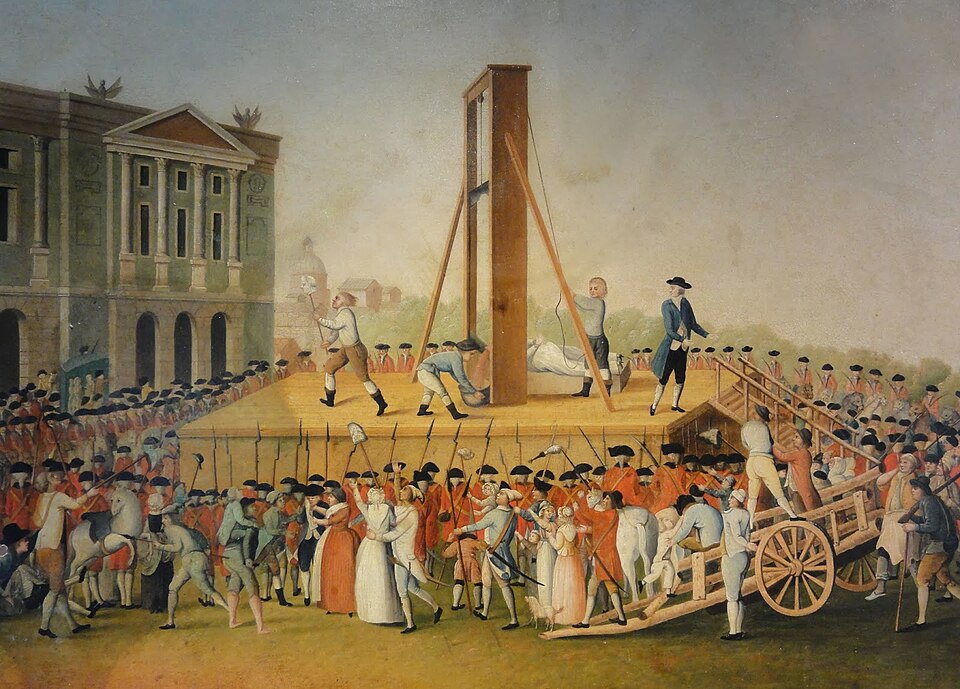
Turned off: the moment when the cart or platform beneath a condemned prisoner is pulled away, leaving them hanging. A chillingly casual phrase for a final, irreversible act.
About This Series
Lives of the Most Remarkable Criminals is one of the earliest works of true crime writing in the English language, nearly 300 years old, covering murderers, thieves, highwaymen, forgers, coiners and worse.
The book is entirely in the public domain and every word of it can be read today for free. But if you would rather listen, this podcast does exactly that: one criminal at a time, every week, read aloud.
True crime was not invented by podcasts or streaming services. Eighteenth century readers were just as fascinated by outlaws and killers as we are today. They just consumed their dark stories by candlelight.
The voice you hear is David Dark: crime researcher, theatre script writer, producer of live immersive experiences, and audiobook narrator and voice artist. This podcast uses an AI voice model trained on David’s own voice, built using the maximum available training data to faithfully represent how he actually sounds. To hear David’s real voice in human generated form, visit him on Audible, Online Stage, Voices of Today, Spoken Realms, and Internet Archive.