John Molony: Highwayman and Street Robber of Old England

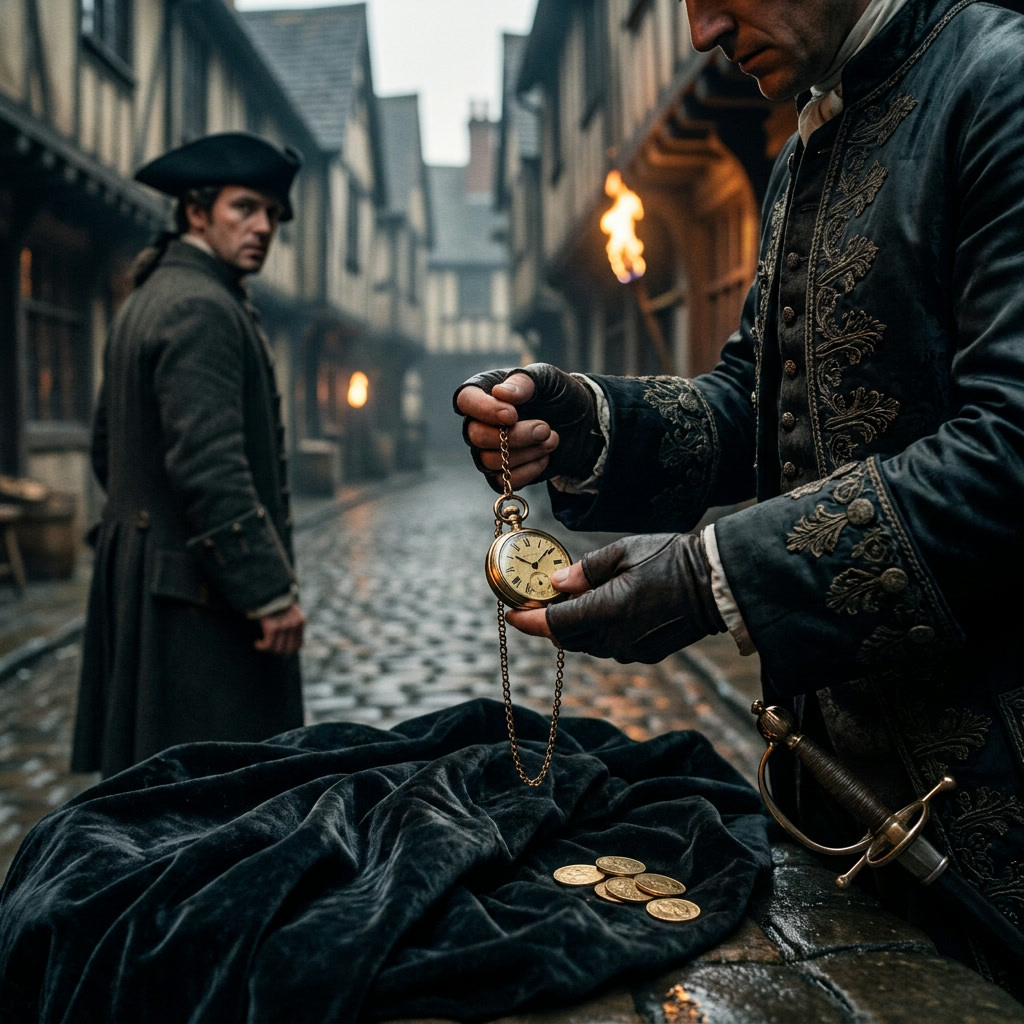
John Molony is an Irish sailor who has seen the world: Mediterranean fleets, pirate hunts, shipwrecks and even a blood-soaked tragedy in a Sicilian church. But when he washes ashore in old England with no work and no prospects, it is the gaming tables that swallow him whole.

What begins as idle nights of drink and dice quickly becomes something darker. The friendships Molony makes in those smoke-filled rooms are not the kind that lead anywhere good; they are the kind that lead to the Old Bailey.

Step into the story of a man who traded the open sea for the open road and hear how it all unravelled.

John Molony: Highwayman and Street Robber of Old England

Follow the podcast so you never miss an episode:

Apple PodcastsSpotifyAmazon MusicMore apps

FROM THE 1735 TEXT

the certain methods of being brought to such ways of getting money as end in a shameful death

CASE FILE No. 28
NAMEJohn Molony
AGEnot recorded
WHENearly 1720s
WHERELondon
CHARGEhighway robbery and street robbery
FATEHanged at Tyburn
SOURCELives of the Most Remarkable Criminals, 1735
HANGED

Dark Lexicon: Old words. Dark meaning.

The past speaks its own dialect; here is what to listen for in this episode.

Duenna: not a servant exactly, but an older woman appointed to chaperone and guard the virtue of a younger one. In old England and across Catholic Europe, the duenna was a fixture of respectable households: half governess, half spy.

Cavaliers: today we think of dashing Royalist soldiers from the English Civil War, but here the word simply means well-dressed gentlemen or gallants. In Sicily, two brothers paying a friendly visit to their sisters looked, to a suspicious duenna, like dangerous suitors.

Sanctuary: fleeing into a church for protection from arrest was an ancient legal custom. In old England it had been slowly stripped away, but in Catholic lands it lingered: a murderer could buy time by reaching consecrated ground.

Gaming tables: in old England these were not glamorous casinos but unlicensed back rooms and coffee houses where men drank, gambled recklessly and fell into the company of criminals. Many a robbery began at the gaming table, where a man lost his money and then resolved to take someone else's.

Rally the evidence: to rally someone in this context meant to mock or ridicule them. Molony and his companion treated their own trial as a kind of comedy show, baiting the witnesses with trick questions designed to get the courtroom laughing.

The Ordinary: the chaplain of Newgate Prison, whose job it was to attend condemned prisoners in their final days. In old England the Ordinary was a familiar figure to every soul awaiting the noose: sometimes comforting, sometimes recording their confessions for publication.

Papist: a blunt, often hostile term for a Roman Catholic. In old England, declaring yourself a Papist in the condemned cell meant you would be visited by your own priest, not the Ordinary: a small but telling act of defiance even at the end.

Place of execution: almost always Tyburn, the infamous gallows at the western edge of London. The journey there from Newgate was a public procession through packed streets: the last spectacle a condemned person would ever give.

About This Series

Lives of the Most Remarkable Criminals (1735) is one of the earliest works of true crime in the English language. Each week this podcast retells one of its stories for today's listener, keeping the old book's most striking lines.
Spread the word on your favourite platform!

James Carrick: The Gentleman Highwayman of Finchley Common

James Carrick is the youngest son of an Irish gentleman, a boy handed an officer's commission before he is old enough to truly understand it. He is beautiful, well-shaped, and something more than ordinarily genteel: exactly the kind of young man old England loves to watch destroy himself.

After soldiering in Spain and losing his commission, Carrick drifts into London with empty pockets and expensive habits. Rather than accept his brother's plea to come home to Dublin, he chooses the road: a life of highway robbery fuelled by gambling, women and fine clothes, the kind of true crime story where charm is the most dangerous weapon of all.

Step into the world of James Carrick, from the streets of Barcelona to the heaths of old England, and hear how a gentleman became a robber.

James Carrick: The Gentleman Highwayman of Finchley Common

Follow the podcast so you never miss an episode:

Apple PodcastsSpotifyAmazon MusicMore apps

FROM THE 1735 TEXT

If you had suspended your curiosity till I went to Tyburn, you might have seen me for nothing.

CASE FILE No. 27
NAMEJames Carrick, alias Valentine Carrick
AGEabout 27
WHEN1722
WHEREFinchley Common, Hounslow Heath, Bagshot Heath, Lincoln's Inn Fields, London
CHARGEHighway robbery and street robbery
FATEHanged at Tyburn, 18 July 1722
SOURCELives of the Most Remarkable Criminals, 1735
HANGED

Dark Lexicon: Old words. Dark meaning.

The past speaks its own dialect; here is what to listen for in this episode.

Duenna: not a lover but her opposite: an older woman appointed to chaperone a younger one. In old England and across Catholic Europe, a duenna was the gatekeeper between a young woman and any man who wanted to reach her; in this story, she is the bait in a trap.

Pieces-of-eight: Spanish silver dollars, the universal currency of empire. In old England, these coins circulated freely and carried real weight; two hundred of them was a handsome sum, enough to make a young officer feel whole again after a humiliating robbery.

Taking a purse: the polite way of saying highway robbery in old England. The phrase sounds almost genteel, as if the money simply changed hands of its own accord; the pistol or blade that made it happen went unmentioned.

Ordinary: today an ordinary is just an adjective, but in old England it meant a fixed-price eating house or tavern where men dined, drank and gambled together. A 'gaming ordinary' was essentially an illegal casino disguised as a dining room.

Chair: not furniture but transport: a sedan chair, a small enclosed box carried on poles by two men through the streets. In old England, stopping a chair at night was a favourite method of street robbery; the passenger was trapped, visible and usually wealthy.

Sparks: young men of fashion, lively and a little reckless. The word carried a note of admiration and a note of warning; in old England, a spark was someone who might set a fire he could not put out.

The cart drove away: at Tyburn, the condemned stood in a horse-drawn cart with the noose already around their neck. When the cart was driven forward, there was nothing left beneath their feet; the phrase is plain, but what it describes is the final second of a life.

About This Series

Lives of the Most Remarkable Criminals (1735) is one of the earliest works of true crime in the English language. Each week this podcast retells one of its stories for today's listener, keeping the old book's most striking lines.
Spread the word on your favourite platform!

Nathaniel Jackson: The Soldier Turned Highwayman

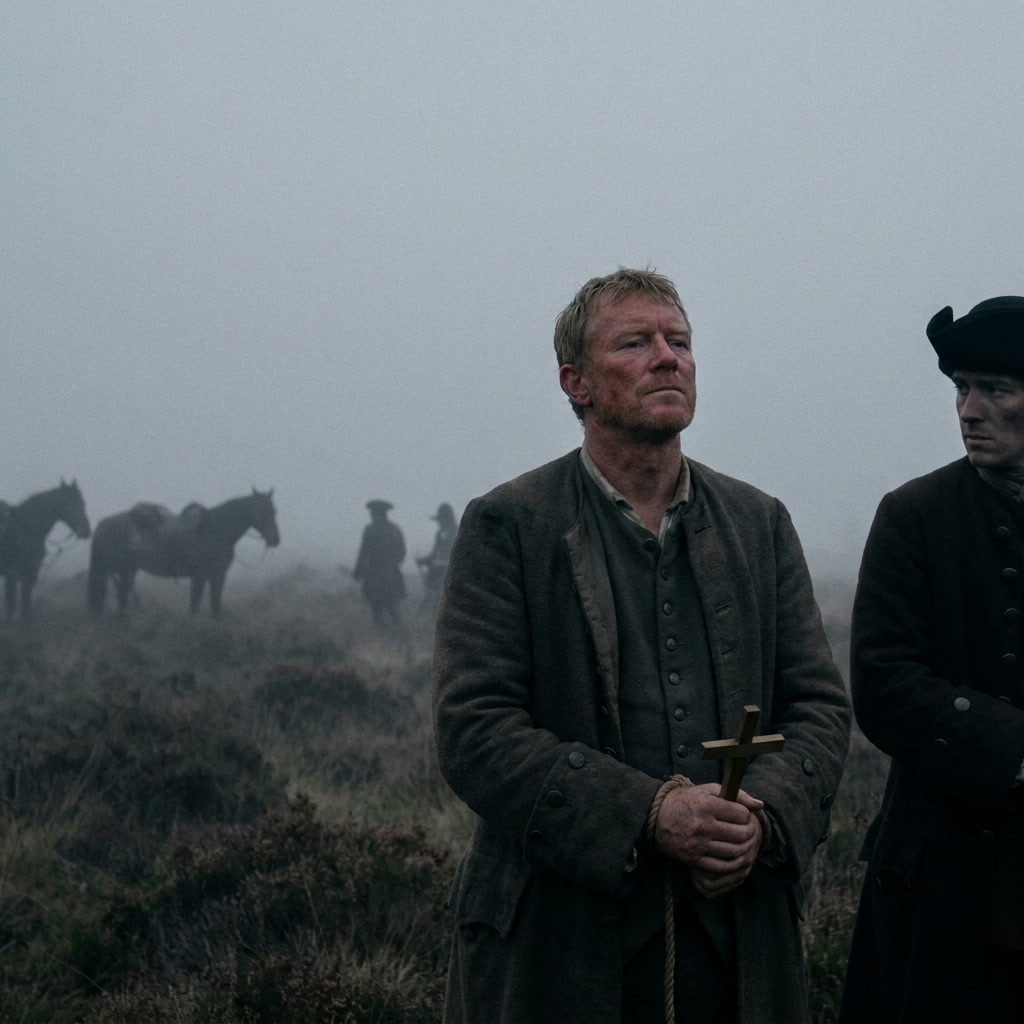
Nathaniel Jackson is a man who seems incapable of standing still. Born to a family of some means in Doncaster, orphaned young, apprenticed to a silk-weaver in Norwich, he runs from every structure placed around him and lurches toward whatever is reckless and ruinous.

After a violent duel costs him his place in a regiment of dragoons in Ireland, Jackson drifts back to England with nothing but old habits and worse company. London swallows him whole, and a chance reunion with former comrades pulls him toward a road he cannot walk back from.

Follow Nathaniel Jackson down that road, from the army that cast him out to the robbery that seals his fate.

Nathaniel Jackson: The Soldier Turned Highwayman

Follow the podcast so you never miss an episode:

Apple PodcastsSpotifyAmazon MusicMore apps

FROM THE 1735 TEXT

He seemed to have swept all impurities with a drag net, and to have habituated himself to nothing but wickedness from his cradle.

CASE FILE No. 26
NAMENathaniel Jackson
AGEabout 30
WHEN1722
WHERELondon, between Hampstead and St. Pancras
CHARGEHighway robbery
FATEHanged at Tyburn, 18 July 1722
SOURCELives of the Most Remarkable Criminals, 1735
HANGED

Dark Lexicon: Old words. Dark meaning.

The past speaks its own dialect; here is what to listen for in this episode.

Broke him: nothing to do with money. When a soldier was 'broke,' his officers stripped him of his rank and expelled him from the regiment; a public humiliation that left him without pay, status or purpose.

Drag net: today we picture a police dragnet closing in on a suspect. In the 1700s the image was literal: a heavy fishing net dragged along the bottom of a river, scooping up everything in its path. To say Jackson swept all impurities with a drag net means he gathered every available vice into his life, missing none.

Sutler: a civilian merchant who set up shop near a military camp, selling food, drink and sundries to soldiers. Think of a camp follower with a licence to profit; the sutler's tent was part marketplace, part tavern, and often part den of scheming.

Conversation of women: in old England, 'conversation' could mean far more than talk. Here it is a polite veil over sexual liaisons; 'criminal conversation' was in fact the legal term for adultery.

Hair: among the items stolen from the victim Dennet was 'some hair,' almost certainly referring to a wig or hairpiece. Wigs were valuable personal property in the early 18th century, and stealing one was no small matter.

Commitment: not a promise or a pledge. In legal language of the time, a commitment was the formal order sending a person to gaol to await trial; to hear of someone's commitment was to know they had been locked up.

Interest: when Jackson's friends tried to make 'interest' on his behalf, they were pulling strings: lobbying powerful people, calling in favours, petitioning for mercy. The word carried the weight of patronage and connection, the unofficial currency of justice in old England.

About This Series

Lives of the Most Remarkable Criminals (1735) is one of the earliest works of true crime in the English language. Each week this podcast retells one of its stories for today's listener, keeping the old book's most striking lines.

Spread the word on your favourite platform!

John Meff: The Housebreaker Who Could Not Stay Away

John Meff is the son of French Protestant refugees who fled Louis XIV's persecution and rebuilt their lives in London. Raised with care and apprenticed to a weaver, he marries young; but when honest labour cannot feed his family, he turns to housebreaking.

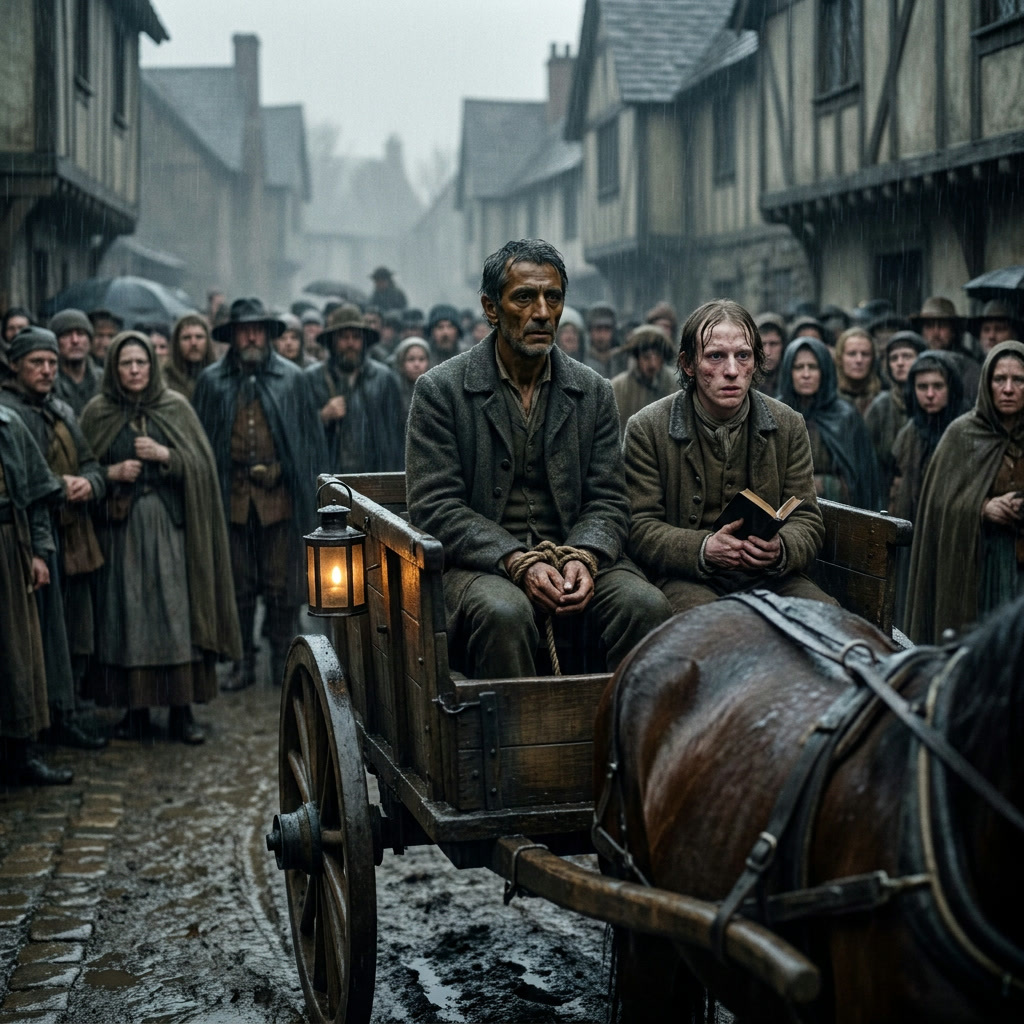
Almost immediately he is caught, tried and loaded into the cart bound for the gallows: a story that should end right there. Instead, a bizarre twist of fate sends his life spiralling through pirate encounters, a desert island and a desperate return to old England, where the machinery of justice has a long memory.

This is one of the strangest true crime stories you will hear: listen now and follow Meff from the weaver's loom to the edge of the world and back again.

John Meff: The Housebreaker Who Could Not Stay Away

Follow the podcast so you never miss an episode:

Apple PodcastsSpotifyAmazon MusicMore apps

FROM THE 1735 TEXT

the hangman being arrested as he was going to Tyburn, he and the rest were transported through the clemency of the Government

CASE FILE No. 9
NAMEJohn Meff, alias Merth
AGEabout 40
WHEN1721
WHERELondon, Newgate, Tyburn
CHARGEHousebreaking and returning from transportation without lawful cause
FATEHanged at Tyburn, 11 September 1721
SOURCELives of the Most Remarkable Criminals, 1735
HANGED

Dark Lexicon: Old words. Dark meaning.

The past speaks its own dialect; here is what to listen for in this episode.

Marooned: today it conjures a castaway on a tropical beach, almost romantic. In old England and on the high seas it was a death sentence by abandonment: pirates would dump unwanted men on uninhabited islands with nothing, leaving the sun and starvation to do the killing.

Springes: simple snare traps made from whatever flexible material was at hand: cord, wire, or in Meff's desperate case, strands pulled from an old horsehair wig. A springe would tighten around a bird's leg when triggered; on a barren island it could mean the difference between eating and dying.

Fluxes: a word for severe, often bloody diarrhoea, the kind that killed as readily as any fever in the eighteenth century. When the text says the island animals threw the castaways into 'dangerous fluxes,' it means men too weak to stand, wasting away from food their bodies could not tolerate.

Plantations: not merely farms. In old England this word meant the colonies, especially in the Caribbean and the Americas, where transported convicts were sent to serve out their sentences as forced labourers. It was exile dressed up as mercy.

Act of Indemnity: a sweeping legal pardon issued by the government, sometimes covering whole categories of offence. Meff hoped it would wipe his slate clean; the court had other ideas, since his real crime was returning from transportation itself.

Returning from transportation: in old England, coming back to the country after being transported was a capital offence, no matter how you had lived abroad. The law saw it not as mere rule-breaking but as a defiance of royal mercy: you were spared the rope once, and by returning you were practically tying the noose yourself.

Impeached: today it means to charge a politician with misconduct. In old England it meant to inform on your criminal associates in exchange for your own life: a desperate bargain that could buy you another few years, if your former friends did not find you first.

Put in the cart: the condemned were loaded into an open cart at Newgate and driven through the streets to Tyburn for hanging. The phrase sounds almost casual, but the journey was a public spectacle: crowds lined the route, and taverns along the way offered the doomed a final drink.

About This Series

Lives of the Most Remarkable Criminals (1735) is one of the earliest works of true crime in the English language. Each week this podcast retells one of its stories for today's listener, keeping the old book's most striking lines.

Spread the word on your favourite platform!
On This Day in True Crime History

Subscribe to Dark Stories

True crime stories, dark history and tour news, straight to your inbox.