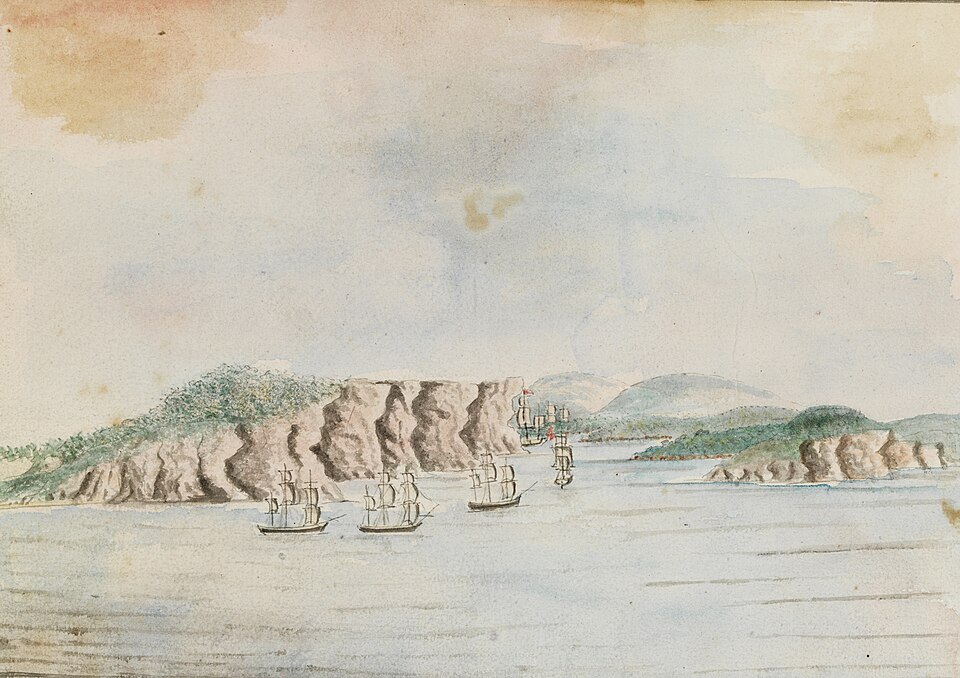
In 1786, Britain faced a crisis of its own making. Decades of the so-called bloody code had swollen the criminal class with petty offenders, American independence had slammed shut the old dumping ground of the colonial plantations, and the gaols were bursting. The solution settled upon was audacious: ship Britain’s unwanted more than 15,000 miles to New South Wales, a coastline only recently mapped by Captain Cook, who had praised the land around Botany Bay.
Over the next 80 years, more than 160,000 men and women were transported to Australia and Van Diemen’s Land. Transportation meant total erasure: the loss of home, family, and identity, followed by a brutal sea crossing and survival in an utterly foreign land. Yet for many, the far side of the world offered something the old country never would: a second chance.
First Fleet ships entering Sydney Harbour 1788 illustration
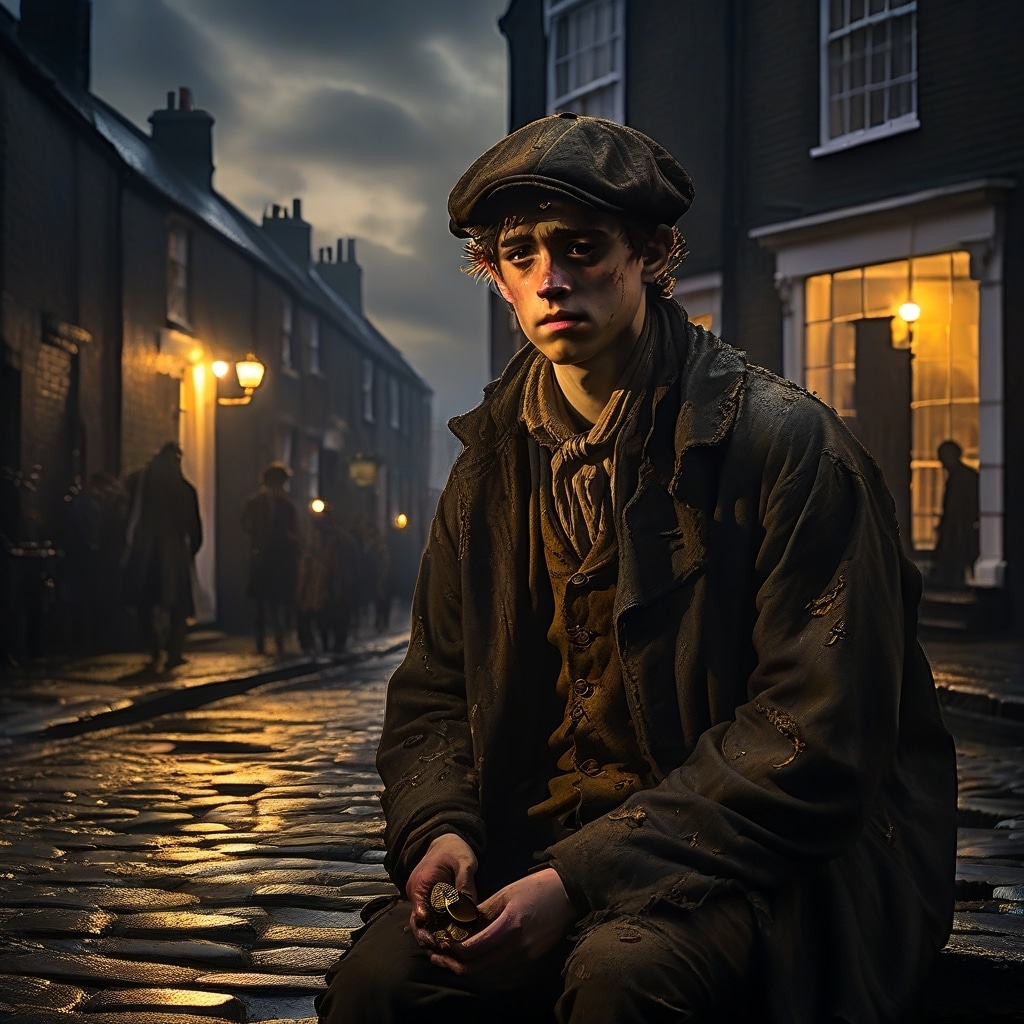
A respectable wigmaker on the Old Bailey begins to spend faster than he earns, drawn into pleasures he cannot afford and will not abandon. Lives of the Most Remarkable Criminals captures his slide with quiet precision: James Wright does not turn to crime out of malice but out of want, a man whose appetites gnaw through his livelihood until nothing remains but the road.
What makes Wright linger in the annals of true crime is not his daring but his conscience. He is described as a highwayman who could hardly rob a traveller without weeping, a man forever promising himself he would stop, forever failing to keep that promise.
The tension between remorse and repetition shapes everything that follows, a loop of guilt and need tightening around a man who cannot break free. Lives of the Most Remarkable Criminals tells his story in full; listen now and step into the dimly lit world of a criminal who could never quite harden his own heart.
Click the RSS feed link below to subscribe and get new episodes the moment they drop.
Subscribe via RSS
Dark Lexicon: Old words. Dark meaning.
The past speaks its own dialect; here is what to listen for in this episode.
Malefactor: today this word sounds almost theatrical, something pulled from a superhero film. In the eighteenth century it was deadly serious: a malefactor was simply a person who committed a crime, a wrongdoer in the eyes of the law. It carried no dramatic flair; it was the plain, official label pinned to anyone awaiting judgement.
Peruke-maker: a maker of perukes, which is to say wigs. In Georgian England the wig trade was a legitimate and often lucrative craft, serving everyone from lawyers to gentlemen of fashion. To be apprenticed to a peruke-maker was a perfectly respectable start in life; the fact that Wright had one makes his fall all the sharper.
Equipage: today this word is virtually extinct, but in the 1700s it referred to the carriage, horses, servants and general outfit a wealthy person travelled with. Wright used equipage as his guide; the finer the coach and livery, the fatter the target.
Villainies: not the cartoonish scheming the word might conjure now, but a straightforward plural for criminal acts. In this era it carried real legal weight; a list of villainies was a list of offences that could send a person to the gallows.
Impeached: in modern usage we think of presidents and parliamentary proceedings, but in eighteenth century criminal slang, to be impeached meant to be informed upon by an associate. It was betrayal dressed in legal clothes: one thief turning evidence against another to save his own skin.
Assizes: the travelling courts that moved through the English counties, bringing the full power of royal justice to provincial towns. The assizes at Kingston, where Wright was tried and acquitted on one occasion, were periodic sessions where serious criminal cases were heard by visiting judges.
Ignominious: bearing public shame and disgrace. Wright uses the word when speaking of the death that awaits him, and in the context of a public hanging it is precise; the punishment was designed not merely to kill but to humiliate, serving as a spectacle of disgrace for all who watched.
About This Series
Lives of the Most Remarkable Criminals is one of the earliest works of true crime writing in the English language, nearly 300 years old, covering murderers, thieves, highwaymen, forgers, coiners and worse.
The book is entirely in the public domain and every word of it can be read today for free. But if you would rather listen, this podcast does exactly that: one criminal at a time, every week, read aloud.
True crime was not invented by podcasts or streaming services. Eighteenth century readers were just as fascinated by outlaws and killers as we are today. They just consumed their dark stories by candlelight.
The voice you hear is David Dark: crime researcher, theatre script writer, producer of live immersive experiences, and audiobook narrator and voice artist. This podcast uses an AI voice model trained on David’s own voice, built using the maximum available training data to faithfully represent how he actually sounds. To hear David’s real voice in human generated form, visit him on Audible, Online Stage, Voices of Today, Spoken Realms, and Internet Archive.
Rebecca Worlock, a 37-year-old mother of three from Oldland and Bitton in Gloucestershire, poisoned her husband Thomas with arsenic in April 1820. She had purchased the poison from a pharmacy at Kingswood Hill, telling a stranger she had enlisted to accompany her that it was not for rats but for her husband. Thomas died on 21 April after falling ill following a beer laced with the substance; a post-mortem confirmed poisoning and Rebecca was arrested.
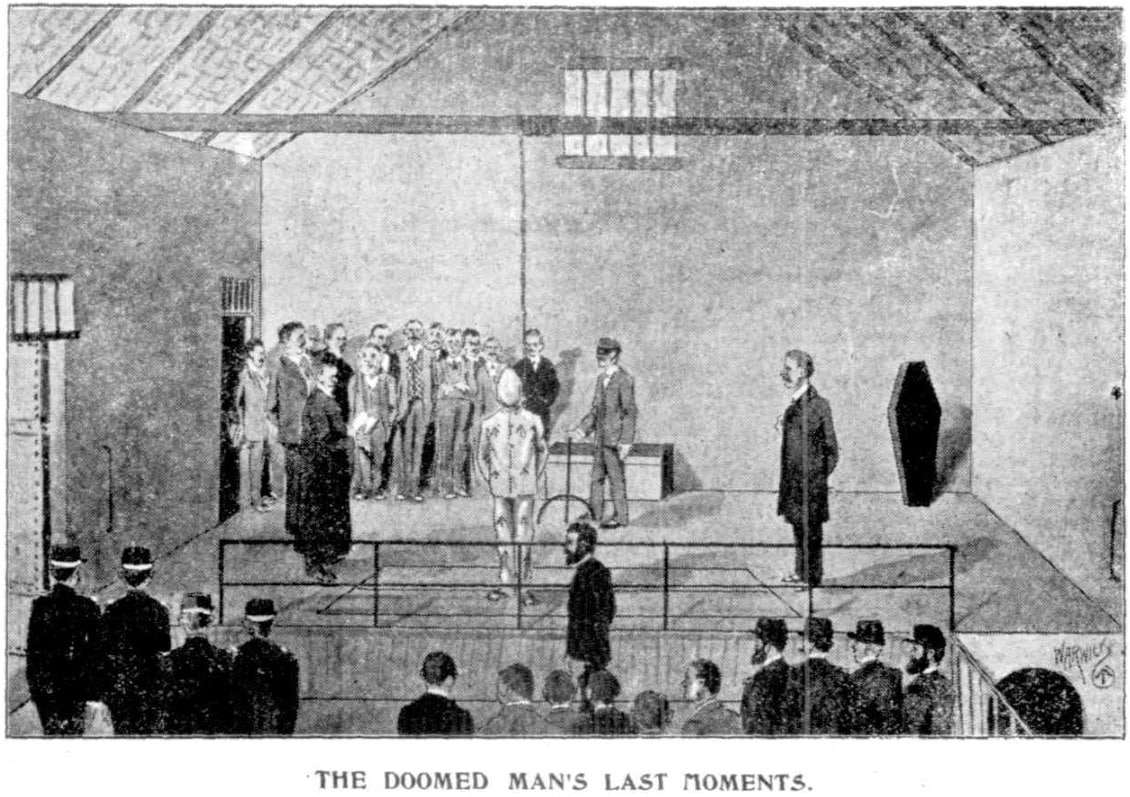
Tried at Gloucester Assizes on 14 August 1820, the jury convicted her in just seven minutes. She was hanged at Gloucester Prison two days later, on 16 August, before a large crowd that had travelled from her home villages. Her body hung for an hour before being handed over to surgeons for dissection.
Worlock confessed to the murder before her execution.
On August 15, 1963, Henry John Burnett was hanged at Craiginches Prison in Aberdeen by executioner Harry Allen, becoming the last person executed in Scotland and the first in Aberdeen since 1891. His crime: the murder of merchant seaman Thomas Guyan, shot in the face at close range after Burnett broke into the Guyan family flat on May 31, 1963, furious that his lover Margaret May Guyan had chosen to return to her husband.
Burnett had become obsessively controlling of Margaret, locking her in his flat at Skene Terrace when he went out. On the day of the murder, after she announced she was returning to Thomas, Burnett stole a shotgun from his brother’s home in the Bridge of Don area of Aberdeen, boarded a bus to Jackson Terrace, and shot Guyan dead. He was tried at the High Court in Aberdeen between July 23 and 25, 1963, convicted, and executed three weeks later. A crowd of around 200 gathered outside the prison gates.