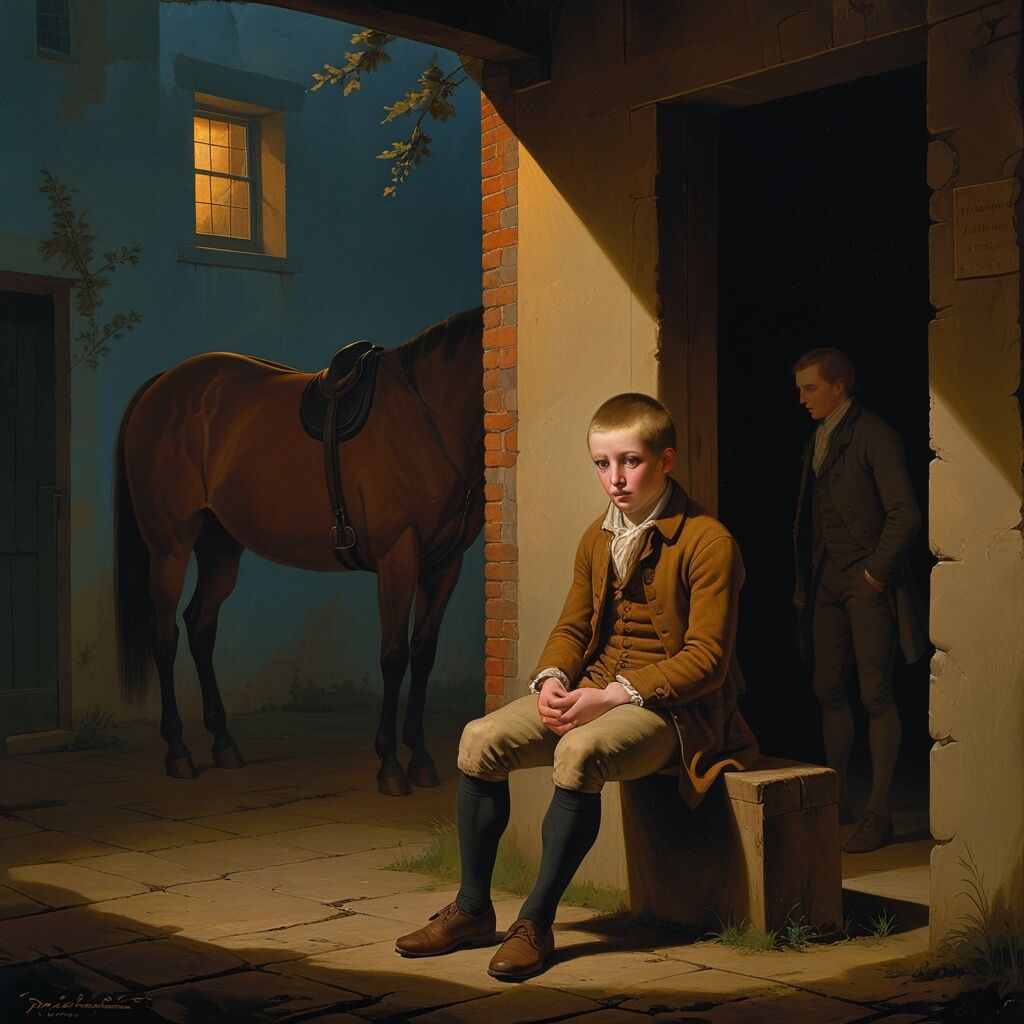
Richard Whittingham is a teenager with a good heart and a weak will, apprenticed to a hot-presser in old England, where the pressure to keep up with the women in his life pushes him out of honest work and into the streets. He runs from his master and falls in with a crew of pickpockets and footpads: Jones, Applebee, and Lee.
Together they develop a system: one trips the victim, another shoves, a third moves in to finish the job. It is coordinated violence on the open streets of London, and for a while it works: until the gang begins to crack from within.
Step into this true crime story and hear how quickly loyalty dissolves when every man is fighting to save his own skin.
Follow the podcast so you never miss an episode:
FROM THE 1735 TEXT
While one laid his leg before a passenger, another gave him a jolt on the shoulders, and as soon as he was down a third came to their assistance.
Dark Lexicon: Old words. Dark meaning.
The past speaks its own dialect; here is what to listen for in this episode.
Footpad: a robber who works on foot, as opposed to a highwayman on horseback. In old England this was the lowest rung of the robbery trade: no horse, no romance, just ambush on dark streets.
Hot-presser: not someone under emotional strain, but a textile worker who used heated plates to press and finish cloth. It was a respectable London trade, and exactly the kind of steady life Whittingham walked away from.
Cutting off women's pockets: in old England, women's pockets were separate pouches tied around the waist beneath skirts. Thieves would literally slice the strings and walk away with the whole thing: a crime so common it had its own vocabulary.
Impeached: today this word conjures political scandal, but in old England it meant something more desperate: one criminal formally accusing another in exchange for mercy. When Applebee was taken, he impeached his friends to save himself.
Condemned hold: the section of Newgate Prison where those sentenced to death were kept in the days before execution. It was a dark, overcrowded pit, and as Whittingham discovered, even its last hours were not granted in peace.
Fled for sanctuary: in old England, the word 'sanctuary' had lost its medieval legal power, but the instinct remained: Whittingham hid at his former master's house hoping the world would simply forget about him.
Dissolution: we might use this word for a company winding down, but here it means death itself: the dissolving of body and soul. Whittingham used it to describe what he was trying to prepare for in his final days.
About This Series
Lives of the Most Remarkable Criminals (1735) is one of the earliest works of true crime in the English language. Each week this podcast retells one of its stories for today's listener, keeping the old book's most striking lines.


