John Smith is a soldier with a reputation for fierce courage, a man who once gagged a French stable boy between enemy lines and galloped off with a stolen horse under musket fire. When the wars end and the navy pays him off, he washes up in London with empty pockets and no trade but violence.
He is a man shaped entirely by conflict, and when peacetime strips him of purpose, he drifts into petty theft and drink. The city he lands in is the sprawling, desperate London of old England: a place where a discharged veteran can vanish into the crowd or explode out of it.
Listen now to this true crime story of a soldier who could not leave the battlefield behind.
Follow the podcast so you never miss an episode:
FROM THE 1735 TEXT
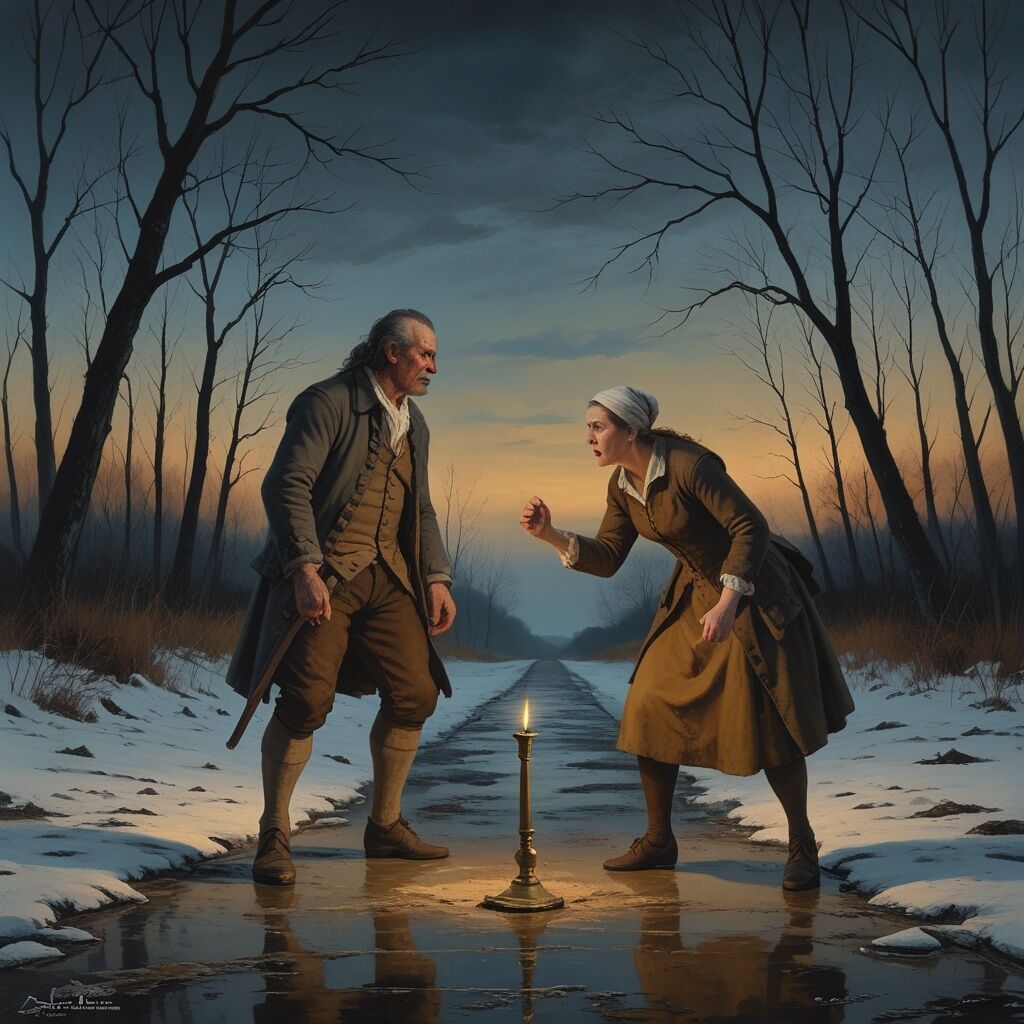
I had no design to kill the woman who jilted me, and left me for another man, but only to terrify her
Dark Lexicon: Old words. Dark meaning.
The past speaks its own dialect; here is what to listen for in this episode.
Trusses: not medical supports; in old England, trusses were bundles of hay or forage carried for the horses. When a cavalry party abandoned their trusses, they were leaving behind the only food their mounts would get that night.
Livery: today we might think of a car service. In old England it meant the distinctive clothing worn by a servant or soldier to show whose household or regiment they belonged to. Smith's yellow livery was what let him pass, at a glance, for a French trooper.
Walloon: a French dialect spoken in what is now Belgium. The fact that Smith spoke it 'bad enough to be taken for a Frenchman' is a lovely irony: his poor accent was his best disguise.
Gag: the word has barely changed, but picture the reality: a strip of cloth or a wooden bit forced into a prisoner's mouth by a lone soldier acting in total silence between two armies. It was a tool of battlefield kidnapping.
Disbanded: when a war ended in old England, soldiers were simply let go, often with a pittance of back pay and no pension. A disbanded army poured trained, desperate men into the streets: it was a factory for crime.
Fray: today it means a frayed edge or a minor scuffle. In old England it described a sudden, chaotic brawl: neighbours rushing in, bodies pressing together, someone pulling out a weapon. Smith's fray turned fatal in seconds.
Sessions: the regular sittings of a criminal court in old England. The Old Bailey sessions were held roughly every six weeks, meaning a prisoner might wait in gaol for weeks before facing trial, then be tried, convicted and sentenced all in a single day.
Lewd women: in Smith's dying paper, the phrase does not simply mean immoral. It carries a weight of blame; in old England, a condemned man was expected to name the forces that corrupted him, and women were a conventional target. Whether he believed it, or whether the convention simply gave him somewhere to put his shame, is another question.
About This Series
Lives of the Most Remarkable Criminals (1735) is one of the earliest works of true crime in the English language. Each week this podcast retells one of its stories for today's listener, keeping the old book's most striking lines.


