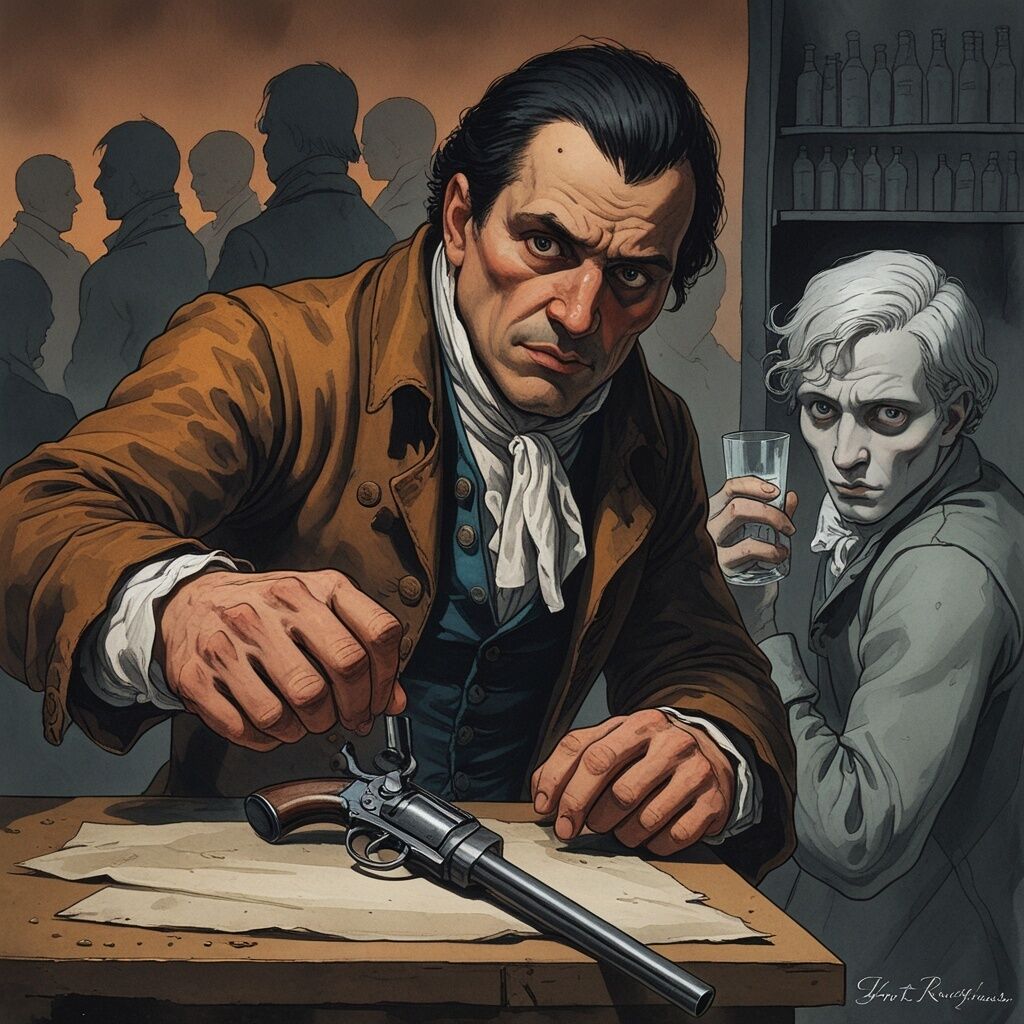
Thomas Reeves grows up in old England as a tinman's son, indulged by a loving father who imagines a good life ahead for the boy. But young Tom falls in with freethinkers who mock religion and morality, and he swallows their philosophy whole: not because it enlightens him, but because it gives him permission to do whatever he wants.
Bold, reckless, and hungry for extravagance, Reeves becomes one of the most striking figures in the annals of true crime from old England: a man who leads a gang of highway robbers while quietly constructing his own private theology to keep his conscience silent. His story is a collision between violence and philosophy that still disturbs.
Listen now and walk the dark fields of Shoreditch with Thomas Reeves.
Follow the podcast so you never miss an episode:
FROM THE 1735 TEXT
He had so far satisfied himself by considering the necessity of dying, and coined a new religion of his own.
Dark Lexicon: Old words. Dark meaning.
The past speaks its own dialect; here is what to listen for in this episode.
Footpad: a robber who worked on foot rather than on horseback. In old England the distinction mattered: a highwayman rode, a footpad lurked in alleys and fields, and both could hang for the same offence.
Tinman: not a figure from a fairy tale but a metalworker who made and mended household goods from tin. In old England it was a respectable urban trade, the kind of steady livelihood a father might hope his son would carry on.
Priestcraft: a loaded word in old England, meaning the supposed manipulation of ordinary people by clergymen using religion as a tool of control. To call something priestcraft was to dismiss it as fraud dressed in vestments.
Sceptical persons: today a sceptic is someone who questions claims and demands evidence. In old England, calling someone sceptical often carried a darker charge: it meant they rejected God entirely, which put them outside the moral order of society.
Stand: when a robber cried 'stand' it meant 'stop where you are.' In old England this single word carried the full menace of a loaded pistol; it was the highwayman's signature command.
Intermediate state: a theological idea that the soul might pass through a waiting place between death and final judgement, neither heaven nor hell. Reeves asked about this in the condemned cell; not out of fear, apparently, but curiosity.
Suffered: today to suffer is to endure pain. In old England, when someone 'suffered,' it often meant they were executed: a grim euphemism that made the gallows sound like an act of passive endurance rather than state violence.
About This Series
Lives of the Most Remarkable Criminals (1735) is one of the earliest works of true crime in the English language. Each week this podcast retells one of its stories for today's listener, keeping the old book's most striking lines.


