1854: A Poisoned Kettle and a Child Who Saw It All: Hanged at Geelong for Attempted Murder by Arsenic

George Roberts worked alongside fellow shepherd George Kelly on a sheep station near Geelong, and had quietly been stealing from him, cash, clothing, even a small box of gold, when Kelly began asking questions. That August, Kelly found his breakfast tea emptied from the kettle and refilled with what looked like plain water; one mouthful burned his throat like fire and he collapsed before he could reach help.

A nine-year-old boy told the court he had watched Roberts stir a white powder into the kettle before setting it back on the fire, and investigators later found a box of arsenic, the very one stolen from Kelly, hidden under Roberts's bed. Convicted of attempting to murder his workmate, Roberts was sentenced to hang.

On 9 November 1854, Roberts was hanged at Geelong alongside another man condemned for murder, in the first public execution ever carried out in the city, before a crowd of some two thousand onlookers.

Roberts went to the gallows having confessed his guilt and the justice of his sentence.
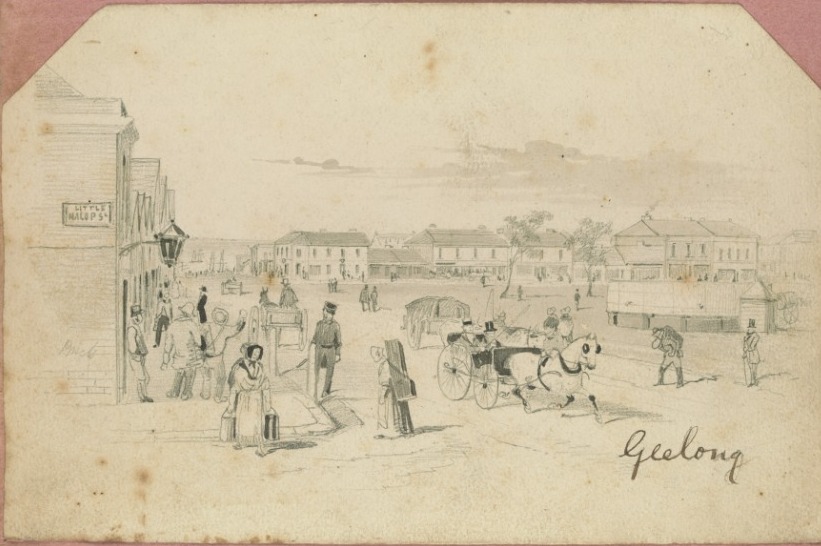
Geelong, 1855. S. T. Gill (1818–1880), pencil, pen and ink drawing of Little Malop Street. State Library Victoria, H90.91/462

⬅ See all events from 9 November

Spread the word on your favourite platform!

1984: The "Death Row Granny": the First Woman Executed in America Since 1962

Velma Barfield cared for the elderly and the infirm, and one by one they fell ill with the same wrenching symptoms: vomiting, diarrhoea, stomach pains that would not ease. She was dosing their food and drink with arsenic-laced rat poison, chasing insurance payouts and covering forged cheques. Her mother died of it in 1974, two elderly patients in 1977, and finally her boyfriend Stuart Taylor in 1978, even as Barfield nursed him through his final days. She confessed to six murders but was tried and convicted of only one.

On death row she became a devout Christian, ministering to fellow inmates, and her lawyers argued for clemency on the strength of it. A second defence claimed she suffered a split personality named "Billy," who insisted he alone had killed her abusers; the judge was unmoved, reportedly saying, "One of them did it, I don't care which one." North Carolina's governor refused clemency, and on this day in 1984 Barfield was executed by lethal injection, the first woman put to death in the United States since 1962 and the first ever killed by that method.

She abandoned her final appeals, wanting to "die with dignity," and left a statement before her death: "I am sorry, and I want to thank everybody who have been supporting me all these six years."

Would you like sugar or rat poison in your tea?

⬅ See all events from 2 November

Spread the word on your favourite platform!

1974: The Man Who Killed Halloween: A Father Poisoned His Own Son for $100,000 in Insurance

Deep in debt and facing the loss of his home and car, Ronald Clark O'Bryan took his eight-year-old son Timothy trick-or-treating through a Pasadena, Texas neighbourhood on this day in 1974 and slipped him a Pixy Stix laced with potassium cyanide. To make the poisoning look like the work of a stranger, he handed identically tainted candy to four other children, including his own daughter; none of them ate it. Timothy did, and died within the hour.

Investigators soon discovered O'Bryan had taken out roughly $100,000 in new life insurance on his two children in the months before the murder, and had tried to buy cyanide from a chemical supplier weeks earlier. A jury took under an hour to convict him of capital murder in 1975, and he was sentenced to death.

After years of delayed execution dates, O'Bryan was put to death by lethal injection in Huntsville on 31 March 1984, while a crowd outside shouted "Trick or treat!"

O'Bryan never confessed to the killing. In his final statement he called his own execution "wrong", while insisting it did not mean the justice system that convicted him was at fault.

Poison Candy on Halloween

⬅ See all events from 31 October

Spread the word on your favourite platform!

1857: Abandoned by His Own Chaplain: A Shepherd Hanged at Oatlands for a Poisoning Plot

Abraham Munday, a shepherd working the east coast of Tasmania near Swansea, laced a rival shepherd's flour with arsenic, hoping to kill George White. White survived only because the dose was so large it made him vomit it back up. An old man named Hamilton, who happened to share a piece of the poisoned bread while visiting the hut, was not so fortunate: the arsenic settled in his joints and left him crippled for life.

Munday was convicted and sentenced to death. He was hanged within the gaol at Oatlands on this day in 1857, and went to the scaffold badly shaken, not only by his fate but because the clergyman who had attended him in his final days, the Reverend Mr Ison, refused to walk up to the drop with him.

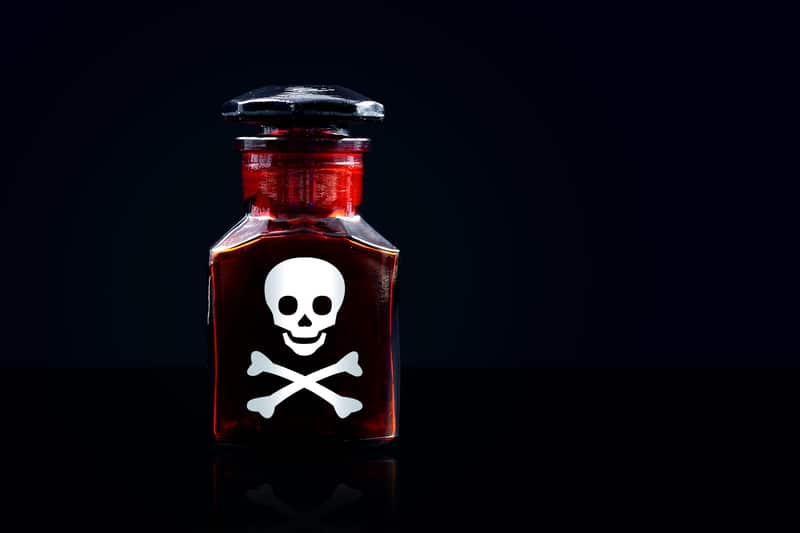
Antique apothecary poison bottle

⬅ See all events from 27 October

Spread the word on your favourite platform!
On This Day in True Crime History
1863·Given a Glass of Brandy and Told to Shoot: A Servant Hanged in Melbourne for a Shanty Murder
1863·The Lover Whose Pistol Misfired: David Gedge Hanged in Melbourne for a Murder Near Mansfield
1863·On the Scaffold, She Begged Her Lover to "Clear Her": the First Woman Hanged in Melbourne
1880·Such Is Life: Ned Kelly Hanged in Melbourne for the Murder of Constable Lonigan
More Crime On This Day →

Subscribe to Dark Stories

True crime stories, dark history and tour news, straight to your inbox.