1846: Over Confiscated Kettles: Twelve Hanged on Norfolk Island After a Convict Mutiny

The trouble began with cooking pots. When the commandant of the Norfolk Island penal settlement ordered all private kettles and saucepans confiscated in June 1846, tightening an already brutal regime, convicts erupted in fury the next morning. A mob armed with axes and wooden billets killed a convict constable at the lumber-yard gate, beat an overseer to death with a carving fork and billets, then struck down two more sleeping constables before soldiers finally restored order.

Fourteen men were tried months later before a military jury; twelve were convicted and hanged in two batches of six on the same morning in October 1846, their bodies buried outside consecrated ground in a spot still known as Murderers’ Mound. A thirteenth man was hanged six days after for the same overseer’s killing.

Before his execution, the ringleader declared that four of the twelve condemned men were innocent, insisting he had not even spoken to one of them on the morning of the riot and that the others had played no part in the killings, but it was to no avail.


Murderers mound on Norfolk Island circa 1900

⬅ See all events from 13 October

Spread the word on your favourite platform!

1629: The Batavia Massacre: First European Executions on Australian Soil

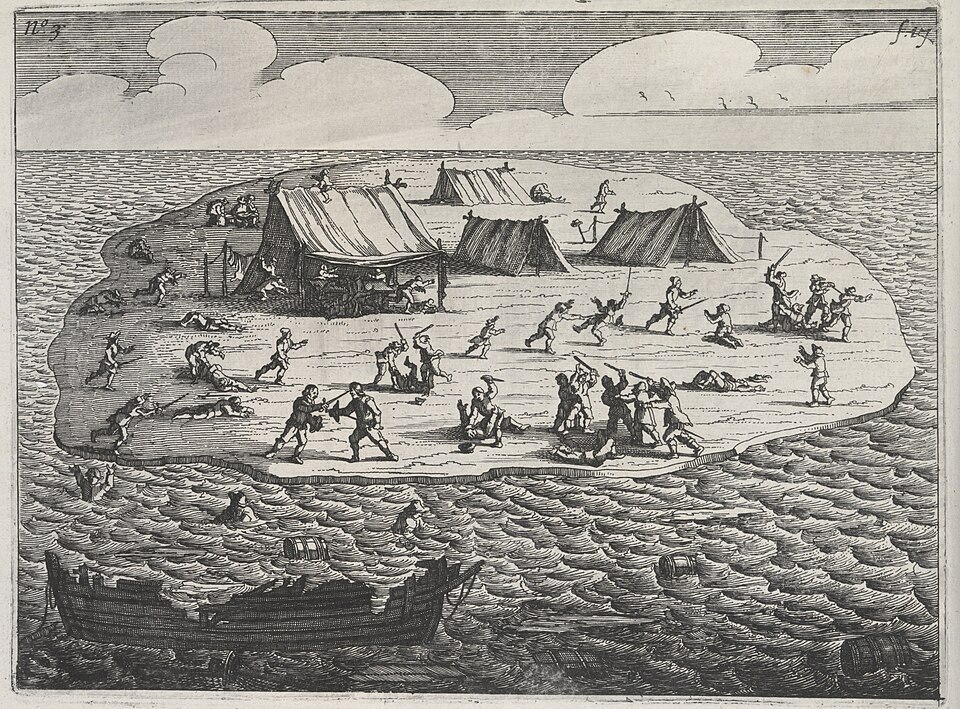
When the Dutch East India Company ship Batavia wrecked on a reef off Western Australia in 1629, disgraced merchant Jeronimus Cornelisz seized control of the survivors stranded on the barren Houtman Abrolhos islands. Fearing his crimes would be exposed once rescue came, he set his followers to killing anyone who might oppose him or drain the group’s meagre food and water. Over the following weeks his men murdered at least 125 men, women and children, drowning some and butchering others, while a small band of soldiers under Wiebbe Hayes held out against them on a nearby island.

When commander Francisco Pelsaert finally returned with a rescue ship, Cornelisz had already been captured. He and six of his men were hanged on Long Island in the Houtman Abrolhos on 2 October 1629, the first Europeans executed on Australian soil; Cornelisz had both hands amputated before he was strung up. Two lesser offenders were marooned on the mainland instead, becoming the first Europeans known to live in Australia.

Confessions were extracted from several of the mutineers under torture before the executions were carried out.

From Shipwreck to Massacre on Beacon Island

⬅ See all events from 2 October

Spread the word on your favourite platform!

1764: Born to Mutiny: Fletcher Christian, the Man Who Cast Captain Bligh Adrift

Fletcher Christian was born on 25 September 1764 in Cumberland, England, decades before he would become one of history’s most infamous mutineers. In April 1789, as master’s mate aboard HMS Bounty, he led a revolt against Captain William Bligh, seizing the ship in the South Pacific after months of tension during the vessel’s breadfruit-collecting voyage.

Rather than kill Bligh, Christian set him adrift in a small open boat with eighteen loyal crew members and minimal supplies. Bligh went on to complete an extraordinary 3,618-mile voyage to safety in Timor, a feat of navigation still studied today.

Christian and his fellow mutineers eventually settled on remote Pitcairn Island with a group of Tahitian men and women, burning the Bounty to avoid detection. The fate of the settlement descended into violence within years, and the exact circumstances of Christian’s own death remain disputed, with some accounts claiming he was killed by fellow settlers and others suggesting he secretly returned to England.

Portrait of Friday Fletcher October Christian son of Bounty mutineer Christian Fletcher 1814 by John Shillibeer

⬅ See all events from 25 September

Spread the word on your favourite platform!

1754: Born to Mutiny Twice: Captain William Bligh, Survivor of the Bounty and the Rum Rebellion in Sydney

Born on 9 September 1754, William Bligh rose to Vice-Admiral of the Blue and served as Governor of New South Wales from 1806 to 1808, but he is remembered above all for surviving not one but two uprisings against his command.

The first came on 28 April 1789 aboard HMAV Bounty, when Master’s Mate Fletcher Christian led a mutiny in the South Pacific. Bligh and 18 loyal crew were cast adrift in a 23-foot open launch so overloaded its gunwales sat only inches above the water, given four cutlasses and barely a week’s food, with a compass and quadrant but no charts. The ship’s clerk, Samuel, defied threats from the mutineers to smuggle aboard vital navigation instruments, while the gunner’s own pocket watch became the only means of keeping time. Fleeing hostile islanders at Tofua, the party lost quartermaster John Norton, killed on the beach, before Bligh navigated the tiny boat some 3,618 nautical miles to safety at Timor.

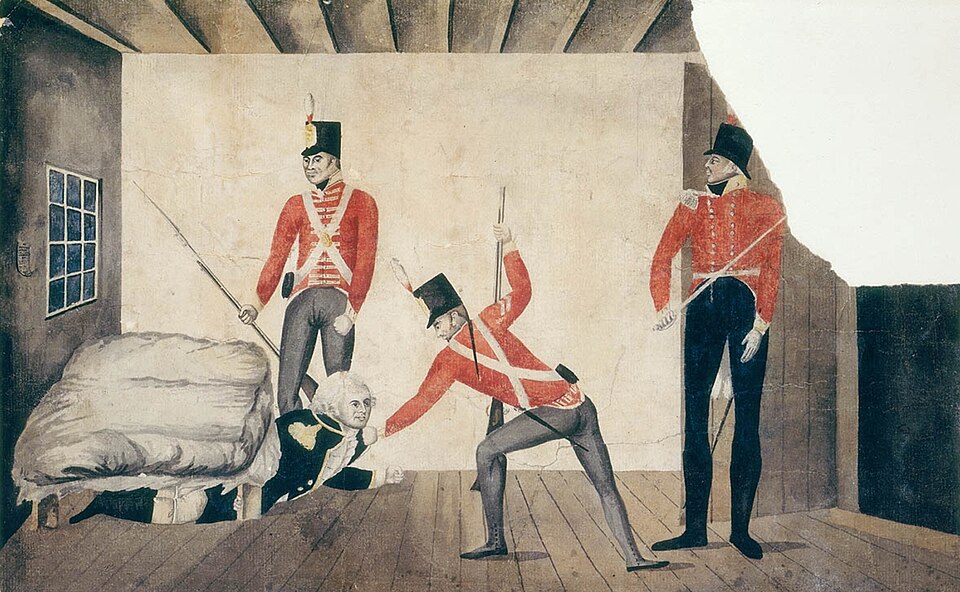
Nearly two decades later, as governor of Sydney, Bligh faced a second rebellion when officers of the NSW Corps deposed him in the colony’s Rum Rebellion, a rare case of a British officer surviving both a shipboard mutiny and a colonial military coup.

Sydney Rum Rebellion Arrest of Governor Bligh historical illustration

⬅ See all events from 9 September

Spread the word on your favourite platform!
On This Day in True Crime History

Subscribe to Dark Stories

True crime stories, dark history and tour news, straight to your inbox.