Nat Turner was an enslaved preacher who believed he had been chosen for a divine mission when he led an uprising that August in Southampton County, Virginia, killing dozens of people in the slaveholding community and sparking the bloodiest slave revolt in American history.
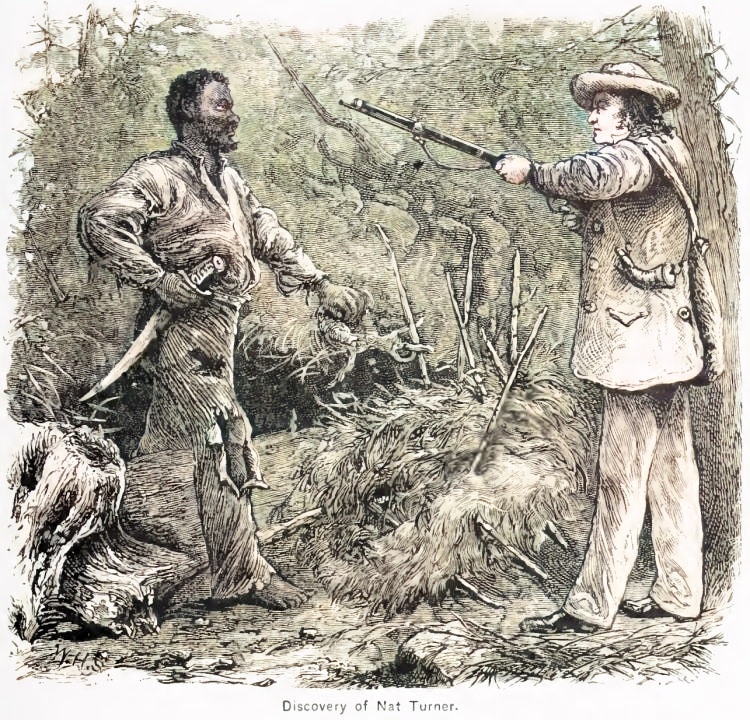
He evaded capture for more than two months, hiding in the woods and finally in a hole dug beneath a fallen tree, before he was found, tried and sentenced to death. He was hanged at Jerusalem, Virginia, on this day in 1831.
Asked before his execution whether he now repented, Turner showed no remorse, reportedly replying, "Was not Christ crucified?"
Discovery of Nat Turner by William Henry Shelton, 1882
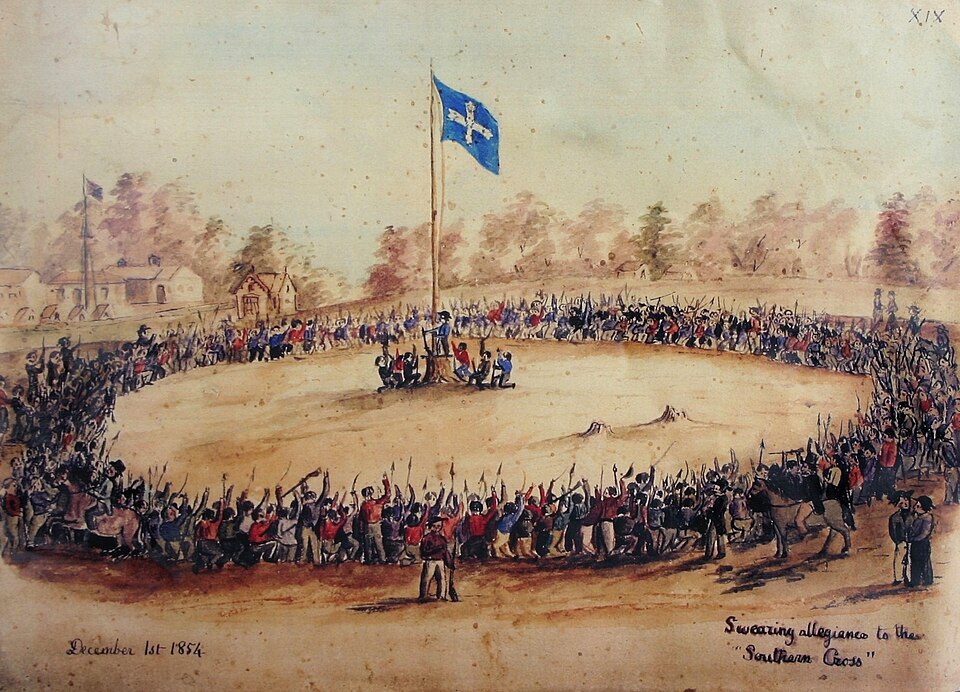
More than 10,000 diggers crowded onto Bakery Hill, directly opposite the government camp in Ballarat, and formally established the Ballarat Reform League under the Chartist John Humffray on this day in 1854. The resolutions they passed were blunt: full democratic representation, the vote for every man, and an end to being governed without a say in it.
They did not stop at petitioning. The League declared that if their demands went unmet, the diggers would secede from the United Kingdom altogether, a threat of open rebellion against the Crown. Weeks later that defiance would end in gunfire at the Eureka Stockade.
Ralph Entwistle was a transported labourer assigned to a farm near Bathurst when he and a fellow convict stopped to cool off in the Macquarie River after a long cart journey. Governor Ralph Darling's touring party happened to pass by, and though Darling had not even seen the incident, the local magistrate had both men flogged for the affront. Within a year the humiliated Entwistle had turned bushranger, building a band that swelled to as many as 80 men, the largest convict uprising in New South Wales since 1804, known as the Ribbon Gang for the white streamers he wore in his hair.
The rebellion turned deadly when the gang descended on a farm seeking revenge on the magistrate who had ordered the floggings. The overseer, James Greenwood, refused to free the farm's convict servants and bared his chest, daring the bushrangers to shoot, telling them they were not game enough. Entwistle and two others fired, killing him instantly.
Weeks of gun battles with troopers and soldiers followed before the gang was run down and captured. On 2 November 1830, ten of the bushrangers, including Entwistle, were publicly hanged at Bathurst, six for Greenwood's murder and four for plundering farmhouses. Their bodies were left on display for a day as a warning before being buried in two mass graves of five.
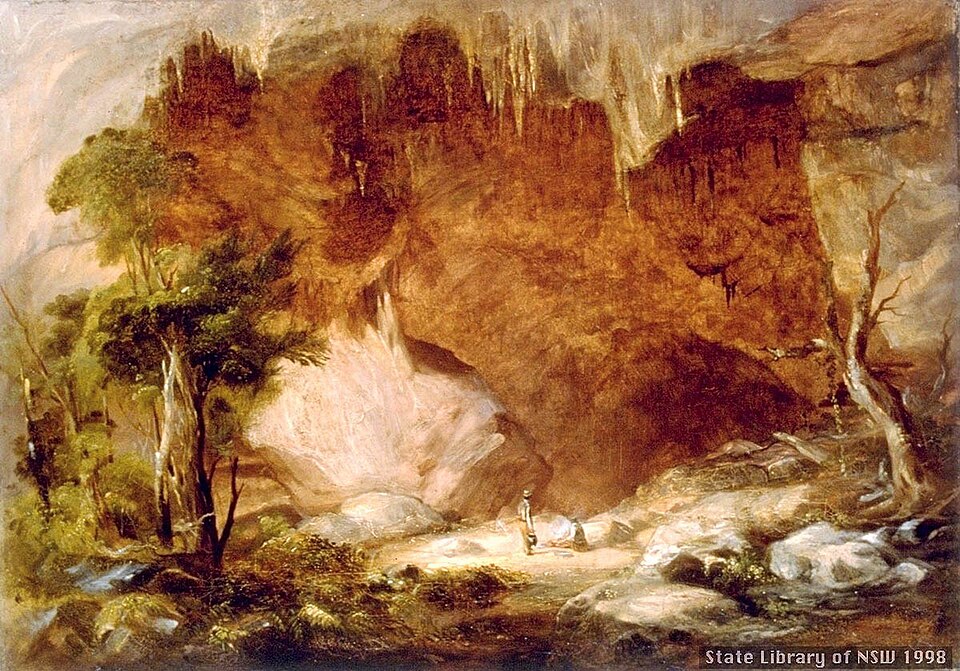
Abercrombie Caves: Burrangalong Cavern, Rockbridge Creek, 1849 / oil painting by Conrad Martens
Ralph Entwistle was an escaped convict who had been publicly flogged on the orders of Bathurst magistrate Thomas Evernden after being spotted bathing in the Macquarie River by the Governor's travelling party. Within a year he had turned bushranger, gathering escaped convicts into a band that grew to as many as eighty men, the largest convict uprising since Castle Hill, known as the Ribbon Gang for the white streamers Entwistle wore in his hair.
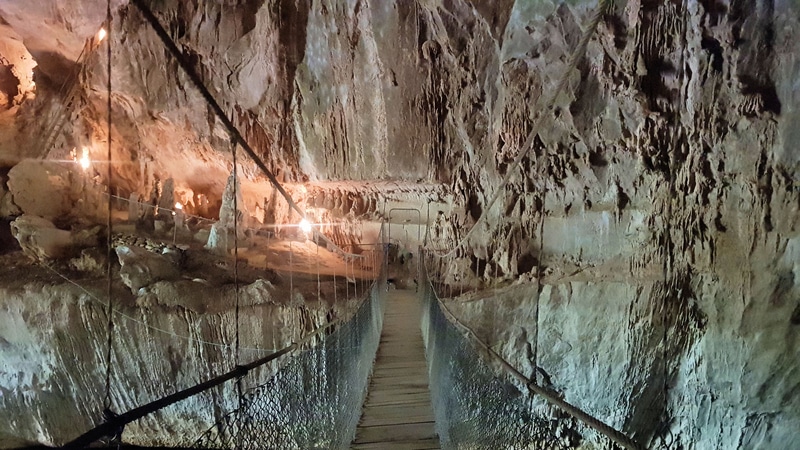
The gang's campaign turned deadly when overseer James Greenwood refused to let them recruit his master's men, baring his chest and daring them to shoot. They did. Troopers and armed volunteers, guided by two Aboriginal trackers, finally cornered the remaining bushrangers at the Abercrombie Caves, where a gunfight lasting hours forced the survivors onto a nearby hilltop before reinforcements ran the exhausted gang down.
On 30 October 1830, ten captured bushrangers faced trial at Bathurst before a jury of military officers. The court convicted six, including Entwistle, of Greenwood's murder, and four others of plundering farmhouses, sentencing all ten to death.
Suspension bridge over underground lake at Abercrombie Caves