Thomas Butlock is a young man from Ireland with what he calls 'an aspiring temper': a restless hunger to look the part of a gentleman, even when his pockets are empty. He crosses the sea to London on the promise of connections and a future in the law, taking lodgings he cannot afford and living as though success has already arrived.
In old England, appearances could be everything and nothing at once. For Butlock, the gap between the life he wants and the life he has is about to collapse in a single reckless afternoon: a true crime story of vanity, impulse, and a half-hour of fatal reasoning.
Listen now and follow Thomas Butlock from the moment temptation takes hold to the bitter end of a young man's gamble.
Follow the podcast so you never miss an episode:
FROM THE 1735 TEXT
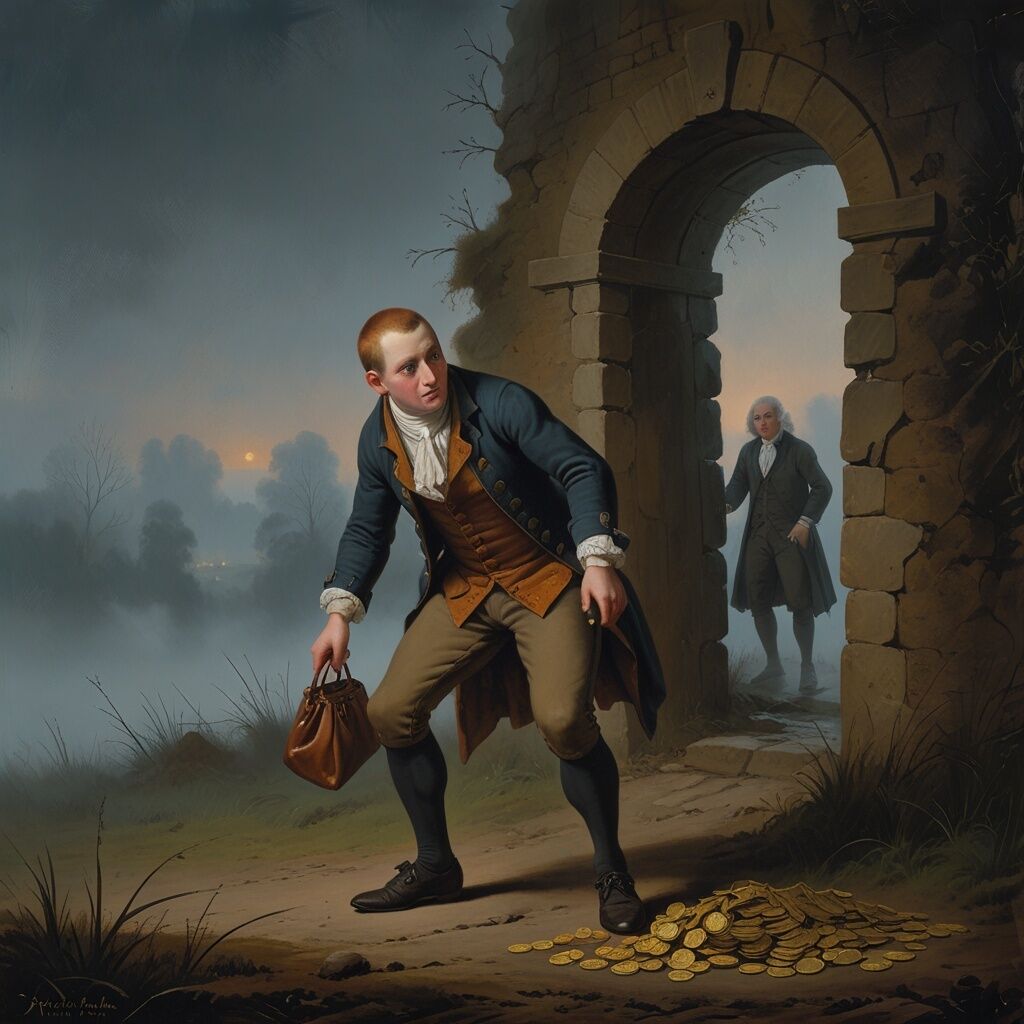
It then came into his head what a figure he might cut if he had all that money.
Dark Lexicon: Old words. Dark meaning.
The past speaks its own dialect; here is what to listen for in this episode.
Vintner: not just someone who makes wine, but in old England a keeper of a wine house or tavern: a place where drink, company and trouble all mixed freely.
Broke: when the text says his master 'broke,' it means went bankrupt. In old England, a ruined tradesman might flee to another country to dodge his creditors and start again under the radar.
Louis d'or: a French gold coin stamped with the king's portrait, valuable and immediately conspicuous. Spending foreign gold in an English market town was practically a confession.
An aspiring temper: not ambition in the modern, admirable sense. In old England, an 'aspiring temper' hinted at dangerous vanity: the compulsion to live above one's station, a moral failing the law had little patience for.
Cut a figure: to make a striking impression in public, especially through dress. In old England, looking like a gentleman could open doors or, if the clothes were funded by crime, slam them shut.
Fact: today it means something proven true, but in old England's courts, 'the fact' simply meant the criminal deed itself. When the text says 'the fact appearing plain,' it means the crime was obvious and undeniable.
Suffered: in this context, not merely to endure pain but to undergo execution. When someone 'suffered' in old England, they met their death at the hands of the hangman.
About This Series
Lives of the Most Remarkable Criminals (1735) is one of the earliest works of true crime in the English language. Each week this podcast retells one of its stories for today's listener, keeping the old book's most striking lines.


