1851: A Fabricated Choking Bullock Led to the Murder of a Sleeping Man: Hanged at Launceston

Francis Duke, a servant on George Hill’s farm near Deloraine in northern Tasmania, woke his employer in the middle of the night with an urgent story: the bullock being fattened was choking and needed help. When they reached the shed the animal was calm and Duke complained only of the cold, but as Hill turned back toward the house Duke knocked him down with a piece of firewood and began stabbing him as the two men grappled on the ground. It was Hill’s wife who turned the fight, beating Duke with a brick until neighbours arrived to help subdue him.

Searching the property afterwards, they found Duke’s fellow servant, a ticket-of-leave man named William Smith, already dead in his bed, a wound driven more than an inch into his skull while he slept. Duke was convicted of murder and sentenced to death without hope of mercy. He was hanged at Launceston on 31 October 1851.

Duke, a Spaniard who reportedly spoke unintelligibly in court, insisted to the end that the evidence given by Hill and his wife was false from beginning to end.
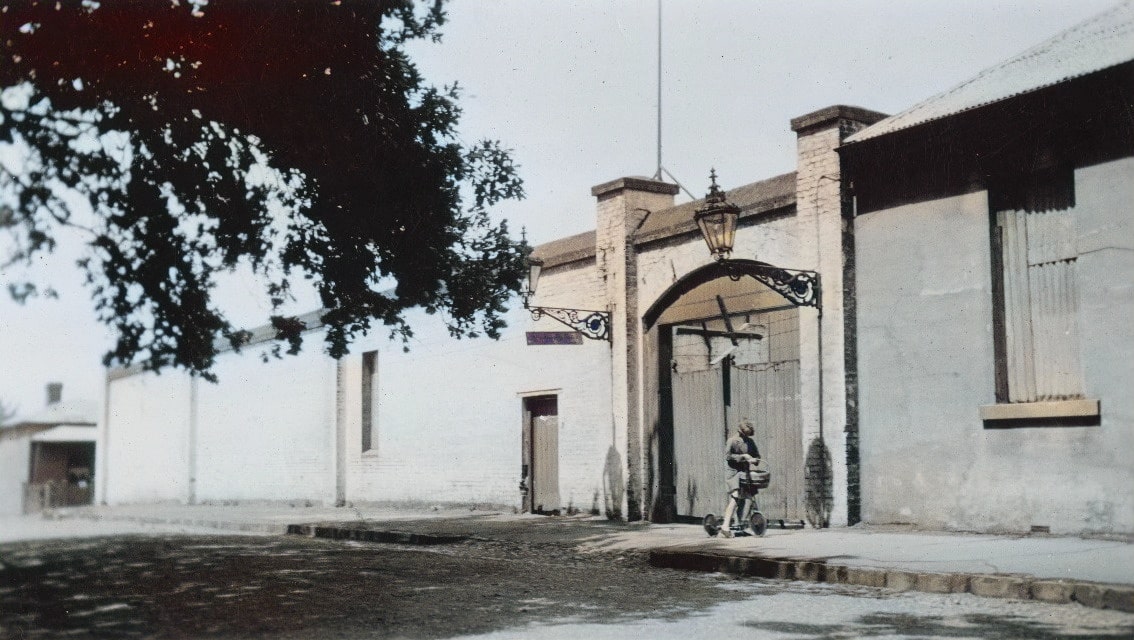

Old Launceston Gaol, viewed from Wellington Square. State Library and Archives of Tasmania, LPIC147/4/62.

⬅ See all events from 31 October

Spread the word on your favourite platform!

1851: “And Am Willing to Suffer”: the Chilling Calm After a Deloraine Hut Stabbing

James Yardsley was drinking keg beer with fellow farm servants in a hut near Deloraine on the night of 26 July 1851 when, after a separate scuffle outside, he strode back in and told Robert Hudson he would be his “butcher to night.” He stabbed Hudson three times with a pocket knife while another labourer, Bush, wrestled for the blade and begged him to stop; Hudson collapsed with wounds to his chest, arm and back.

Convicted of wounding with intent to do bodily harm, Yardsley was hanged at Launceston on this day in 1851, the same port where he had landed as a transported convict sixteen years earlier.

When his employer confronted him that night, Yardsley answered flatly, “I’ve done it, and am willing to suffer,” and later said he was ready to “die on the gallows for it.”

Butcher and butcherer

⬅ See all events from 31 October

Spread the word on your favourite platform!

1861: They Dined on Stolen Ham While the Family Lay Bound: Thomas Sanders Hanged in Melbourne for a Farmhouse Attack

Thomas Sanders and his accomplice, John Johnson, burst into a farmhouse at Keilor, outside Melbourne, and held the farmer, his pregnant wife and their teenage servant girl at gunpoint for six hours. They nailed the windows shut, hung the family’s double-barrelled gun out of reach, then settled by the fire to fry a stolen ham and drink the household’s wine and brandy while their captives sat bound and silent in the kitchen.

At trial, Sanders admitted his involvement in the robbery but disputed the evidence against him on the more serious charge. Both men were convicted, and Sanders was hanged on 31 October 1861. The rope had been improperly adjusted, leaving him struggling on the gallows for three minutes. He maintained his innocence of the capital offence to the end, declaring before the execution crowd, “I stand before you innocent of the offence for which I am about to die… I swear I am innocent.”

Cast-iron pan with pork belly cooking over a forest campfire

⬅ See all events from 31 October

Spread the word on your favourite platform!

1866: “Unprecedented in Our Annals of Crime”: A Sydney Butcher Committed for Trial Over a Dismembered Body

A boy’s dog scratching at a rubbish heap near a flour mill uncovered a charred human head, its features burned beyond recognition. Days later a woman’s torso turned up nearby, but no one had been reported missing, and the case stalled until police found a torn scrap of calico left in a landlady’s cellar by a young butcher named William Henry Scott. It matched, thread for thread, a fragment of chemise recovered with the remains.

After nine days of police court hearings, Scott was committed for trial on 31 October 1866, accused of a murder most foul: that of a Sydney woman with whom he had been living as husband and wife. The magistrate praised the remarkable police investigation, which had traced an entire body back to a single scrap of fabric, describing the case as “unprecedented in our annals of crime”.

William Henry Scott under sentence of death 1867 for murder most foul

⬅ See all events from 31 October

Spread the word on your favourite platform!
On This Day in True Crime History

Subscribe to Dark Stories

True crime stories, dark history and tour news, straight to your inbox.