1863: The Mob Wanted to Lynch Him on the Spot: A Bushranger Hanged at Maitland for Murdering a Brave Drover

On Warland’s Range near Murrurundi in April 1863, a masked rider named Henry Wilson held up a party of drovers and stripped young Peter Clarke of his watch and chain. When Clarke lunged at him, Wilson shot him three times; Clarke was dead within minutes. So furious was the crowd that gathered at the scene that police had to physically stop them from hanging Wilson on the nearest tree.

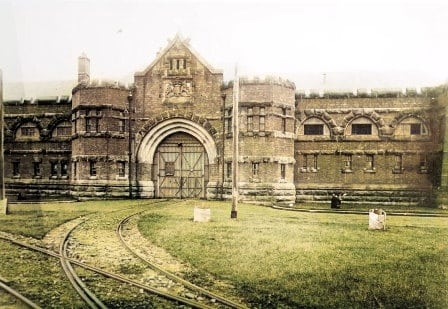
He was tried instead at Maitland Circuit Court, where his counsel argued the fatal shot had gone off accidentally in the struggle. The jury took ten minutes to convict him, and he was hanged at East Maitland Gaol on 2 October 1863. Clarke’s bravery was later honoured with a public monument erected on the spot where he fell.

Wilson admitted firing the shots but denied meaning to kill, blaming drink and panic in the scuffle; still, he told his priest he accepted the justice of his sentence and deserved to die.
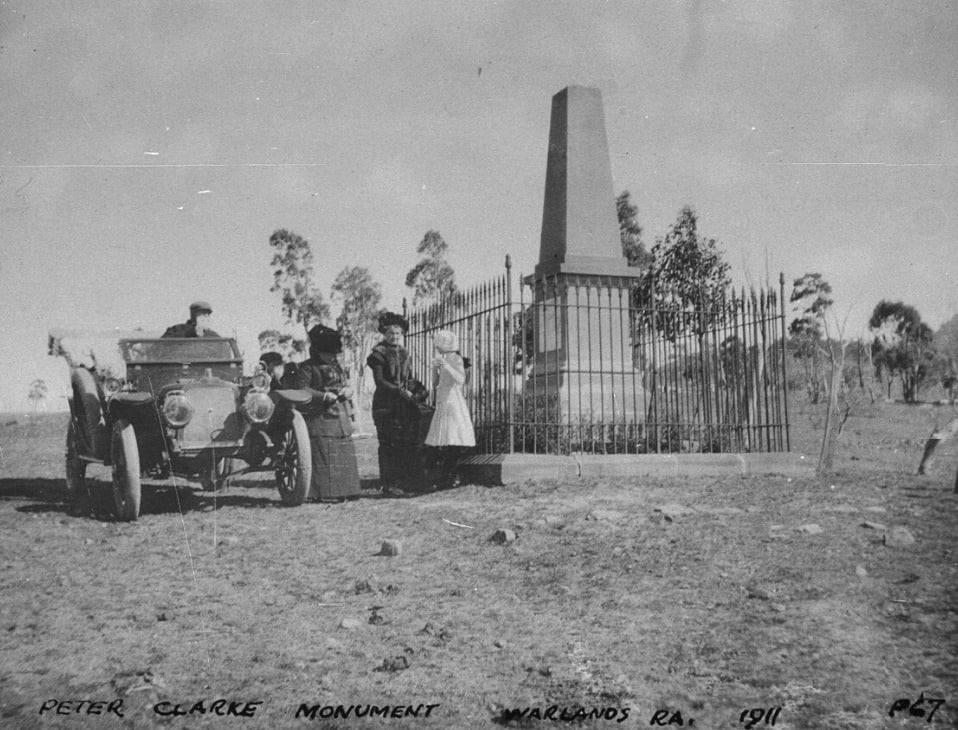

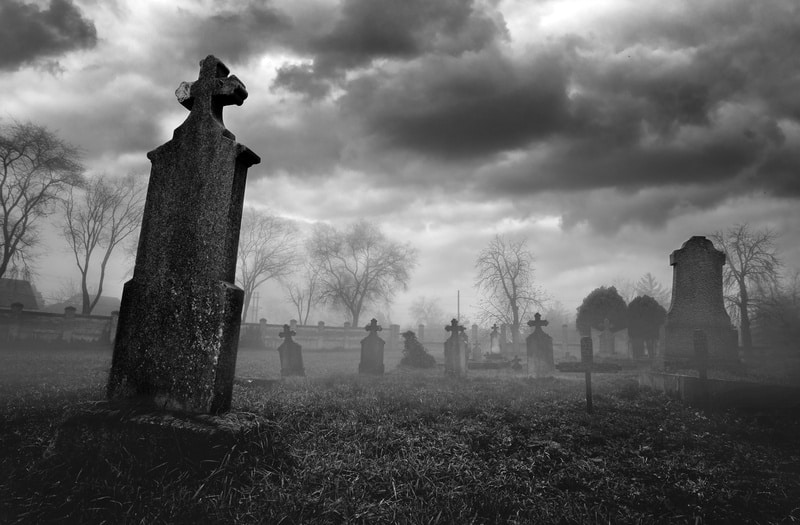
Peter Clarke monument, Warland’s Range, near Blandford, NSW. Mitchell Library, State Library of New South Wales, At Work and Play - 05492.
Peter Clarke monument, Warland’s Range, near Blandford, NSW. Mitchell Library, State Library of New South Wales, At Work and Play – 05492.

⬅ See all events from 2 October

Spread the word on your favourite platform!

1826: Property Crimes, Not Murder: Seven Men Hanged in Hobart in a Single Morning

On 15 September 1826, seven convicts, George Brace, John McFarlane, James Edwards, Thomas Balfour, John Dadd, John Clark and Patrick Brown, were hanged together in Hobart, the second of three mass executions carried out that month under Chief Justice John Pedder.

Unlike the seven hanged just two days earlier for murder, not one of this group had killed anyone. Balfour, McFarlane and Edwards went to the gallows for absconding into the bush and robbing settler William Holdship; Brace was hanged for robbery, Dadd and Clark for burglary in Ross, and Brown for stealing sheep, a crime that under Britain’s Bloody Code carried the same legal weight as taking a human life.

The scale of the executions reflected both the severity of imported English law and Governor George Arthur’s determined push to impose discipline on the penal colony. Rather than hang prisoners as they were convicted, the Supreme Court held sentences over and carried them out in batches: seven men on 13 September, seven more on the 15th, and a further nine on the 18th, accounting for nearly half of the 53 executions recorded in Van Diemen’s Land that year.

1826 in the Hobart Colony

⬅ See all events from 15 September

Spread the word on your favourite platform!

1862: A Slipped Mask Gives Away a Bushranger

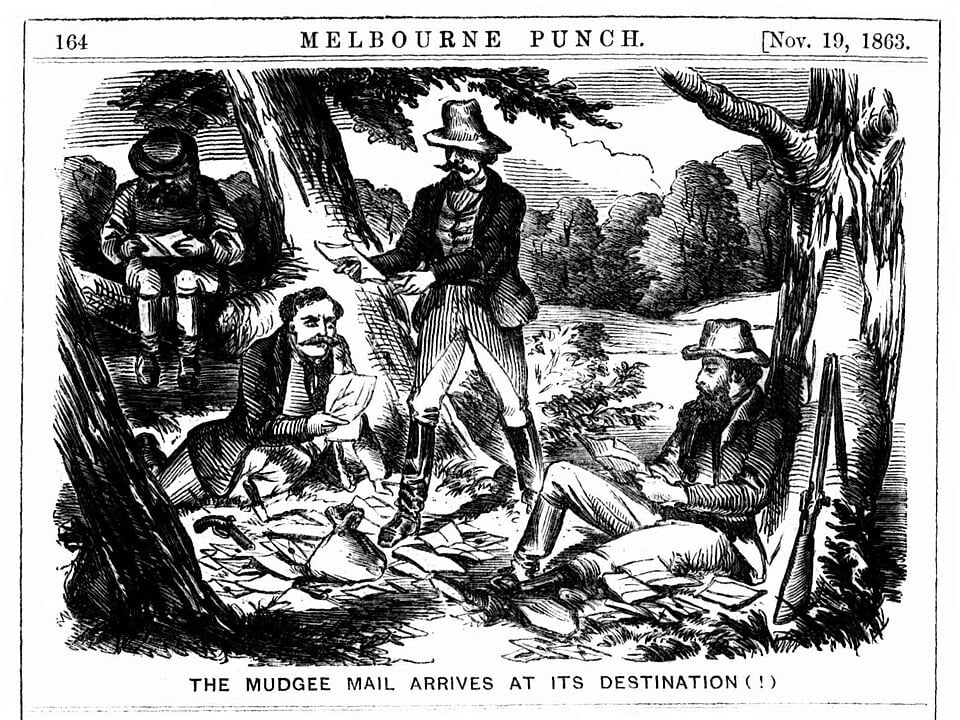
On 14 September 1862, two bushrangers robbed a mailman near Mudgee in New South Wales. They let him keep his sixpence and his pipe. His horse and the mail went with them.

But one robber gave himself away when his crepe mask slipped. The mailman caught a glimpse of his face and believed he could identify him as the infamous bushranger Fred Lowry.

The mail run offered little chance of real profit. Some suspected the hold-up was a decoy to draw police away from a bigger job. News of an armed horse robbery nearby fed the theory, though the report established no connection.

Less than a year later, Lowry died after being shot by police. He reportedly asked that his brother-in-law be told “Tell ’em I died game”.

Mudgee Mail Delivery

⬅ See all events from 14 September

Spread the word on your favourite platform!

1866: The Wild Scotchman Jailed for 25 Years After Queensland Mail Robberies

Bushranger James Macpherson, known as the Wild Scotchman, entered the St Helena Island penal settlement in Moreton Bay, Queensland, on 14 September 1866 to begin serving a 25 year sentence for mail robbery.

He did not serve his time quietly. On 11 April 1870, Macpherson took part in a mass escape attempt, breaking free of the stockade with six other prisoners and hiding in the scrub around the island. He was shot in the wrist during his recapture and returned to custody.

Despite the harsh sentence and the failed breakout, Macpherson was eventually released by executive clemency in 1874.

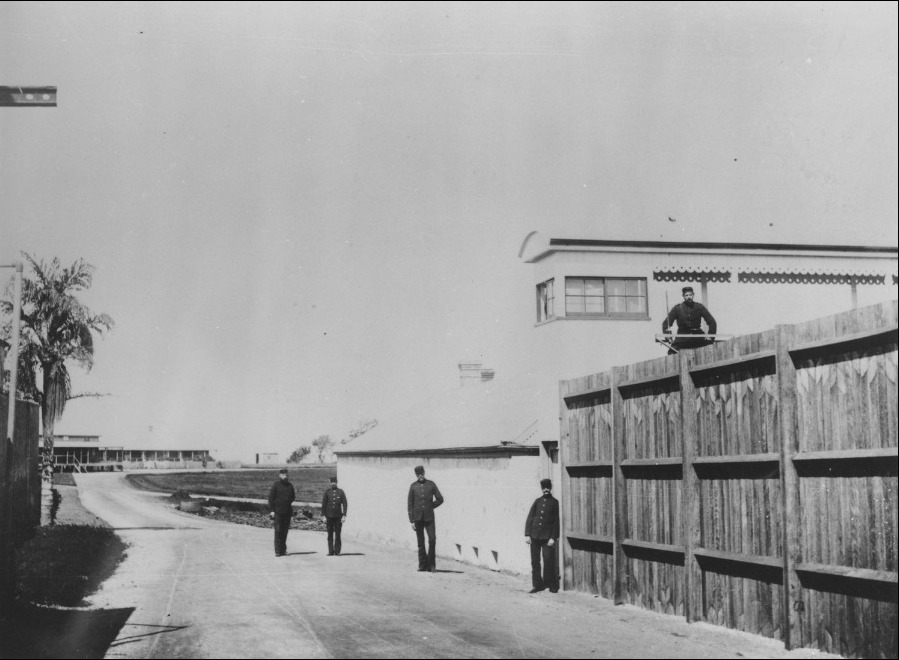
Prison guards on St. Helena, ca. 1893. State Library of Queensland, negative number 60065.

⬅ See all events from 14 September

Spread the word on your favourite platform!
On This Day in True Crime History
1891·The Mace, the Madam, and a Melbourne Scandal That Never Died
1959·Through a Chapel Ventilator: the Sydney Jailbreak That Triggered Australia's Biggest Manhunt
More Crime On This Day →

Subscribe to Dark Stories

True crime stories, dark history and tour news, straight to your inbox.