1859: Confessing to Murder, Denying the Brutality: A Young Man Hanged in Melbourne

William Siddons, a young labourer newly arrived from London with no family in the colony, faced trial at a Ballarat circuit court and was convicted of a capital offence.

He was hanged in Melbourne on this day in 1859. Witnesses described him facing the gallows with composure, and just before the drop he asked that reporters be brought to him so he could make one final statement.

Siddons confessed to the capital offence itself, but to the last denied the additional brutality the evidence had suggested, repeating that denial to the journalists gathered around him before he died without a struggle.
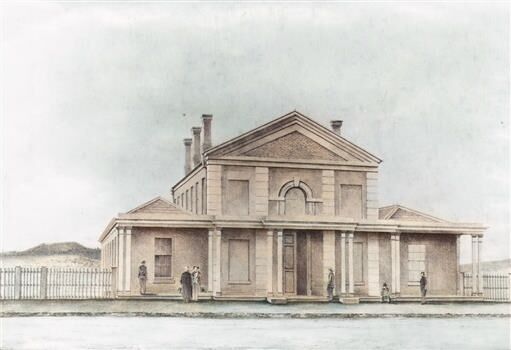
Ballarat Circuit Court: 1859 Australia

⬅ See all events from 17 November

1858: He Named Four Innocent Men as the Killers: Hanged in Melbourne for a Ballarat Murder

Hugh Anderson had money and a fortnight of riotous spending behind him when he was found dead in a Ballarat stable, dragged there in the dark with his boots and hat gone. A trail of blood led straight back to a coffee stall tent kept by George Thompson, a ticket-of-leave hawker who swore he had heard nothing of any murder that night.

Facing trial, Thompson changed his story completely. He claimed four strangers had forced their way into his tent, struck the victim down with an axe while he was held back and threatened into silence, and that he himself had taken no part at all. Investigators picked the account apart: of the men he named, those brought before the inquest were discharged for lack of evidence, and a jury convicted Thompson alone of wilful murder.

He was hanged in Melbourne on this day in 1858. Witnesses noted the strange contrast: a man who could kill with such ferocity for a few pounds now trembled uncontrollably as the hangman prepared the rope, and on the drop itself he stood perfectly still.

Thompson was stolid and unmoved for most of his time in gaol, but in his final days he confessed his guilt and acknowledged the justice of his sentence.

Panorama of Ballarat in 1858 showing early townscape and gas works

⬅ See all events from 12 November

1894: A Jockey Hanged at Ballarat Asked One Last Question: Who Won the Melbourne Cup?

Elijah Cockroft was a young jockey besotted with his half-sister Fanny Mott, who was engaged to marry his own brother. One night near Stawell, he lured her into a paddock with a tale of stray horses, struck her with a stick, and cut her throat. Arrested days later, he confessed readily, telling police he dearly loved her, though he insisted he had never meant anything improper.

Tried for murder, Cockroft's defence argued a childhood head injury had left him unbalanced, but the jury took just 35 minutes to convict. He was hanged at Ballarat on 12 November 1894, and in his final hours, with unsettling calm, he asked the warders which horse had won the Melbourne Cup, Australia's most popular annual horse race.

Cockroft first protested his innocence to the guards, then reversed himself, expressing sorrow for what he had done and declaring, as he was led to the scaffold, that he had put his trust in Jesus.

Elijah Cockroft condemned jockey 1894

⬅ See all events from 12 November

1854: Ten Thousand Diggers Threaten to Secede From the Empire: the Birth of the Ballarat Reform League

More than 10,000 diggers crowded onto Bakery Hill, directly opposite the government camp in Ballarat, and formally established the Ballarat Reform League under the Chartist John Humffray on this day in 1854. The resolutions they passed were blunt: full democratic representation, the vote for every man, and an end to being governed without a say in it.

They did not stop at petitioning. The League declared that if their demands went unmet, the diggers would secede from the United Kingdom altogether, a threat of open rebellion against the Crown. Weeks later that defiance would end in gunfire at the Eureka Stockade.

Swearing allegiance to the Southern Cross

⬅ See all events from 11 November

On This Day in True Crime History

Subscribe to Dark Stories

True crime stories, dark history and tour news, straight to your inbox.