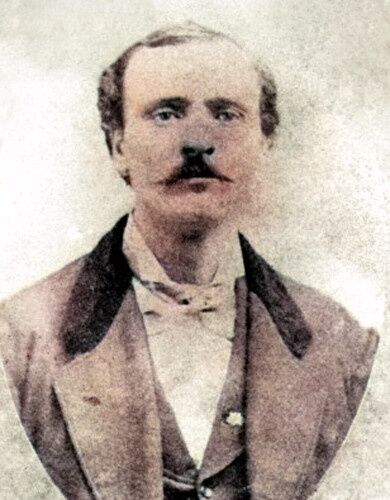
James Reed and two accomplices rode onto the property of the Watt Grayson family in the Choctaw Nation on this day in 1873 and made off with $30,000, an extraordinary sum for the frontier. In a territory where federal law had little reach and armed men moved freely between jurisdictions, the raid stood out even among the era's frequent hold ups for its scale and its nerve.
The Grayson robbery became one of the notable frontier crimes of the period, remembered less for violence than for the sheer audacity of walking away with a fortune from a single family's home.
Patty Hearst was the granddaughter of a newspaper tycoon when armed members of the Symbionese Liberation Army snatched her from her apartment in 1974, holding her captive for weeks until she emerged under a new name, Tania, rifle in hand, helping the group rob a San Francisco bank. Tried for armed robbery, she was convicted and sent to prison, her defence insisting she had acted under duress, brainwashed and threatened by her captors.
She walked free on 19 November 1976, posting $1.5 million bail while her conviction went to appeal. The question of whether she was victim or willing accomplice would trail her for years, long after the bail money changed hands.
At his jungle commune in Guyana, Jim Jones had already rehearsed the ending. More than once he gathered the Jonestown community at night, handed out cups of red liquid, and told them it was poison with forty five minutes left to live. When nobody died, he revealed it had been a loyalty test, a drill he called a White Night, and warned that one day it would not be a drill.
That day came when US Congressman Leo Ryan flew in to investigate reports that members were being held against their will. Two Temple members passed him a note reading, "Please help us get out of Jonestown." As Ryan's party reached the airstrip with a handful of defectors, armed guards from the commune followed and opened fire, killing Ryan and four others on the tarmac.
Back in the settlement that evening, on 18 November 1978, Jones summoned the community to the pavilion for the last time. A tub of poisoned punch was mixed, and parents were made to feed it to their children before taking their own share, while armed guards ringed the crowd to make sure no one simply walked away. By morning, 918 people were dead, Jones among them, in one of the largest mass killings in modern history; roughly a third of the dead were children.
"Death is a million times preferable to 10 more days of this life," Jones told the gathered crowd as the poison took hold. He was found dead in his chair from a gunshot wound to the head, ruled likely self-inflicted.
Man looking up while surrounded by men looking down
Ted Bundy was strapped into the machinery of his own execution with the clock running out, only to have it stopped with seven hours to spare. The serial killer, convicted of multiple murders of young women in Florida, had exhausted appeal after appeal by the time his death warrant was signed, and his lawyers kept filing right up to the deadline.
On this day in 1986, that last-minute filing bought him a reprieve. It was not mercy, only delay: his attorneys pressed on with further appeals against his death sentences, dragging the case out for years before the state of Florida finally carried out his execution.
Empty prison corridor with lights turning on and wet floor