1791: Twenty Convicts and a Pregnant Woman Flee Parramatta, Convinced China Lay Just Over the River

Twenty male convicts newly arrived from Ireland, along with one pregnant woman, vanished from the settlement at Rose Hill, near Parramatta, on this day in 1791, taking their tools, bedding and a week's rations with them. Passing settlers who saw them pass asked where they were bound; the convicts answered that they were walking to China, certain that a great river lay only about a hundred miles to the north, beyond which a copper coloured people would receive and treat them kindly.

An officer and a detachment of troops were sent after them, tracing the group as far as the harbour before Sydney before losing the trail entirely. Within a week most had stumbled back starving and half naked, having survived on wild berries and shrubs, while one or two of the runaways were killed by spears from the people whose country they had wandered into.

Watkin Tench, recording the episode, could not resist a final barb: insisting he intended no "illiberal national reflection" on any people, he added that it was certain every one of the escapees was Irish.
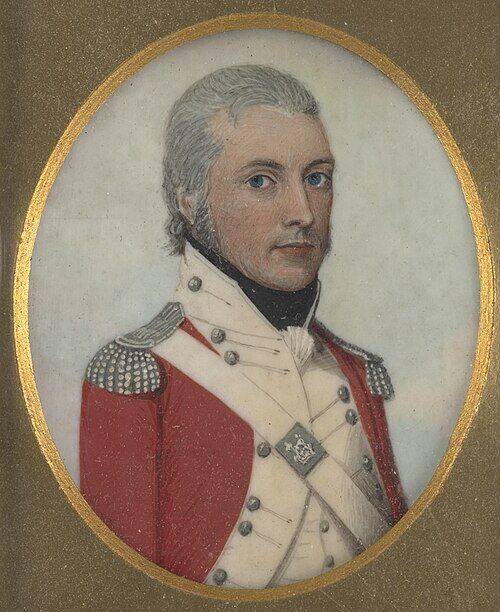
Portrait of Watkin Tench: Narrator of the establishment of the Port Jackson colony(Sydney)

⬅ See all events from 1 November

1790: Freed From Prison at Dawn, Burgling Again by Dusk: One of the Earliest Hangings Near Sydney.

William Harris had only just walked free from a Birmingham gaol, a three month sentence for robbing an outhouse behind him, when he broke into another house in the same street that same night. Caught in the act, he was convicted of burglary and condemned to death, later reprieved to transportation for life. He survived the notorious Second Fleet voyage aboard the Neptune, one of the deadliest convict crossings in Australia's history, in which scores of prisoners perished before the ship ever reached Sydney.

In the young colony, Harris fell in with fellow convict Edward Wildblood, and the pair spent weeks pilfering from other convicts' huts before fleeing into the bush. Recaptured and chained together on bread and water, they escaped again within weeks and broke into a hut, beating a sick settler and stealing beef, flour, a frock and a book. Tried for the break-in, the two men were hanged together on this day in 1790, among the first executions carried out in the young colony, with settlers gathered to watch them die from a tree.

In an extraordinary coincidence, Harris and Wildblood were both recorded as having been born on 1 January 1764. Their lives would ultimately end together, on the same day and at the same gallows, aged just 26.

Second Fleet aka The Death Fleet in distress

⬅ See all events from 28 October

1841: The Scaffold Confession That Exposed a Wrongful Transportation by a Bushranger

Patrick Curran was a notorious bushranger who terrorised the colony's roads and outstations, once storming a property with a loaded gun levelled at the overseer before he was overpowered, wounding one of his captors with the stock of his musket in the struggle. Sentenced to death, he escaped from his escort between Picton and Sydney that April, prompting a thirty pound reward before he was run down and returned to custody.

On the morning of 21 October 1841, Curran was hanged at Berrima. His final days swung between violent despair, so bad the attending clergymen were twice ordered from his cell, and sudden, sincere penitence that lasted through the night before his death.

On the scaffold, Curran confessed to the murder of a man named Fuller, a crime for which another man, Bright, had already been tried and transported for life in his place.

The Cat Walk inside Berrima Gaol prison yard Australia circa 1914 1941

⬅ See all events from 21 October

1891: The Bushranger Who Taught Ned Kelly His Trade Drowned in the Murray River

Harry Power was already a seasoned escaper and highway robber when, in 1869, he took on a teenage recruit: Ned Kelly, son of a sympathetic Irish family who sheltered him in the Ovens district. For a few months the pair stuck up coaches and squatters together, Power later boasting of hundreds of robberies, until Kelly broke away and Power carried on alone, eventually suspecting his young protege of helping police track him down.

Captured in 1870 after being betrayed by a relative of the Kelly family, Power served another fifteen years at Pentridge before his release in 1885. He spent his last years as a guide aboard the old prison hulk Success, now a museum ship, before drowning in the Murray River near Swan Hill in October 1891, his body found days later at Tyntynder. One newspaper suggested suicide, but the drowning of a man who had survived two prison escapes and a life of robbery without ever killing anyone was most likely a simple accident.

Bushranger Harry Power 1870s

⬅ See all events from 11 October

On This Day in True Crime History

Subscribe to Dark Stories

True crime stories, dark history and tour news, straight to your inbox.