Archives: Dark Stories: On This Day In True Crime History - Page 8
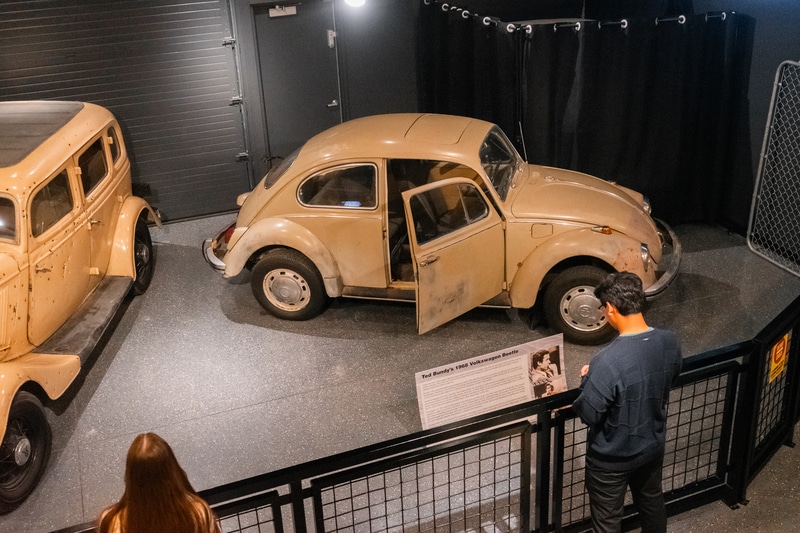
Laura Ann Aime left a Halloween party in Lehi, Utah, on this day in 1974 and never made it home. Hikers found her body on the banks of a river in American Fork Canyon almost a month later, on Thanksgiving Day.
At the time, Ted Bundy was living nearby in Salt Lake City, studying law at the University of Utah, while already murdering women across the region. Before his 1989 execution in Florida, he confessed to killing her, but refused to give any detail, so investigators would not close the file on his word alone.
It took new DNA testing, decades later, to formally confirm his guilt, finally closing the case 51 years after Laura disappeared.
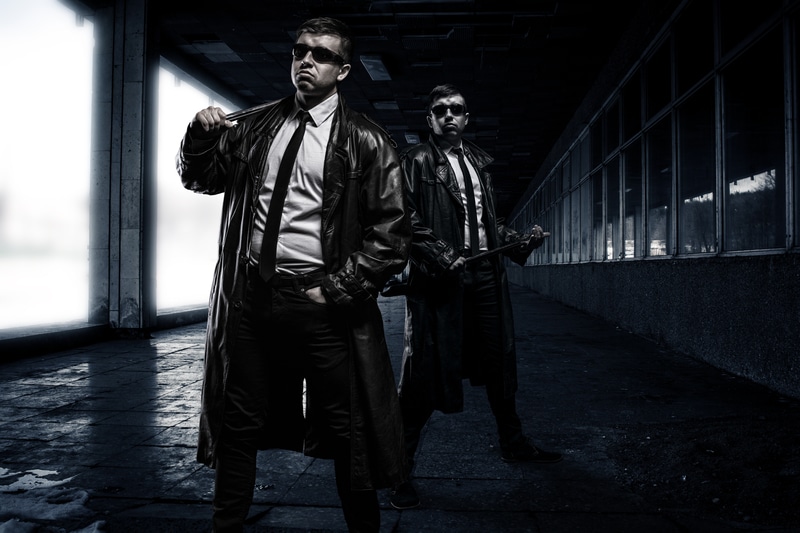
Peter and Doug Morgan, identical twins born in regional Victoria on this day in 1953, grew up to pull off more than twenty armed robberies across the state as the so-called After Dark Bandit, a single figure police hunted for two years without ever suspecting he was two men. Wearing matching clothes and disguises, the brothers struck rural banks and betting shops in towns just twenty minutes apart, sending detectives chasing a suspect who seemed able to be in two places at once. Their habit of striking near closing time and escaping into the bush under cover of darkness earned them their nickname.
The ruse unravelled on 27 April 1979, when Peter robbed the Heathcote bank for a third time and shot veteran constable Ray Koch twice, leaving him fighting for his life. Fleeing into the bush as nearly two hundred officers swarmed the area, he resurfaced the next morning walking through Bendigo with a suitcase, telling a suspicious unarmed constable, Rick Hasty, that he was headed to Melbourne to watch the football. Inside the case Hasty found a sawn-off shotgun, stolen cash and an old man’s mask. When Morgan drew a pistol, he was unable to fire it, and as Hasty pinned him against a wall, he reportedly said, “You’ve got me, I just made you a hero.”
The investigation took another extraordinary turn when detectives searching Peter’s farm discovered a photograph of him sitting beside another man with the same face, moustache and sideburns. Detective Patrick Brear realised the truth and telephoned his partner: the elusive After Dark Bandit was not one man but two. Peter had an identical twin brother, Doug, and the pair had been using their matching appearances to outwit police for nearly two years.
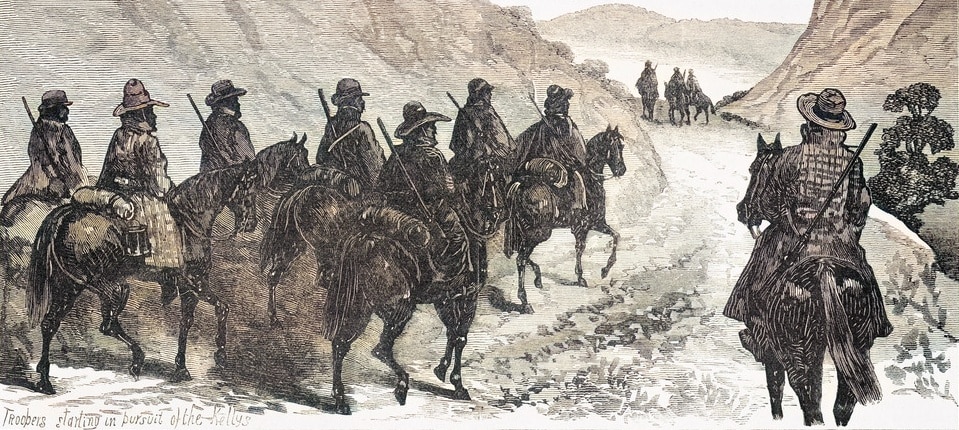
Just four days after three police officers were shot dead at Stringybark Creek, the Victorian government introduced the Felons Apprehension Bill on 30 October 1878, paving the way for extraordinary powers that would allow Ned Kelly and his gang to be declared outlaws.
Once Ned and his brother Dan were formally declared outlaws, they could legally be shot on sight by police or any member of the public, without first standing trial. The legislation also threatened severe penalties for anyone knowingly sheltering or assisting the fugitives.
The crackdown extended beyond the outlaws themselves. Police arrested suspected Kelly sympathisers, with around twenty men detained for months as authorities attempted to break the gang’s network of support. The heavy-handed campaign fuelled resentment among sections of the local population, strengthening sympathy for the very men the government was determined to capture.
Even after the gang robbed banks at Euroa and Jerilderie, prompting Victoria and New South Wales to offer a combined reward of £8,000 in February 1879, the outlaws remained at large. It took another sixteen months, and the bloody siege at Glenrowan in June 1880, before Ned Kelly, wearing his homemade iron armour, was finally captured.
Ralph Entwistle was an escaped convict who had been publicly flogged on the orders of Bathurst magistrate Thomas Evernden after being spotted bathing in the Macquarie River by the Governor’s travelling party. Within a year he had turned bushranger, gathering escaped convicts into a band that grew to as many as eighty men, the largest convict uprising since Castle Hill, known as the Ribbon Gang for the white streamers Entwistle wore in his hair.
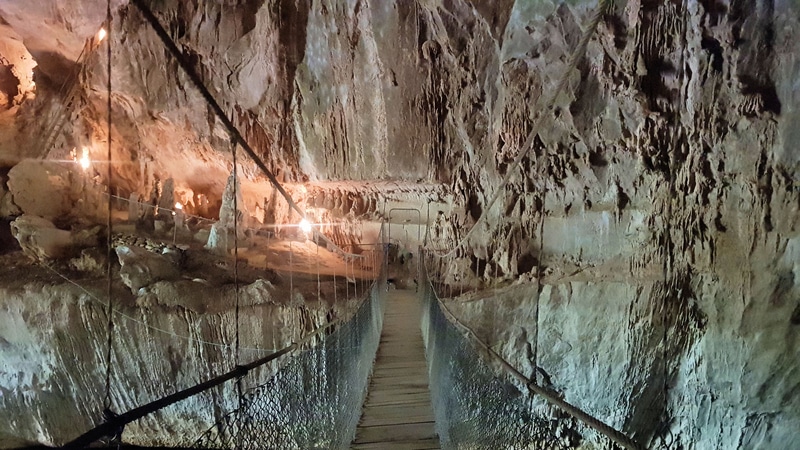
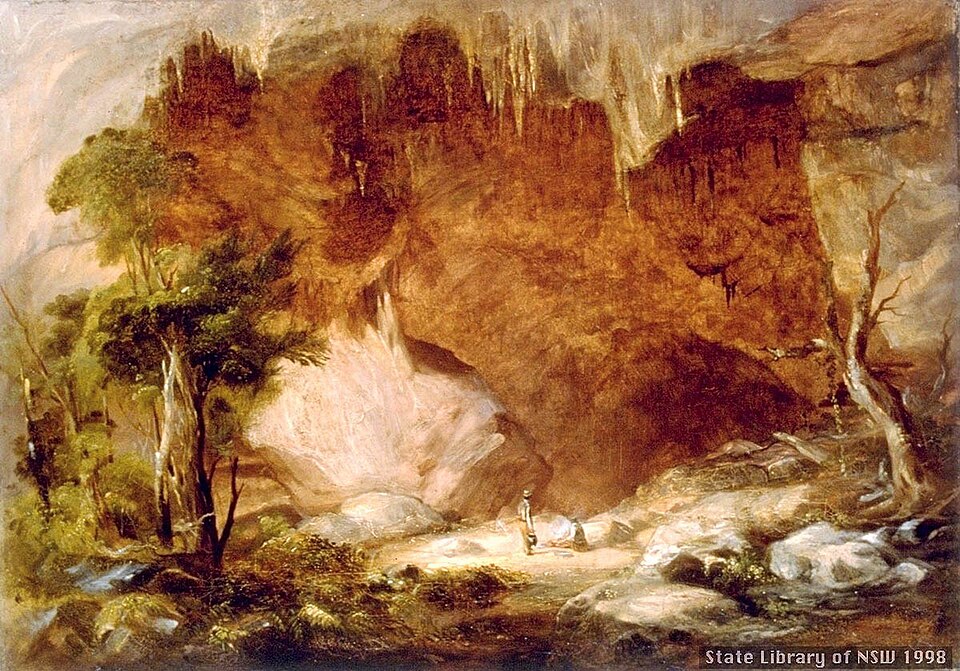
The gang’s campaign turned deadly when overseer James Greenwood refused to let them recruit his master’s men, baring his chest and daring them to shoot. They did. Troopers and armed volunteers, guided by two Aboriginal trackers, finally cornered the remaining bushrangers at the Abercrombie Caves, where a gunfight lasting hours forced the survivors onto a nearby hilltop before reinforcements ran the exhausted gang down.
On 30 October 1830, ten captured bushrangers faced trial at Bathurst before a jury of military officers. The court convicted six, including Entwistle, of Greenwood’s murder, and four others of plundering farmhouses, sentencing all ten to death.
Suspension bridge over underground lake at Abercrombie Caves