1867: The Magistrate Who Rode With the Gold Escort: Arrested for Murdering His Own Troopers

Thomas Griffin was the police magistrate entrusted with escorting a gold shipment through remote country in Queensland, riding alongside two troopers, Power and Cahill. The gold never reached its destination, and when the troopers were found dead, a doctor's examination uncovered bullet wounds hidden in their skulls, wounds that had at first gone unnoticed.

On 11 November 1867, a detective lured Griffin into casual conversation at the murder scene, a distraction that let Sub-Inspector Elliott seize and handcuff him before he could react. Griffin's response was almost clinical in its calm: he said he could only expect to be arrested, since he was the last person known to have been in the company of the victims.
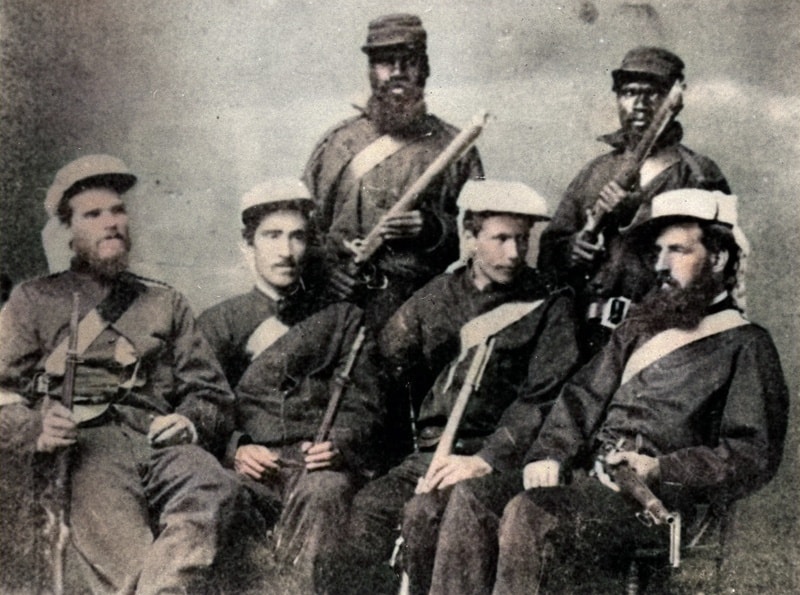

The Clermont Gold Escort, 1867. Murder victims Cahill and Power (second and third from left), with their killer Griffin (right). Queensland Police Museum, PM0680a.

⬅ See all events from 11 November

Spread the word on your favourite platform!

1869: He Faked His Own Death to Escape His First Wife, Then Murdered His Second at Beechworth

James Smith, born Peter Higgins, solved an unhappy marriage in colonial Sydney by faking his own death, having a letter sent to his wife's family claiming he had fallen down a mine shaft and drowned. She rebuilt her life believing herself a widow, remarried, and prospered, while Higgins resurfaced years later under a new name, tracked her down and asked her to take him back. She refused.

He returned to his second wife, Elizabeth, at a mail station near Beechworth, where their marriage was marked by constant drunken violence and her threats to expose his bigamy. That July, Elizabeth was found dead in their bedroom, her body covered in fresh wounds and broken ribs. Smith was tried and convicted of her murder, and hanged inside Beechworth Gaol on this day in 1869.

At his trial he insisted his wife's injuries had come from being trampled by a loose horse, an explanation the court found impossible to credit; he went to the gallows without ever admitting his guilt.

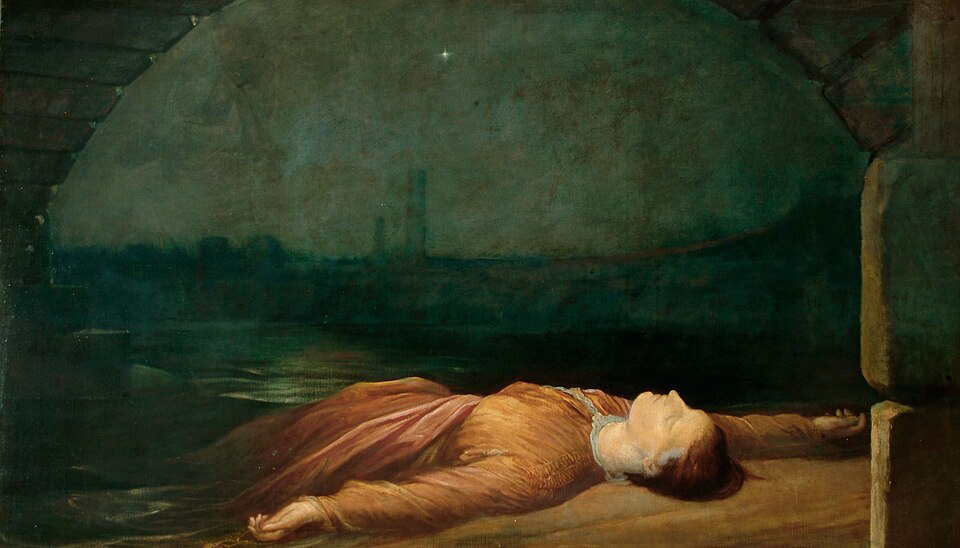
Found Drowned, 1867, by George Frederic Watts. James Smith faked his drowning before facing the scaffold for murder.

⬅ See all events from 11 November

Spread the word on your favourite platform!

1880: Such Is Life: Ned Kelly Hanged in Melbourne for the Murder of Constable Lonigan

Ned Kelly led Australia's most notorious bushranging gang, becoming a wanted man after the killing of three police officers at Stringybark Creek in October 1878. Among the dead was Constable Thomas Lonigan, whose murder would ultimately send Kelly to the gallows.

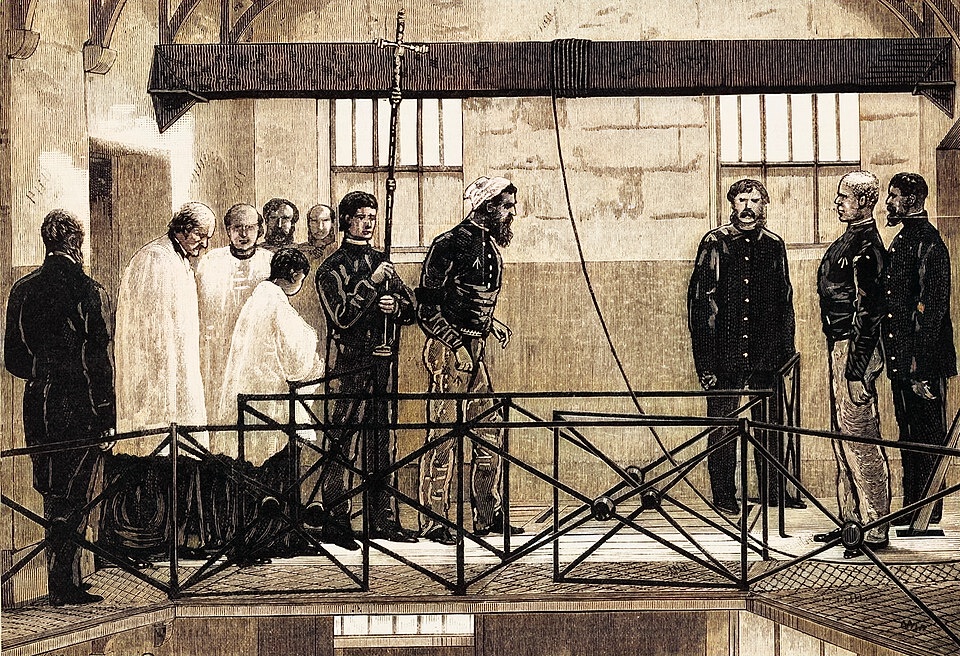
Captured after the dramatic siege at Glenrowan in June 1880, Kelly was tried and convicted of Lonigan's murder. He was hanged at the Old Melbourne Gaol in Melbourne on 11 November 1880, bringing one of Australia's most infamous outlaw sagas to an end.

As he stood on the scaffold, Kelly is remembered for words that, whether spoken exactly or paraphrased, have echoed through Australian folklore ever since: "Such is life." The calm acceptance of fate captured in those three simple words has resonated with generations of Australians.

Ned Kelly on the gallows: Such is Life

⬅ See all events from 11 November

Spread the word on your favourite platform!

1834: Risking the Gallows to Avoid a Flogging: Two Hanged in Sydney for the Murder of Dr Wardell

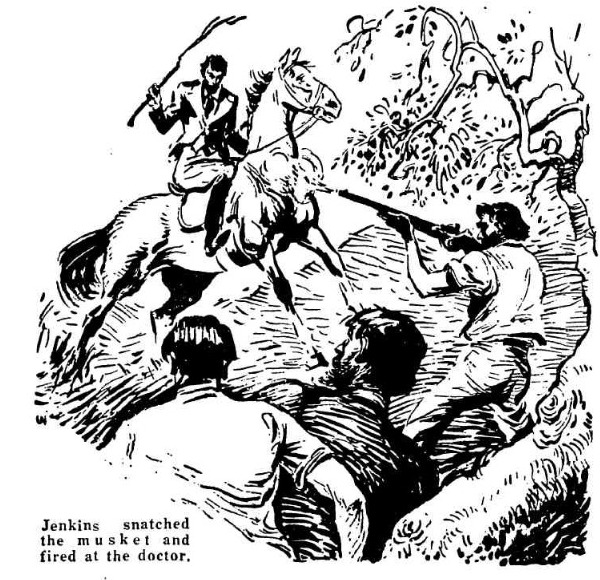
Dr Robert Wardell, a Sydney barrister and co-founder of The Australian newspaper, was inspecting his Petersham estate one Sunday afternoon when he rode straight into the bark hut of three runaway convicts, among them a teenage absconder named Brace. Trying to talk his way clear, Wardell urged the men to surrender and come quietly with him, warning it would go better for them. Brace begged his companions not to risk their lives over a matter that might cost them only fifty lashes, but John Jenkins raised his stolen gun and fired, killing Wardell on the spot.

Brace turned Crown evidence, and his account convicted both Jenkins and his companion Thomas Tattersdale, who had joined the pair partway through their bushranging spree. A jury took only minutes to find them guilty, and on this day in 1834 the two men were hanged in Sydney for the murder.

On the scaffold, Jenkins confessed to a separate killing, claiming he had once stabbed a man on the Liverpool road whose body had, he said, been devoured by the native dogs and never found. Tattersdale made no such confession, saying only that he hoped to make his peace with God.

Jenkins shooting at Dr Wardell

⬅ See all events from 10 November

Spread the word on your favourite platform!
On This Day in True Crime History
1858·The Rope Broke, So They Hanged Him Again: Samuel Gibbs Executed in Melbourne for the Murder of His Wife
1858·He Named Four Innocent Men as the Killers: Hanged in Melbourne for a Ballarat Murder
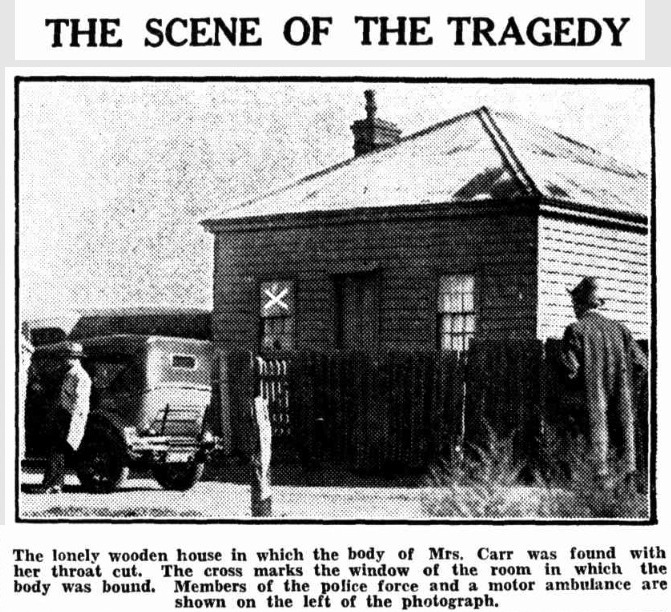
1929·She Asked for a Kiss, Then Bled to Death: Frederick Carr Hanged in Adelaide for Murdering His Wife
1963·The Royal Commission That Cleared Brisbane Police, Then Unravelled as a Cover-up
More Crime On This Day →

Subscribe to Dark Stories

True crime stories, dark history and tour news, straight to your inbox.