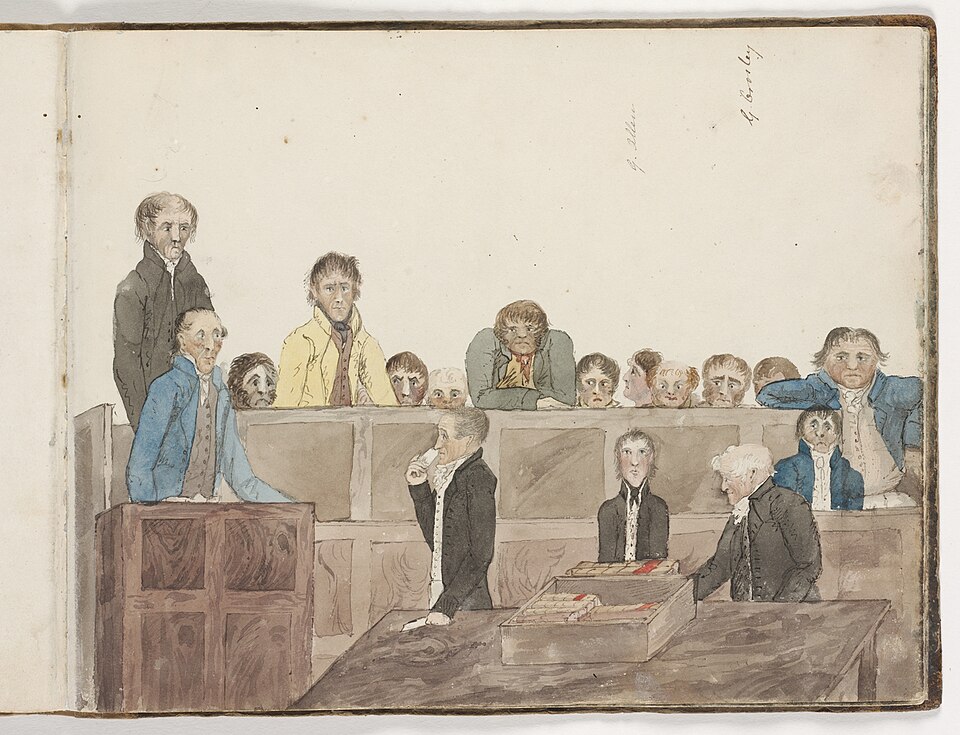
An inquest into the death of Sydney woman Maria McCormack ended in deadlock: seven jurors voted that her husband, Patrick McCormack, had not killed her, while five held firm for wilful murder. The numbers favoured him, and he walked free, the matter apparently closed.
The authorities refused to let it rest. McCormack was re-arrested and brought to trial, where a jury took barely half an hour to convict him of beating his wife to death. He was sentenced to hang, and the sentence was carried out in Sydney on this day in 1834.
McCormack made no confession on the scaffold, going to his death without admitting guilt or protesting his innocence.
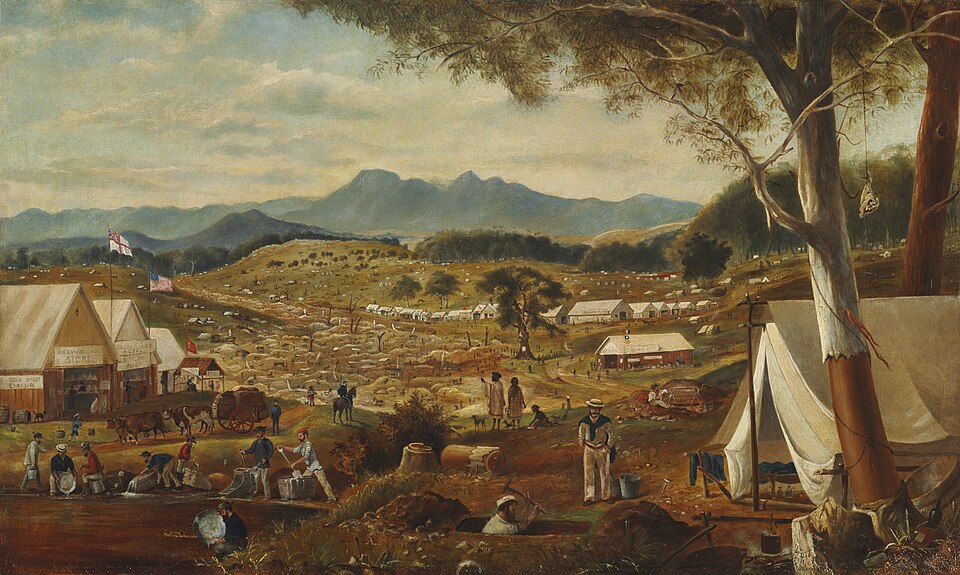
Courtroom scene, Sydney c1817. Painting by Edward Charles Close (1790-1866)
When assistant bailiff Thomas Garroway seized Carl Jung's horse, cart and pigs over an unpaid debt on 29 June 1871, Jung begged him to turn back, promising to sell his own gun to raise the money instead. Garroway refused and walked on toward Mount Gambier with the seized property. Jung followed, caught him in a gully, and demanded to know what Garroway had ever heard against his character. By Jung's own account to police, the bailiff's last words were "Don't Charley, don't Charley," as he threw up a hand and turned his head.
Jung shot him twice at close range, dragged the body into the ferns, then calmly sold off his possessions, settled an agreement with a neighbour and told his stepchildren goodbye, warning they would never see him again. He wrote a confession to a local newspaper and swallowed laudanum before his nerve failed. Captured days later hiding in the bush, he was tried for wilful murder and convicted.
On this day in 1871 Jung climbed the gaol scaffold at Mount Gambier carrying a bunch of flowers. He forgave "the English law for its severity," asked that the flowers be given to his wife, and died almost without a struggle, still mid sentence when the bolt was drawn.
Though he had earlier confessed to levelling the gun and firing deliberately, when the moment came to be sentenced Jung insisted the shooting was an accident, the gun discharging as his horse reared and threw him backward.
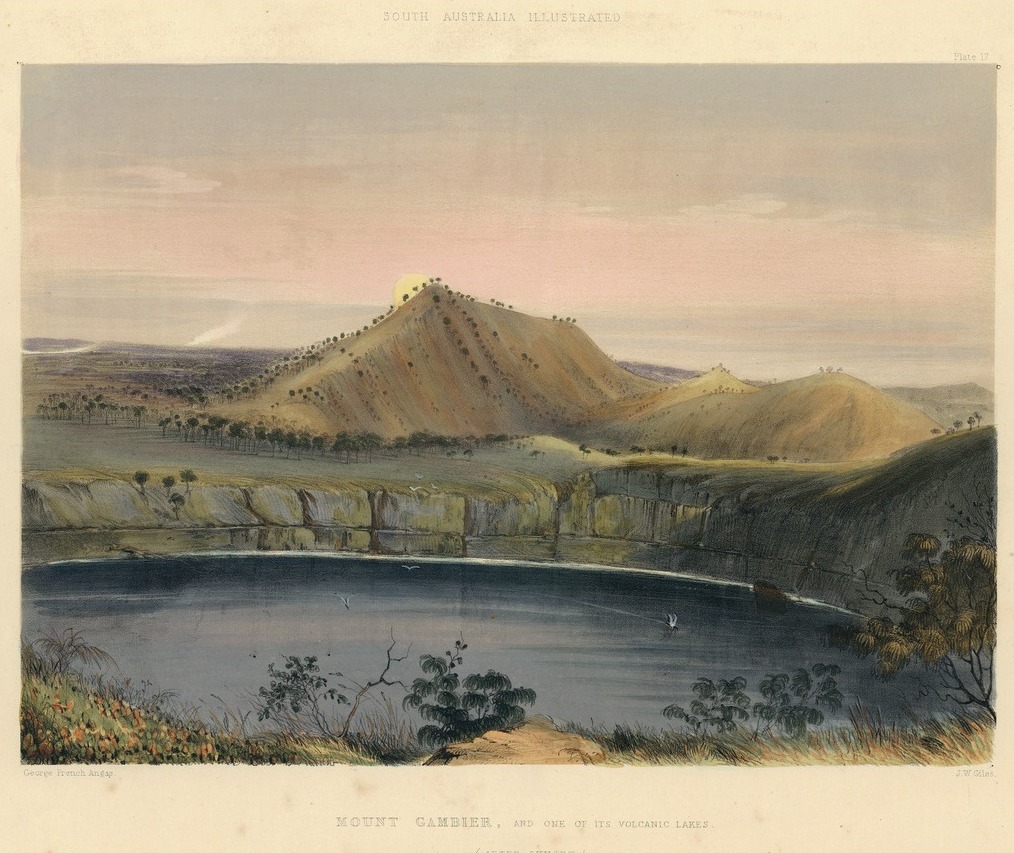
Mount Gambier, with one of its volcanic lakes (after sunset), 1846. State Library of South Australia,
When the wounded survivor of a bloody attack on two Chinese men near Myrtleford was brought to the Beechworth lock-up to identify his attacker, he stared at James Quinn for five minutes, edged to within a yard of him, then wavered. "The beard was too long, and the cheek bones not high enough," he said, concluding he did not think it was the man.
Police held Quinn regardless, certain he had been near the crime scene at the right hour and unable to account for his movements since. Weeks later a jury returned a guilty verdict amid what one reporter called a "deathlike silence," and he was sentenced to death.
Quinn went to the gallows at Beechworth on 10 November 1871 insisting he was innocent, telling onlookers his wife had lured him from Tasmania to Victoria and helped rob him of 50 pounds. His last words, as the cap was drawn over his face, were: "Lord help me! I am an innocent man."
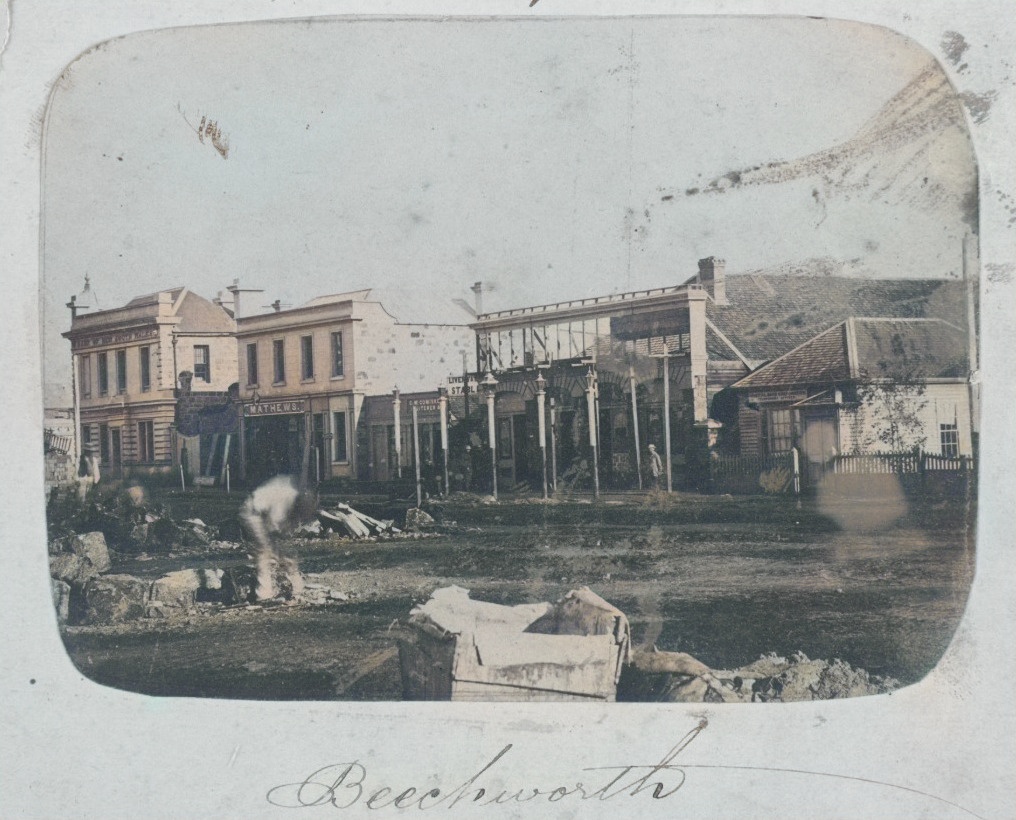
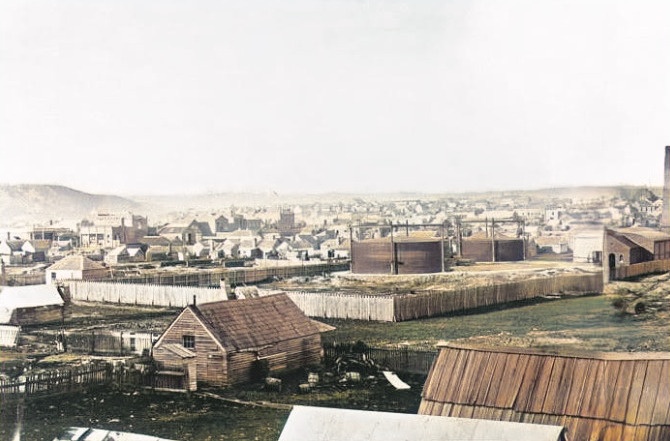
Ford Street, looking towards the Chinese camp in Beechworth, c. 1859. Thomas Hannay, photographer. State Library Victoria.
Tommy Ah Fook ran a shop on Adelaide's Hindley Street, where his cook, Mah Poo, lived alongside two other employees. Last seen locking up after midnight, Ah Fook vanished, and when nightmen cleaning out his cesspit two days later found his body crammed inside, dead from a gunshot to the head, suspicion fell straight onto the cook. Mah Poo had turned up for work the next morning in his best clothes, wearing his dead employer's scarf pin, and carrying bundles of laundry he could never account for; he had also bought a revolver and ammunition weeks earlier, and bank staff later traced Ah Fook's missing takings to a deposit made under a false name.
The case against him was entirely circumstantial but convincing. After five days of testimony a jury took only twelve minutes to convict him, and he was sentenced to hang in Adelaide. He was executed there on 10 November 1883, walking to the scaffold calmly and climbing its steps unaided.
Days before his death Mah Poo signed a full confession admitting he alone shot Ah Fook after enduring constant abuse from him, and told his gaolers without a trace of fear, "Me shoot Tommy, he die; you hang me, me die; me no 'fraid."
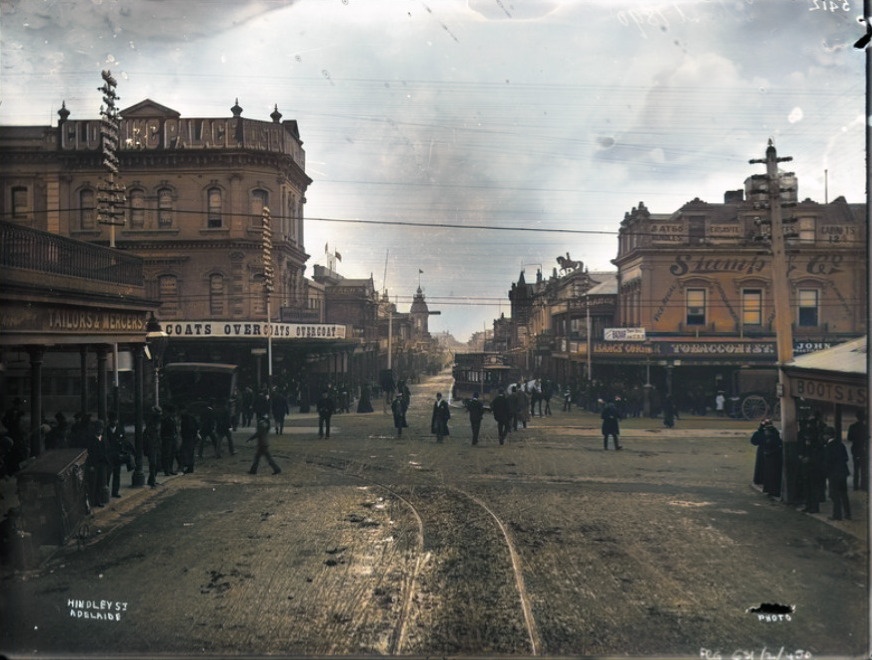
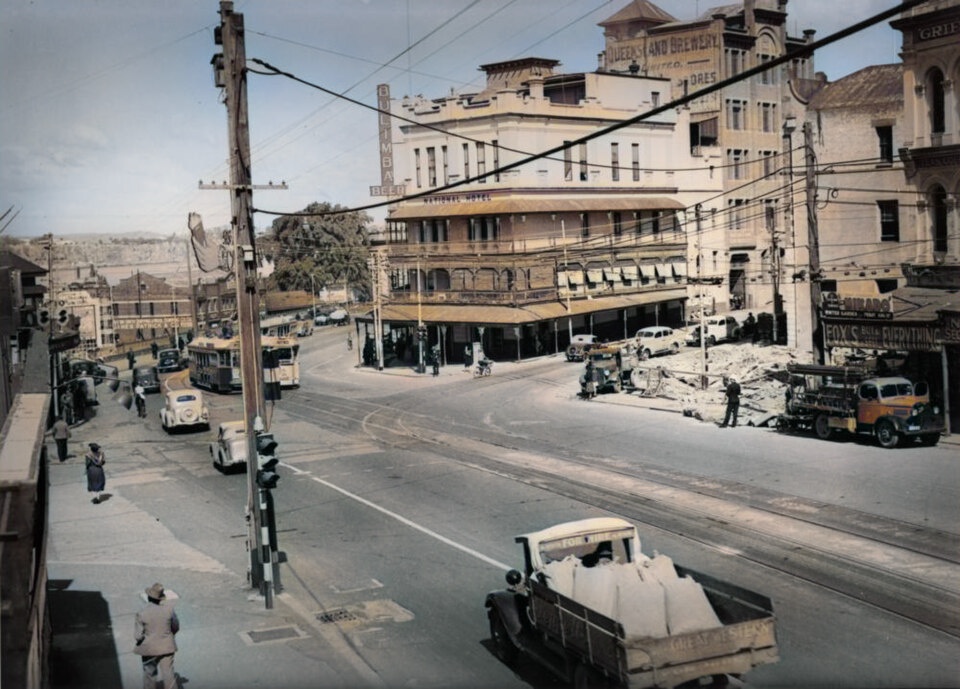
Looking west along Hindley Street from King William Street, Adelaide, c. 1891, eight years after the murder of shopkeeper Tommy Ah Fook. Ernest Gall, photographer. State Library of SA