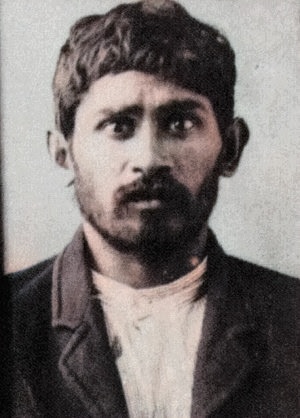
1873: Oscar Wallace Hanged at Ballarat for Armed Assault at Mount Beckworth

Oscar Wallace, known also by the aliases James and Hasker, had only been free for six weeks when he committed a brutal armed assault on Mary Cook at her isolated farmhouse near Mount Beckworth, outside Clunes, on 4 August 1873. Her husband was away, and Wallace, disguised with a bran bag over his head and a sack about his body, entered the property, seized a double-barrelled gun, locked the children in an adjoining room, and attacked the homeowner at knifepoint. He then fled through the district, robbing several men, firing at a Mr Prentice near Beaufort, and reportedly heading toward a hotel to settle an old score. He had served two years in Pentridge for larceny and had openly threatened the life of a witness from that trial.

Senior Constable Woods disguised himself as a digger and tracked Wallace to a store near Beaufort, where he overpowered him before Wallace could use the butcher's knife he still carried. Wallace was tried, convicted, and hanged at Ballarat on 11 August 1873. He reportedly showed complete indifference to his fate from the moment of his capture.
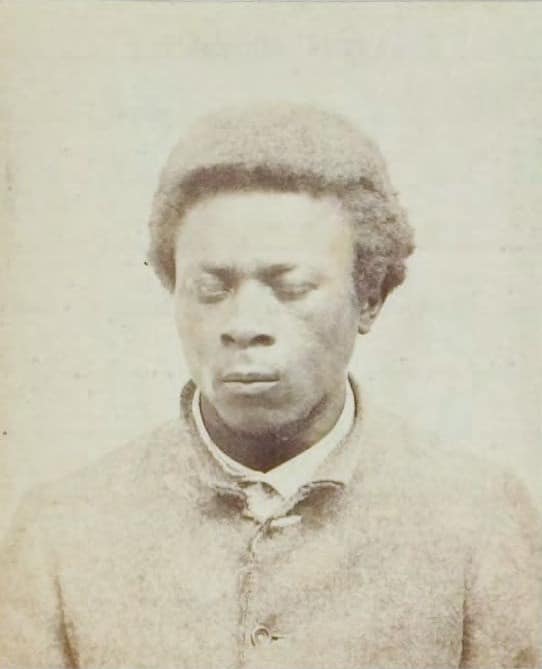

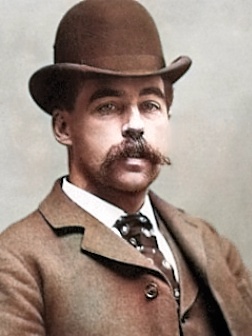
James Wallace (tried as Oscar Wallace), prisoner no. 8775. PROV, VPRS 515/P0000, Volume 13, p. 167

⬅ See all events from 11 August

Spread the word on your favourite platform!

1987: The Hoddle Street Massacre: Seven Dead in Melbourne Shooting Rampage

On the evening of 9 August 1987, 19-year-old Julian Knight opened fire on motorists and pedestrians along Hoddle Street in Clifton Hill, a suburb of Melbourne, killing seven people and seriously injuring 19 others. Knight had been discharged from the Royal Military College, Duntroon just 16 days earlier following a fight and stabbing at a bar. He returned home to find his girlfriend had left him and his mother had converted his bedroom. Armed with multiple weapons, he took to the street.

After a police chase lasting more than 30 minutes, Knight was caught in nearby Fitzroy North and arrested. He was later sentenced to seven concurrent life terms, with a non-parole period of 27 years, for what the presiding judge described as 'one of the bloodiest massacres in Australian history'. As Knight neared parole eligibility in 2014, the Victorian Government amended the Corrections Act to prevent his release unless he was in imminent danger of dying or physically incapable of causing harm.

The Hoddle Street Massacre: Seven Dead in <a href='https://darkstories.com.au/melbournes-true-crime-tour/' target='_blank' rel='noopener noreferrer'>Melbourne</a> Shooting Rampage

⬅ See all events from 9 August

Spread the word on your favourite platform!

1789: The Birth of Policing in New South Wales

On 8 August 1789, Governor Arthur Phillip authorised the formation of a nightwatch at Sydney Cove, drawing eight of the best-behaved convicts from the colony's population. The Royal Marines, originally tasked with policing duties, had proved unwilling to discipline their fellow convicts, forcing Phillip's hand. A free settler named John Smith had earlier been appointed as the colony's first constable, becoming the first recorded police officer in Australia.

The Night Watch was joined by a Row Boat Guard, also composed of selected convicts. The Night Watch was replaced by the Sydney Foot Police in 1790 and evolved into an organised force that endured until the amalgamation of all New South Wales colonial police forces in 1862.

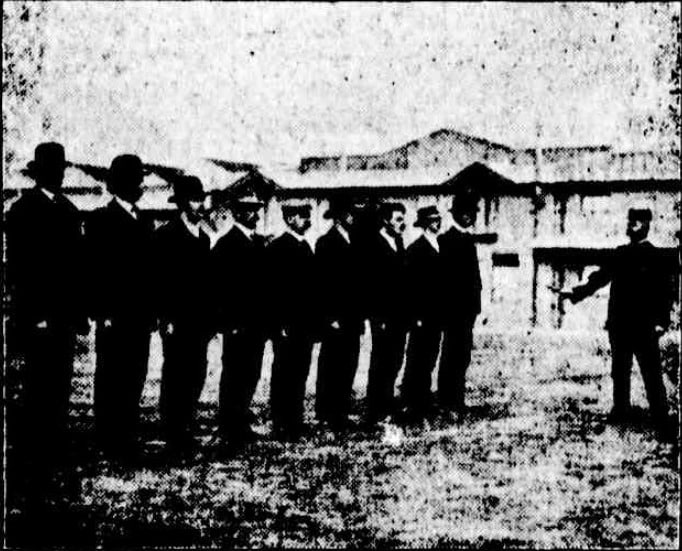
NSW Police Force recruits training with horses revolvers drill and gear

⬅ See all events from 8 August

Spread the word on your favourite platform!

1944: The Cowra Breakout: Bloodiest Mass Prison Escape of World War II

In the early hours of 5 August 1944, more than 1,000 Japanese prisoners of war held at the 12th Australian Prisoner of War and Internees Camp near Cowra, New South Wales, launched a mass breakout. Climbing over dead bodies and barbed wire, the escapees stormed the perimeter in what many had accepted as a suicide mission, a final bid to reclaim lost honour in the face of capture. It remains the largest mass escape of World War II and one of the bloodiest in history.

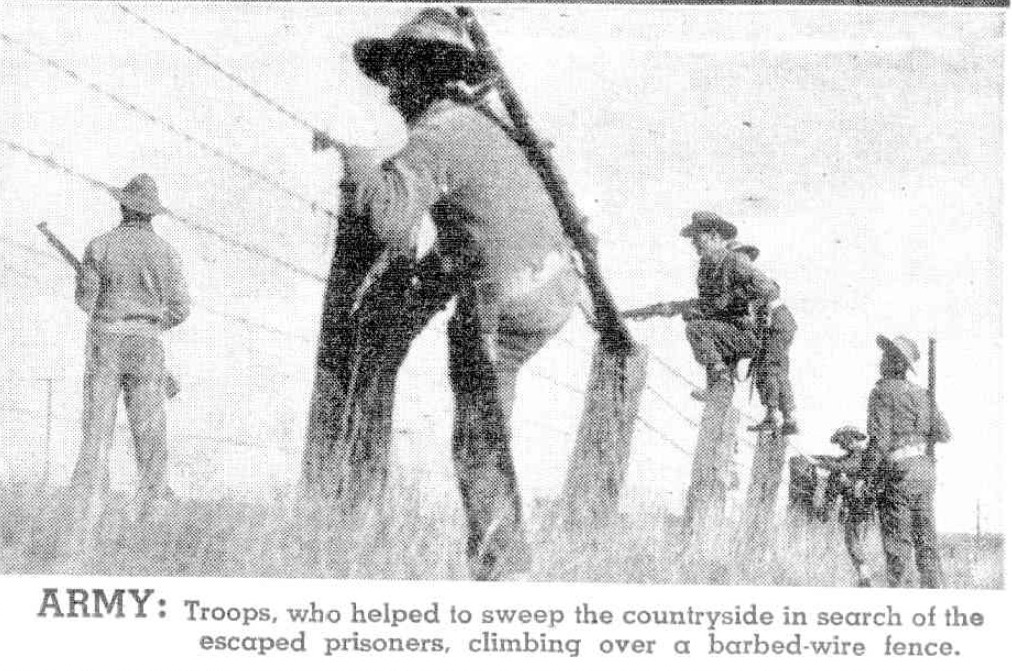
By the time the chaos subsided, 234 Japanese prisoners were dead and 108 wounded. Three Australian guards were killed, and a fourth officer was stabbed to death during the subsequent manhunt. Over 300 men were recaptured across the following nine days. The Cowra camp, opened in 1941, had grown to hold some 4,000 POWs and internees by 1944, including Italians, Formosans, Koreans, and Japanese non-commissioned officers, all held under Australia's National Security Act 1939.

Police and troops search for Cowra POW camp escapees August 1944

⬅ See all events from 5 August

Spread the word on your favourite platform!
On This Day in True Crime History

Subscribe to Dark Stories

True crime stories, dark history and tour news, straight to your inbox.