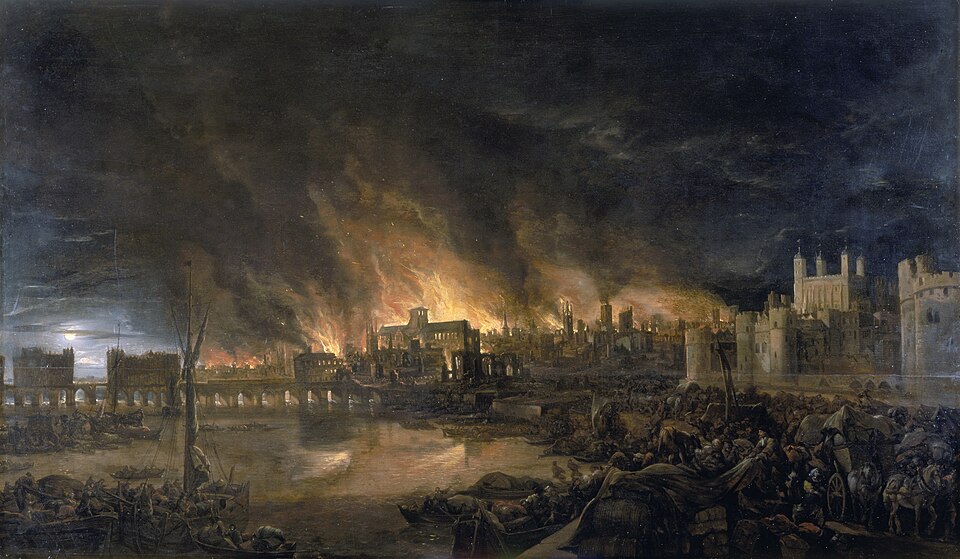
In the early hours of 2 September 1666, a fire broke out at the Pudding Lane bakery of Thomas Farriner in the City of London. Driven by strong winds, the blaze consumed around 80 percent of the old city before it was brought under control on 6 September. Though attributed to an accident at the bakery, the disaster ignited a desperate search for culprits.

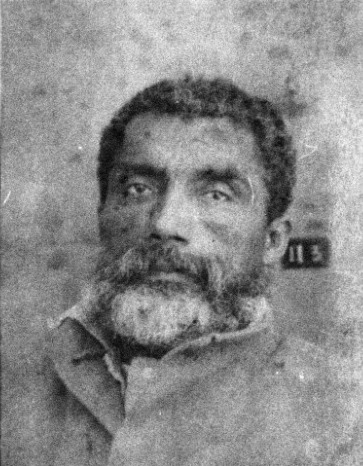
Robert Hubert, a French watchmaker from Rouen, confessed to starting the fire. His confession was riddled with impossibilities: he had not arrived in England until two days after the fire broke out, and he described throwing a fire grenade through a window at the Farriner bakery, which had no windows. With nationalism inflamed by the Second Anglo-Dutch War, a scapegoat was needed, and Hubert, a foreigner in a hostile city, was hanged for a crime he almost certainly did not commit.

The Great Fire of London

⬅ See all events from 2 September

Spread the word on your favourite platform!

Early morning, September 2nd 1816, Constable Thomas Wright was standing outside the Guard Room at the army barracks in Sydney‘s outer settlement of Windsor when he was assaulted with a cutlass. The attack is believed to have been motivated by his earlier removal of an illicit still from the barracks.

Three soldiers, were tried for his wilful murder and all three were acquitted owing to conflicting witness statements. According to the Sydney Gazette, the trial had excited considerable interest and ended in a manner gratifying to general feeling, but left the true circumstances of Wright’s death unresolved.

Vintage Moonshine Still.

⬅ See all events from 2 September

Spread the word on your favourite platform!

In August 1963, Perth police discovered a rifle hidden in bushes, linked to the murder of Shirley McLeod. Rather than remove it, they set a trap: replacing the weapon with an inoperable replica tied with fishing line, then waited.

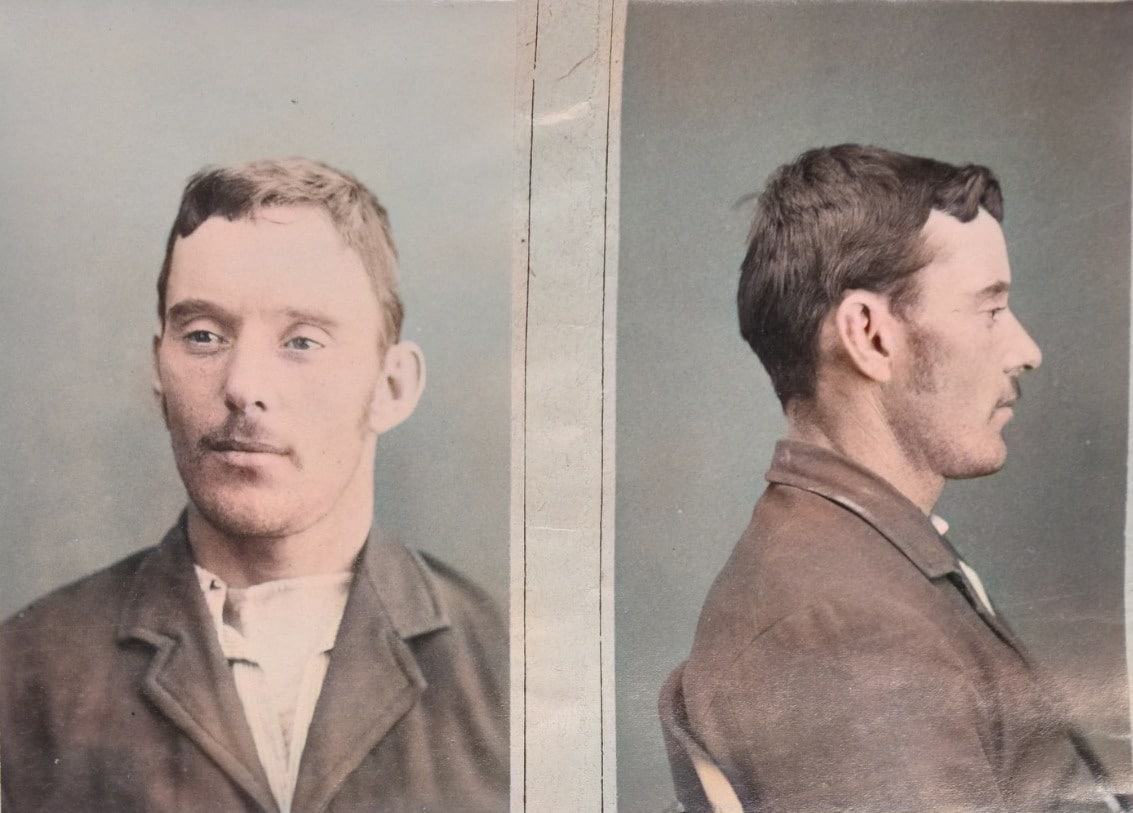
On 1 September 1963, Eric Edgar Cooke returned to retrieve the rifle and was arrested on the spot. Under questioning, he confessed to 22 violent crimes, including eight murders, making him one of the deadliest serial killers in Australian history.

Captured trying to retrieve the hidden weapon

⬅ See all events from 1 September

Spread the word on your favourite platform!

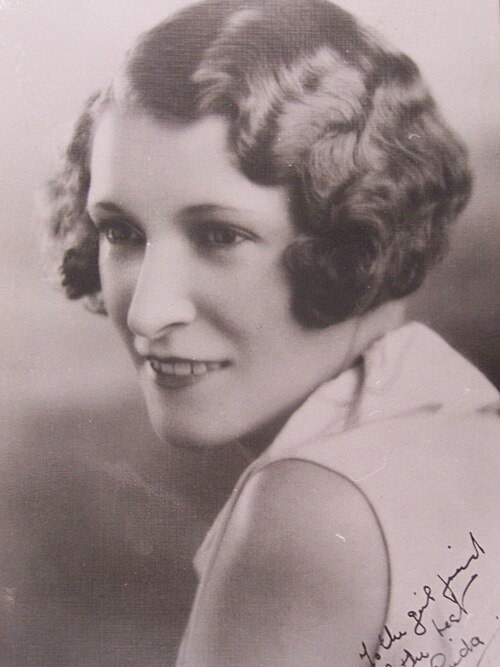
On 1 September 1934, the body of a woman with a bullet through the neck was found in a culvert beneath near Albury, New South Wales.

Dressed in silk pyjamas, she remained unidentified for a decade, preserved in formalin and viewed by thousands before police named her as Florence Linda Agostini, an English-born woman who had lived on Darlinghurst Road in Kings Cross and later moved to Melbourne with her husband Tony Agostini.

Tony Agostini confessed to killing Linda and was convicted of manslaughter, sentenced to six years. He served just over three years before being deported to Italy.

Photograph of Linda Agostini(Linda Platt) - Pyjama Girl Mystery
Photograph of Linda Agostini(Linda Platt) – Pyjama Girl Mystery

⬅ See all events from 1 September

Spread the word on your favourite platform!
On This Day in True Crime History
1853·"Thank You, My Lord, I Am Very Glad of That Sentence": Bushrangers Hanged in Melbourne
1884·He Swore to Shoot Whoever Bought His Farm, and Kept His Word: Hanged in Melbourne
1892·"The Only Man on the Station That I Liked": Hanged in Brisbane for a Torres Strait Murder
1892·A Mutilated Body in a Trunk: Sailor Hanged in Brisbane for Murder at Sea
1895·George Dean, Pardoned for Poisoning His Wife, Convicted of Perjury in Sydney
More Crime On This Day →

Subscribe to Dark Stories

True crime stories, dark history and tour news, straight to your inbox.