During the September Massacres of 1792, revolutionary crowds swept through Paris prisons and religious institutions, killing prisoners and others regarded as enemies of the Revolution.

At the Carmelite Convent, Roman Catholic clergy imprisoned for refusing to swear allegiance to the Civil Constitution of the Clergy were brought out and killed, among them several bishops.

The violence formed part of a broader wave of extrajudicial executions that engulfed Paris over several days, as fears of counter-revolution and foreign invasion fed a climate of panic and vengeance.

Those killed at the convent were later recognised by the Catholic Church as the Martyrs of September and were beatified in 1926.
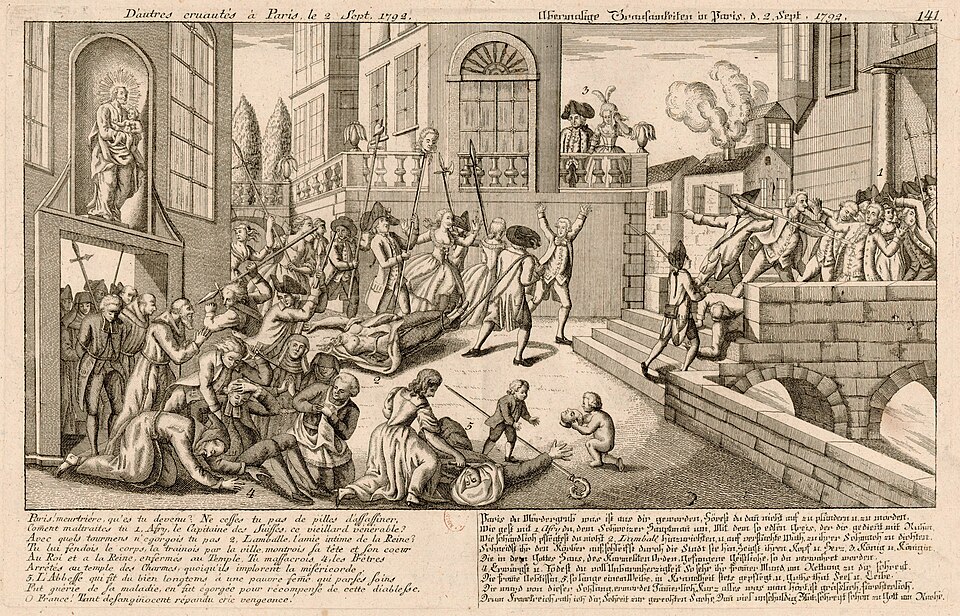

Engraving showing the massacre of Princess de Lamballe

⬅ See all events from 2 September

Spread the word on your favourite platform!

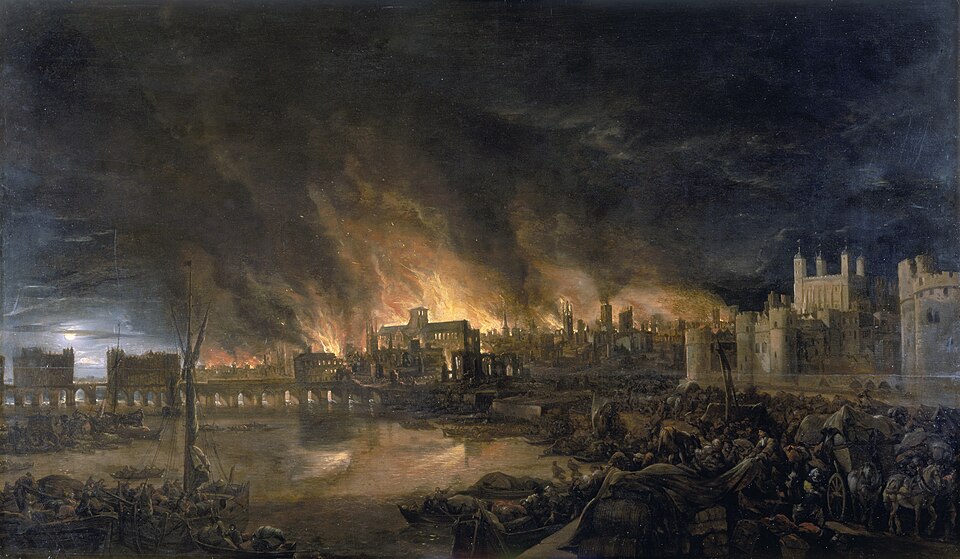
In the early hours of 2 September 1666, a fire broke out at the Pudding Lane bakery of Thomas Farriner in the City of London. Driven by strong winds, the blaze consumed around 80 percent of the old city before it was brought under control on 6 September. Though attributed to an accident at the bakery, the disaster ignited a desperate search for culprits.

Robert Hubert, a French watchmaker from Rouen, confessed to starting the fire. His confession was riddled with impossibilities: he had not arrived in England until two days after the fire broke out, and he described throwing a fire grenade through a window at the Farriner bakery, which had no windows. With nationalism inflamed by the Second Anglo-Dutch War, a scapegoat was needed, and Hubert, a foreigner in a hostile city, was hanged for a crime he almost certainly did not commit.

The Great Fire of London

⬅ See all events from 2 September

Spread the word on your favourite platform!

On Father’s Day, 2 September 1984, a heavily armed convoy of Comanchero motorcycle club members descended on the Viking Tavern car park in Milperra, a south-western suburb of Sydney.

The Comancheros had been at war with the newly formed Bandidos, a breakaway chapter, whose split from the Comancheros founder had curdled into open conflict. When both clubs converged on a swap meet that day, gunfire erupted in the car park. Seven people died, including a 14-year-old girl caught in the crossfire, and twenty-eight others were wounded.

The Milperra Massacre became the bloodiest single clash in the history of Australian outlaw motorcycle clubs.

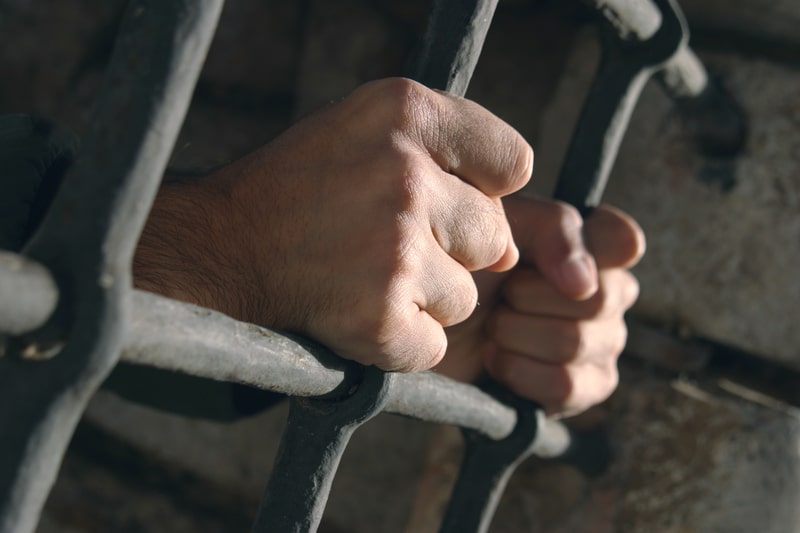
Biker
Biker

⬅ See all events from 2 September

Spread the word on your favourite platform!

In August 1963, Perth police discovered a rifle hidden in bushes, linked to the murder of Shirley McLeod. Rather than remove it, they set a trap: replacing the weapon with an inoperable replica tied with fishing line, then waited.

On 1 September 1963, Eric Edgar Cooke returned to retrieve the rifle and was arrested on the spot. Under questioning, he confessed to 22 violent crimes, including eight murders, making him one of the deadliest serial killers in Australian history.

Captured trying to retrieve the hidden weapon

⬅ See all events from 1 September

Spread the word on your favourite platform!
On This Day in True Crime History
1855·The Wife Who Forged a Will and Bought a Murderer: Bridget Hurford Hanged at Perth
1855·Hanged at Perth, William Dodd Spent His Final Words Blaming an Innocent Man
1855·"I Am Sorry I Did Not Kill Him": a Convict Hanged at Perth for a Shovel Attack on a Warder
1883·A Father Who Watched Him Hang: James Gardiner Executed at Brisbane for Killing German Ada
1953·Caroline Grills Laughed During Her Own Trial for Poisoning
More Crime On This Day →

Subscribe to Dark Stories

True crime stories, dark history and tour news, straight to your inbox.