Richard James comes into the world already half abandoned: the son of a nobleman’s cook, fatherless before he can remember, cast to sea at twelve years old. As Lives of the Most Remarkable Criminals recounts his story, what emerges is a man shaped less by malice than by a relentless current of misfortune; a figure whose slide toward highway robbery feels almost inevitable, and who belongs to the long, dark tradition of true crime that stretches from Georgian England to our own restless fascination with outlaws.
Captured by Spaniards, taken by pirates, abandoned by a wife who declared him dead while he still breathed: every return to England strips away another reason to live honestly. By the time he turns to the Oxford Road with violence in his hands, there is almost nothing left of the boy who once crossed oceans just to come home.
The road ahead for Richard James narrows with every robbery, and the Georgian world he inhabits does not forgive men without friends or fortune. Hear his full story read aloud from Lives of the Most Remarkable Criminals; it waits for you now.

Click the RSS feed link below to subscribe and get new episodes the moment they drop. Subscribe via RSS
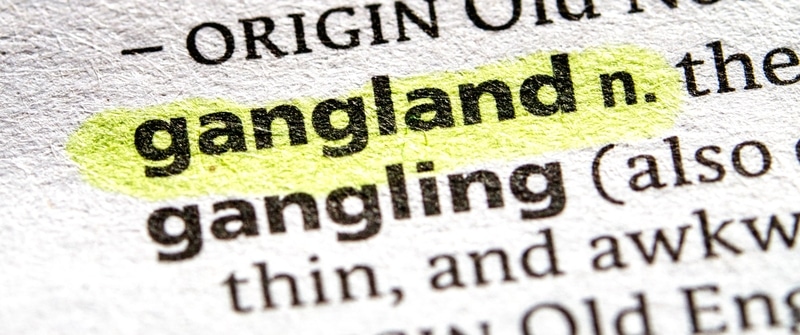
Dark Lexicon: Old words. Dark meaning.
The past speaks its own dialect; here is what to listen for in this episode.
Disobliged: today we might use this word lightly, meaning to mildly offend or inconvenience someone. In eighteenth century usage it carried far more weight; to disoblige your friends was to sever ties, to alienate those whose goodwill was your only safety net. When Richard James ‘disobliged’ his few remaining friends, the text is telling us he burned every bridge he had.
Betake him: a construction that sounds strange to modern ears, meaning simply to take himself off to something; to resort to an occupation or course of action. James ‘betook him’ to the sea the way a man might shrug and walk toward the only door still open.
Viz.: short for the Latin ‘videlicet,’ meaning ‘namely’ or ‘that is to say.’ Writers of this period used it the way we might use ‘i.e.’ or ‘in other words.’ Here it introduces the blunt truth of James’s new career with almost clinical precision.
Waggoners: not simply drivers but the men who hauled goods along the major roads in heavy horse-drawn wagons. They were frequent targets for highwaymen because they travelled predictable routes, moved slowly, and often carried cargo worth stealing. Robbing a waggoner was less glamorous than holding up a coach, but far more reliable.
Reprieve: in Georgian criminal justice, a reprieve was a temporary suspension of a death sentence, often granted by royal mercy or through the intercession of powerful friends. It did not mean acquittal; it meant a pause, a breath of time in which fate might be renegotiated. That James claims he would refuse one even if offered tells us something chilling about the man.
Inclinable: meaning disposed toward or willing. A word that has faded from everyday speech but once served as the standard way of saying someone was leaning toward a decision. James’s companions were ‘inclinable’ to return the lady’s possessions; James himself was not.
Ignominious: a word still in use but rarely felt as sharply as it was in the eighteenth century, when public execution was designed to be a spectacle of shame as much as a punishment of death. An ignominious death was one that marked you before the crowd as something lower than human; the disgrace was considered part of the sentence.
About This Series
Lives of the Most Remarkable Criminals is one of the earliest works of true crime writing in the English language, nearly 300 years old, covering murderers, thieves, highwaymen, forgers, coiners and worse.
The book is entirely in the public domain and every word of it can be read today for free. But if you would rather listen, this podcast does exactly that: one criminal at a time, every week, read aloud.
True crime was not invented by podcasts or streaming services. Eighteenth century readers were just as fascinated by outlaws and killers as we are today. They just consumed their dark stories by candlelight.
The voice you hear is David Dark: crime researcher, theatre script writer, producer of live immersive experiences, and audiobook narrator and voice artist. This podcast uses an AI voice model trained on David’s own voice, built using the maximum available training data to faithfully represent how he actually sounds. To hear David’s real voice in human generated form, visit him on Audible, Online Stage, Voices of Today, Spoken Realms, and Internet Archive.