1305: William Wallace Hanged, Drawn, and Quartered at Smithfield

William Wallace, the Scottish knight and military leader who had defied English rule for nearly a decade, was captured in August 1305 and swiftly tried for treason and atrocities against English civilians. Brought before a tribunal in Westminster Hall, he denied the charge of treason on the grounds that he had never sworn allegiance to the English crown, but the verdict was a foregone conclusion.

On 23 August 1305, Wallace was dragged through the streets of London to Smithfield, where he was hanged, cut down while still alive, disembowelled, beheaded, and his body divided into four parts. His head was displayed on London Bridge; his limbs were sent to Newcastle, Berwick, Stirling, and Perth as a warning to those who would resist English rule. He became the most enduring symbol of Scottish resistance.
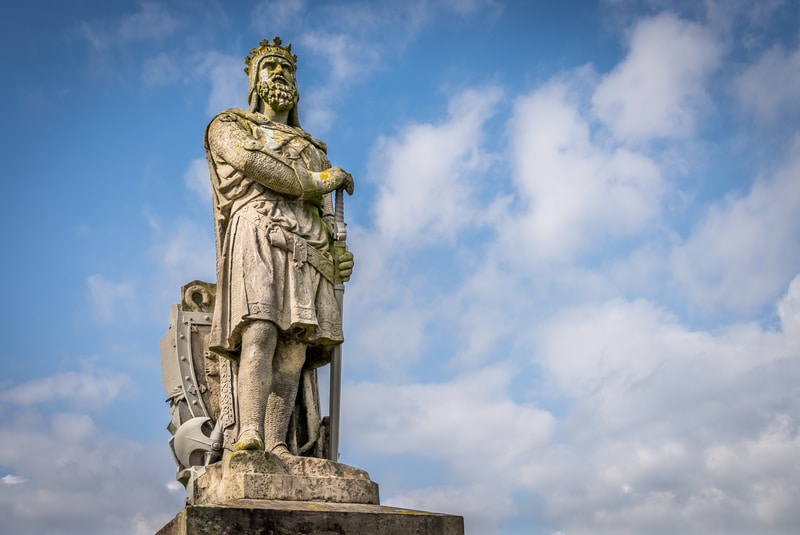

William Wallace statue outside Stirling Castle Scotland

⬅ See all events from 23 August

Spread the word on your favourite platform!

2004: The Scream and Madonna Stolen at Gunpoint from Oslo Museum

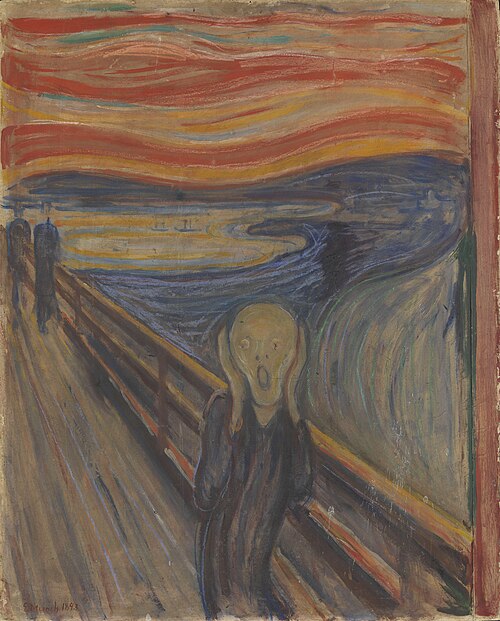
In broad daylight on 22 August 2004, masked gunmen entered the Munch Museum in Oslo, Norway, and tore two priceless works from the walls: the 1910 version of Edvard Munch’s iconic The Scream and his enigmatic Madonna. A quick-thinking bystander photographed the thieves as they fled to a getaway car. Fragments of the gilded frames were later found nearby, and fears circulated that the paintings had been deliberately destroyed to eliminate evidence.

Norwegian police arrested a suspect in April 2005, and in early 2006 six men stood trial. Three were sentenced to between four and eight years in prison. Then, in August 2006, police announced they had recovered both works. The Scream bore moisture damage to its lower-left corner; Madonna showed tears and holes on her right side. Before restoration, the Munch Museum exhibited the damaged paintings to the public for five days, drawing more than five thousand visitors.

Edvard Munch, The Scream (1893). Photo: Børre Høstland/National Museum of Norway. CC BY 4.0, via Wikimedia Commons.

⬅ See all events from 22 August

Spread the word on your favourite platform!

1972: The Brooklyn Bank Siege That Inspired Dog Day Afternoon

On August 22, 1972, John Wojtowicz and Salvatore Naturile attempted to rob a branch of Chase Manhattan Bank at 450 Avenue P in Gravesend, Brooklyn. A third accomplice fled before the robbery began after spotting a police car. Rather than escaping with the cash, Wojtowicz and Naturile held seven bank employees hostage for fourteen hours. Wojtowicz, a former bank teller, had working knowledge of bank operations, but the plan unravelled completely.

Naturile was shot and killed by an FBI agent during the final moments of the standoff. Wojtowicz was arrested and sentenced to 20 years at Lewisburg Federal Penitentiary, serving five. The story became the basis for the 1975 film Dog Day Afternoon, starring Al Pacino.

NEW YORK - Facade of Chase Bank with sunset the rays in New York, USA, business, finance, logo, banking, sign, building, city, financial, exterior, company, money, editorial, architecture, symbol, branch, office, atm, investment, street, morgan, jpmorgan, states, united, cash, deposit, economy, corporation, blue, urban, america, corporate, american, manhattan, nyc, outdoor, commerce, withdrawal, lender, institution, people, brand | ID 164823257 © Photovs | Dreamstime.com

⬅ See all events from 22 August

Spread the word on your favourite platform!

1962: De Gaulle Survives a Hail of Bullets at Petit-Clamart

On the evening of 22 August 1962, Lieutenant-Colonel Jean Bastien-Thiry led a carefully planned ambush on the presidential motorcade at Petit-Clamart, south of Paris. Acting under the banner of the Organisation armee secrete (OAS), his team opened fire with automatic weapons as de Gaulle’s car passed, riddling the vehicle with bullets. The president and his wife escaped without injury.

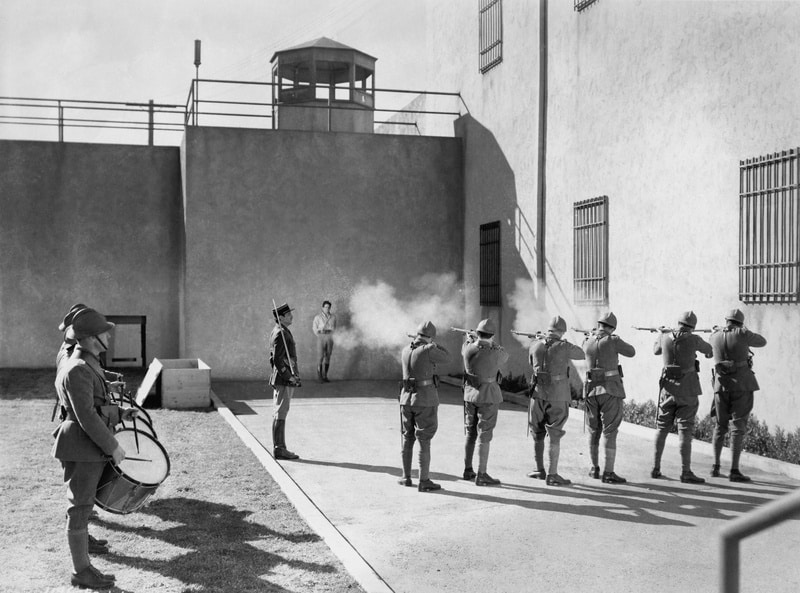
The attack, code-named Operation Charlotte Corday, triggered a massive manhunt that swept up nearly all participants within months. Bastien-Thiry was brought before a military court, where he justified the attempt by declaring de Gaulle a tyrant who had betrayed French Algeria. He was sentenced to death and executed by firing squad in March 1963, the last person to die by that method in France.

Historical firing squad execution scene

⬅ See all events from 22 August

Spread the word on your favourite platform!
On This Day in True Crime History

Subscribe to Dark Stories

True crime stories, dark history and tour news, straight to your inbox.