1854: Nobody Believed Him: An Innocent Man Hanged at Perth for a Murder He Did Not Commit

Edward Bishop was a ticket-of-leave convict working at York, east of Perth, when he fell into a bitter feud with a Chinese cook named Ah Chong. When the man turned up bludgeoned and dumped in the Avon River in 1854, a bloodied axe was found hidden in Bishop’s room, his clothes had been freshly washed, and his own drunken threats against Ah Chong were repeated back to him in court.

The evidence was entirely circumstantial, but the jury took twenty minutes to convict him, and he was hanged near the causeway at Perth. Bishop never wavered. Nobody believed him then, but three years later his own hut-mate, William Voss, confessed to the murder, admitting he had planted the axe among Bishop’s belongings. Voss himself was hanged in 1862 for killing his wife.

On the scaffold, Bishop raised his hand and declared, “I assert in the presence of God that I did not commit the murder. I am dying innocent of crime, and I do not fear death”.
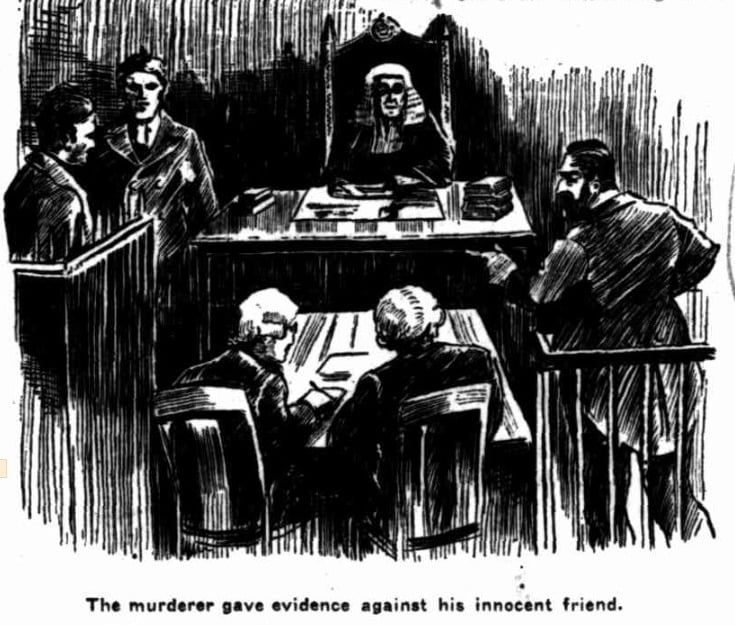

Innocent Edward Bishop betrayed.

⬅ See all events from 12 October

Spread the word on your favourite platform!

1932: Nine Minutes on the Gallows: the Longest Last Speech in Melbourne History

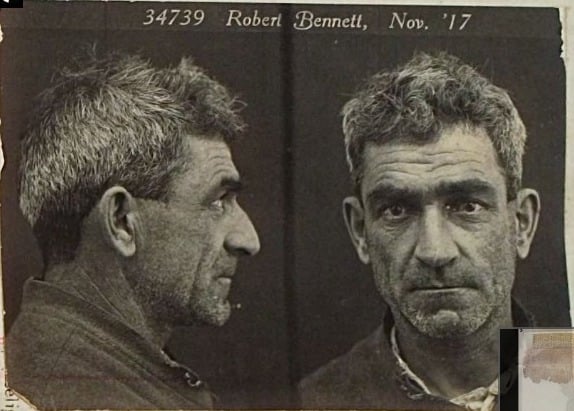
David Bennett spoke from the gallows for nine minutes, the longest statement ever made by a condemned man in Victoria. The 59-year-old painter and carpenter had walked to the scaffold calmly, and he spoke in a clear, steady voice.    He was hanged in Melbourne for a capital assault committed in July 1932, the first execution in Victoria since 1924 and the first since 1891 for any crime other than murder. It was not his first such conviction. In Western Australia in 1911 he had been sentenced to life imprisonment and a flogging by a judge who told him: “You are not fit to live in this world.”    He served just three years in Fremantle Gaol before the Attorney-General released him on legal doubts about the conviction, causing an outcry unprecedented in the state. Bennett moved east, and in 1930 he came forward to Melbourne detectives with information about a notorious unsolved murder. A man was arrested on his word, and was later found to be innocent.    Bennett admitted nothing. He claimed his defence had never been properly put to the jury, and ended: “I repeat that I am not guilty, and again ask forgiveness from those whom I have wronged as I forgive those who have wronged me. Good-bye.”

An Unspeakable Degenerate - CeVPRS 1100/P0002, David Bennett
An Unspeakable Degenerate – CeVPRS 1100/P0002, David Bennett

⬅ See all events from 26 September

Spread the word on your favourite platform!

1982: A Dingo Did Take the Baby: The Second Inquest Into Azaria Chamberlain’s Disappearance Begins

Nine week old Azaria Chamberlain vanished from her family’s tent at a campsite near Ayers Rock on the night of 17 August 1980. Her mother, Lindy Chamberlain, said she had seen a dingo leaving the tent, and the baby’s blood stained jumpsuit was found nearby days later, but her body was never recovered. A first inquest in 1981 accepted the dingo account and found no evidence of foul play.

That finding was overturned on appeal, and a second inquest opened on 13 September 1982, reopening a case that had already divided the country. This inquest went the other way, committing Lindy Chamberlain for trial on a charge of murder, a reversal that would send her to prison and make her one of the most publicly vilified women in Australian history.

Lindy Chamberlain was convicted later that year and sentenced to life imprisonment, but the case unravelled in 1986 when a piece of Azaria’s matinee jacket was found near a dingo lair, corroborating the original account. She was released and eventually exonerated, and a fourth inquest in 2012 formally confirmed that a dingo had taken and killed the child.

Australian dingo standing in bushland setting

⬅ See all events from 13 September

Spread the word on your favourite platform!

1980: Baby Azaria Vanishes at Uluru, Sparking One of History’s Most Divisive Cases

On the night of 17 August 1980, nine-week-old Azaria Chamberlain disappeared from a tent at a campsite near Uluru in the Northern Territory. Her mother, Lindy Chamberlain, reported that a dingo had taken the baby, but her account was met with widespread public scepticism and intense media scrutiny.

The case became one of the most controversial miscarriages of justice in the history of Australia. Lindy Chamberlain was convicted of murder in 1982 and imprisoned, before new evidence, a piece of Azaria’s clothing found near a dingo lair, led to her release in 1986. A fourth inquest in 2012 finally returned the finding that a dingo did take and kill Azaria, vindicating the Chamberlain family after more than three decades.

Dingo
Dingo

⬅ See all events from 17 August

Spread the word on your favourite platform!
On This Day in True Crime History

Subscribe to Dark Stories

True crime stories, dark history and tour news, straight to your inbox.