Joe Governor had been on the run for fifteen weeks when New South Wales declared him and his brother Jimmy outlaws under the Felons Apprehension Act, a law that stripped them of the right to surrender and made it lawful for any armed settler to shoot them dead. The brothers had been linked to a string of killings that winter, nine people dead across the colony, before the manhunt swept north toward Singleton.

At dawn on this day in 1900, brothers Joe and George Wilkinson found Joe asleep on their own property near Singleton and called on him to surrender. He woke, ran, and the men exchanged fire until he fell dead into a waterhole, the chase finally over after months of pursuit.

The coronial inquest that followed did more than clear the Wilkinsons of blame: it congratulated them, with the coroner thanking them for “ridding the country of so dangerous a brute” while the crowd outside broke into cheers. A rumour swept the town that Joe’s head had been removed and preserved for identification; it was false, officials denied it emphatically, but the story continued to circulate.
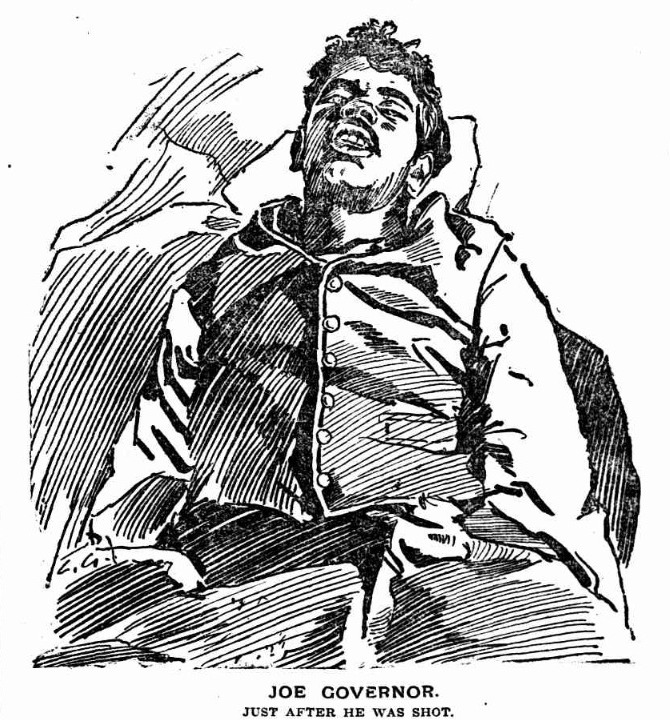

Joe Governor newspaper illustration Evening News Sydney 1900

⬅ See all events from 30 October

Spread the word on your favourite platform!

Ralph Entwistle was an escaped convict who had been publicly flogged on the orders of Bathurst magistrate Thomas Evernden after being spotted bathing in the Macquarie River by the Governor’s travelling party. Within a year he had turned bushranger, gathering escaped convicts into a band that grew to as many as eighty men, the largest convict uprising since Castle Hill, known as the Ribbon Gang for the white streamers Entwistle wore in his hair.

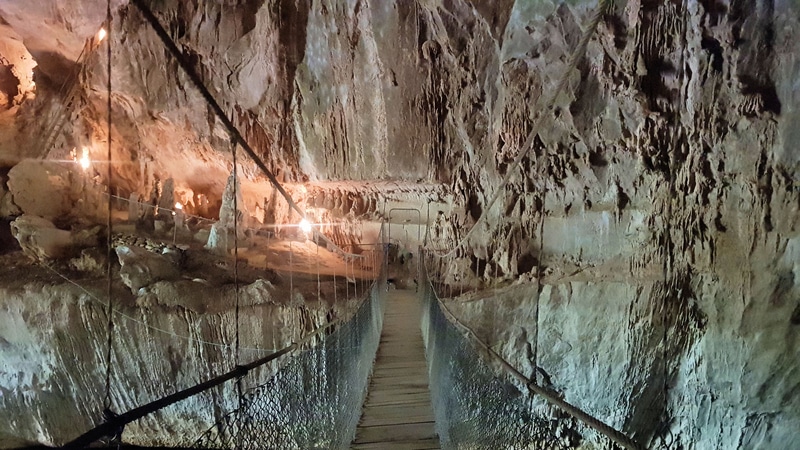
The gang’s campaign turned deadly when overseer James Greenwood refused to let them recruit his master’s men, baring his chest and daring them to shoot. They did. Troopers and armed volunteers, guided by two Aboriginal trackers, finally cornered the remaining bushrangers at the Abercrombie Caves, where a gunfight lasting hours forced the survivors onto a nearby hilltop before reinforcements ran the exhausted gang down.

On 30 October 1830, ten captured bushrangers faced trial at Bathurst before a jury of military officers. The court convicted six, including Entwistle, of Greenwood’s murder, and four others of plundering farmhouses, sentencing all ten to death.

Suspension bridge over underground lake at Abercrombie Caves

⬅ See all events from 30 October

Spread the word on your favourite platform!

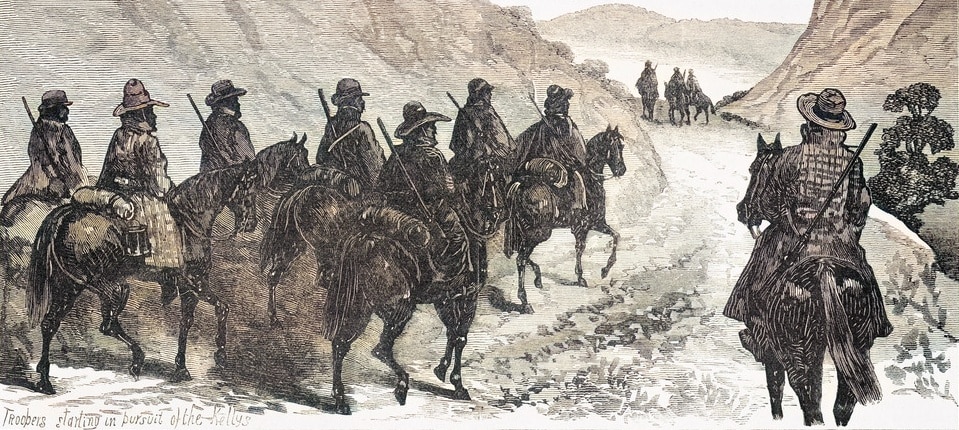
Just four days after three police officers were shot dead at Stringybark Creek, the Victorian government introduced the Felons Apprehension Bill on 30 October 1878, paving the way for extraordinary powers that would allow Ned Kelly and his gang to be declared outlaws.

Once Ned and his brother Dan were formally declared outlaws, they could legally be shot on sight by police or any member of the public, without first standing trial. The legislation also threatened severe penalties for anyone knowingly sheltering or assisting the fugitives.

The crackdown extended beyond the outlaws themselves. Police arrested suspected Kelly sympathisers, with around twenty men detained for months as authorities attempted to break the gang’s network of support. The heavy-handed campaign fuelled resentment among sections of the local population, strengthening sympathy for the very men the government was determined to capture.

Even after the gang robbed banks at Euroa and Jerilderie, prompting Victoria and New South Wales to offer a combined reward of £8,000 in February 1879, the outlaws remained at large. It took another sixteen months, and the bloody siege at Glenrowan in June 1880, before Ned Kelly, wearing his homemade iron armour, was finally captured.

Troopers pursuing the Kelly Gang on horseback

⬅ See all events from 30 October

Spread the word on your favourite platform!

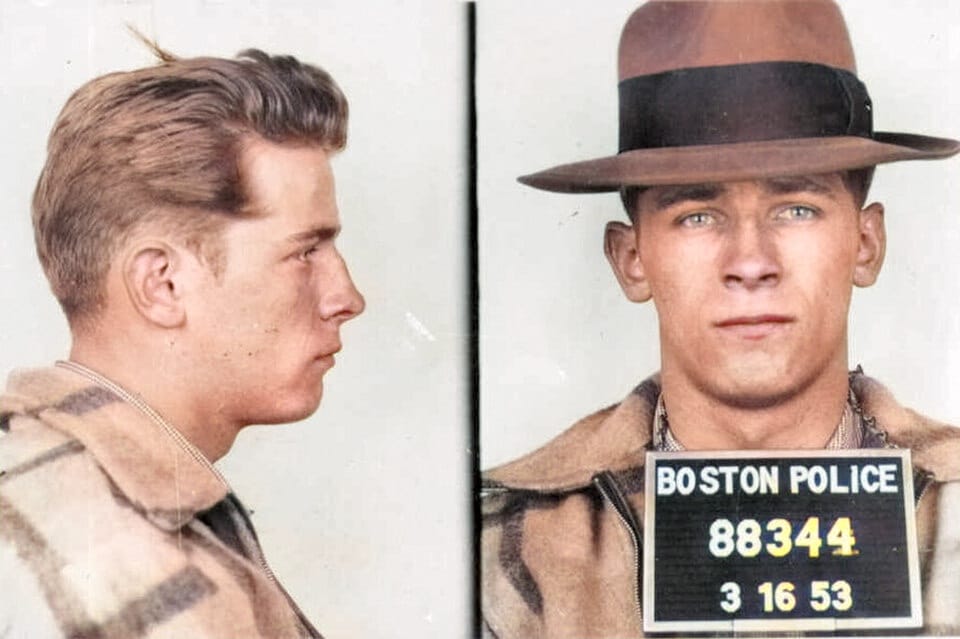
James “Whitey” Bulger ran Boston’s underworld for decades while secretly informing for the FBI, a betrayal that let his gang operate almost untouched. He vanished in 1994 after a tip-off from his own handler, spent sixteen years as a fugitive second only to Osama bin Laden on the FBI’s most wanted list, and was finally captured in California in 2011. Convicted in 2013 of racketeering and involvement in eleven murders, he was handed two life sentences.

Five years later, the 89 year old and wheelchair bound Bulger was abruptly transferred to a high security prison in West Virginia, his medical status quietly downgraded just weeks earlier. He arrived on 29 October 2018. Within hours, on this day in 2018, he was found beaten to death in his cell, attacked with a sock wrapped padlock and a shiv so savagely a law enforcement official called him unrecognisable.

Mafia hitman Fotios Geas was later identified as the man behind the killing and in 2024 was sentenced to 25 years for voluntary manslaughter. A relative of one of Bulger’s own victims summed up the reaction of many: “He died the way I hoped he always was going to die.”

James Joseph Bulger Jr portrait photograph 1953

⬅ See all events from 30 October

Spread the word on your favourite platform!
On This Day in True Crime History
1852·Mercy Recommended, Mercy Denied: John Riches Hanged in Melbourne Over a Deadly Camp Quarrel
1989·Twice in 24 Hours: the Granny Killer Claims Another Victim in Sydney
2005·The First Murder Convictions of the Melbourne Gangland War: Keith Faure and Evangelos Goussis Convicted
More Crime On This Day →

Subscribe to Dark Stories

True crime stories, dark history and tour news, straight to your inbox.