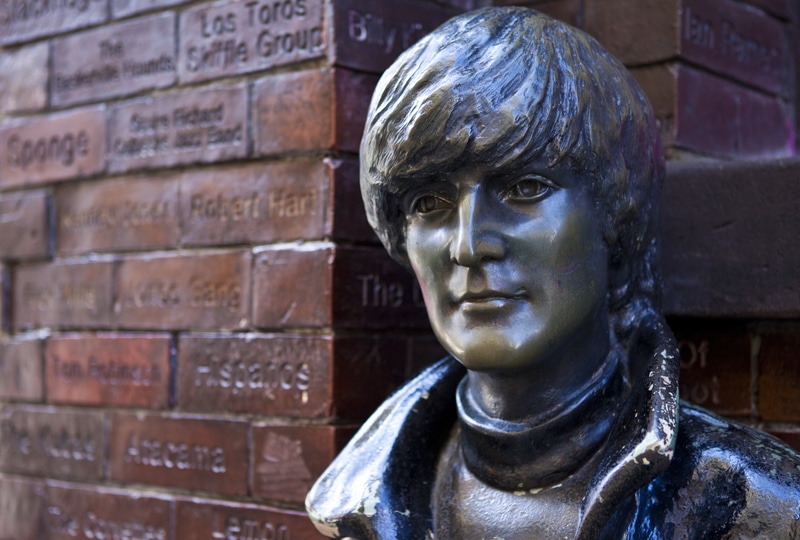
In December 1980, Mark David Chapman shot John Lennon four times in the back outside the Dakota apartment building in New York City, killing the former Beatle as he returned home. Chapman had waited hours for Lennon, who had earlier autographed a copy of his album ‘Double Fantasy’ for him, and remained at the scene until police arrived.
On 24 August 1981, Chapman was sentenced to 20 years to life in prison after pleading guilty to second-degree murder, against the advice of his attorneys. He has been denied parole multiple times and remains incarcerated.
William Wallace, the Scottish knight and military leader who had defied English rule for nearly a decade, was captured in August 1305 and swiftly tried for treason and atrocities against English civilians. Brought before a tribunal in Westminster Hall, he denied the charge of treason on the grounds that he had never sworn allegiance to the English crown, but the verdict was a foregone conclusion.
On 23 August 1305, Wallace was dragged through the streets of London to Smithfield, where he was hanged, cut down while still alive, disembowelled, beheaded, and his body divided into four parts. His head was displayed on London Bridge; his limbs were sent to Newcastle, Berwick, Stirling, and Perth as a warning to those who would resist English rule. He became the most enduring symbol of Scottish resistance.
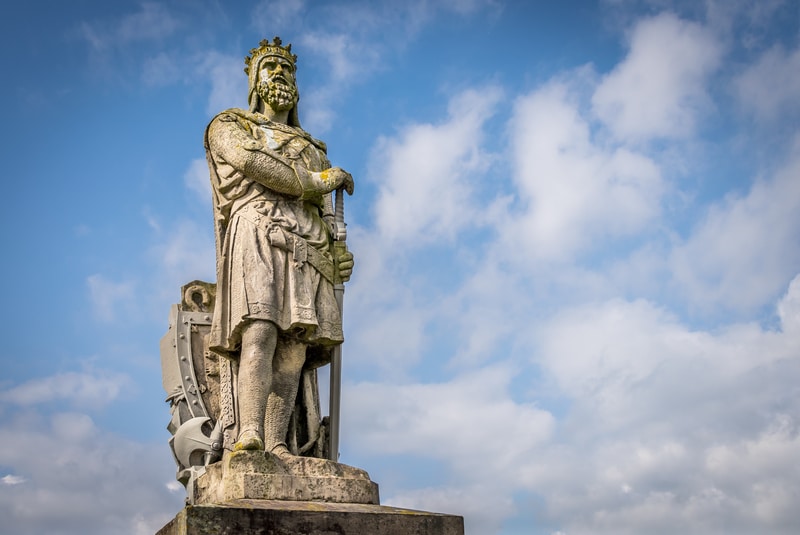
William Wallace statue outside Stirling Castle Scotland
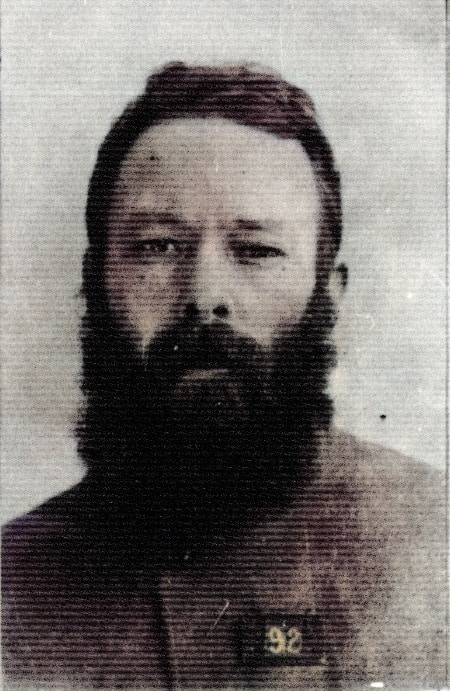
Peter Kurten, known as the Vampire of Dusseldorf, murdered two young foster sisters at a fairground on 23 August 1929, in one of a string of attacks that terrorised the city throughout that year. Born in Cologne in 1883, the eldest of 13 children, Kurten endured a childhood of brutal poverty and domestic terror, and had already demonstrated violent and sadistic tendencies from boyhood, including drowning two playmates on the Rhine at the age of nine.
His killing spree in 1929 left Dusseldorf gripped by fear. He was eventually arrested, tried, and convicted of nine murders, though police suspected him in as many as 68 attacks. His victims were overwhelmingly women and girls. He was executed by guillotine in July 1931. Shortly before his death, he asked the prison psychiatrist whether he would still be able to hear his own blood gushing from his neck after the blade fell. When told his brain might function for a few seconds, Kurten replied: ‘That would be the pleasure to end all pleasures.’
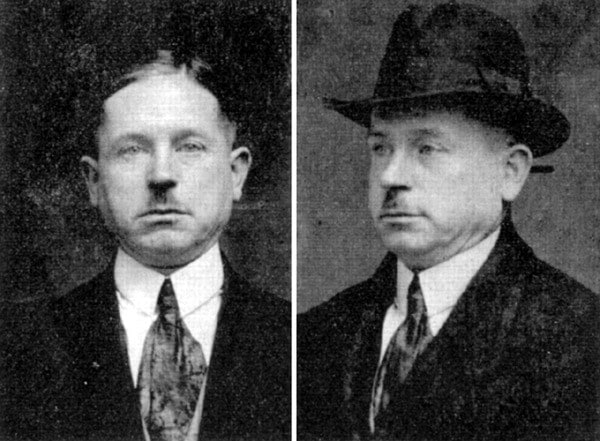
Peter Kürten police mugshot, 1931. Photographer unknown; Wikimedia Commons, CC BY-SA 3.0.
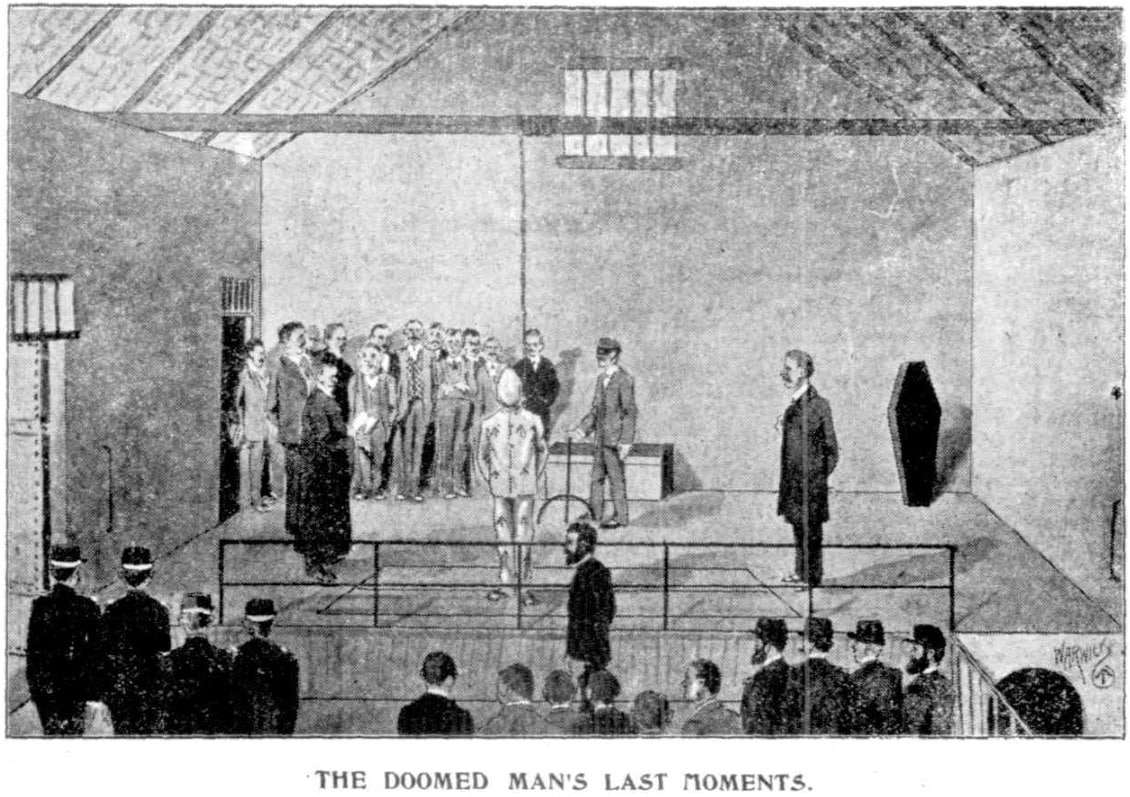
In March 1852, Adolphus Henry Trevethan, a station manager at Rawbell in the Burnett District, was killed during a tense confrontation with a large group of armed men on his property. He had gone out to negotiate and was returning with tobacco and pipes when he came running back, hand pressed to his chest, crying ‘I’m a dead man’ before dying of multiple stab wounds within hours.
The accused was tried at the Brisbane Circuit Court, where witness James Carney testified against the accused. Found guilty and sentenced to death, the condemned man walked to the scaffold on 22 August 1854, ascending it without resistance and dying without a struggle.
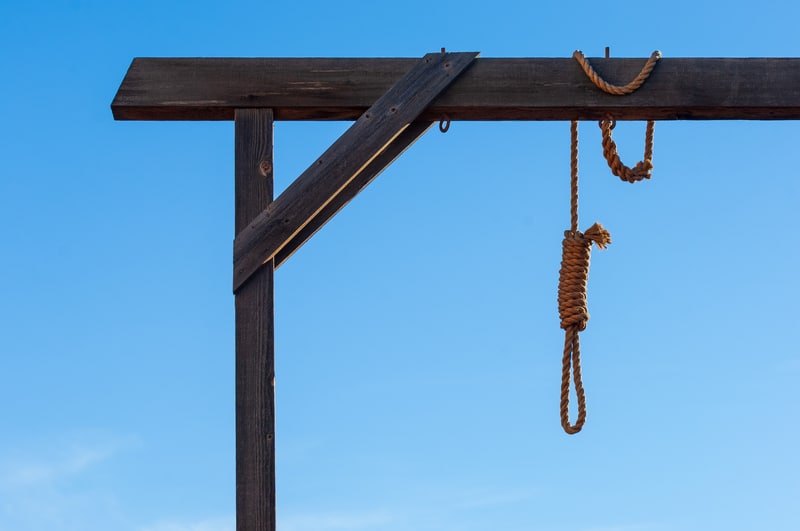
Noose at historic Tombstone courthouse courtyard, Arizona