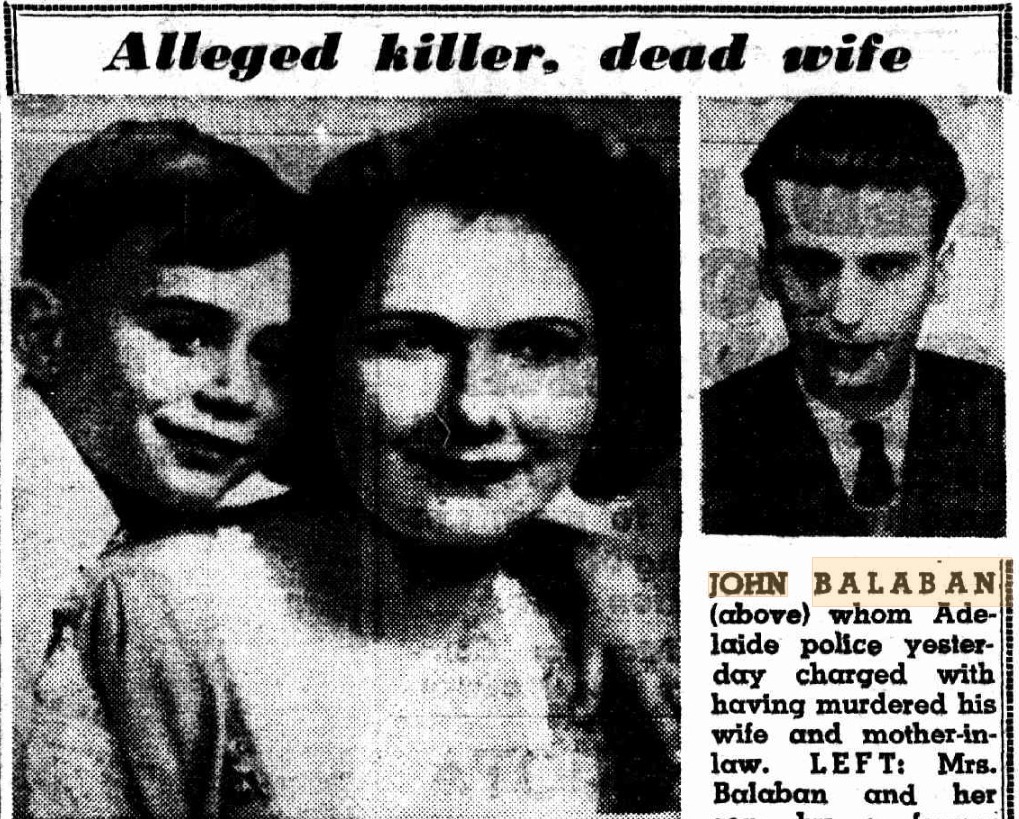
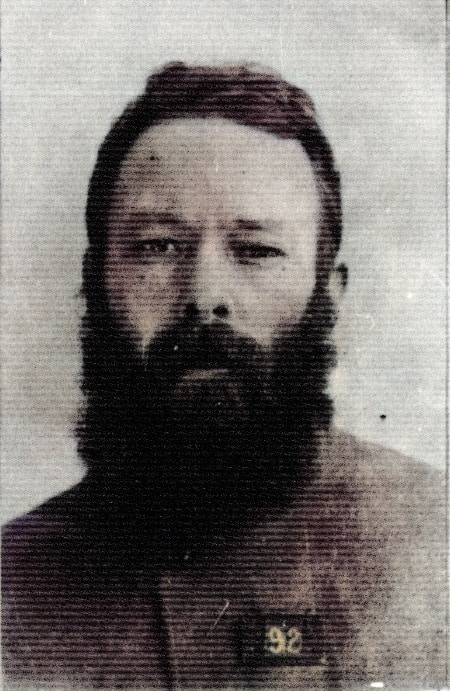
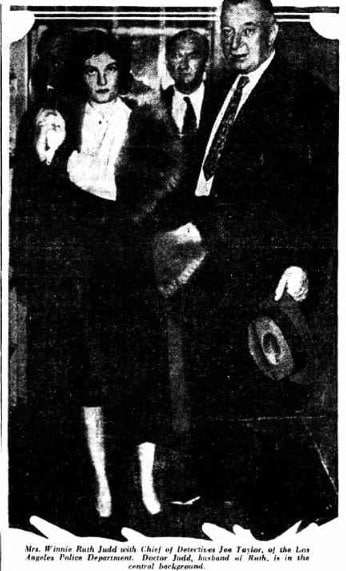
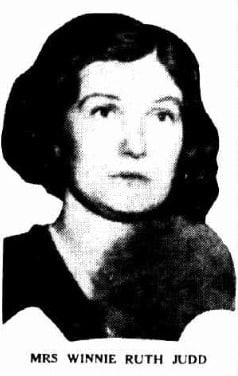
John Balaban, a 29-year-old Rumanian industrial chemist living in Adelaide, admitted in the Criminal Court in July 1953 to murdering at least five people. His victims included Zora Kusic, a 29-year-old Yugoslav woman whose throat he cut at her tin-shed home in Torrensville; a French girl named Riva Kwas; his wife Thelma Joyce Balaban; his mother-in-law Susan Jane Ackland; and his young stepson.
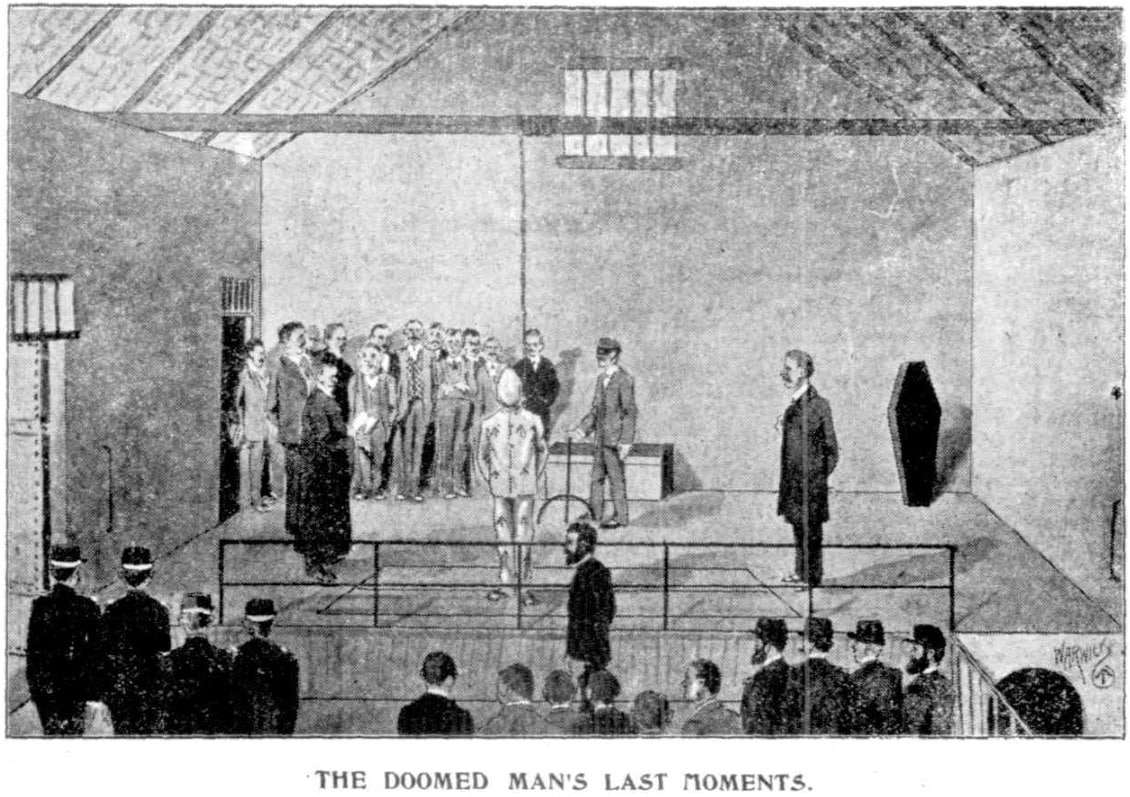
He claimed a divine vision had told him to do whatever his conscience dictated. Balaban pleaded insanity, but the jury rejected the defence. He was convicted of the murder of Kusic and sentenced to death. On 26 August 1953, he was hanged at Adelaide Gaol, walking to the gallows with blackened eyes and a bruised nose after being subdued following a sudden outburst in his cell.
1953 Daily Telegraph article Alleged killer dead wife Trove image
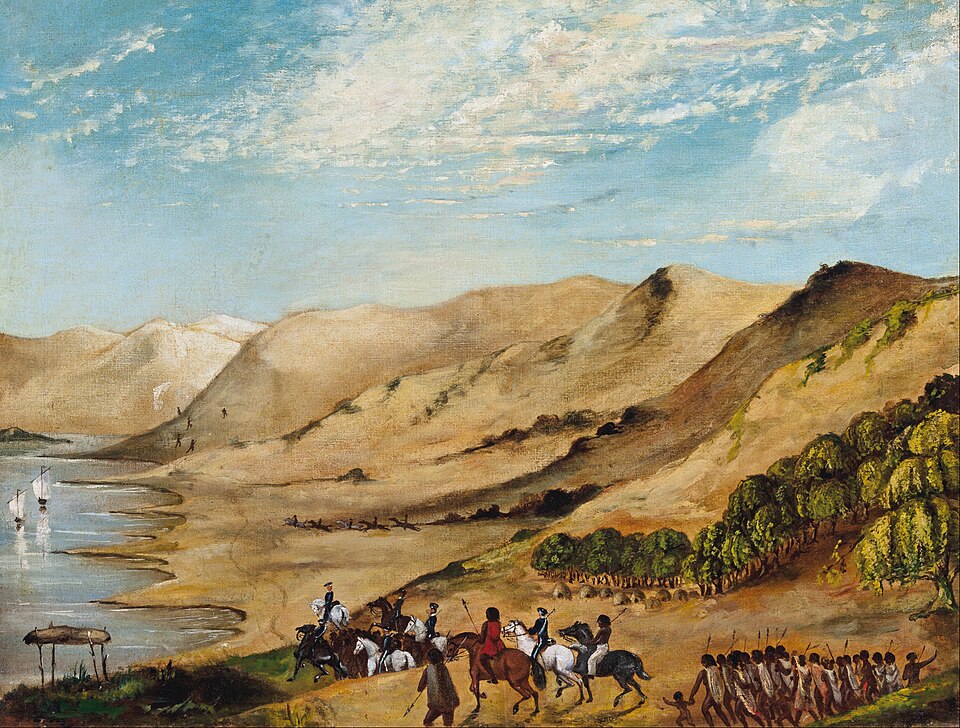
In June 1840, the ship Maria wrecked on Margaret Brock Reef off Cape Jaffa, South Australia. All twenty-six aboard reached shore, but the survivors later split into groups as they attempted to make their way towards Adelaide. Those travelling along the coast entered the territory of the local clan, where they were killed in a series of attacks. The remaining survivors were also pursued and subsequently killed.
Major O’Halloran, acting under orders, rounded up members of the local clan and conducted a summary field trial on the Adelaide frontier. Two men were hanged on 25 August 1840, in what colonial authorities framed as justice for the massacre, but which many historians regard as an act of punitive colonial retribution.
Major OHallorans 1840 expedition scene with mounted party
Nathaniel Hawes is barely out of his apprenticeship when he begins stealing from his master’s cash box, a slow slide from mischief into something far darker. Lives of the Most Remarkable Criminals presents him as one of those young men who mistakes recklessness for courage; a Norfolk grazier’s orphan who falls into expensive company and never finds his way back out.
Among the true crime figures of early Georgian England, Hawes stands out not for cunning or calculation but for sheer, blistering nerve. He is sprightly, sharp, and utterly convinced that boldness alone can carry a man through any danger the world throws at him.
The roads around London are about to learn what that kind of conviction looks like on horseback, and the courts of justice are waiting to answer it in kind.
Click the RSS feed link below to subscribe and get new episodes the moment they drop.
Subscribe via RSS
Dark Lexicon: Old words. Dark meaning.
The past speaks its own dialect; here is what to listen for in this episode.
Grazier: today the word barely registers, but in the eighteenth century a grazier was a substantial farmer who fattened cattle or sheep for market. It carried weight; a rich grazier meant a man of real rural prosperity, the kind whose estate might be worth fighting over after his death.
Put him out apprentice: this phrase describes the common practice of placing a young person with a master tradesman to learn a craft, usually for seven years. It was less a choice than a transaction; guardians paid a premium to bind the child, and the master gained cheap labour in return.
Good parts: nothing to do with physique. In Georgian speech, to say a man had ‘good parts’ meant he was clever, quick witted, and naturally talented. It was a compliment that made his criminal waste of those gifts all the more pointed.
Runners of the prison: these were low ranking servants or turnkeys who fetched and carried within the gaol, running errands for both keepers and inmates. They occupied a murky space; paid poorly by the system, often tipped by prisoners, and rarely trusted by either side.
Crow: today we might say crowbar, but in the early 1700s the tool was simply called a crow. It referred to any iron bar with a flattened, slightly curved end used to prise things apart; in this case, stones from a prison roof.
Stays: what we now call a corset. Stays were stiffened undergarments worn by women to shape the torso, but the rigid boning also created hidden channels and flat surfaces perfect for concealing tools, cord, or contraband against the body.
Sentence of the press: this is the legal term for peine forte et dure, a grim procedure in which heavy weights were placed on the chest of a prisoner who refused to enter a plea. It was not punishment for the crime itself; it was punishment for silence, designed to force the accused to submit to the court’s authority.
Mute: in a courtroom context, standing mute did not simply mean staying quiet. It meant formally refusing to plead guilty or not guilty, which halted the trial entirely. The law treated this refusal as a kind of defiance so dangerous it required its own brutal remedy.
Profligate: the word still exists but has softened over time. Today it suggests wasteful spending; in the 1720s it carried a heavier moral charge, meaning utterly dissolute, abandoned to vice, and beyond the reach of shame.
About This Series
Lives of the Most Remarkable Criminals is one of the earliest works of true crime writing in the English language, nearly 300 years old, covering murderers, thieves, highwaymen, forgers, coiners and worse.
The book is entirely in the public domain and every word of it can be read today for free. But if you would rather listen, this podcast does exactly that: one criminal at a time, every week, read aloud.
True crime was not invented by podcasts or streaming services. Eighteenth century readers were just as fascinated by outlaws and killers as we are today. They just consumed their dark stories by candlelight.
The voice you hear is David Dark: crime researcher, theatre script writer, producer of live immersive experiences, and audiobook narrator and voice artist. This podcast uses an AI voice model trained on David’s own voice, built using the maximum available training data to faithfully represent how he actually sounds. To hear David’s real voice in human generated form, visit him on Audible, Online Stage, Voices of Today, Spoken Realms, and Internet Archive.
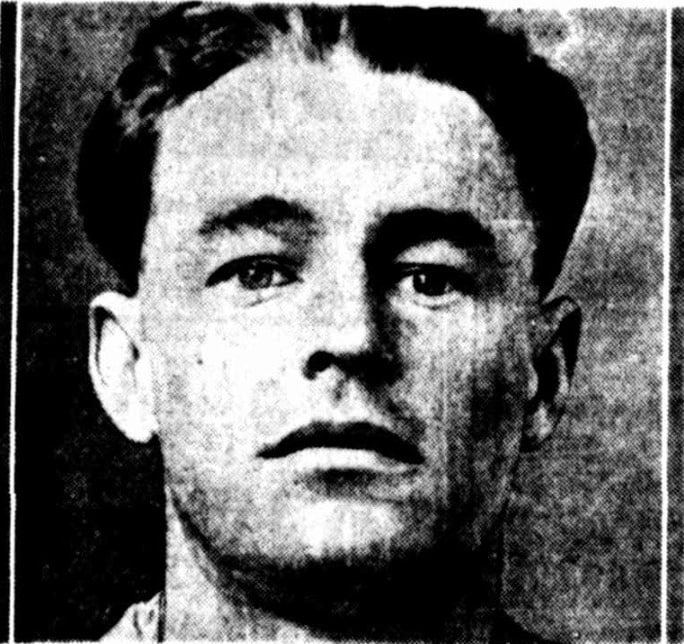
John Trevor Kelly, 24, was hanged at Long Bay Gaol near Botany Bay, Sydney, shortly after eight in the morning of 24 August 1939. He had been convicted of the axe murder of Marjorie Constance Sommerlad at Hillcrest farm near Tenterfield, where he had been working alongside her and her brother Eric. During the attack, Kelly also struck Eric Sommerlad with the same axe, though Eric survived. Appeals to the Court of Criminal Appeals and the High Court both failed.
Kelly became the last person judicially executed in New South Wales. His father, a well-known figure in Lismore and northern New South Wales, mounted a public appeal arguing that other killers had received commuted sentences, and that his son had no control of himself when drinking. Authorities refused to intervene.