1666: The Great Fire of London Begins on Pudding Lane

In the early hours of 2 September 1666, a fire broke out at the Pudding Lane bakery of Thomas Farriner in the City of London. Driven by strong winds, the blaze consumed around 80 percent of the old city before it was brought under control on 6 September. Though attributed to an accident at the bakery, the disaster ignited a desperate search for culprits.

Robert Hubert, a French watchmaker from Rouen, confessed to starting the fire. His confession was riddled with impossibilities: he had not arrived in England until two days after the fire broke out, and he described throwing a fire grenade through a window at the Farriner bakery, which had no windows. With nationalism inflamed by the Second Anglo-Dutch War, a scapegoat was needed, and Hubert, a foreigner in a hostile city, was hanged for a crime he almost certainly did not commit.
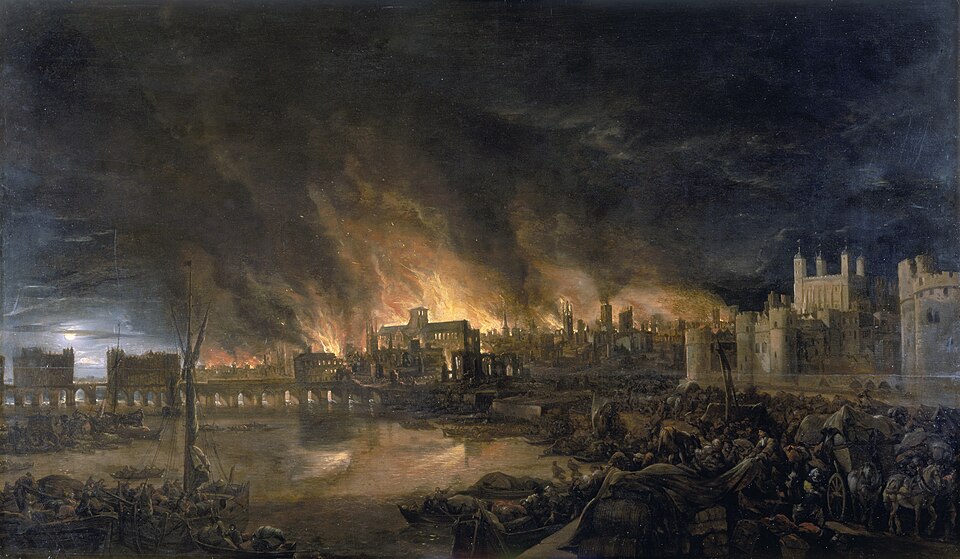

The Great Fire of London

⬅ See all events from 2 September

Spread the word on your favourite platform!

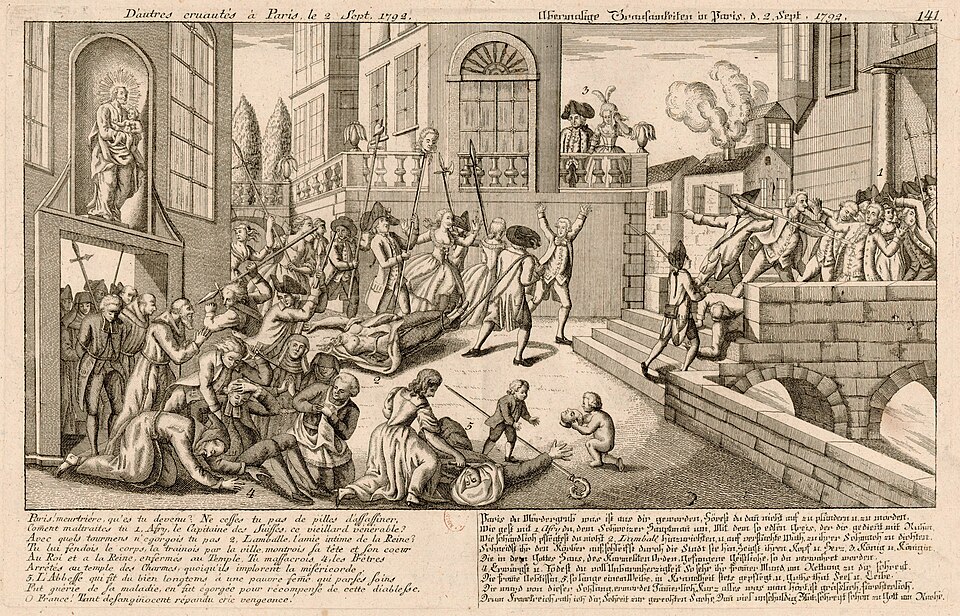
1792: The September Massacres begin in Paris

During the September Massacres of 1792, revolutionary crowds swept through Paris prisons and religious institutions, killing prisoners and others regarded as enemies of the Revolution.

At the Carmelite Convent, Roman Catholic clergy imprisoned for refusing to swear allegiance to the Civil Constitution of the Clergy were brought out and killed, among them several bishops.

The violence formed part of a broader wave of extrajudicial executions that engulfed Paris over several days, as fears of counter-revolution and foreign invasion fed a climate of panic and vengeance.

Those killed at the convent were later recognised by the Catholic Church as the Martyrs of September and were beatified in 1926.

Engraving showing the massacre of Princess de Lamballe

⬅ See all events from 2 September

Spread the word on your favourite platform!

1825: John Riddel Hanged at Hobart for Murder, Confessing Two More Killings

A dispute over the butchering of a pig turned fatal in Hobart in 1825. John Read Riddel, a carpenter, had hired a butcher to cut up a slaughtered pig. Dissatisfied with the work, the two men came to blows, and Riddel drove a knife into the man during the struggle.

Standing on the gallows for his crime, on 31 August 1825, Riddel confessed to the gathered crowd to smothering two of his wives while they slept in a drunken stupor, to forging a letter with an English postmark to deceive a clergyman into marrying him, and to a failed attempt on the life of his Captain, where he had snatched a concealed sword and was about to strike when a bystander intervened.

Riddel himself requested that the full weight of his crimes be made public, before being launched into eternity.

Piggy bank hanging from a hangmans noose on a golden rope

⬅ See all events from 31 August

Spread the word on your favourite platform!

1825: Thomas Peacock Hanged at Hobart for the Murder of Constable Craggs

Thomas Peacock, transported from Macquarie Harbour to stand trial, was convicted in the Supreme Court of the murder of Constable Craggs. Craggs had apprehended Peacock in the bush; Peacock stabbed him deliberately in the left side, declaring at the time that he would die happy having caused the constable’s death.

Peacock was hanged on the new drop at Hobart Gaol on 31 August 1825. His loud sobbing on the scaffold suggested the happiness he had claimed was nowhere to be found in his final moments.

Young woman bows head over execution block crying

⬅ See all events from 31 August

Spread the word on your favourite platform!
On This Day in True Crime History

Subscribe to Dark Stories

True crime stories, dark history and tour news, straight to your inbox.