1805: “I Have Killed Biddy, and Am Going to Deliver Myself Up”: A Hawkesbury Murderer Hanged at Sydney

William Miller, a labourer at Hawkesbury near Sydney, attacked Bridget Horan (also recorded as Kean) with a hoe on the afternoon of 18 September 1805. Minutes later he ran to a neighbour and blurted out the truth: “Yes: I have killed Biddy, and am going to deliver myself up.” He then led the chief constable straight to her body himself, the hoe still lying beside it.

At his trial before the Court of Criminal Jurisdiction in Sydney, Miller pleaded not guilty to acting with malice, insisting the killing had come from unbridled momentary rage rather than intent. The court was unconvinced. He was convicted and hanged on 30 September 1805, his body afterwards handed over for dissection.

Witnesses said Miller never wavered from his confession, going to the gallows with what observers called sincere repentance, seemingly resigned that only his own death could answer for hers.


Rustic garden hoe in dirt.

⬅ See all events from 30 September

Spread the word on your favourite platform!

1860: Flogged as a Soldier, Broken on Norfolk Island, Hanged at Hobart: the Ruin of a Convict

Moments after the bolt was drawn at the Campbell Street Gaol in Hobart, the chaplain stepped forward and read aloud a letter the dead man had written the day before in the condemned cell. It was addressed “To all men at Port Arthur”, and Martin Lydon had begged that it be made public.

It was the story of a ruined life in a few lines. Disobedient at ten, a soldier at 16, Lydon struck an officer of his company in a moment of anger and was flogged: “this ruined me”. He came to hate the army and took to drink, and further violence saw him transported. “The vileness of Norfolk Island turned me into an animal,” he wrote. Only three weeks earlier, in H division, he had boasted that he did not care about being hanged. Now he called that his “wicked flashiness”: “Every man about to die must fear the judgment of God.”

Lydon had been capitally convicted in the Supreme Court of a felonious assault at Port Cygnet, south of Hobart, committed while drunk, a crime that then carried the death penalty. Lydon disputed part of the evidence given at his trial, but he did not dispute the sentence: what he had done in his drunkenness, he wrote, deserved death. “May the drunkenness that brought on me this misery be a warning to all of you.”

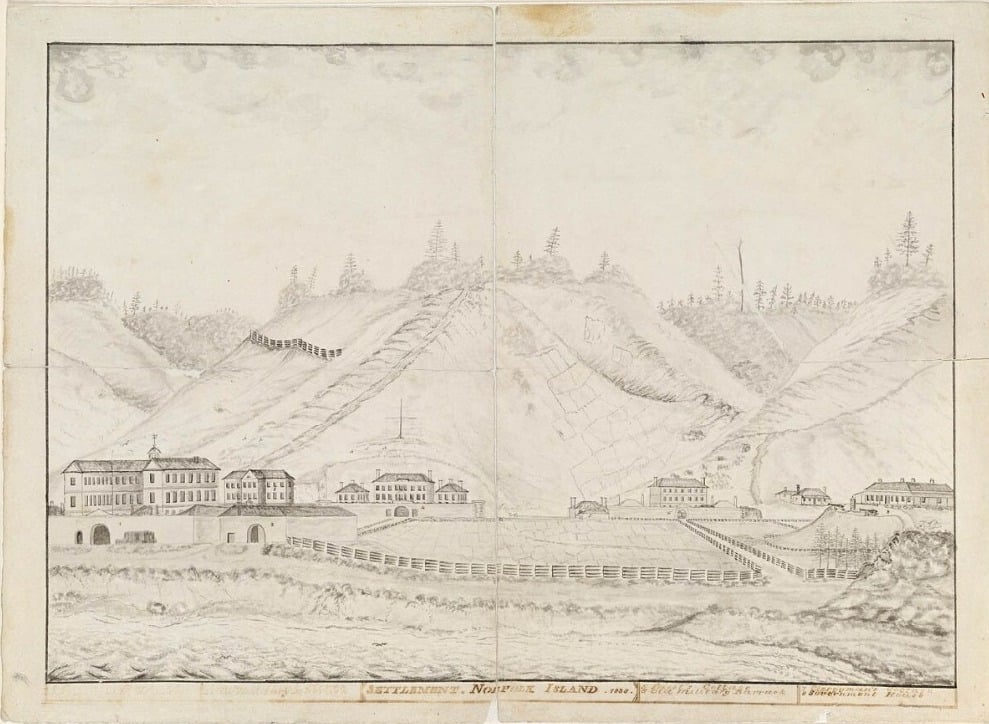
Norfolk Island settlement, 1838. Ink and wash drawing, artist unknown. State Library of New South Wales, SV8/Norf I/5.

⬅ See all events from 25 September

Spread the word on your favourite platform!

1940: Screaming in Terror: Murder Inc. Gunman Arrested Hiding in a Manhattan Church

Vito ‘Socko’ Gurino, a trigger man for the Brooklyn-based crime syndicate Murder Inc., was finally cornered on September 12, 1940, not in some underworld hideout but inside the Church of the Guardian Angel in Manhattan, where he had been hiding out from New Jersey. Detectives found him screaming hysterically, convinced his own associates were coming to silence him for good.

The fear was not unfounded. Gurino had spent weeks in fear of his life, aware that Murder Inc. dealt with liabilities by killing them before they could talk to police.

Once in custody, Gurino broke quickly, confessing to three murders carried out on the syndicate’s orders and implicating himself in four more killings, opening a window into the machine-like efficiency of contract killing that had terrorised the New York underworld for years.

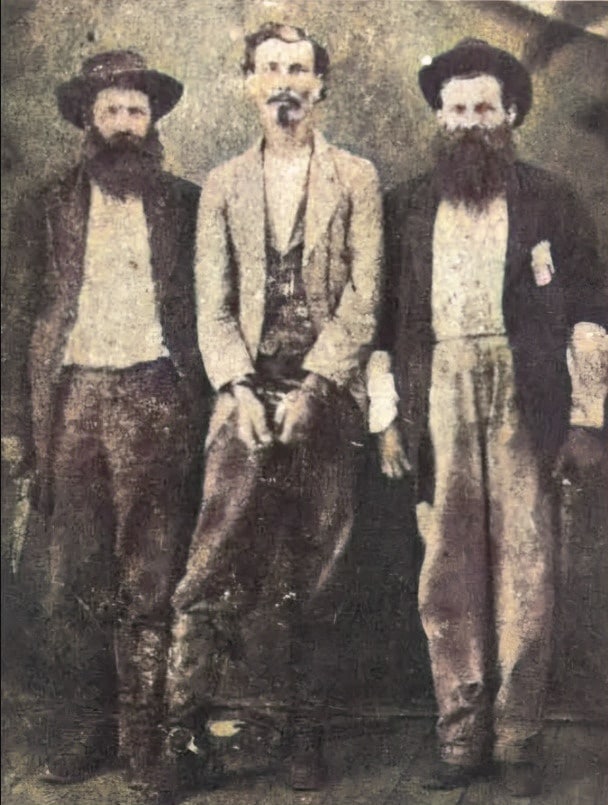
Vito Gurino: Murder Inc

⬅ See all events from 12 September

Spread the word on your favourite platform!

1904: “She Was Always Kind and Good to Me”: Employee Hanged at Melbourne Gaol for Murdering His Employer’s Wife

On the morning of 10 July 1904, Mrs Veitch, wife of baker A. C. T. Veitch, was found dead in the passage of the family’s bakery on O’Grady Street, Clifton Hill, a suburb of Melbourne. She still clutched a buggy whip in her hand, and a deep gash on one hand suggested she had fought desperately for her life. Whoever attacked her had locked the back doors, the front gate and the shop door beforehand, and had even tried to silence the family’s terrier tied up in the yard, evidence of careful planning rather than a chance intrusion.

The body was discovered by James Coleman Augustus Williams, an employee of the bakery who had been out on his delivery round. He raised the alarm after a boy came to buy bread and got no answer. Williams was soon charged with the murder, and at trial evidence pointed to a robbery gone wrong at the nearby office, though nothing suggested any personal grievance against the victim.

Williams was hanged at Melbourne Gaol on 8 September 1904.

The night before his execution, Williams wrote out a formal confession, insisting the killing was not for gain or lust but committed “in a fit of passion”, and that Mrs Veitch “was always kind and good to me”. He asked that the public not judge his family for what he had done and thanked the gaol’s governor and chaplains for their kindness to him in his final days.

Vintage bakery storefront on a sunny day

⬅ See all events from 8 September

Spread the word on your favourite platform!
On This Day in True Crime History

Subscribe to Dark Stories

True crime stories, dark history and tour news, straight to your inbox.