1900: Butch Cassidy and the Sundance Kid: the Photo That Doomed the Wild Bunch

Robert LeRoy Parker, known as Butch Cassidy, and Harry Longabaugh, the Sundance Kid, had built their reputation robbing trains, picking off moving targets loaded with bank cash. Switching tactics, they and their gang, the Wild Bunch, held up the First National Bank and walked away with one of the biggest hauls of their careers, money meant to fund their retirement from crime.

They should have quit while they were ahead. On this day in 1900, flush with success, the gang posed for a group photograph, dressed sharp and grinning for the camera. That image was later circulated on wanted posters across the country, handing lawmen the faces they needed. The robbery that was meant to set them up for life instead marked the beginning of the end for the Wild Bunch.
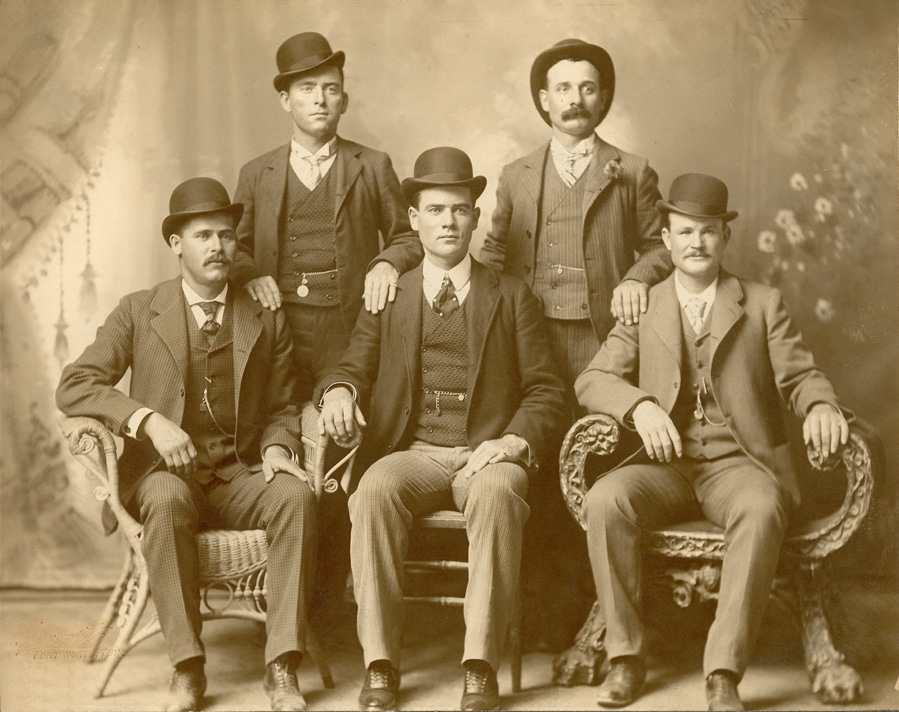

Fort Worth Five Photograph; Front row left to right: Harry A. Longabaugh, alias the Sundance Kid; Ben Kilpatrick, alias the Tall Texan; Robert Leroy Parker, alias Butch Cassidy. Standing: Will Carver & Harvey Logan, alias Kid Curry.

⬅ See all events from 21 November

Spread the word on your favourite platform!

1903: Hanged by His Own Weight: Tom Horn Dies on a Water-Powered Gallows in Wyoming

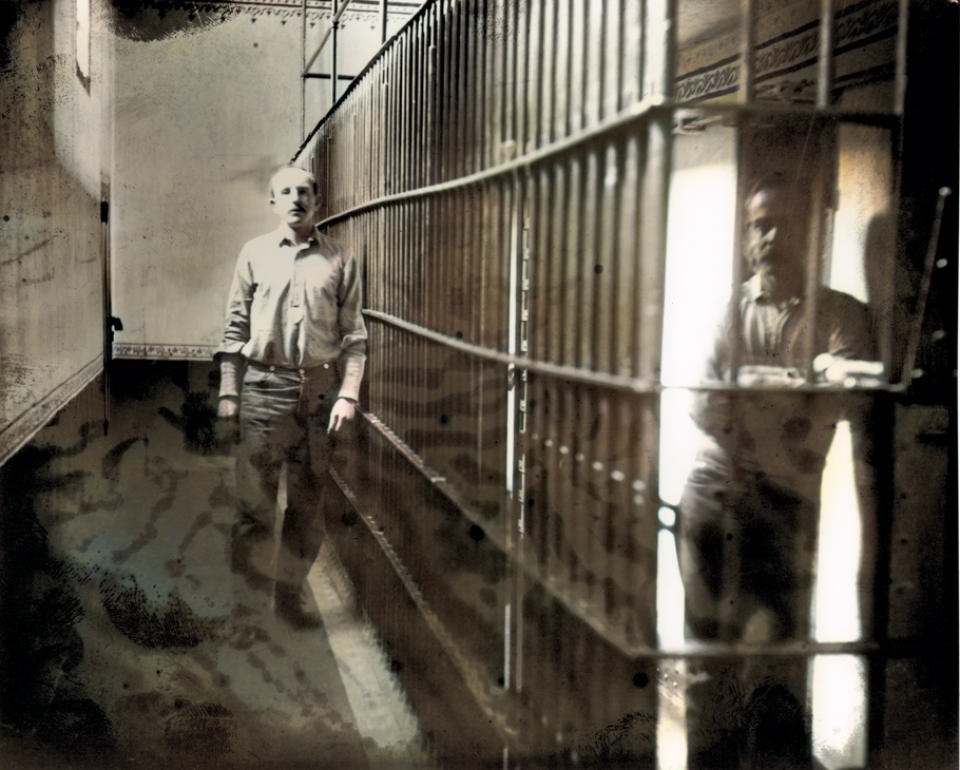
Tom Horn had already made his name as an army scout, Pinkerton detective and gun for hire across the American West before Wyoming cattle barons near Iron Mountain put him to work watching their herds. In 1901 the teenage son of a sheep rancher locked in a bitter feud with his cattle-raising neighbours was found shot dead near the family gate, and investigators eventually traced the killing, fired from roughly three hundred yards away, back to Horn.

A deputy marshal lured Horn into a fake job interview, got him drinking, and had a hidden stenographer take down his boasts, which Horn later claimed were drunken exaggeration rather than confession. Convicted largely on those words, he was sentenced to hang, and on this day in 1903 he was executed in Cheyenne on a device newspapers called the Julian gallows.

The Julian gallows worked by water, not by a hangman's hand. A tank slowly drained until a counterweight grew light enough to pull free a support beam, springing the trapdoor beneath the condemned man's feet without anyone ever having to pull a lever themselves.

Horn never named the men who had hired him, and doubt over his guilt has persisted ever since; even Geronimo, who had known him from his army scouting days, said he did not believe Horn was guilty.

Tom Horn stands by cell bars facing camera with another inmate behind | wyohistory.org
wyohistory.org

⬅ See all events from 20 November

Spread the word on your favourite platform!

1977: A Nine-Year-Old Found the Bodies: the Hillside Strangler Claims Three Victims in One Day

A young boy stumbled onto a trash heap near Dodger Stadium and found the decomposed bodies of, Dolores Cepeda and Sonja Johnson, dumped together as if discarded with the rubbish around them.

Hours later and across the city, hikers walking a hillside between Glendale and Eagle Rock found a third victim: Kristina Weckler, a 20 year old honours student. She had been injected with Windex before being strangled, a detail that revealed just how methodical her killers had become. All three bodies surfaced on the same day, 20 November 1977, as Los Angeles began to grasp the scale of what the press would soon call the Hillside Strangler murders.

Hillside Strangler: Aerial view of rush hour traffic on the 101 Ventura Freeway

⬅ See all events from 20 November

Spread the word on your favourite platform!

1873: A $30,000 Robbery Shakes the Watt Grayson Family in the Choctaw Nation

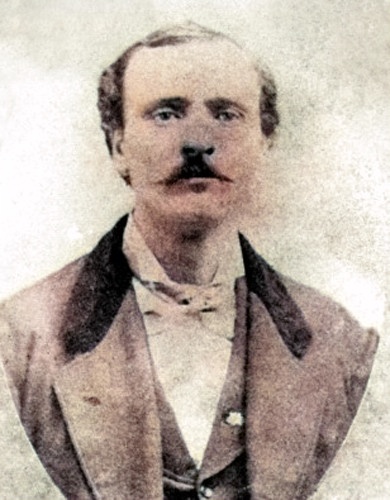
James Reed and two accomplices rode onto the property of the Watt Grayson family in the Choctaw Nation on this day in 1873 and made off with $30,000, an extraordinary sum for the frontier. In a territory where federal law had little reach and armed men moved freely between jurisdictions, the raid stood out even among the era's frequent hold ups for its scale and its nerve.

The Grayson robbery became one of the notable frontier crimes of the period, remembered less for violence than for the sheer audacity of walking away with a fortune from a single family's home.

James Reed: Husband of the Bandit Queen

⬅ See all events from 19 November

Spread the word on your favourite platform!
On This Day in True Crime History

Subscribe to Dark Stories

True crime stories, dark history and tour news, straight to your inbox.