1984: The Brighton Bomb: the IRA Attempt to Wipe Out Margaret Thatcher and Her Cabinet

The Grand Hotel in Brighton was packed with Britain's Conservative leadership for their annual conference when a long-delay bomb, planted by the Provisional IRA weeks earlier in a guest room, tore through the building in the early hours. Margaret Thatcher was still awake working on her conference speech in the room next door and escaped with only cuts, but five people died in the rubble and 31 more were injured, some permanently maimed.

The bomber, Patrick Magee, had checked into the hotel under a false name and set the timer so far in advance that he was long gone before it detonated. The IRA's chilling statement afterward noted that Thatcher had been lucky that day, but they would only need to be lucky once. Magee was later caught through forensic evidence left on the bomb casing and convicted for the attack.
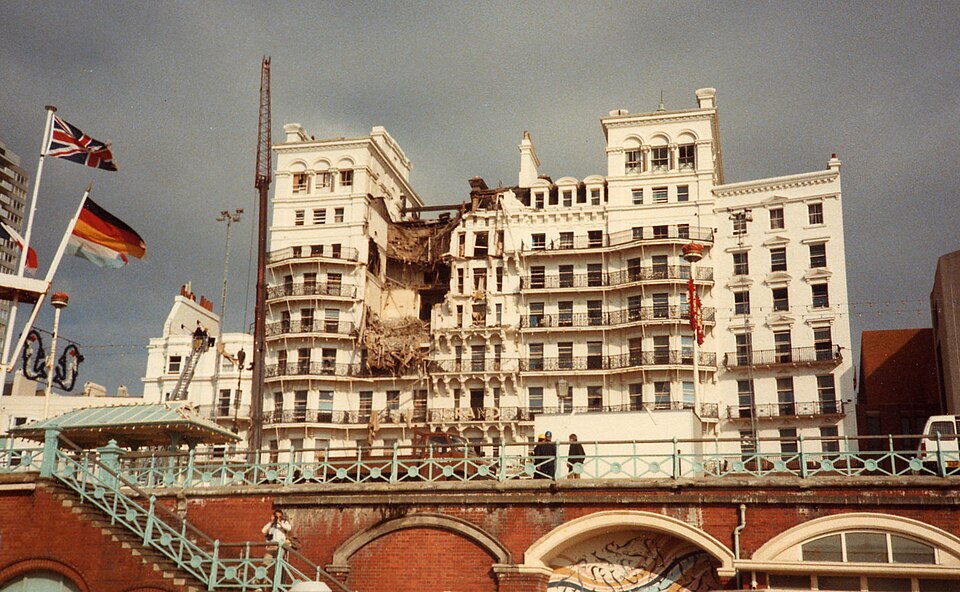

Grand Hotel, Brighton, after the bombing, 1984. Photo: D4444n / Wikimedia Commons, CC BY-SA 3.0 (creativecommons.org/licenses/by-sa/3.0/).

⬅ See all events from 12 October

Spread the word on your favourite platform!

1789: The Doctor Who Wanted Death to Be Humane: Joseph Guillotin Proposes a Single-Blow Beheading Machine

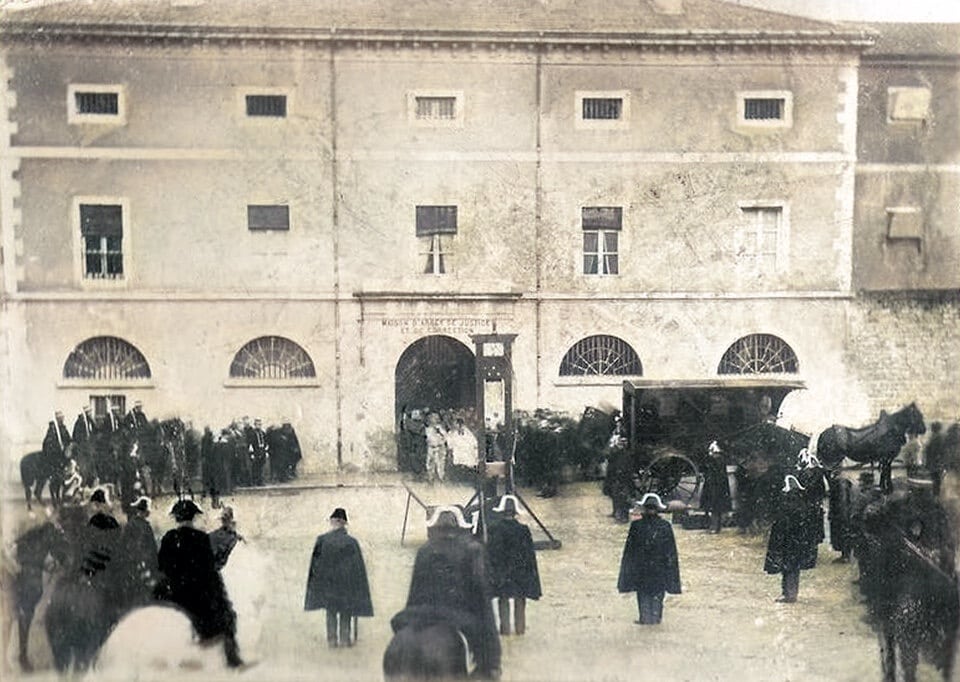
In Versailles in 1789, a physician named Joseph Guillotin stood before France's new National Assembly and argued that execution should not be a matter of rank or suffering. He proposed that every condemned prisoner, noble or commoner, die the same way: instantly, by a single blow of a blade, rather than by the axe, the sword, or the rope, methods that often took multiple strokes or slow strangulation to finish the job.

Guillotin framed it as a mercy, a way to strip cruelty and class privilege out of state killing. He did not invent the device that would later carry his name, nor did he ever operate one, but the machine built from his proposal would go on to define the French Revolution's Reign of Terror, and the word guillotine would forever be linked to the man who only meant to make dying less brutal.

Public guillotine execution scene 1897

⬅ See all events from 10 October

Spread the word on your favourite platform!

1891: The Mace, the Madam, and a Melbourne Scandal That Never Died

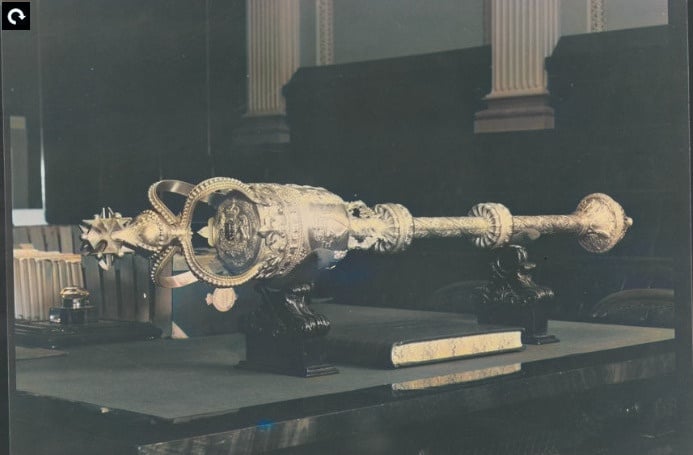
In the early hours of 9 October 1891, the ceremonial mace vanished from Parliament House in Melbourne, the silver-plated symbol of the speaker's authority gone from a locked case. A parliamentary engineer was seen that same day running from the building with a parcel the right size and shape to be the mace; he told police it was firewood, and with no proof against him the investigation stalled.

Thirteen months later newspapers claimed the mace had turned up in the parlour of a notorious madam who catered to visiting members of parliament, a story so delicious it triggered a formal Board of Inquiry. The board cleared the brothel but settled nothing else, and popular rumour simply shifted the blame onto the new Speaker, Thomas Bent, despite his having taken office only after the theft. The mace was never seen again, and whether it was a burglary or a parliamentary prank gone wrong remains Melbourne's favourite unsolved mystery.

Parliamentry Mace Stolen: Credit: Public Record Office Victoria, VPRS 14517/P0001/39, O884.

⬅ See all events from 9 October

Spread the word on your favourite platform!

1967: Che Guevara Captured and Shot Trying to Spark a Revolution in Bolivia

Che Guevara had already helped topple one government, fighting alongside Fidel Castro in Cuba, when he slipped into Bolivia in 1966 to light the same fuse there. He spent nearly a year leading a ragged guerrilla band through the jungle, hunted by the Bolivian army with American backing, before troops cornered and captured him on 8 October 1967 in a remote ravine.

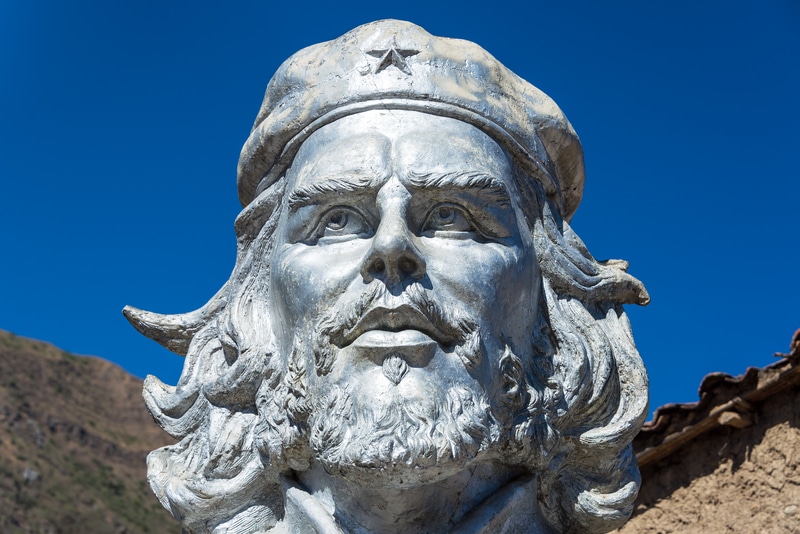
He was held overnight in a schoolhouse in a small village, then shot dead the following day on orders from the Bolivian government, which wanted him silenced rather than put on public trial. His death turned him instantly into a global revolutionary icon, his face reproduced on posters and T-shirts for decades after the jungle where he fell was forgotten.

Bust of Che Guevara in La Higuera. LA HIGUERA, BOLIVIA - AUGUST 6: Monument to Che Guevara in La Higuera, Bolivia seen on August 6, 2014. Guevara was executed in La Higuera in 1967 | ID 54527187 © Jesse Kraft | Dreamstime.com
ID 54527187 © Jesse Kraft | Dreamstime.com

⬅ See all events from 9 October

Spread the word on your favourite platform!
On This Day in True Crime History

Subscribe to Dark Stories

True crime stories, dark history and tour news, straight to your inbox.