1984: The Brighton Bomb: the IRA Attempt to Wipe Out Margaret Thatcher and Her Cabinet

The Grand Hotel in Brighton was packed with Britain’s Conservative leadership for their annual conference when a long-delay bomb, planted by the Provisional IRA weeks earlier in a guest room, tore through the building in the early hours. Margaret Thatcher was still awake working on her conference speech in the room next door and escaped with only cuts, but five people died in the rubble and 31 more were injured, some permanently maimed.

The bomber, Patrick Magee, had checked into the hotel under a false name and set the timer so far in advance that he was long gone before it detonated. The IRA’s chilling statement afterward noted that Thatcher had been lucky that day, but they would only need to be lucky once. Magee was later caught through forensic evidence left on the bomb casing and convicted for the attack.
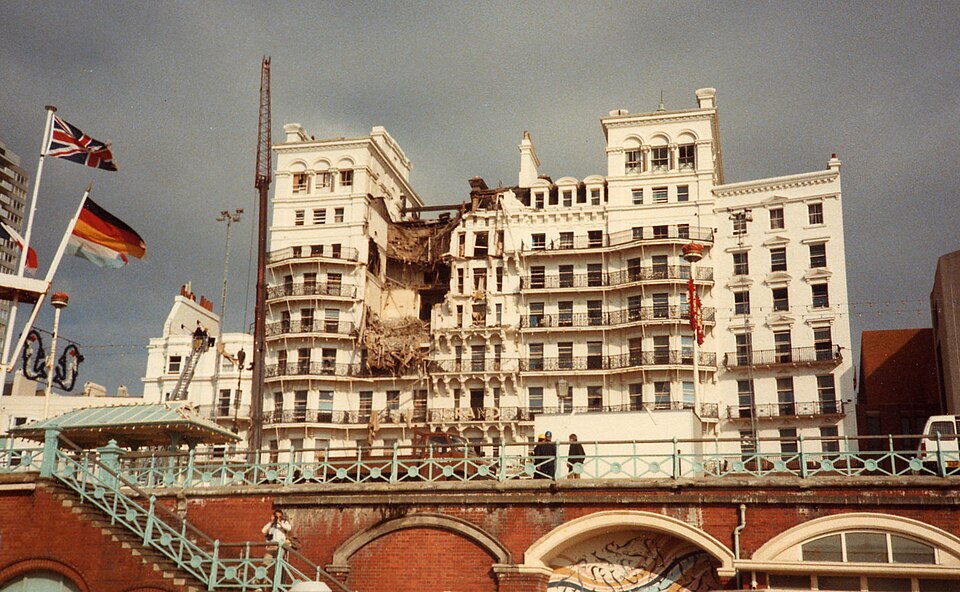

Grand Hotel, Brighton, after the bombing, 1984. Photo: D4444n / Wikimedia Commons, CC BY-SA 3.0 (creativecommons.org/licenses/by-sa/3.0/).

⬅ See all events from 12 October

Spread the word on your favourite platform!

2002: Timed to Kill the Survivors: the Bali Nightclub Bombings

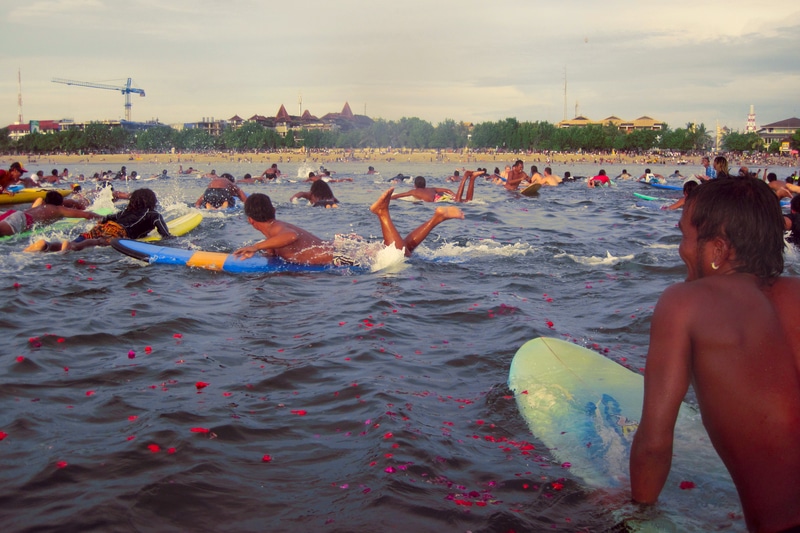
On 12 October 2002, a suicide bomber walked into Paddy’s Pub in Bali’s Kuta district and detonated an explosive vest on the crowded dance floor. Twenty seconds later, as survivors fled into the street to see what had happened, a second bomb hidden in a van outside the Sari Club tore through the crowd gathered there, killing many who had just escaped the first blast. The attack claimed 202 lives, including 88 Australians, the deadliest act of terrorism in Indonesia’s history. Three men were convicted of orchestrating the bombings and sentenced to death. They were executed by firing squad on Nusakambangan island in November 2008. In their final moments, the three men showed no remorse, shouting loudly, rather than any word of apology.

Kuta carnival 2010. Paddle for peace. Bali. Annual Kuta beach carnival celebration. Initially organized as a response to the Bali terrorist attack of October 2002, the event has now become a regular fixture on Bali's busy calendar of yearly events. October 2010. Among majority of events - every year all surfers padles to the mid of the ocean to make the circle, unite the hands, put flowers into the water and pray for victims of terrorist attack. The name of this part is Paddle for piece | ID 16538257 © Evgeniya Bolyukh | Dreamstime.com
ID 16538257 © Evgeniya Bolyukh | Dreamstime.com

⬅ See all events from 12 October

Spread the word on your favourite platform!

1985: France Finally Admits State-Sponsored Terrorism: the Bombing of the Rainbow Warrior in Auckland

On 10 July 1985, agents of the French secret service DGSE attached two bombs to the hull of the Greenpeace flagship Rainbow Warrior as it lay moored in Auckland Harbour, sinking the vessel and killing Portuguese photographer Fernando Pereira, who drowned trying to retrieve his camera equipment. The ship had been preparing to lead a protest flotilla against French nuclear testing in the Pacific.

Two French agents, Alain Mafart and Dominique Prieur, were arrested in New Zealand travelling under false Swiss identities and later pleaded guilty to manslaughter, drawing widespread attention to the operation’s codename, Operation Satanique.

For weeks the French government denied any involvement, until on 22 September 1985 Prime Minister Laurent Fabius publicly admitted that French secret service agents had sunk the ship acting on orders, an extraordinary confession of state-directed sabotage carried out against an allied nation.

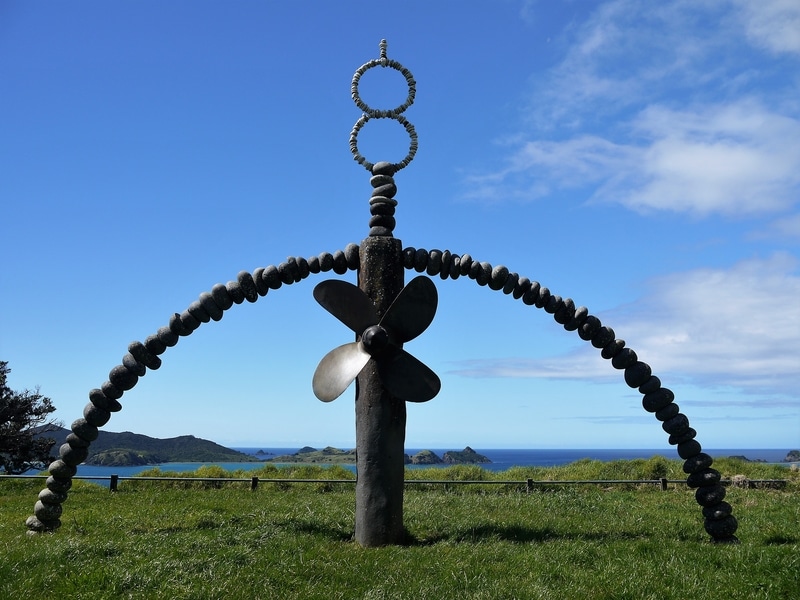
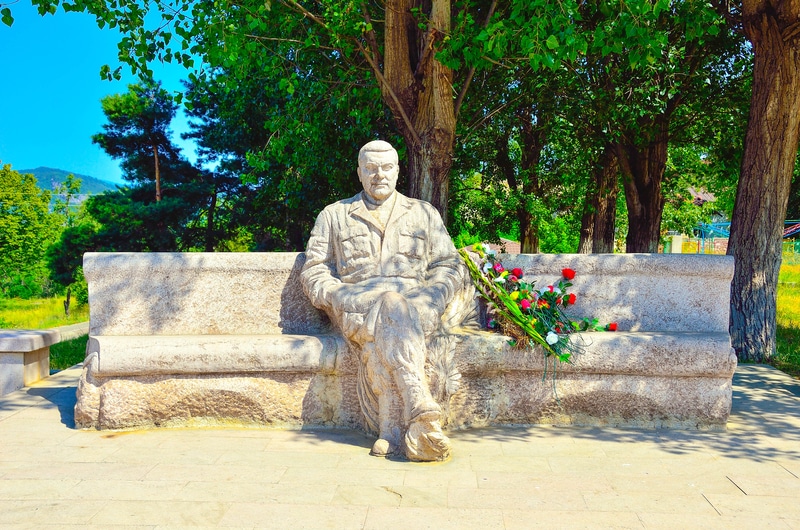
New Zealand: Matauri Bay Rainbow Warrior memorial. Matauri Bay, Northland, memorial to Rainbow Warrior sculpted by Chris Booth | ID 101374786 © Jill Shepherd | Dreamstime.com
ID 101374786 © Jill Shepherd | Dreamstime.com

⬅ See all events from 22 September

Spread the word on your favourite platform!

1920: The Wagon That Vanished: New York’s Unsolved Wall Street Bombing

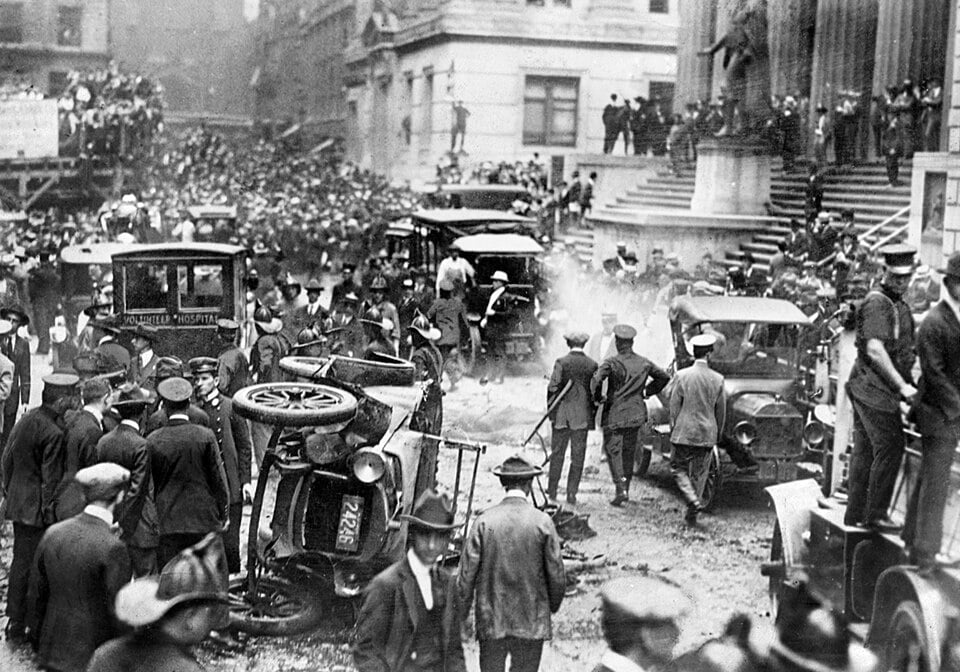
At 12:01 pm on September 16, 1920, a horse-drawn wagon parked across from the J.P. Morgan & Co. headquarters at 23 Wall Street exploded, packed with 100 pounds of dynamite and 500 pounds of cast-iron sash weights turned into shrapnel. Thirty people died instantly and eight more later succumbed to their wounds, with 143 seriously injured and hundreds hurt in total. Witnesses saw the driver step down and vanish down a side street moments before the blast; he was never identified.

Within a minute, the New York Stock Exchange president suspended trading to head off panic. A 17-year-old messenger, commandeered a parked car and used it to ferry 30 wounded victims to hospital as police seized nearby vehicles for the same purpose. Crews worked through the night to clear the wreckage so the Exchange could reopen the next morning, but in doing so destroyed evidence that might have identified the bomber.

Investigators from the Bureau of Investigation, forerunner of the FBI, suspected the attack was the work of Galleanist anarchists responsible for a string of bombings the previous year, but no one was ever charged. More than a century on, the Wall Street bombing remains unsolved, its perpetrator and motive still unknown.

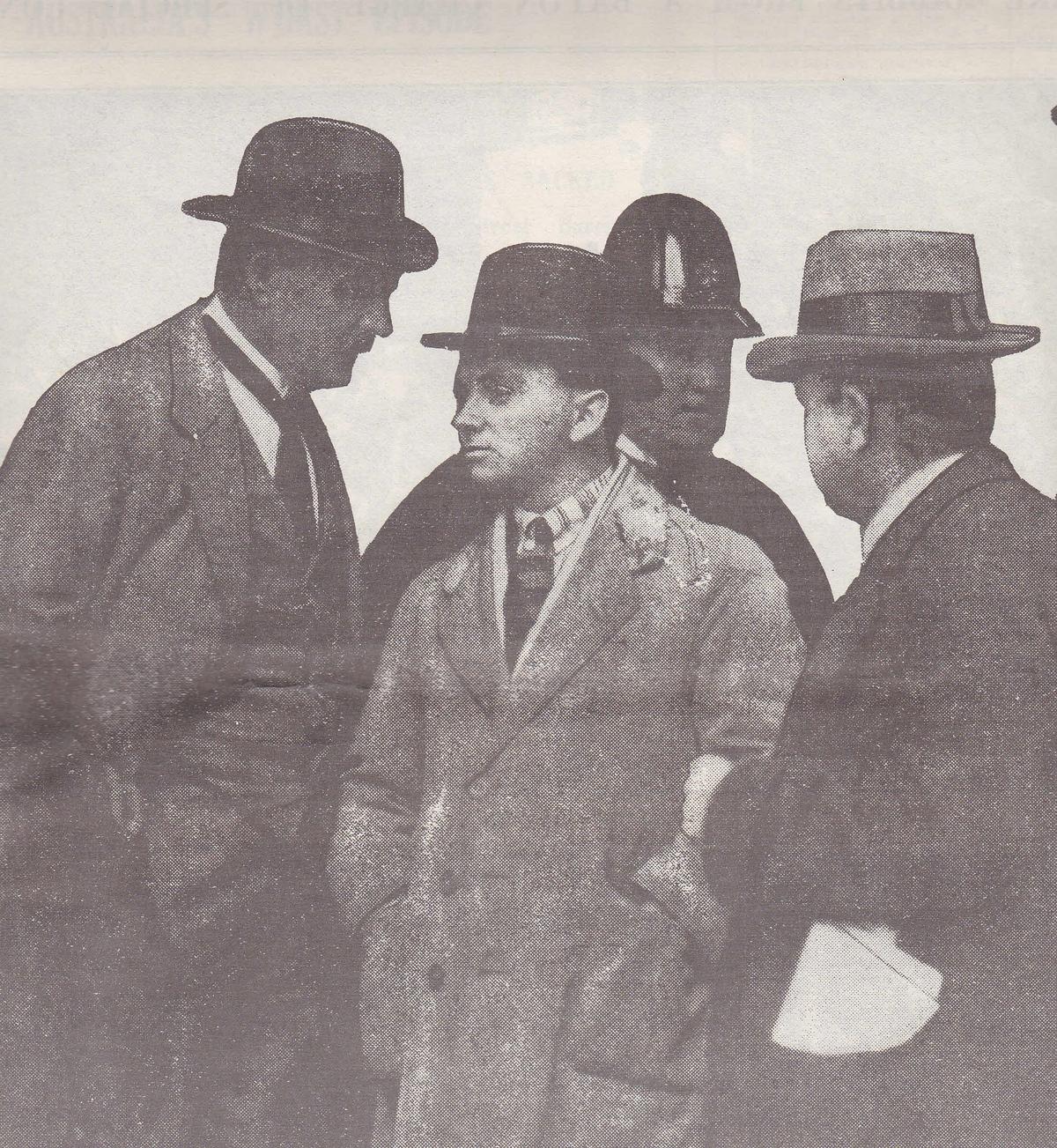
Historic photo of bombing aftermath on Wall Street

⬅ See all events from 16 September

Spread the word on your favourite platform!
On This Day in True Crime History

Subscribe to Dark Stories

True crime stories, dark history and tour news, straight to your inbox.