1857: He Hid the Head for Tobacco and Tea: Hanged in Melbourne for an Axe Murder

John Mason and his mate, a big, powerfully built man known only as "Big George," worked together splitting timber near Ballan, a small settlement outside Ballarat. George had a habit of manhandling his smaller partner, once tossing him onto their campfire and holding him there until his clothes burned. That history of cruelty, Mason later claimed, was what finally drove him to pick up an axe and strike George dead with a single blow. Unable to move the heavy body, Mason spent the night dismembering it and feeding the remains into the fire, concealing the head elsewhere. When searchers cornered him in the bush, he refused to reveal its location until they gave him tobacco and tea. He then directed them to rake through the ashes, where the skull was discovered. Mason never denied the killing. When a trooper confronted him, he admitted "he had done it, and was not ashamed to own it." Tried for murder, he was convicted despite the jury's recommendation for mercy and hanged in Melbourne on this day in 1857.
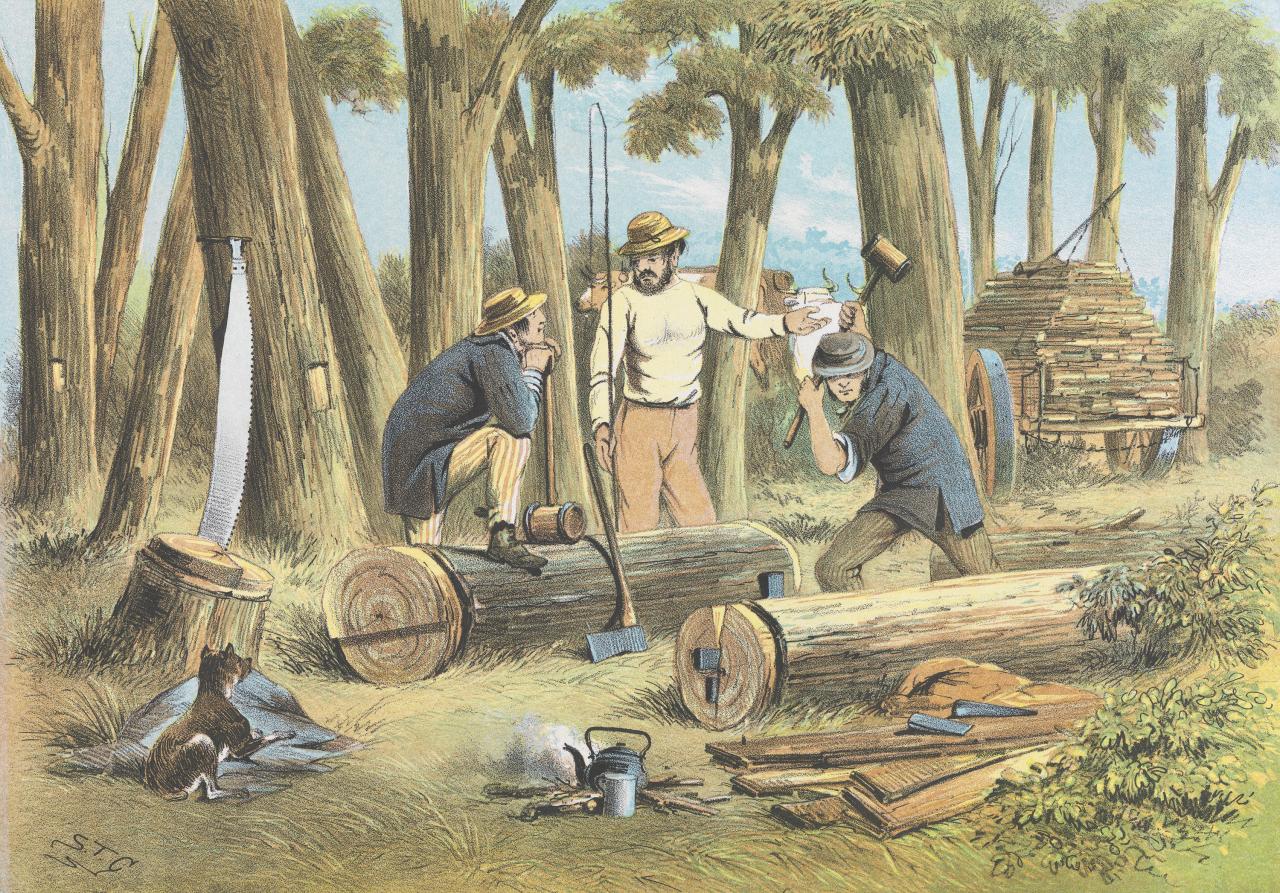

Timber Splitters artwork by S T Gill: National Gallery of Victoria, Melbourne

⬅ See all events from 6 November

Spread the word on your favourite platform!

1866: "Unprecedented in Our Annals of Crime": A Sydney Butcher Committed for Trial Over a Dismembered Body

A boy's dog scratching at a rubbish heap near a flour mill uncovered a charred human head, its features burned beyond recognition. Days later a woman's torso turned up nearby, but no one had been reported missing, and the case stalled until police found a torn scrap of calico left in a landlady's cellar by a young butcher named William Henry Scott. It matched, thread for thread, a fragment of chemise recovered with the remains.

After nine days of police court hearings, Scott was committed for trial on 31 October 1866, accused of a murder most foul: that of a Sydney woman with whom he had been living as husband and wife. The magistrate praised the remarkable police investigation, which had traced an entire body back to a single scrap of fabric, describing the case as "unprecedented in our annals of crime".

William Henry Scott under sentence of death 1867 for murder most foul

⬅ See all events from 31 October

Spread the word on your favourite platform!

2017: The Twitter Killer: Nine Dismembered Bodies Found in a Freezer Near Tokyo

Takahiro Shiraishi trawled Twitter for young people who had posted about wanting to die, then invited them to his apartment in the Japanese city of Zama with promises to help them end their lives, or to die together. Between August and October 2017, he murdered eight young women and one man, the latter killed because he threatened to expose the crimes.

When one of the women disappeared, her brother searched her Twitter messages and helped police trace her movements to Shiraishi. Investigators arrived at his apartment on 30 October 2017 and discovered human remains concealed in cooler boxes and storage containers. The remains belonged to nine victims, aged between fifteen and twenty-six, whose disappearances had gone largely unconnected until the discovery.

Shiraishi admitted all nine killings and acknowledged that his victims had not consented to their deaths, despite his lawyers arguing otherwise. Sentenced to death in December 2020, he withdrew an appeal lodged by his lawyers and was executed by hanging on 27 June 2025, Japan's first execution in nearly three years.

Zama death pact slayings murder scene photo: released into the public domain.

⬅ See all events from 30 October

Spread the word on your favourite platform!

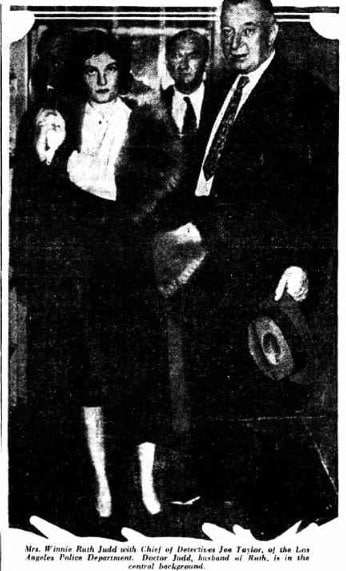
1931: The Confession Note Fished From a Department Store Sink That Caught the Trunk Murderess

Winnie Ruth Judd, a medical secretary in Phoenix, shot her two friends Anne LeRoi and Hedvig Samuelson after a jealous falling out in October 1931, then packed their bodies, one dismembered, into trunks and shipped them to Los Angeles by train. A foul smell leaking from the luggage tipped off a baggage handler, and police forced the locks to find the corpses inside.

Judd vanished into Los Angeles for days before she surrendered to police at a funeral home on this day in 1931. By then her fate had already been sealed by a scrawled confession letter, torn up and flushed, that a department store cleaner fished from a ladies room wash basin. Police pieced the scraps together from the plumbing and reconstructed her own words: "It was as much a battle as Germany and the U.S. I killed in defence." The press, already calling her the Trunk Murderess, seized on a new name: the Tiger Woman.

Winnie Ruth Judd the Velvet Tigress Arizona trunk murder case 1933

⬅ See all events from 23 October

Spread the word on your favourite platform!
On This Day in True Crime History

Subscribe to Dark Stories

True crime stories, dark history and tour news, straight to your inbox.