James “Whitey” Bulger ran Boston’s underworld for decades while secretly informing for the FBI, a betrayal that let his gang operate almost untouched. He vanished in 1994 after a tip-off from his own handler, spent sixteen years as a fugitive second only to Osama bin Laden on the FBI’s most wanted list, and was finally captured in California in 2011. Convicted in 2013 of racketeering and involvement in eleven murders, he was handed two life sentences.

Five years later, the 89 year old and wheelchair bound Bulger was abruptly transferred to a high security prison in West Virginia, his medical status quietly downgraded just weeks earlier. He arrived on 29 October 2018. Within hours, on this day in 2018, he was found beaten to death in his cell, attacked with a sock wrapped padlock and a shiv so savagely a law enforcement official called him unrecognisable.

Mafia hitman Fotios Geas was later identified as the man behind the killing and in 2024 was sentenced to 25 years for voluntary manslaughter. A relative of one of Bulger’s own victims summed up the reaction of many: “He died the way I hoped he always was going to die.”
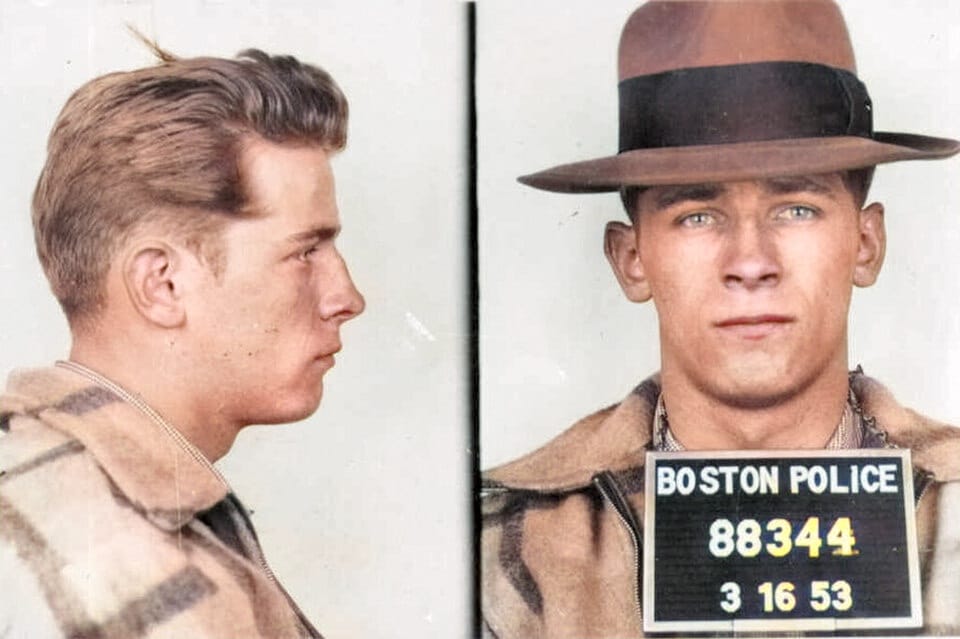

James Joseph Bulger Jr portrait photograph 1953

⬅ See all events from 30 October

Spread the word on your favourite platform!

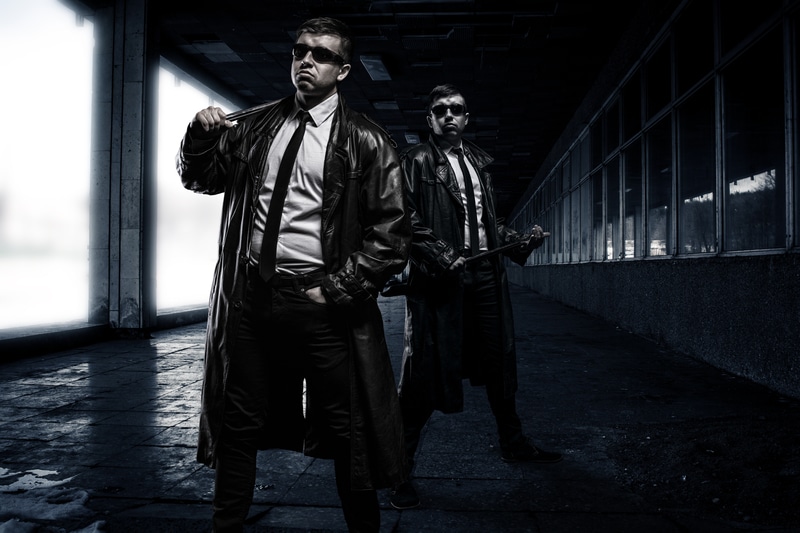
Peter and Doug Morgan, identical twins born in regional Victoria on this day in 1953, grew up to pull off more than twenty armed robberies across the state as the so-called After Dark Bandit, a single figure police hunted for two years without ever suspecting he was two men. Wearing matching clothes and disguises, the brothers struck rural banks and betting shops in towns just twenty minutes apart, sending detectives chasing a suspect who seemed able to be in two places at once. Their habit of striking near closing time and escaping into the bush under cover of darkness earned them their nickname.

The ruse unravelled on 27 April 1979, when Peter robbed the Heathcote bank for a third time and shot veteran constable Ray Koch twice, leaving him fighting for his life. Fleeing into the bush as nearly two hundred officers swarmed the area, he resurfaced the next morning walking through Bendigo with a suitcase, telling a suspicious unarmed constable, Rick Hasty, that he was headed to Melbourne to watch the football. Inside the case Hasty found a sawn-off shotgun, stolen cash and an old man’s mask. When Morgan drew a pistol, he was unable to fire it, and as Hasty pinned him against a wall, he reportedly said, “You’ve got me, I just made you a hero.”

The investigation took another extraordinary turn when detectives searching Peter’s farm discovered a photograph of him sitting beside another man with the same face, moustache and sideburns. Detective Patrick Brear realised the truth and telephoned his partner: the elusive After Dark Bandit was not one man but two. Peter had an identical twin brother, Doug, and the pair had been using their matching appearances to outwit police for nearly two years.

After Dark Bandit(s)

⬅ See all events from 30 October

Spread the word on your favourite platform!

Wilma McCann, a mother of four, left a Leeds nightclub to walk home on the night of 30 October 1975 and never made it back. She was found the next morning on a playing field, stabbed and beaten, the first of thirteen women Peter Sutcliffe would kill over the next five years as the Yorkshire Ripper evaded capture despite one of the largest manhunts in British police history.

The damage did not end with her death. In 2007, more than three decades later, her eldest daughter Sonia took her own life, never having recovered from losing her mother as a child. It meant the Ripper’s toll outlived his capture and his sentencing, reaching into a generation he never touched directly.

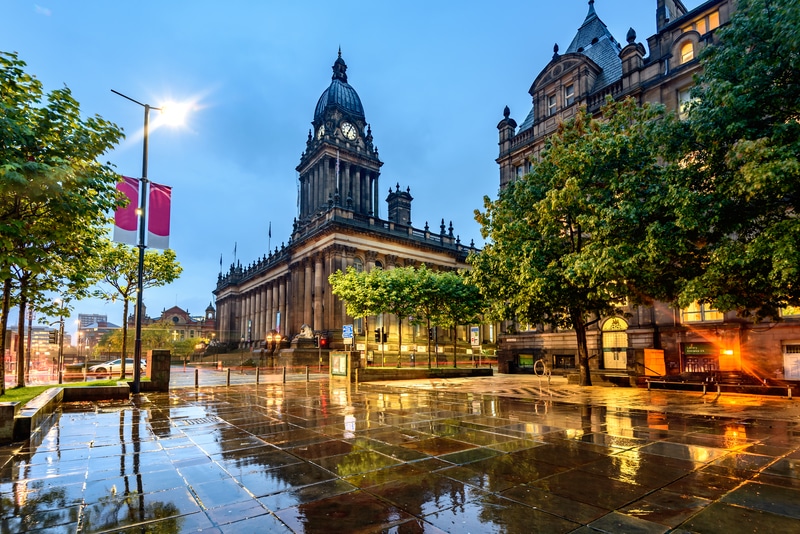
Leeds Town Hall, Leeds.

⬅ See all events from 30 October

Spread the word on your favourite platform!

Just four days after three police officers were shot dead at Stringybark Creek, the Victorian government introduced the Felons Apprehension Bill on 30 October 1878, paving the way for extraordinary powers that would allow Ned Kelly and his gang to be declared outlaws.

Once Ned and his brother Dan were formally declared outlaws, they could legally be shot on sight by police or any member of the public, without first standing trial. The legislation also threatened severe penalties for anyone knowingly sheltering or assisting the fugitives.

The crackdown extended beyond the outlaws themselves. Police arrested suspected Kelly sympathisers, with around twenty men detained for months as authorities attempted to break the gang’s network of support. The heavy-handed campaign fuelled resentment among sections of the local population, strengthening sympathy for the very men the government was determined to capture.

Even after the gang robbed banks at Euroa and Jerilderie, prompting Victoria and New South Wales to offer a combined reward of £8,000 in February 1879, the outlaws remained at large. It took another sixteen months, and the bloody siege at Glenrowan in June 1880, before Ned Kelly, wearing his homemade iron armour, was finally captured.

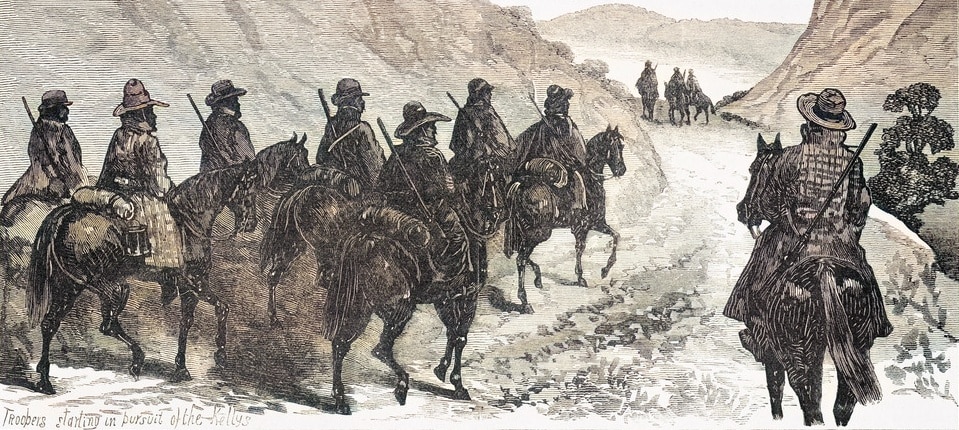
Troopers pursuing the Kelly Gang on horseback

⬅ See all events from 30 October

Spread the word on your favourite platform!
On This Day in True Crime History

Subscribe to Dark Stories

True crime stories, dark history and tour news, straight to your inbox.