Geological surveyor Lamont Young, his assistant and three boatmen set out from Bermagui, New South Wales by night and would be last seen on this date, searching the coast for gold. Their boat would be found drifting empty near what would become known as Mystery Bay, its sail and anchor gone, loaded with heavy rocks, and a bullet hole through the hull.

What unsettled investigators most was not what was missing but what remained. A pair of spectacles sat neatly folded on a seat, none of the cargo was wet, and the holes in the planking had been punched outward from inside the boat, not in. No bodies, no weapon, and no sign of struggle were ever found, despite rewards, government inquiries and headlines across the British Empire. The five men were never seen again, and the mystery remains unsolved to this day.
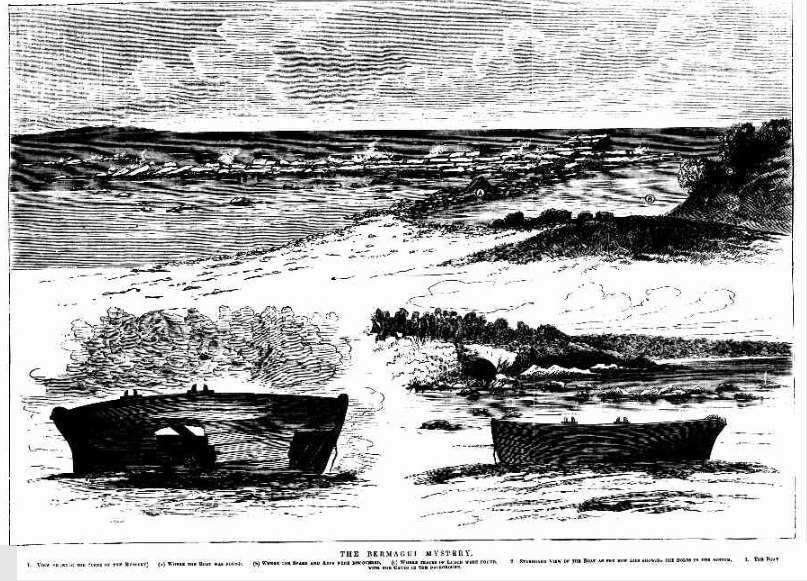

Scene of the Bermagui Mystery

⬅ See all events from 10 October

Spread the word on your favourite platform!

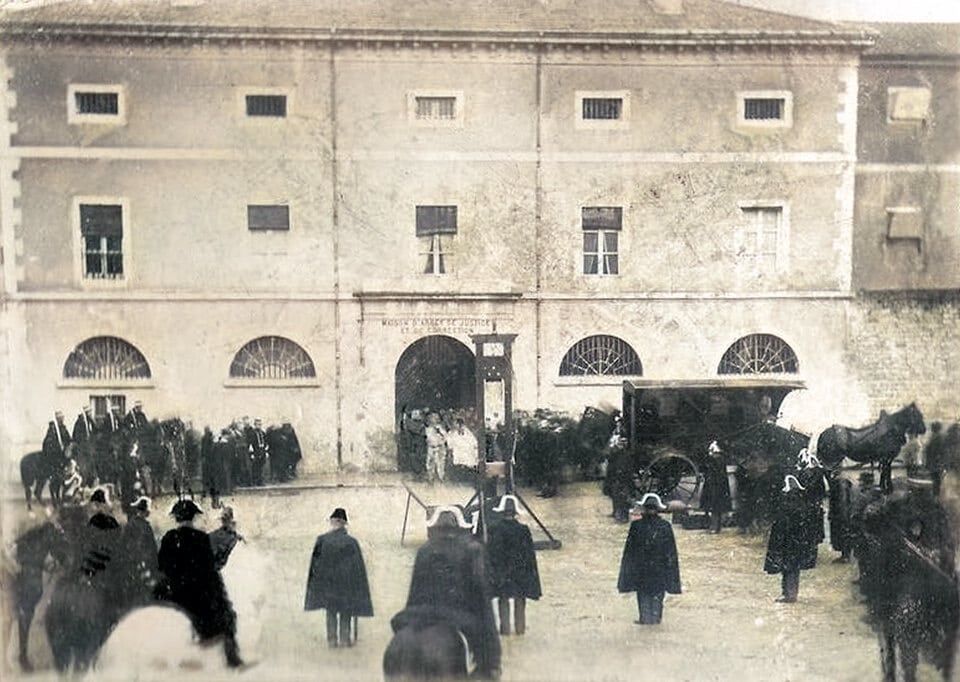
In Versailles in 1789, a physician named Joseph Guillotin stood before France’s new National Assembly and argued that execution should not be a matter of rank or suffering. He proposed that every condemned prisoner, noble or commoner, die the same way: instantly, by a single blow of a blade, rather than by the axe, the sword, or the rope, methods that often took multiple strokes or slow strangulation to finish the job.

Guillotin framed it as a mercy, a way to strip cruelty and class privilege out of state killing. He did not invent the device that would later carry his name, nor did he ever operate one, but the machine built from his proposal would go on to define the French Revolution’s Reign of Terror, and the word guillotine would forever be linked to the man who only meant to make dying less brutal.

Public guillotine execution scene 1897

⬅ See all events from 10 October

Spread the word on your favourite platform!

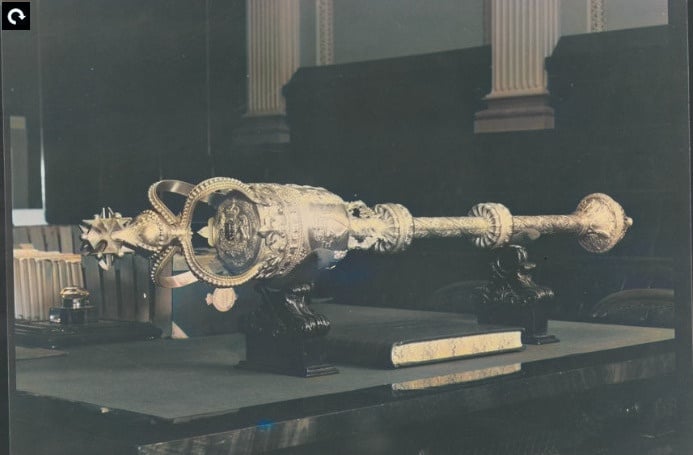
In the early hours of 9 October 1891, the ceremonial mace vanished from Parliament House in Melbourne, the silver-plated symbol of the speaker’s authority gone from a locked case. A parliamentary engineer was seen that same day running from the building with a parcel the right size and shape to be the mace; he told police it was firewood, and with no proof against him the investigation stalled.

Thirteen months later newspapers claimed the mace had turned up in the parlour of a notorious madam who catered to visiting members of parliament, a story so delicious it triggered a formal Board of Inquiry. The board cleared the brothel but settled nothing else, and popular rumour simply shifted the blame onto the new Speaker, Thomas Bent, despite his having taken office only after the theft. The mace was never seen again, and whether it was a burglary or a parliamentary prank gone wrong remains Melbourne’s favourite unsolved mystery.

Parliamentry Mace Stolen: Credit: Public Record Office Victoria, VPRS 14517/P0001/39, O884.

⬅ See all events from 9 October

Spread the word on your favourite platform!

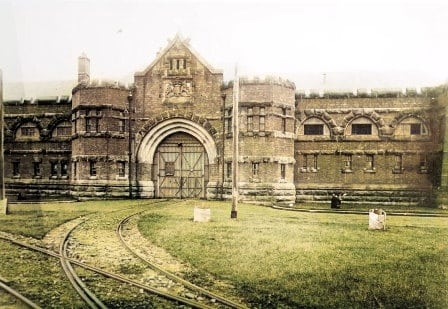
Kevin Simmonds and fellow inmate Leslie Newcombe escaped Sydney‘s Long Bay jail on 9 October 1959 by squeezing through a ventilator in an old chapel while prisoners watched a film. The next day they killed prison guard Cecil Mills at Emu Plains Prison Farm and fled with his gun, triggering what became the biggest manhunt in Australian history.

Newcombe was caught within a fortnight, but Simmonds evaded hundreds of armed police, tracker dogs and a helicopter for more than five weeks, tying up two rangers and stealing their truck along the way. Detective Sergeant Ray Kelly, nicknamed ‘Gunner’ for his record of shooting suspects, finally ran him down near Mulbring on 15 November, by which point crowds were cheering him at police stations as a folk hero.

A jury convicted both men of manslaughter rather than murder, and Simmonds was sent to the ‘intractables’ wing of Grafton gaol. Six years of brutal treatment there left him a vacant, self-harming shell of the man who had outrun the state; he was found hanged in his cell in 1966.

Long Bay Gaol Entrance (circa 1900)

⬅ See all events from 9 October

Spread the word on your favourite platform!
On This Day in True Crime History

Subscribe to Dark Stories

True crime stories, dark history and tour news, straight to your inbox.