1829: The Birth of Scotland Yard: London Gets Its First Modern Police Force

Before 1829, London had no unified police, just a patchwork of parish constables and private watchmen who could barely keep pace with a city rife with theft, riot and violence. Home Secretary Robert Peel changed that, pushing through the Metropolitan Police Act and creating a single force answerable to the Crown rather than local vestries.

Its headquarters took its name from the street behind it, a quiet lane called Great Scotland Yard, and the name stuck long after the force outgrew the building. The new constables, soon nicknamed bobbies and peelers after their founder, were unarmed, uniformed and deeply distrusted at first by a public wary of state surveillance. Within decades Scotland Yard would become the model for modern policing worldwide, and its name a byword for criminal investigation itself.
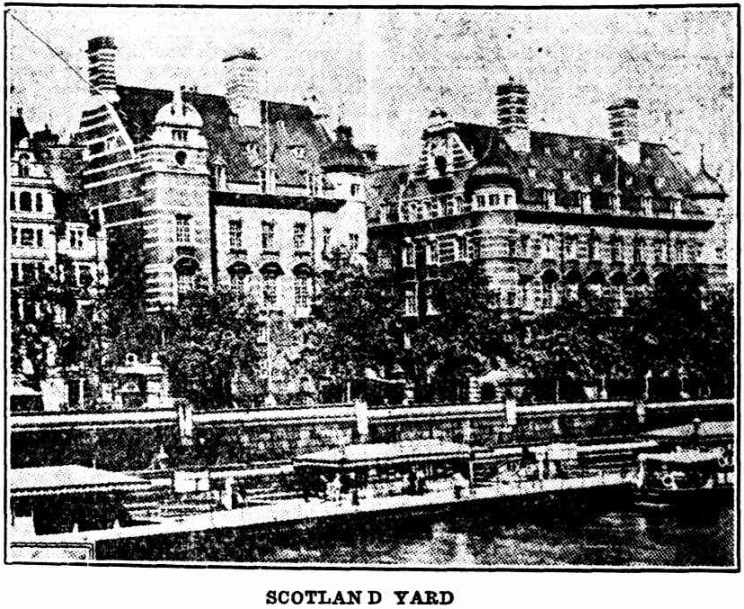

Scotland Yard headquarters in London police force: 1929 centenary celebration

⬅ See all events from 29 September

Spread the word on your favourite platform!
True Crime Scene Tape

1854: Being Drunk Was No Excuse: A Husband Hanged at Maitland for Beating His Wife to Death

Neighbours near Lydney Park on the Hunter River heard Mary Walsh begging “to spare her life” as the blows fell, then heard her husband Christopher Walsh order her to leave the house. She said she could not. By morning she lay dead on the floor, covered in bruises, a gun and blood-stained trousers found nearby.

At his trial, his own counsel argued that jealousy and drink should reduce the killing to manslaughter. The jury was not persuaded, convicting him of wilful murder after less than two hours. He was hanged at Maitland gaol before a crowd of some four hundred, including women and children.

On the scaffold he had a message read out: he claimed he had come home sober, only for suspicion of his wife’s infidelity to work him into a rage that drink then inflamed. He said he now believed her faithful, regretted his violence, and held no animosity.

Empty bottle on wooden background symbolizing alcoholism

⬅ See all events from 28 September

Spread the word on your favourite platform!
True Crime Scene Tape

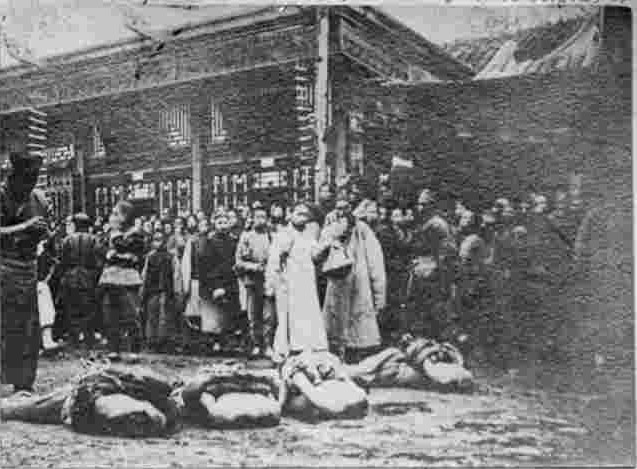
1898: Executed as Reform Martyrs, But Were They Assassins? The Beheading of Six Gentlemen in Beijing

When Empress Dowager Cixi crushed the Hundred Days’ Reform with a palace coup in September 1898, she moved fast. Six officials and intellectuals who had championed the Guangxu Emperor’s modernisation drive, among them Tan Sitong and Kang Youwei’s younger brother Kang Guangren, were arrested, denied any trial, and beheaded the same day at the Caishikou execution ground in Beijing. For decades they were remembered simply as reform martyrs cut down by a reactionary court.

That story only cracked in the 1980s, when testimony surfaced in Japanese archives from a man who had been ordered to assassinate Cixi and fled before he could act. His account implicated four of the six in a genuine plot to kill the Empress Dowager, suggesting at least one of the condemned, Yang Rui, may have been entirely innocent, executed alongside men who really had been plotting murder.

Historic photo of beheaded bodies after execution: Laneway of Caishikou crossroad, Beijing, China.

⬅ See all events from 28 September

Spread the word on your favourite platform!
True Crime Scene Tape

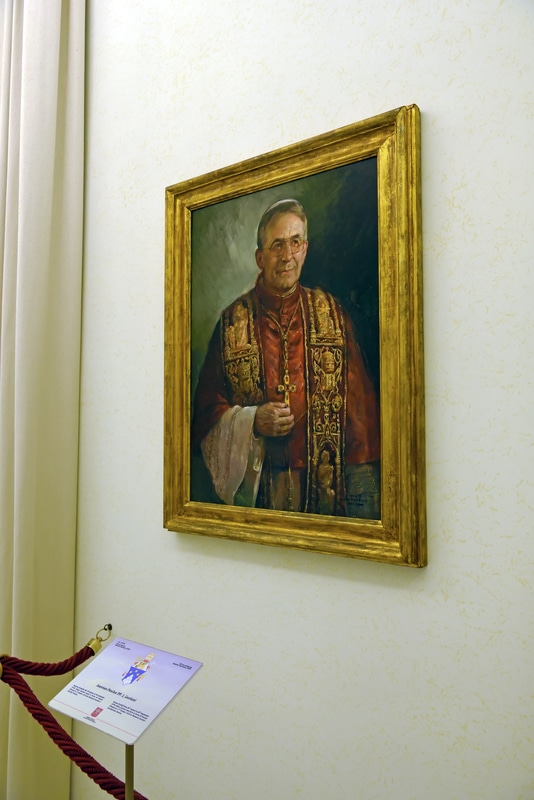
1978: The Vatican Cover-Up That Fuelled a Poisoning Legend: the Death of Pope John Paul I

Pope John Paul I was found dead in his bed after just 33 days in office, the shortest papacy since 1605, with a religious devotional still in his hands. The Vatican initially claimed a priest had discovered the body; in truth it was a nun, Sister Vincenza, who found him, and officials lied about it out of embarrassment that a woman had entered the private papal quarters.

No autopsy was performed and the body was embalmed with unusual speed, feeding decades of speculation that he had been poisoned to stop him exposing corruption at the Vatican Bank. One theory even produced a mobster who claimed to have helped administer the poison. Later research drawing on confidential Vatican archives instead found a simpler explanation: a history of heart trouble, chest pains the night before his death, and no doctor ever called.

Castel Gandolfo Lazio Italy. Portrait of Pope John Paul I, albino luciani in the museum of the pontifical villas 11 Sep 2022 Castel Gandolfo Italy | ID 259284583 © Maudanros | Dreamstime.com
ID 259284583 © Maudanros | Dreamstime.com

⬅ See all events from 28 September

Spread the word on your favourite platform!
True Crime Scene Tape
On This Day in True Crime History
1875·"I Come From a Race That Will Not Take an Insult": Hanged at Melbourne Gaol for a Double Murder
1889·The Devoted Wife Who Poisoned Her Husband in Melbourne, Then Killed Three More
More Crime On This Day →

Subscribe to Dark Stories

True crime stories, dark history and tour news, straight to your inbox.