Archives: Dark Stories: On This Day In True Crime History - Page 8
1863: The Escape-Proof Prison That Wasn’t: Captain Thunderbolt Breaks Out of Cockatoo Island
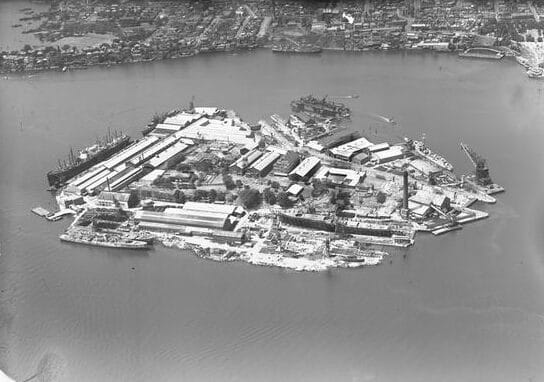
Frederick Wordsworth Ward, the bushranger known as Captain Thunderbolt, was serving time on Sydney‘s Cockatoo Island, a prison ringed by harbour currents and sheer sandstone cliffs and widely declared impossible to escape. On the night of 11 September 1863, Ward slipped his cell and plunged into the water, swimming through the cold, shark infested harbour to the mainland shore.
The breakout humiliated colonial authorities and turned Ward into a folk figure almost overnight. He spent the next seven years roaming the bush of northern New South Wales, robbing coaches, inns and travellers as one of the colony’s most enduring and elusive bushrangers before he was finally shot dead by police near Uralla in 1870.
Cockatoo Island, Sydney, 1951. Photograph by Frank Hurley. National Library of Australia, PIC FH/7951. Out of copyright.
1978: The Umbrella That Killed: Assassinated with a Ricin Pellet
Bulgarian dissident Georgi Markov was waiting for a bus on Waterloo Bridge in London when he felt a sudden sharp pain in his leg. He turned to see a man pick up a dropped umbrella and hurry away, offering a mumbled apology. Markov thought little of it until a small red mark and fever set in over the following days.
The umbrella had been rigged to fire a tiny pellet packed with ricin, a poison for which there was and is no antidote. Markov died four days later, on 11 September 1978, from the resulting blood poisoning, becoming one of the most infamous casualties of Cold War espionage.
His killer would not be identified for almost three decades. It was not until 2005 that leaked files named the assassin as Francesco Gullino, an agent working for the Bulgarian secret service, though he was never extradited or tried for the murder.
1935: The Sydney Shark Arm Murder Case Collapses on Judge Orders
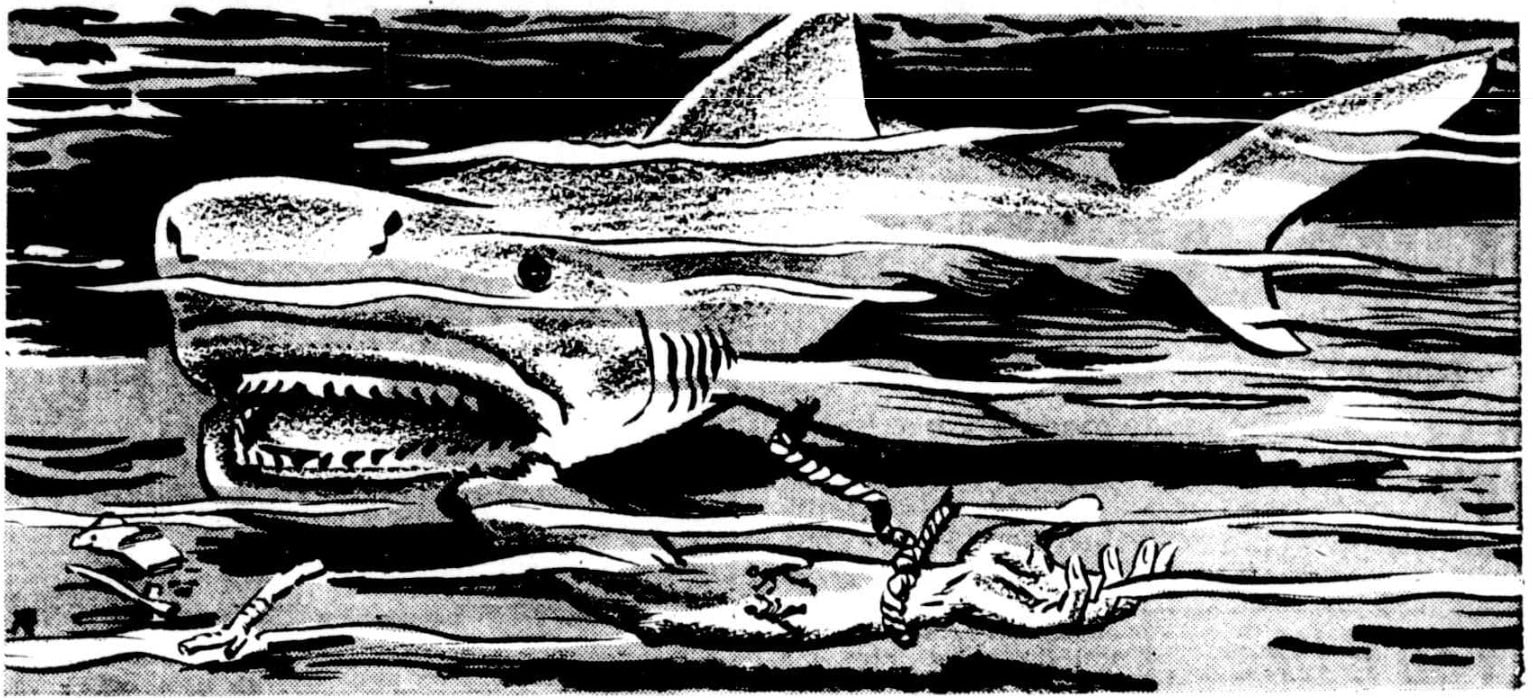
The case began in the most macabre way imaginable: on April 25, 1935, a captured shark on display at an Aquarium in Sydney vomited up a human arm. Tattoos identified the limb as belonging to James Smith, who had vanished after leaving home on April 8 with the stated intention of going on a fishing trip.
Police investigations focused on Patrick Brady, an associate of Smith who had been with him around the time of his disappearance. Another central figure was businessman Reginald Holmes, who was in a position to give direct evidence about Smith’s killing and Brady’s alleged involvement.
But before Holmes could give that evidence, the case took another extraordinary turn. In the early hours of June 12, just hours before he was due to appear at the inquest, Holmes was found shot dead in his car at Dawes Point. With the Crown’s key witness gone, the murder case against Brady was left largely dependent on circumstantial evidence.
Despite what Chief Justice Sir Frederick Jordan acknowledged was plenty of cause for suspicion, the prosecution now faced two fundamental problems: its key witness was dead, and there was no body to prove that Smith himself was dead. A person could, after all, survive the loss of an arm. On September 10, 1935, Jordan ruled that the evidence was insufficient to sustain a conviction and directed the jury to acquit Brady, bringing to an abrupt end what was described at the time as a case “without parallel in the annals of Australian criminal history.”
Brady’s freedom was short-lived. As soon as he stepped outside the court, detectives arrested him on an unrelated Tasmanian forgery charge. No one was ever convicted over Smith’s death or Holmes’s killing, and the infamous Shark Arm case remains unsolved.
1977: The Last Blade Falls: the Final Guillotine Execution in France
Hamida Djandoubi went to the guillotine in France on this day in 1977, the last person ever executed by the device and the last person executed in France at all. He had been convicted of the murder of 21-year-old Elisabeth Bousquet, a crime that closed out nearly two centuries of the guillotine’s use as the instrument of French justice.
His execution marked a quiet historical hinge: within a few years France would abolish capital punishment altogether, in 1981, making Djandoubi’s death the final chapter of a punishment first adopted during the French Revolution.
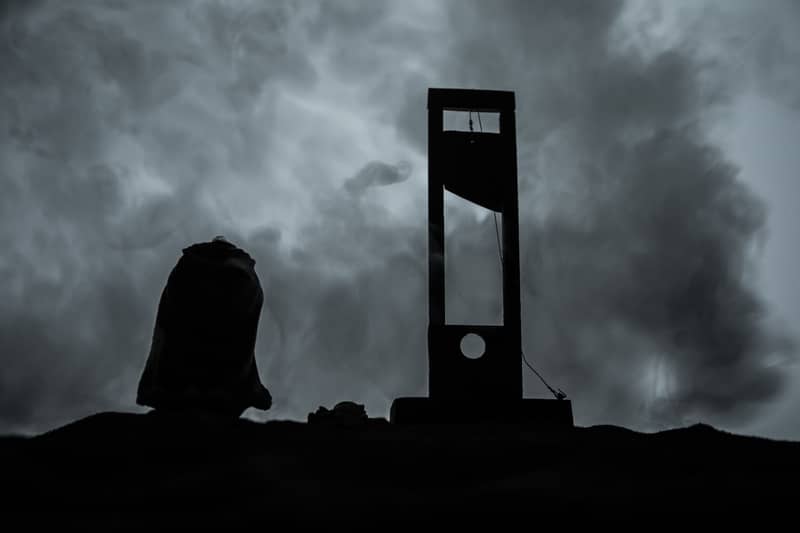
Close-up of a guillotine in dark foggy setting execution concept