In August 1963, fifteen masked men ambushed the Glasgow to London Royal Mail train near Buckinghamshire, making off with 120 bags of cash totalling a record 2.6 million pounds. Police traced the gang to Leatherslade Farm within days, and Charlie Wilson, then 32, was among those arrested. In April 1964 he was sentenced to 30 years.

Just four months into his sentence, on 12 August 1964, several men broke into the maximum-security Winson Green Prison in Birmingham and freed Wilson in a brazen outside job. He evaded capture for over three years before being recaptured in Canada on 24 January 1968, returned to England, and made to serve out his term. Wilson later moved to Spain, where he allegedly became involved in drug trafficking, and was shot dead on 23 April 1990.


Arm reaches through jail window to open door escape scene

⬅ See all events from 12 August

Spread the word on your favourite platform!

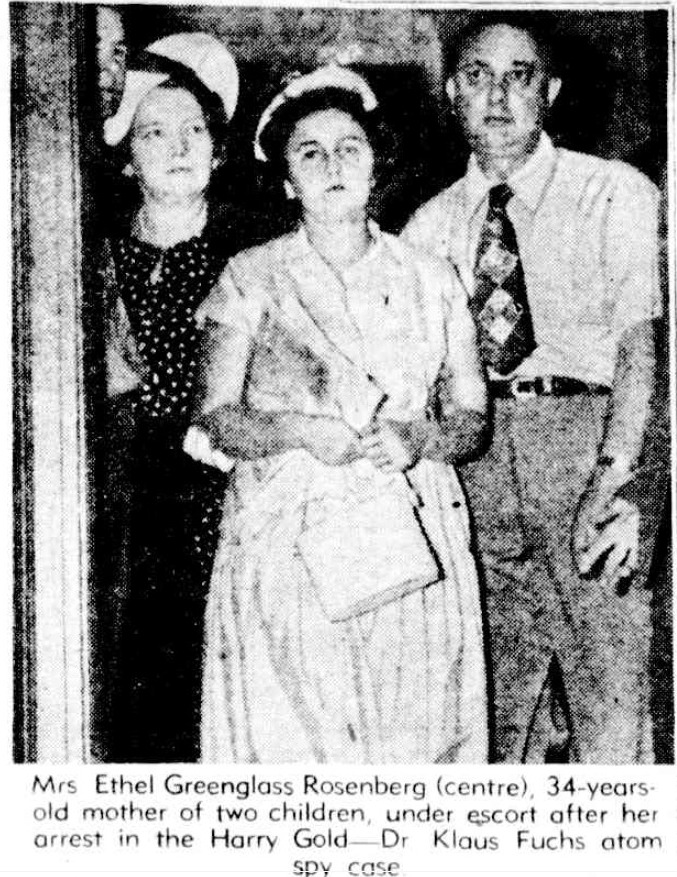
Ethel Rosenberg, a 34-year-old mother of two, was arrested in New York on 11 August 1950 in connection with the Harry Gold and Klaus Fuchs atom spy case. She and her husband Julius, both lifelong Communist sympathisers with Russian-born parents, were accused of passing atomic secrets to the Soviet Union. The trail had begun with the unravelling of a network stretching from British physicist Klaus Fuchs to the heart of the American nuclear program.

Convicted at trial in March 1951, both Rosenbergs were sentenced to death. On 19 June 1953, Julius was executed first at Sing Sing prison, followed by Ethel at 8.11 p.m. Five electric shocks were required before doctors pronounced her dead.

In her final letter to her lawyer Emanuel Bloch, Ethel wrote: ‘I am not alone, and I die with honor and dignity, knowing my husband and myself will be vindicated.’

Ethel Greenglass Rosenberg under escort after spy charge arrest

⬅ See all events from 11 August

Spread the word on your favourite platform!

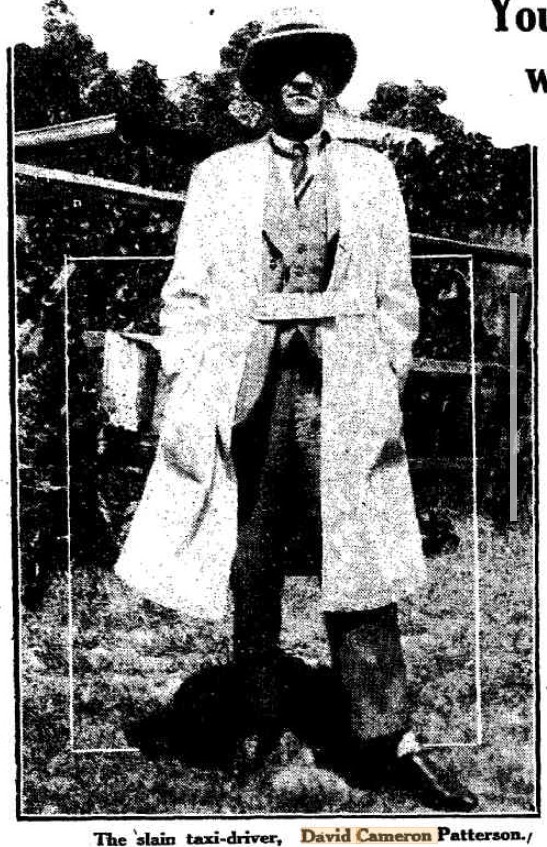
On the evening of Monday 11 August 1930, taxi driver Charles David Cameron Patterson, 27, was shot dead in his own sedan on a lonely stretch of Hale Road, about ten miles from Perth, near Maida Vale. Patterson had been hired to drive a passenger from Victoria Park Post Office to a rural orchard property beyond the crime scene. He was found slumped behind the wheel, shot at close range inside the cab.

Within twelve hours, police arrested Clifford Wray, a 19-year-old English-born city clerk employed at Bairds Co. Ltd., who had been living with his father on a property near the scene. Wray allegedly made two statements to detectives: the first claimed Patterson was killed by the accidental discharge of a revolver Wray was handling while Patterson attended to a fault on the car. A second statement followed, after which Wray was charged with wilful murder. Police noted the case bore striking similarities to the earlier unsolved murder of another Perth taxi driver, John O’Neill.

Taxi driver Charles David Cameron Patterson

⬅ See all events from 11 August

Spread the word on your favourite platform!

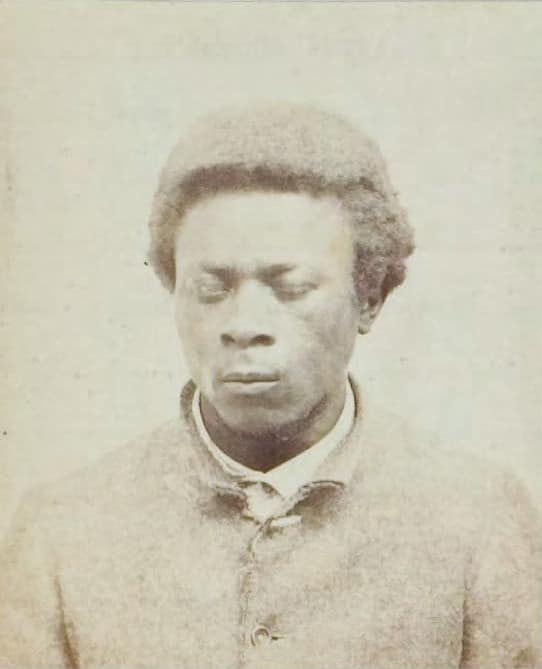
Oscar Wallace, known also by the aliases James and Hasker, had only been free for six weeks when he committed a brutal armed assault on Mary Cook at her isolated farmhouse near Mount Beckworth, outside Clunes, on 4 August 1873. Her husband was away, and Wallace, disguised with a bran bag over his head and a sack about his body, entered the property, seized a double-barrelled gun, locked the children in an adjoining room, and attacked the homeowner at knifepoint. He then fled through the district, robbing several men, firing at a Mr Prentice near Beaufort, and reportedly heading toward a hotel to settle an old score. He had served two years in Pentridge for larceny and had openly threatened the life of a witness from that trial.

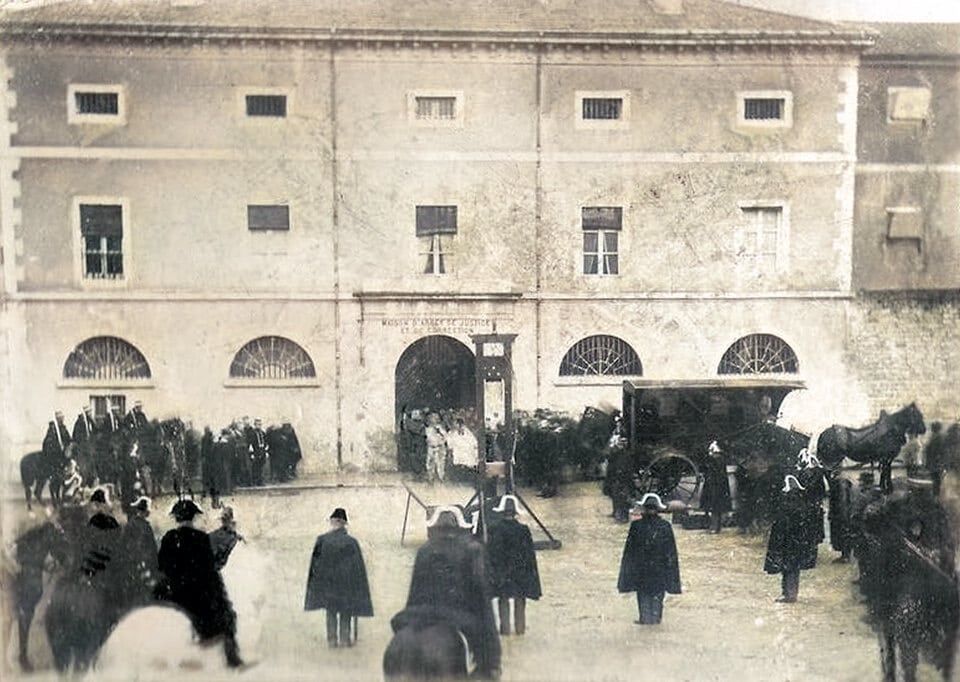
Senior Constable Woods disguised himself as a digger and tracked Wallace to a store near Beaufort, where he overpowered him before Wallace could use the butcher’s knife he still carried. Wallace was tried, convicted, and hanged at Ballarat on 11 August 1873. He reportedly showed complete indifference to his fate from the moment of his capture.

James Wallace (tried as Oscar Wallace), prisoner no. 8775. PROV, VPRS 515/P0000, Volume 13, p. 167

⬅ See all events from 11 August

Spread the word on your favourite platform!
On This Day in True Crime History

Subscribe to Dark Stories

True crime stories, dark history and tour news, straight to your inbox.