1944: The Cowra Breakout: Bloodiest Mass Prison Escape of World War II

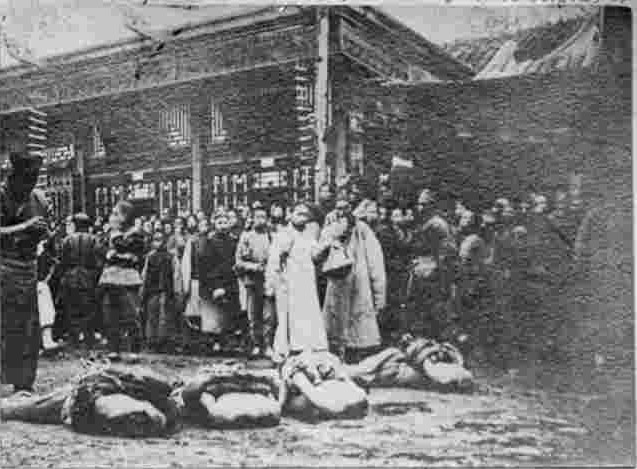
In the early hours of 5 August 1944, more than 1,000 Japanese prisoners of war held at the 12th Australian Prisoner of War and Internees Camp near Cowra, New South Wales, launched a mass breakout. Climbing over dead bodies and barbed wire, the escapees stormed the perimeter in what many had accepted as a suicide mission, a final bid to reclaim lost honour in the face of capture. It remains the largest mass escape of World War II and one of the bloodiest in history.

By the time the chaos subsided, 234 Japanese prisoners were dead and 108 wounded. Three Australian guards were killed, and a fourth officer was stabbed to death during the subsequent manhunt. Over 300 men were recaptured across the following nine days. The Cowra camp, opened in 1941, had grown to hold some 4,000 POWs and internees by 1944, including Italians, Formosans, Koreans, and Japanese non-commissioned officers, all held under Australia’s National Security Act 1939.
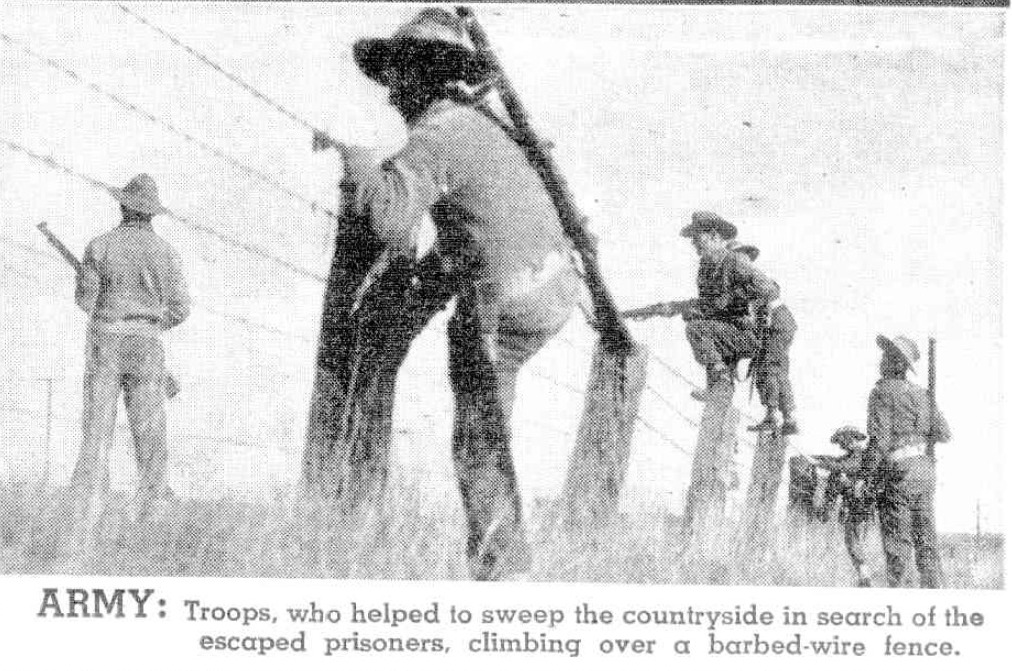

Police and troops search for Cowra POW camp escapees August 1944

⬅ See all events from 5 August

Spread the word on your favourite platform!
True Crime Scene Tape

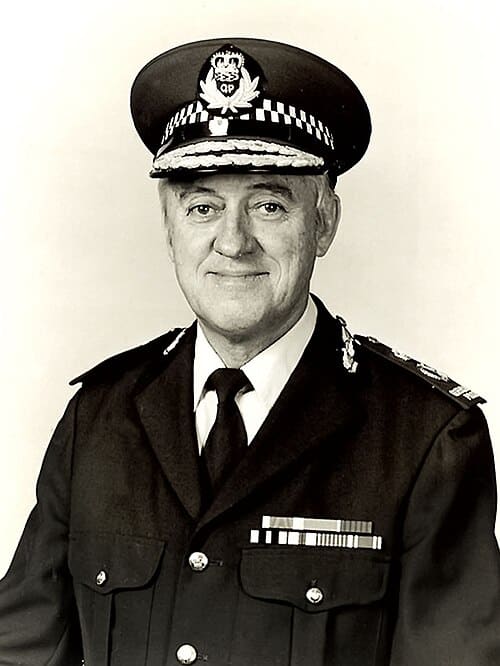
1991: Sir Terence Lewis, Queensland Police Commissioner, Convicted of Corruption

Sir Terence Lewis, Commissioner of the Queensland Police Service from 1976 to 1987, was found guilty on 5 August 1991 of 15 counts of corruption and one of forgery, following the explosive Fitzgerald Inquiry into police misconduct. A District Court jury determined that Lewis had accepted bribes totalling $700,000 to protect brothels, SP bookmakers, illegal casinos, and gaming machine operators. He had been handpicked for the commissioner’s role in 1976 by Premier Joh Bjelke-Petersen, bypassing 122 more senior officers.

Judge Healy sentenced Lewis to the maximum term available: 14 years for corruption and 10 years for forgery, to be served concurrently. Lewis was stripped of his knighthood and two other awards. He continued to protest his innocence and pursued appeals until the last one failed in August 2005.

Terence Murray Lewis, Queensland Police Commissioner. © State of Queensland (Queensland Police Service); original photographer unknown. Retouched by Georgfotoart. Wikimedia Commons, CC BY 4.0.

⬅ See all events from 5 August

Spread the word on your favourite platform!
True Crime Scene Tape

1861: Nathaniel Ruby Hanged at Melbourne Gaol for the Murder of a Fellow Miner at Tarnagulla

At Sandy Creek, near Tarnagulla, the body of Joseph Watson was discovered at the bottom of a deep mine shaft in August 1861. He had been beaten to death, his skull crushed by repeated blows. Two large bloodied stones were found nearby. Nathaniel Ruby, a former mate of the deceased, had already confessed to a woman named Mary Ann Annersley, telling her he would kill Watson after learning she had been with him. Hours later he returned and told her plainly: ‘I have killed Joe, he is for the grave and I’m for the gallows.’

Ruby was arrested on the strength of Annersley’s account and the physical evidence recovered from the shaft. He was tried, convicted, and hanged at Melbourne Gaol on 5 August 1861. Watson had recently found a gold nugget worth around 150 pounds; how much remained on him at the time of his death was never established.

Ruby’s own words to Annersley on the night of the killing served as the most damning evidence against him: ‘I have killed Joe, he is for the grave and I’m for the gallows.’

Golden nuggets in the museum. Gold in nuggets | ID 189813062 © Lyaschock | Dreamstime.com
ID 189813062 © Lyaschock | Dreamstime.com

⬅ See all events from 5 August

Spread the word on your favourite platform!
True Crime Scene Tape

1870: Patrick Smith Hanged at Melbourne Gaol for the Murder of His Wife

Patrick Smith, a fisherman working the Yarra and Saltwater rivers, had subjected his wife Mary to years of brutal abuse at their home in Errol Street, Hotham (North Melbourne). Neighbours had witnessed repeated beatings and shocking cruelties; Mary herself had told those around her that she believed her husband would one day murder her. On 9 July 1870, after a day of drinking and quarrelling, a neighbour heard heavy blows, then silence, then Smith calling out ‘Mary, Mary, do get up.’ She was never seen alive again.

Smith was tried for the murder of his wife and convicted. He was hanged at Melbourne Gaol on 4 August 1870.

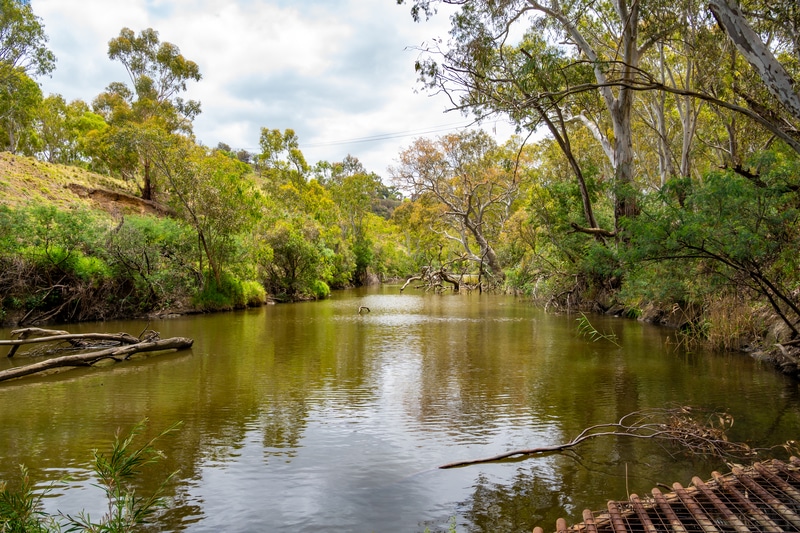
Maribyrnong River at Brimbank Park in Victoria, Australia

⬅ See all events from 4 August

Spread the word on your favourite platform!
True Crime Scene Tape
On This Day in True Crime History

Subscribe to Dark Stories

True crime stories, dark history and tour news, straight to your inbox.