1927: John Robinson Hanged for the Charing Cross Trunk Murder

In May 1927, a large black trunk deposited at Charing Cross railway station in London began to emit a foul smell. When police opened it on 10 May, they found the dismembered body of a woman, her limbs individually wrapped in brown paper. A laundry tag traced the victim to Minnie Alice Bonati, a domestic servant who supplemented her income through prostitution. She had gone to the Rochester Row office of estate agent John Robinson, 35, and died there following an argument over money.

Robinson claimed Bonati had attacked him, that he pushed her away and she fell and struck her head. Forensic pathologist Bernard Spilsbury contradicted this at trial, testifying she had been knocked unconscious and deliberately asphyxiated. Tried at the Old Bailey, Robinson was convicted on Spilsbury’s evidence and hanged on 12 August 1927.
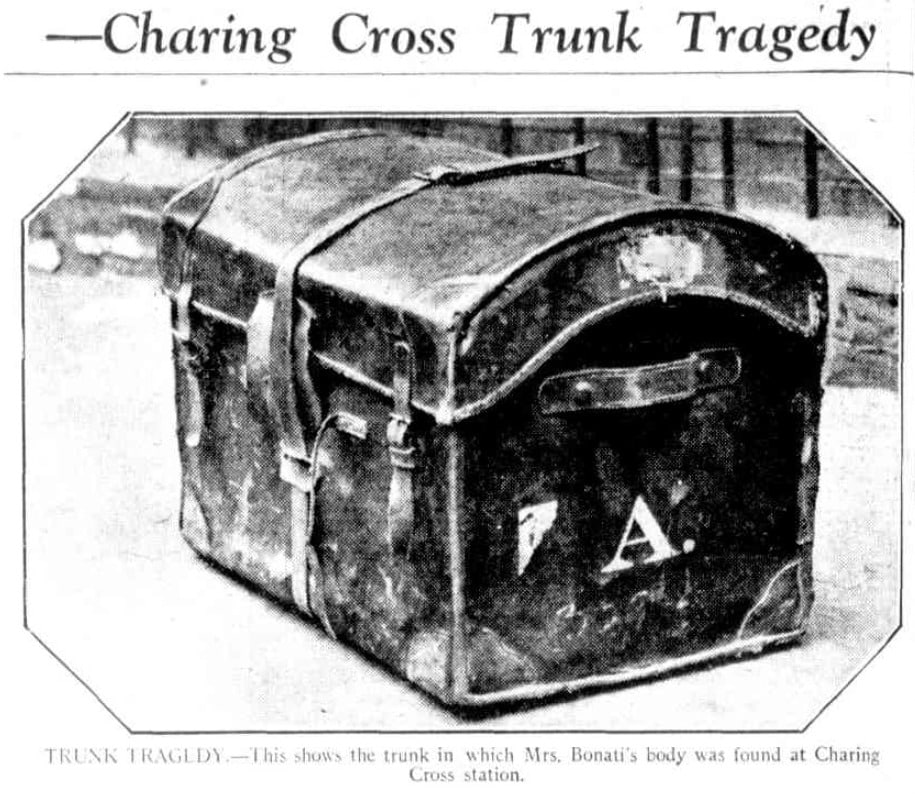

Trunk in which Mrs Bonati body was found at Charing Cross station

⬅ See all events from 12 August

Spread the word on your favourite platform!
True Crime Scene Tape

1930: Taxi Driver Shot Dead on a Lonely Road Outside Perth

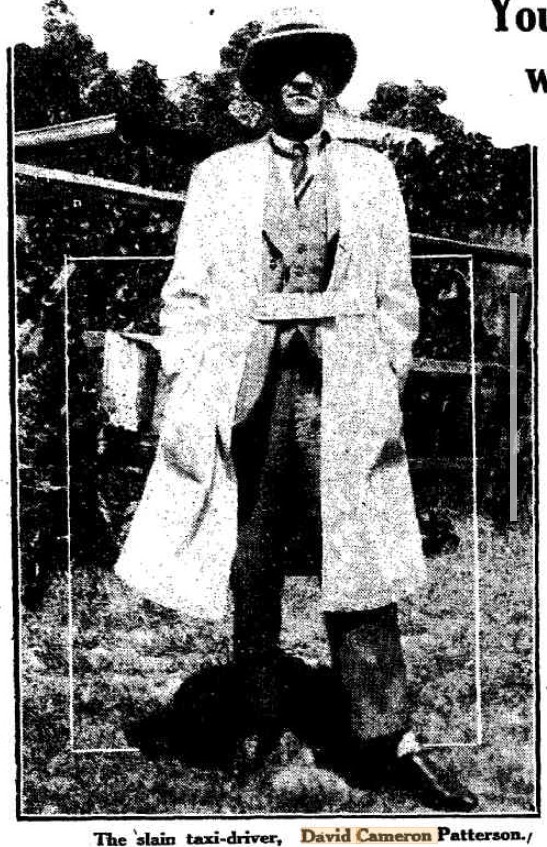
On the evening of Monday 11 August 1930, taxi driver Charles David Cameron Patterson, 27, was shot dead in his own sedan on a lonely stretch of Hale Road, about ten miles from Perth, near Maida Vale. Patterson had been hired to drive a passenger from Victoria Park Post Office to a rural orchard property beyond the crime scene. He was found slumped behind the wheel, shot at close range inside the cab.

Within twelve hours, police arrested Clifford Wray, a 19-year-old English-born city clerk employed at Bairds Co. Ltd., who had been living with his father on a property near the scene. Wray allegedly made two statements to detectives: the first claimed Patterson was killed by the accidental discharge of a revolver Wray was handling while Patterson attended to a fault on the car. A second statement followed, after which Wray was charged with wilful murder. Police noted the case bore striking similarities to the earlier unsolved murder of another Perth taxi driver, John O’Neill.

Taxi driver Charles David Cameron Patterson

⬅ See all events from 11 August

Spread the word on your favourite platform!
True Crime Scene Tape

1873: Oscar Wallace Hanged at Ballarat for Armed Assault at Mount Beckworth

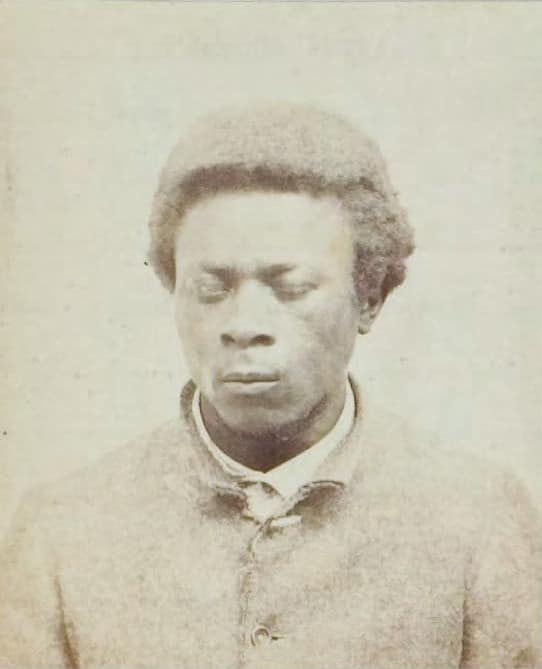
Oscar Wallace, known also by the aliases James and Hasker, had only been free for six weeks when he committed a brutal armed assault on Mary Cook at her isolated farmhouse near Mount Beckworth, outside Clunes, on 4 August 1873. Her husband was away, and Wallace, disguised with a bran bag over his head and a sack about his body, entered the property, seized a double-barrelled gun, locked the children in an adjoining room, and attacked the homeowner at knifepoint. He then fled through the district, robbing several men, firing at a Mr Prentice near Beaufort, and reportedly heading toward a hotel to settle an old score. He had served two years in Pentridge for larceny and had openly threatened the life of a witness from that trial.

Senior Constable Woods disguised himself as a digger and tracked Wallace to a store near Beaufort, where he overpowered him before Wallace could use the butcher’s knife he still carried. Wallace was tried, convicted, and hanged at Ballarat on 11 August 1873. He reportedly showed complete indifference to his fate from the moment of his capture.

James Wallace (tried as Oscar Wallace), prisoner no. 8775. PROV, VPRS 515/P0000, Volume 13, p. 167

⬅ See all events from 11 August

Spread the word on your favourite platform!
True Crime Scene Tape

991: Ealdorman Byrhtnoth Killed as Vikings Crush the Saxons at Maldon

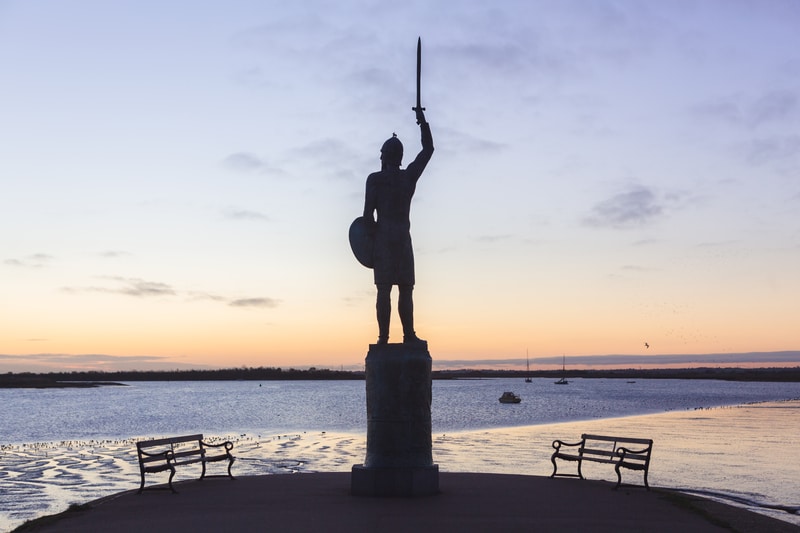
On 11 August 991, a Viking force under Norwegian king Olaf Tryggvason met the Anglo-Saxon fyrd of Essex at Maldon, on the Essex coast. Ealdorman Byrhtnoth, around sixty years old and said to stand nearly seven feet tall with swan-white hair, commanded the Saxon defence. In a fateful act of chivalric pride, he permitted the Vikings to cross a tidal causeway to fight on open ground. The decision proved catastrophic: Byrhtnoth fell in the battle, reportedly taking three men to kill, one of them nearly severing his arm.

The defeat became one of the defining disasters of late Anglo-Saxon England, accelerating the payment of Danegeld to Viking raiders. Byrhtnoth was buried at Ely Abbey, a monastery he had richly endowed with villages and lands. His widow presented the abbey with an embroidered tapestry commemorating his deeds. The battle inspired a celebrated Old English poem, and when his remains were examined in 1781, his skeleton confirmed the legendary stature: 6 feet 9 inches in height.

The Statue of Byrhtnoth at the end of Maldon Promenade in Essex, England | ID 211153857 © Jonathanritchie1990 | Dreamstime.com
ID 211153857 © Jonathanritchie1990 | Dreamstime.com

⬅ See all events from 11 August

Spread the word on your favourite platform!
True Crime Scene Tape
On This Day in True Crime History

Subscribe to Dark Stories

True crime stories, dark history and tour news, straight to your inbox.