1888: Jack the Ripper Claims His Second Victim: the Mutilation of Annie Chapman

Annie Chapman was a heavy drinker who had turned to prostitution in London’s Whitechapel after her marriage collapsed and her daughter died, using the earnings to pay for drink and a bed for the night. On the night of her death she had no money for lodgings and went out to earn her rent; her body was found in the early hours in a backyard, her throat cut and her abdomen slashed open.

The killer had arranged her intestines over her shoulder and removed her uterus, taking it with him. An autopsy determined she had been sober at the time of her death, ruling out the drunkenness that had shaped so much of her life.

Her murder, following that of Mary Ann Nichols just over a week earlier, confirmed for police that a single killer, soon dubbed Jack the Ripper, was stalking the women of Whitechapel.
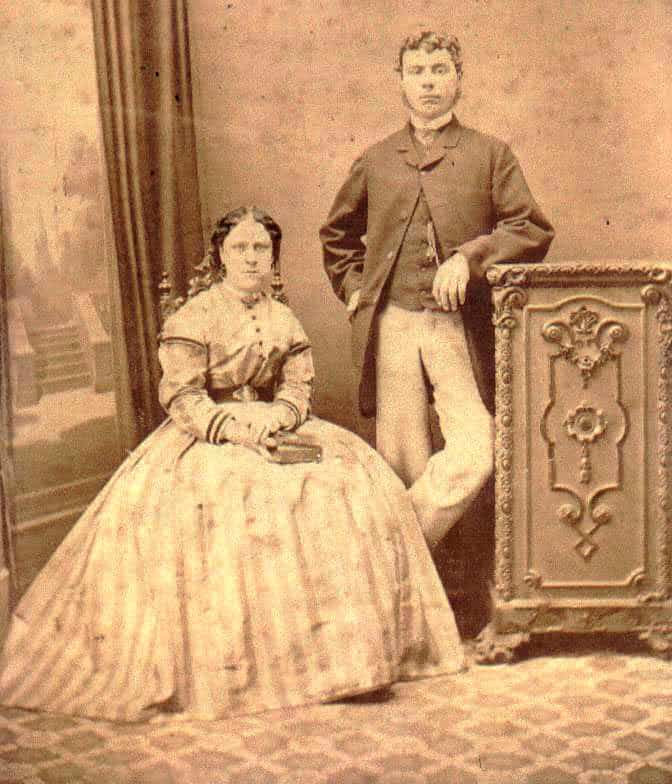

Portrait of Annie Chapman with her husband in 1869

⬅ See all events from 8 September

Spread the word on your favourite platform!
True Crime Scene Tape

2025: Mushroom Murderer Erin Patterson Sentenced to Life, Could Walk Free at 82

Supreme Court Justice Christopher Beale handed Erin Patterson three life sentences for murder and 25 years for attempted murder, setting a non-parole period of 33 years. That means Patterson, who poisoned relatives with a beef Wellington laced with death cap mushrooms, cannot be considered for release until 2056, when she would be 82 years old.

The judge described the crime as an ‘enormous betrayal’ marked by substantial premeditation, and noted that Patterson had shown no remorse for the deaths she caused.

Poisonous death cap mushrooms

⬅ See all events from 8 September

Spread the word on your favourite platform!
True Crime Scene Tape

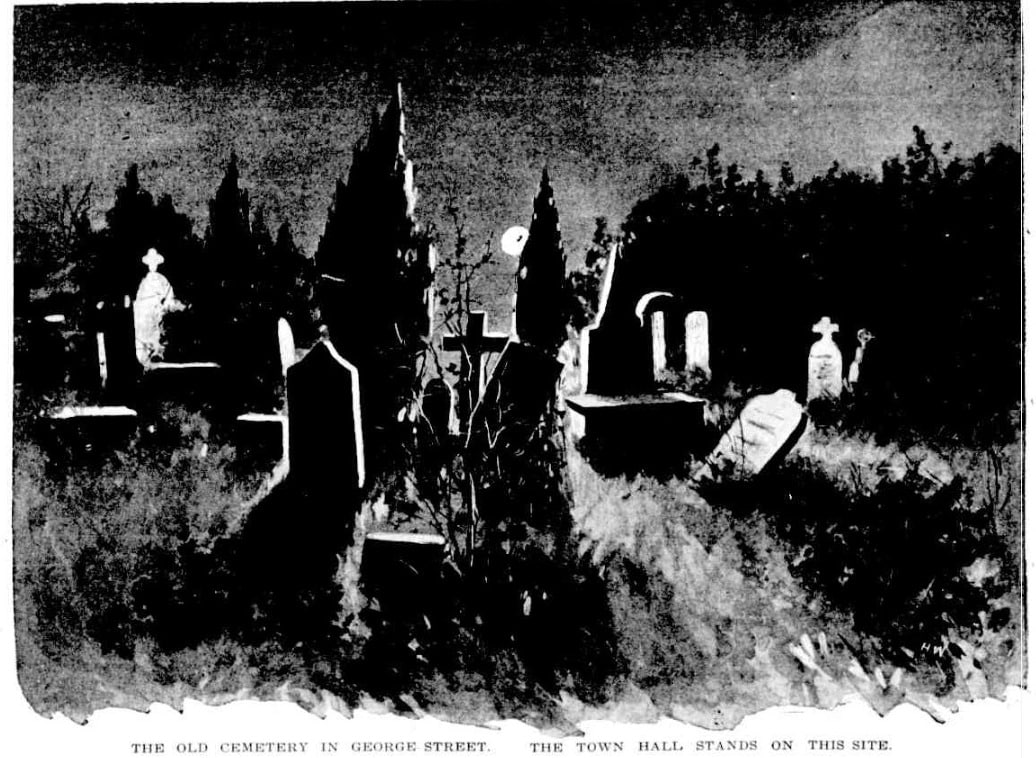
1792: Sydney’s First Grave: The Convict Buried Beneath What Is Now the Town Hall

When Governor Phillip and the Reverend Richard Johnson chose a quiet spot on the outskirts of town for a burial ground in September 1792, the first person laid to rest there is believed to have been a convict named Michael Dunn. The site, later known as the Old Sydney Burial Ground or the George Street Burial Ground, now lies beneath Sydney Town Hall.

For 27 years the cemetery operated with almost no formal oversight: it was never gazetted, no trustees were appointed and no burial register or plan was kept. The Reverend William Cowper later admitted that “the dead of all communions were interred indiscriminately”, though social distinctions persisted among the military, with non-commissioned officers of different regiments buried in separate corners of the ground.

Once the cemetery closed in 1820 and burials moved to Brickfield Hill, now the site of Central railway station, the old ground fell into grim disrepair. Headstones were vandalised, pigs, goats and horses wandered among open graves, and grave robbers were blamed for prising up leaden coffins. A committee report even noted men using the abandoned cemetery to relieve themselves, and in hot weather the stench became unbearable.

Despite public opposition to disturbing the dead, the City of Sydney eventually cleared the site to build its Town Hall, ending nearly a century of neglect over the city’s first burial ground.

Old Sydney burial ground historic cemetery illustration

⬅ See all events from 8 September

Spread the word on your favourite platform!
True Crime Scene Tape

1861: Hanged Where They Killed: Two Men Executed for the Murder of a Shepherd in Colonial South Australia

In September 1861, two men were tried and executed for the murder of a shepherd, Theodore Gustavus Burggoist, near Fowler’s Bay in South Australia.

Before their execution, the two men acknowledged their guilt. Officials erected the gallows on the exact spot where the killing had taken place, guided there by the two men themselves, who calmly pointed out the bush where the shepherd had been sitting, the place where he was attacked as he tried to flee, and the spot where he later died of his wound.

Members of the community gathered to witness the execution, alongside the local station owner, the ship’s captain who had carried the official party, and several station hands. When it came time to take the bodies down, onlookers fled in evident terror, refusing to help remove them. The two men were buried at the site of the execution, laid to rest beneath the very ground where the shepherd had died.

Shepherd at work.
Shepherd at work.

⬅ See all events from 7 September

Spread the word on your favourite platform!
True Crime Scene Tape
On This Day in True Crime History

Subscribe to Dark Stories

True crime stories, dark history and tour news, straight to your inbox.