1830: Flogged for Skinny-Dipping, He Led a Bushranger Uprising That Ended With Ten Hanged at Bathurst

Ralph Entwistle was a transported labourer assigned to a farm near Bathurst when he and a fellow convict stopped to cool off in the Macquarie River after a long cart journey. Governor Ralph Darling's touring party happened to pass by, and though Darling had not even seen the incident, the local magistrate had both men flogged for the affront. Within a year the humiliated Entwistle had turned bushranger, building a band that swelled to as many as 80 men, the largest convict uprising in New South Wales since 1804, known as the Ribbon Gang for the white streamers he wore in his hair.

The rebellion turned deadly when the gang descended on a farm seeking revenge on the magistrate who had ordered the floggings. The overseer, James Greenwood, refused to free the farm's convict servants and bared his chest, daring the bushrangers to shoot, telling them they were not game enough. Entwistle and two others fired, killing him instantly.

Weeks of gun battles with troopers and soldiers followed before the gang was run down and captured. On 2 November 1830, ten of the bushrangers, including Entwistle, were publicly hanged at Bathurst, six for Greenwood's murder and four for plundering farmhouses. Their bodies were left on display for a day as a warning before being buried in two mass graves of five.
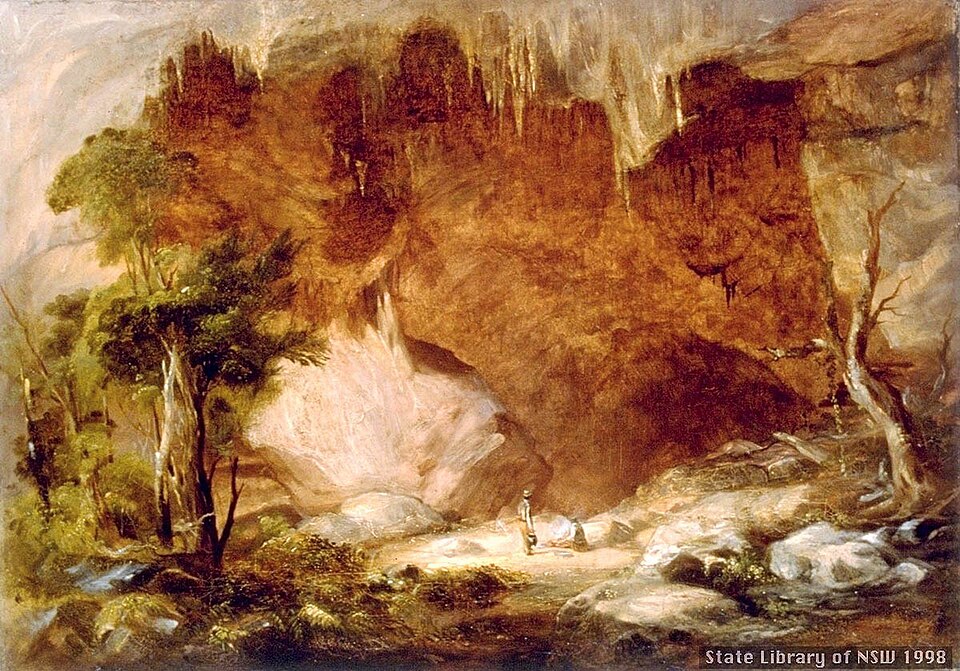

Abercrombie Caves: Burrangalong Cavern, Rockbridge Creek, 1849 / oil painting by Conrad Martens

⬅ See all events from 2 November

Spread the word on your favourite platform!

1830: Cornered at Abercrombie Caves: Ten Ribbon Gang Bushrangers Sentenced to Death at Bathurst

Ralph Entwistle was an escaped convict who had been publicly flogged on the orders of Bathurst magistrate Thomas Evernden after being spotted bathing in the Macquarie River by the Governor's travelling party. Within a year he had turned bushranger, gathering escaped convicts into a band that grew to as many as eighty men, the largest convict uprising since Castle Hill, known as the Ribbon Gang for the white streamers Entwistle wore in his hair.

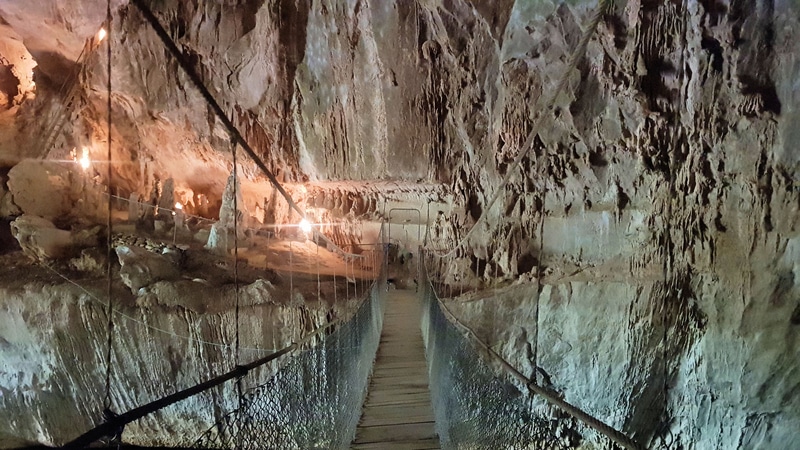
The gang's campaign turned deadly when overseer James Greenwood refused to let them recruit his master's men, baring his chest and daring them to shoot. They did. Troopers and armed volunteers, guided by two Aboriginal trackers, finally cornered the remaining bushrangers at the Abercrombie Caves, where a gunfight lasting hours forced the survivors onto a nearby hilltop before reinforcements ran the exhausted gang down.

On 30 October 1830, ten captured bushrangers faced trial at Bathurst before a jury of military officers. The court convicted six, including Entwistle, of Greenwood's murder, and four others of plundering farmhouses, sentencing all ten to death.

Suspension bridge over underground lake at Abercrombie Caves

⬅ See all events from 30 October

Spread the word on your favourite platform!

1754: Born to Mutiny Twice: Captain William Bligh, Survivor of the Bounty and the Rum Rebellion in Sydney

Born on 9 September 1754, William Bligh rose to Vice-Admiral of the Blue and served as Governor of New South Wales from 1806 to 1808, but he is remembered above all for surviving not one but two uprisings against his command.

The first came on 28 April 1789 aboard HMAV Bounty, when Master's Mate Fletcher Christian led a mutiny in the South Pacific. Bligh and 18 loyal crew were cast adrift in a 23-foot open launch so overloaded its gunwales sat only inches above the water, given four cutlasses and barely a week's food, with a compass and quadrant but no charts. The ship's clerk, Samuel, defied threats from the mutineers to smuggle aboard vital navigation instruments, while the gunner's own pocket watch became the only means of keeping time. Fleeing hostile islanders at Tofua, the party lost quartermaster John Norton, killed on the beach, before Bligh navigated the tiny boat some 3,618 nautical miles to safety at Timor.

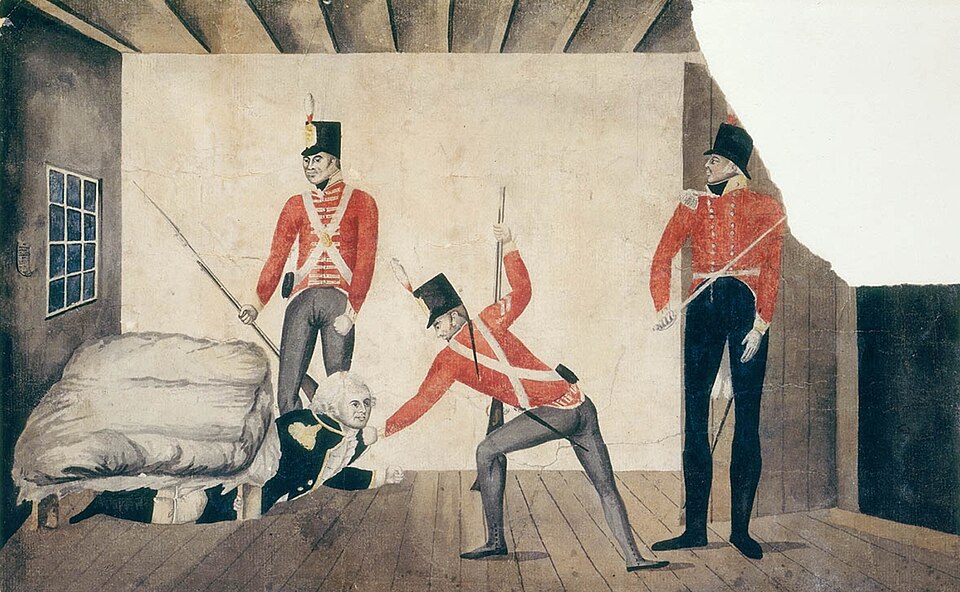
Nearly two decades later, as governor of Sydney, Bligh faced a second rebellion when officers of the NSW Corps deposed him in the colony's Rum Rebellion, a rare case of a British officer surviving both a shipboard mutiny and a colonial military coup.

Sydney Rum Rebellion Arrest of Governor Bligh historical illustration

⬅ See all events from 9 September

Spread the word on your favourite platform!

1265: The Murder of Evesham: Simon de Montfort Crushed at the Height of His Power

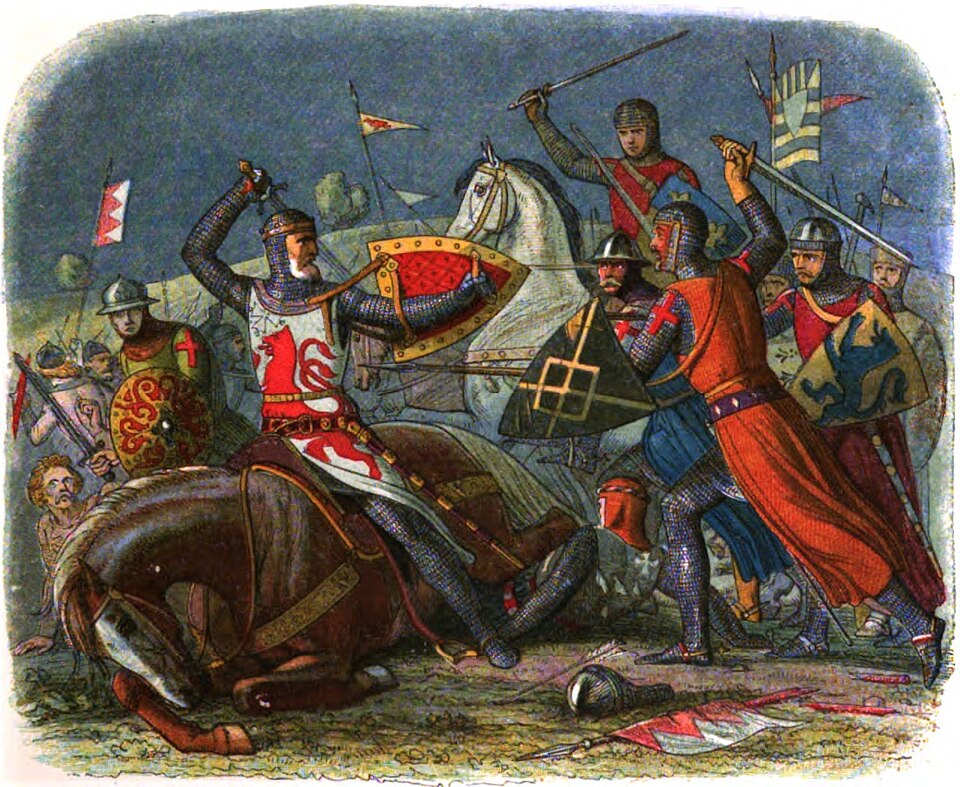
On 4 August 1265, the Battle of Evesham ended the Second Barons' War in one of medieval England's most decisive and brutal engagements. Simon de Montfort, Earl of Leicester, had dominated royal government since his victory at Lewes the previous year, holding King Henry III and Prince Edward in captivity. But the defection of key allies and the escape of Prince Edward unravelled his position. Trapped in a loop of the River Avon near Evesham, Worcestershire, outnumbered two to one and deceived by captured banners flown to disguise the approaching royalist army, de Montfort knew his fate. His reported final words: 'Our bodies are theirs, our souls are God's.'

The battle was short and merciless. De Montfort was killed and his body mutilated. The contemporary chronicler Robert of Gloucester called it 'the murder of Evesham, for battle it was none.' Royal authority was restored, though pockets of resistance persisted until the Dictum of Kenilworth in 1267.

Simon de Montfort, 6th Earl of Leicester, dies in the Battle of Evesham.

⬅ See all events from 4 August

Spread the word on your favourite platform!
On This Day in True Crime History

Subscribe to Dark Stories

True crime stories, dark history and tour news, straight to your inbox.